|
Dear Neighbors,
The Council is in the final stretch of the fiscal year 2027 budget process. As I have emphasized, this is a challenging fiscal environment. We face slowing revenue growth and rising costs, but we are working hard to protect core District services. Following weeks of budget oversight hearings, Council committees completed their budget markups last week. Yesterday, the full Council held a budget work session to review the actions taken by committees and discuss Council-wide priorities that could not be addressed by individual committees. The first vote on the budget will be June 9, followed by the second vote on June 23.
This week's newsletter begins with a look at the upcoming legislative calendar and the ongoing fiscal debate at the Council. I also share specific details on critical investments made by the Committee on Human Services, which I chair, in the city’s social safety net, neighborhood libraries, and local businesses. Additionally, you will find updates on a regional transportation survey and the DC Public Library’s design meeting for the Chevy Chase Library and Community Center. Plus, a recap of recent community events and meetings around Ward 3 and the District.
Thank you for staying engaged as we approach these final budget votes.
| | |
Matt Frumin
Ward 3 Councilmember
| | LEGISLATIVE UPDATES: FY27 BUDGET PROCESS | | |
The Council is entering the final weeks of the fiscal year 2027 budget process, working to balance the District's financial obligations and significant needs during a challenging economic period. Faced with rising costs and slowing revenue growth, we have spent the spring evaluating agency budgets to protect core public services.
Through April and early May, Council committees held budget oversight hearings for agencies under their purview, giving residents a chance to testify about programs and services, as well as allowing Councilmembers to dialogue with agency leadership. Last week, Council committees wrapped up their official budget markups, shifting the process to the full Council. Each committee worked to close funding gaps, find efficiencies, and identify funding to restore critical programs within their respective portfolios.
Yesterday, the full Council held a comprehensive budget work session to review committee actions and discuss how to address critical funding gaps across the District. Those gaps are large, including funding for the Early Childhood Educator Pay Equity Fund, childcare subsidies, Universal Paid Leave, the retention of 58 employees at the Office of the Attorney General, Access to Justice, and environmental priorities. Within the Committee on Human Services, as described in more detail below, funding is needed to pay rent for existing voucher tenants and protect benefits for families receiving support from the Temporary Assistance for Needy Families (TANF). These are just some of the headlines, and the remaining needs are big.
Revenue realized from decoupling from certain provisions of the recently enacted federal tax cuts can help address many, but not all, of these. This is a complex story: while the Chief Financial Officer (CFO) declined to let the mayor use those funds, he has given guidance to the Council on steps we can take that will enable us to utilize the funds.
The next two weeks will almost certainly include a robust discussion of which gaps will need to be filled and how. The Chairman will pull together a budget he believes has the support of the majority of the Council by Monday, June 8. The Council will hold the first vote on the budget on Tuesday, June 9. A second vote will follow later on June 23 before the budget is transmitted to the mayor and subsequently Congress for review.
Residents can continue to track the progress of the budget and view committee reports on the Council’s official website. You should also continue to reach out to our office to express your priorities and views as we move through this process.
| | FROM THE CHAIR: COMMITTEE ON HUMAN SERVICES UPDATES | | |
The District is currently navigating some of the most challenging economic headwinds we have seen in the last five years, with a projected contraction in revenue, a need to maintain critical services, and $469 million in proposed executive budget reductions. The agencies under the purview of the Committee on Human Services bore a significant share of those proposed cuts, facing a combined reduction of nearly $130 million, or more than 10 percent, from FY26 levels. The Department of Human Services (DHS) alone was slated for a $63 million reduction that would have dismantled vital youth homeless services, domestic violence grants, and legal service programs.
While economic resilience and fiscal responsibility are essential to our recovery, a stable economy cannot be built on a fraying safety net. The Committee’s vision for the FY27 budget centers on inclusive, responsible growth, guided by three core principles:
-
Drive Economic Expansion: To counter federal disinvestment, the District must retain and attract new employers and industries. However, government incentives must be deployed responsibly, scaled to actual demand, and structured to recover underutilized funds.
-
Protect the Social Safety Net: Preserving core safety net functions is not optional. While we must realize efficiencies and savings where possible, we cannot sacrifice the vital services our residents rely on.
-
Sustain Public Libraries: Our neighborhood libraries are irreplaceable public goods that provide year-round learning and career training for everyone. A thriving library system is a must-have, not a luxury.
Below are key actions the committee took to align with these principles, protect residents, and support sustainable, community-led growth.
1. Preserving and Repairing the Homeless Services System
We prevented severe contractions in our housing and shelter networks.
-
Expanding Bridge Housing Capacity: In partnership with the Committee on Public Works and Operations, we invested $1.5 million to fund up to 90 new bridge housing beds utilizing existing space at The Aston. We also preserved $25 million in capital funding and $3.4 million in operating funding to open a specialized 100-bed bridge housing site that pairs stable housing with intensive, on-site healthcare and case management services. Together, these investments turn a projected loss of beds into a net gain of 67 beds across the system.
-
Disrupting Family Homelessness: Working with the Committee on Housing, we advanced a Budget Support Act (BSA) subtitle requiring DHS to refer 38 families from the Family Re-Housing Stabilization Program to the DC Housing Authority to be matched with permanent Local Rent Subsidy Program vouchers.
-
Restoring the Youth Continuum of Care: We fully reversed a planned $1.5 million cut to extended transitional housing for unhoused youth. This restoration prevents an across-the-board six percent reduction that would have jeopardized youth providers citywide. Additionally, we allocated a $250,000 grant to sustain the operations of Sasha Bruce Youthwork’s drop-in center.
-
Protecting Critical Centers: We leveraged a transfer from the Committee on Transportation and the Environment to restore $254,000 in recurring funding for Shirley's Place, a drop-in center for unhoused adults.
2. Upholding Legal Rights and Domestic Violence Services
A safety net is only effective if residents can access protection and legal recourse during crises.
-
Full Restoration of Civil Legal Services: We fully restored $3.5 million for the Community Legal Education and Resources (CLEAR) program, which the mayor's budget eliminated. CLEAR provided nearly 1,900 free or low-cost legal consultations and representations in the first half of FY26, defending residents who cannot otherwise afford counsel.
-
Reinvesting in Domestic Violence Survivors: Backed by a $250,000 transfer from the Committee on Health, we fully restored $500,000 in domestic violence services grants to preserve emergency shelter and counseling. We also advanced a BSA subtitle protecting providers from being forced to choose between federal and local funding streams.
3. Strengthening Public Benefits and Family Supports
We moved to modernize our public benefit infrastructure and ensure that assistance reaches families when and where it is most impactful.
-
Securing EBT and Reimbursing Stolen Benefits: With an out-years investment of $3.5 million, we fully funded the Public Benefits Security Amendment Act of 2026, requiring DHS to transition to more secure microchipped EBT cards and reimburse residents who fall victim to benefits theft.
-
Expanding Pregnancy Coverage: We expanded TANF eligibility to single individuals in their second trimester of pregnancy, investing $120,960 in recurring funds to support critical maternal and child health.
-
Ensuring Access to Supportive Services: We ensured that TANF parents in the POWER program do not lose access to vital employment, education, childcare, and transportation subsidies.
-
Child Support Reforms: We invested $200,000 in FY27 to allow the District to pass through up to $200 in child support arrears to families currently or previously on TANF.
4. Keeping Our Libraries Clean, Capitalized, and Open
Our neighborhood libraries are invaluable public spaces for lifelong learning and community gathering.
-
Restoring Book Budgets and Youth Services: We invested $1 million to bring the library’s book-purchasing budget back to FY26 levels. We also restored $105,879 to Children and Young Adult Services to safeguard early education and summer reading initiatives.
-
Clean and Accessible Spaces: We reversed a $143,676 cut to custodial services to keep our neighborhood facilities clean and dignified. Furthermore, we provided half a million dollars in recurring funds to support the newly modernized Southeast Library.
5. Driving Inclusive and Targeted Economic Development
True recovery requires scaling investments to local demand and supporting economic opportunity across all neighborhoods.
-
Spurring Downtown and Small Business Growth: We expanded eligible office building conversions under the Office to Anything program and authorized strategic property acquisitions to catalyze development. We also restored $200,000 to the DC Community Anchor Partnership to drive institutional procurement toward local businesses.
-
Investing in Local Commercial Corridors: In partnership with other committees, we committed resources to businesses and business districts across the city:
-
Nourish DC: Restored $1,000,000 in recurring funds to support food access and food businesses predominantly in Wards 5, 7, and 8.
-
Commercial Corridor Grants: Allocated $1.15 million for retail grants along Rhode Island Avenue, NE, 12th and Monroe Streets, NE, Pennsylvania Avenue, SE, and Lower Georgia Avenue; a planning study for Mount Vernon Triangle; and a feasibility study for an H Street, NE, Business Improvement District.
-
Local Activations: Provided $100,000 annually to the Friendship Heights Alliance for retail activation and urban design, and $50,000 annually for the Connecticut Avenue Clean Team, which provides clean and safe services to four business districts.
How We Funded These Investments
We delivered these crucial safety net protections through a disciplined, fiscally responsible approach that balances our ledger without adding to the District's long-term economic strain by:
- Aligning tax abatements for Downtown building conversions with actual, demonstrated demand, generating $14.65 million over the financial plan.
- Delaying operating expenditures on a new bridge housing site until FY28 (the earliest the site could realistically open), capturing $3.4 million in FY27 savings.
- Identifying approximately $1.5 million in administrative and operational savings across DHS and OCTFME by aligning proposed spending with historical actuals.
- Accepting strategic transfers from colleagues on the Health, Youth Affairs, Transportation, and Public Works committees.
The Work Ahead
While the Committee was able to repair some of the most egregious holes in our social safety net, the work is far from finished. The Committee simply did not have the resources to address two massive funding shortfalls that I will be asking the full Council to prioritize before final budget approval:
-
Voucher Funding Shortfall: It will cost more than $42 million to fully fund current vouchers. DHS acknowledged in the budget process that it did not have funding to pay for all the vouchers it supports. The federal government has said it will stop funding certain emergency vouchers by the end of the year. And families are being exited from Rapid Rehousing, often without other support. Failing to address these issues risks a permanent loss of housing that could spike homelessness and will hurt both residents and housing providers, who could find themselves housing people without compensation.
-
TANF Restorations: It will require $20.5 million in FY27 to delay programmatic time limits and sanctions, among other changes, that threaten to push thousands of District children into deep poverty.
| | |
Don’t Lose Your Healthy DC Plan Insurance Coverage
More than 2,000 District residents get their health insurance through Healthy DC and are at risk of losing coverage unless they take action by June 3rd. Residents enrolled in Healthy DC should look out for mail, phone calls, and emails from DC Health Link. Emails will come from healthydcplan@dc.gov. You can also find out if you need to act by logging into your account at DCHealthLink.com. For Questions: Call (833) 432-7526 / TTY: 711. DC Health Link is open Monday through Friday, from 8:00 a.m. to 6:00 p.m.
| | |
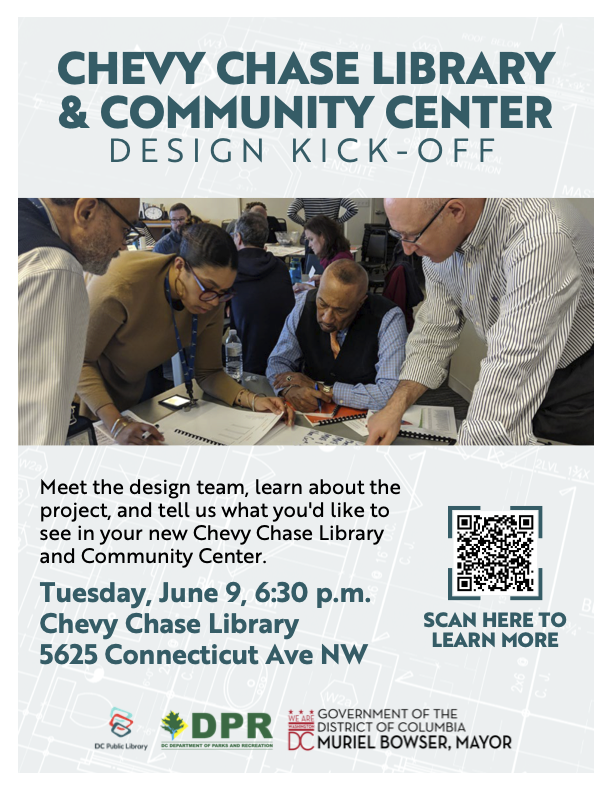
Chevy Chase Library and Community Center Design Kick-Off
The DC Public Library and the Department of Parks and Recreation will host a community meeting regarding the upcoming modernization of the Chevy Chase Library and Community Center. The design kick-off meeting is scheduled for 6:30 p.m. on Tuesday, June 9, at the library, 5625 Connecticut Ave NW. Neighbors are invited to meet the project's design team, learn about the project timeline, and share feedback on the programs and features they would like to see in the new facilities. Additional details can be found at dclibrary.org.
| | |
Regional Travel Survey Launches
The National Capital Region Transportation Planning Board (TPB) launched its 2026 Regional Travel Survey to help shape the future of local transportation. I currently serve as First Vice Chair of the TPB. Local planners and agencies rely on this data to track regional travel patterns, understand area growth and guide future decisions about roadways, transit, sidewalks, and bicycle paths. This is the first survey conducted since the pandemic and the first to offer a smartphone app option alongside the traditional web-based survey. Households are randomly selected to participate. If you receive a postcard invitation in your mailbox, please take 10 minutes to complete the survey. Data collection runs through June, with another wave planned for the fall. Visit the TPB’s survey announcement to learn more.
| | |
DCAP Vendor Connection Day
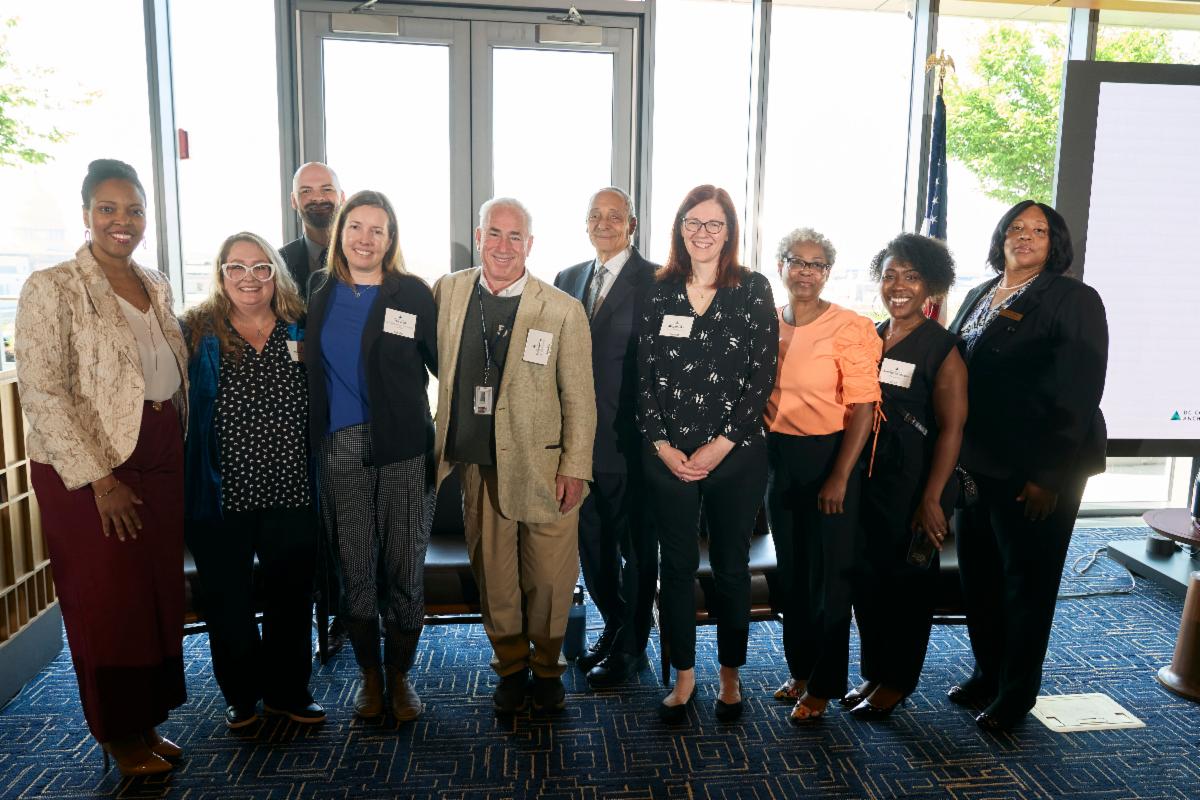
I recently joined leaders and local entrepreneurs at Georgetown University’s McCourt School of Public Policy for the DC Community Anchor Partnership Vendor Connection Day. The event, organized in partnership with the Georgetown University Office of Sustainability and the Washington Area Community Investment Fund, brought together procurement officials from District institutions and local small businesses. This year's session focused on sustainability, helping neighborhood businesses align with emerging green economic opportunities in DC. Fostering these connections is a priority for my office, and it was inspiring to see so many stakeholders collaborating to keep District dollars circulating right here in our communities.
| | |
All In for DC Kids Reception
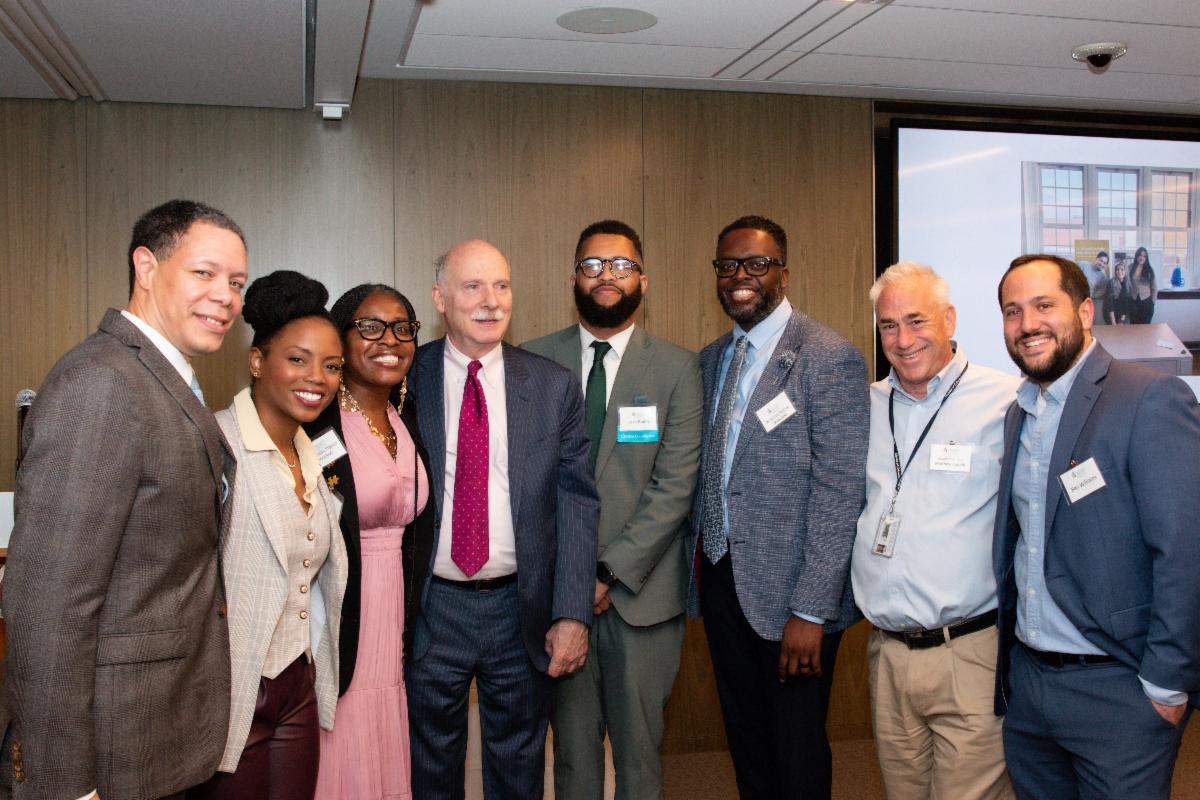
I had the pleasure of attending the All In for DC Kids reception to support youth development and educational equity. Community schools play a vital role in providing comprehensive academic, health, and social services to children and families across the District. I am committed to advancing student success and strengthening our local school systems. I look forward to continuing this important work alongside neighborhood educators, parents, and advocates to ensure every child in Ward 3 and across DC has the resources they need to thrive.
| | HAVE A WARD 3 SERVICE REQUEST? | | | |
|
Please do not hesitate to reach out with any questions or requests.
My Constituent Services team is here to help you.
| | | GOVERNMENT & COMMUNITY CALENDAR | | |
Advisory Neighborhood Commission (ANC) Meetings
ANC3A: Tuesday, June 9, 7:00 p.m., Zoom
ANC3B: Thursday, June 11, 7:00 p.m., Zoom
ANC3C: Monday, June 15, 7:00 p.m., Zoom
ANC3D: Wednesday, June 3, 7:00 p.m., Zoom
ANC3E: Thursday, June 11, 7:30 p.m., Zoom
ANC3F: Tuesday, June 16, 7:00 p.m., Zoom
ANC3/4G: Monday, June 8, 7:00 p.m., Zoom
| | |
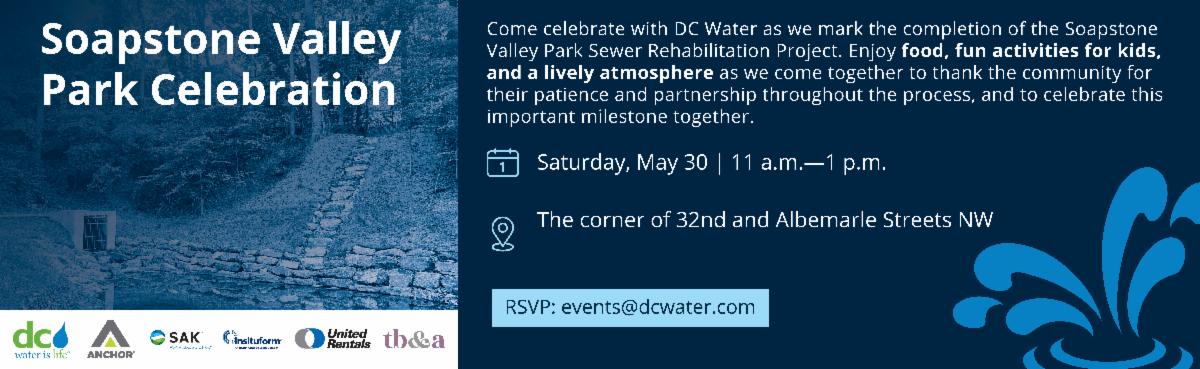
Soapstone Valley Park Celebration
Join DC Water and community members on Saturday, May 30, from 11:00 a.m. to 1:00 p.m. to celebrate the completion of the Soapstone Valley Park Sewer Rehabilitation Project, as well as to recognize the community’s patience, cooperation, and collaboration throughout this long anticipated and extensive project to upgrade the local sewer system infrastructure and help restore a portion of the park. I will be there with my team, along with ANC 3F Commissioners, Ward 3 MOCRS, the National Park Service (NPS), Department of Energy and Environment (DOEE), and neighbors. The event will take place at the corner of 32nd and Albemarle Streets NW. RSVP to events@dcwater.com.
| | |
|
Councilmember Matt Frumin
1350 Pennsylvania Avenue NW
Suite 408
202-724-8062
|
|
| | | |