Each day in Washington County, roughly 67,000 residents find themselves in a living situation where they don't know where their next meal is coming from. Businesses and nonprofit organizations throughout Washington County -- such as Caruso Produce, Manaia Coffeehouse and Island Grill, and the Oregon Food Bank -- are working to tackle this problem, known as food insecurity, head on.
Such efforts directly reduce hunger in Oregon. Recent USDA reports show nearly half a million Oregonians are food insecure. Of the 270,000 Oregonians who receive emergency food boxes each month, 92,000 are children, a number that has gone up 41 percent since the Great Recession. The coalitions that have been formed between business, government, nonprofits and volunteers are helping Washington County businesses become leaders in addressing this statewide problem.
Caruso Produce
For years, Caruso Produce had a local farm take its imperfect produce. This arrangement ended, and Caruso was left throwing away unmarketable yet perfectly edible fruits and vegetables. Washington County offered suggestions for how to divert this "ugly" produce. After teaming up with the Oregon Food Bank (OFB), Caruso is now one of the westside's biggest donation champions. Last year, the Tualatin-based produce distribution company donated enough food for 181,000 meals to local residents.
Much of what cannot be donated to OFB gets composted. Washington County provided green food scraps collection containers to line Caruso's sorting tables so employees could easily separate compostable material from other garbage. These containers are emptied into a large dumpster outside and hauled to an industrial composting facility in Corvallis.
Caruso is always exploring more options for reducing waste. By doing so, Caruso gets to exhibit its leadership in sustainable business practices, reduce its disposal costs and feed people rather than landfills.
Manaia Coffeehouse and Island Grill
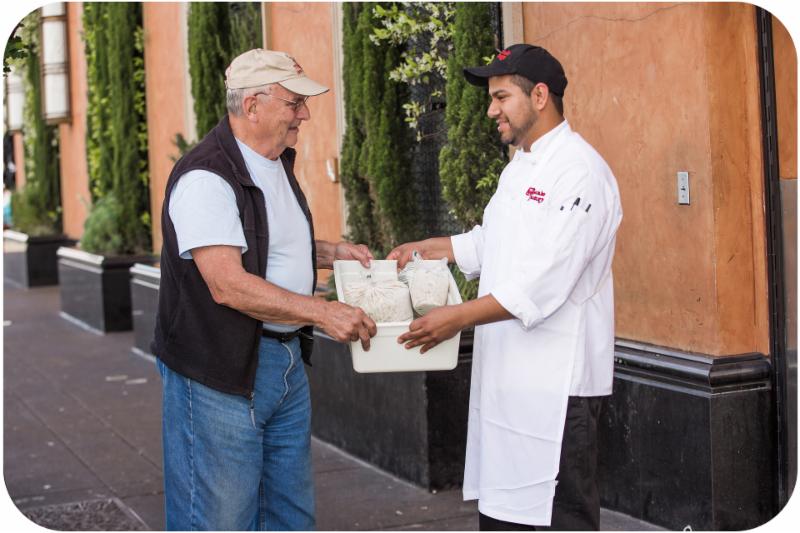
Manaia Coffeehouse and Island Grill in Hillsboro has worked with Washington County to connect with Salvation Army's food assistance program. Manaia's owner, Kristi Hart, estimates this collaboration has allowed her restaurant to divert up to 10 pounds of edible chicken from landfills every day. That's almost two tons every year!
Manaia freeze-dries its extra meat, a process Hart says does not require much staff time, and families in need are able to get access to good food. Similar to the Caruso Produce endeavor to save unmarketable fruits and vegetables, Manaia is directly filling hunger gaps. Manaia has also been able to free up storage space, reduce its tax costs and promote its sustainable business model.
Oregon Food Bank - Fresh Alliance Program
Five days a week, OFB truck drivers pick up from grocery stores nutritious, perishable foods that might have otherwise been composted or gone to a landfill. Known as Fresh Alliance, a food rescue initiative now operating statewide, this innovative approach to reducing hunger redistributed 14.8 million pounds of food last year alone. Since its 2001 inception, roughly 81 million meals have been generated through Fresh Alliance.
Collaborating with over 380 corporate and local grocers and retailers, the Fresh Alliance team works closely with employees and management to save fresh food like dairy, meat and produce that would otherwise have gone to waste.
Maintaining a "cold chain," the food moves from refrigerated trucks into a temperature-controlled facility, where trained volunteers sort and inspect items for cross-contamination, damaged packaging and other market safety standards. Within 24 hours, the food is sent back out. Loading docks remain open six days a week for the various food agencies to collect, a unique process Fresh Alliance Program Coordinator Rachel Dueker refers to as "shopping the dock."
OFB doesn't "allocate products" to agencies, Dueker notes, because agencies know their clients better than OFB does. This system of choice allows for the necessary distinction between emergency food distribution and a hot meal food box; an elder check-in meal site and a backpack program; group homes and a food pantry. The myriad agencies working with the Fresh Alliance program are thus able to access specific items, further assuring meals for those in need.
OFB West alone has four drivers picking up from 50 stores throughout the week, including Safeway, which Dueker noted recently came on board with Fresh Alliance. Regional Safeway stores have reduced their compost volume by 46 percent in their first six months of participating, saving the company thousands of dollars in hauling fees and creating considerable environmental benefits.
One of the more exciting elements of the Fresh Alliance program is that it is setting the standard for national models. Safeway, for example, is now piloting donation programs nationwide, based on its Oregon pilot program. This remarkable reversal in corporate trends can be attributed, in part, to the work of Dueker and the OFB team, leaders setting the stage for new trends to emerge.
Does your business have surplus food to donate?
The Washington County Solid Waste & Recycling Program can help provide the blueprints for such mutually beneficial business approaches, and food service providers will be able to comfortably adjust their practices to help reduce food insecurity. Contact the Washington County Solid Waste & Recycling Program by
email
or call 503-846-3605.