|
Daily Transportation News
May 29, 2026
| | | Waymo Dominates Autonomous Vehicle Registrations As Tesla Trails Behind | |
|
Waymo has nearly 600 autonomous vehicles registered in Texas, a figure that far outpaces emerging competitors Avride, Nuro, Tesla, and Zoox, according to data available in a new website launched by the Texas Department of Motor Vehicles.
The automated vehicle tracker tool — part of a new law that requires AV companies to register with the DMV — gives the public the first accurate and easy-to-access accounting of how many autonomous vehicles are in Texas. The state law, which went into effect May 28, requires companies testing or deploying AVs in the state to share how many vehicles are in their fleets as well as other safety information.
It also shows just how wide the gap is between Waymo and rival Tesla — two companies offering commercial robotaxi services.
Alphabet-owned Waymo has registered 577 autonomous vehicles in Texas, followed by Avride with 317, and Nuro with 47. Tesla, which launched a robotaxi service in Austin last summer and has since said it has expanded to Dallas and Houston, has registered 42 autonomous vehicles. Other companies with registered autonomous vehicles in the state include Volkswagen subsidiary MOIA, which has a fleet of 12 electric, autonomous microbuses.
The size of an autonomous-vehicle fleet only reveals so much about where a company stands on the leaderboard. Many of these companies — Nuro and Zoox, for instance — are not operating commercially.
Source: Tech Crunch
Click Here to Read More
| | IATR Advisory Board Member Together For Safer Roads to Host Intelligent Speed Assistance Webinar | |
|
The U.S. DOT Volpe Center and the Insurance Institute for Highway Safety recently issued a report on their research of 13 fleets and six stakeholders to assess intelligent speed assistance (ISA), including deployment experiences and its benefits for safety, fleet management, fuel efficiency, and vehicle maintenance.
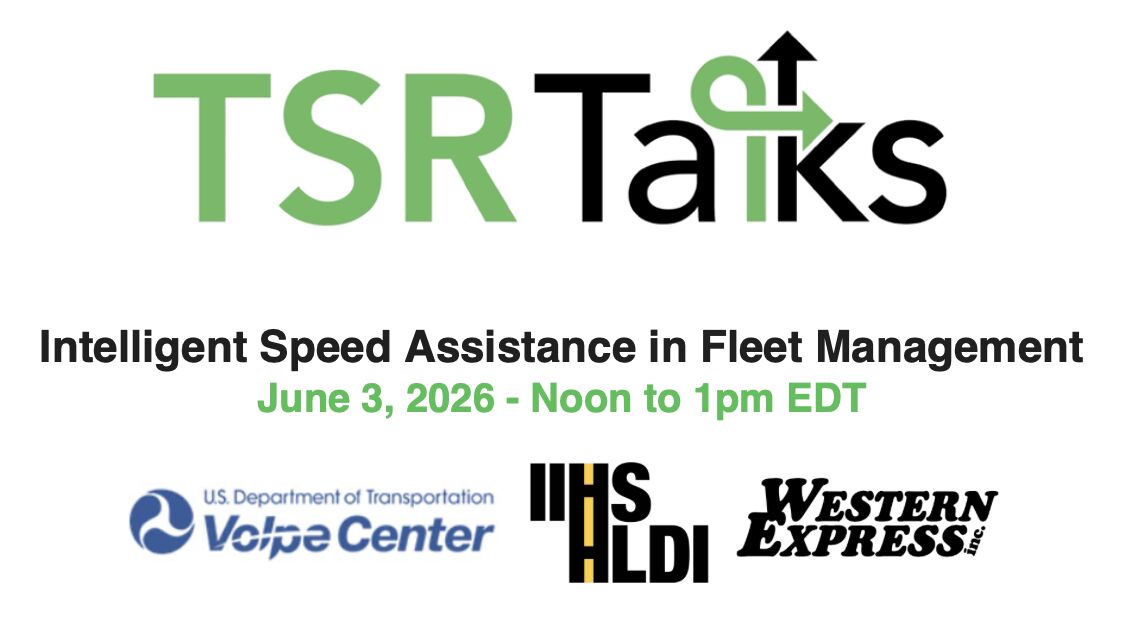
Together for Safer Roads will be hosting a webinar on “Intelligent Speed Assistance in Fleet Management” on Wednesday, June 3rd at Noon EST, where attendees will hear from the authors of this report, as well as Western Express, which is one of the fleets that participated in the research for the report and is one of the largest commercial fleets that have installed ISA.
Recently, ISA has been part of legislative discussions in Albany as part of the New York State budget process, and it was announced this week that the Stop Super Speeders Act would be passed, requiring those who repeatedly receive speeding tickets in New York City to install ISA in order to physically prevent vehicles from exceeding speed limits. You can read more about the New York Stop Super Speeders Act by clicking here.
IATR President Matt Daus’ article about Intelligent Speed Assistance and the “Safety Tech Shift Taxis Can’t Ignore” can be found here.
You can register for the Together for Safer Roads ISA webinar on June 3rd by clicking here.
| | |
Yes, Another Thing That Car Dependency Makes Worse: DUIs
Yes, it is illegal to drink and drive, but it is also illegal to hit and kill pedestrians, and people still do it — and will continue to do it unless something bigger than just traffic laws changes.
Click Here to Read More
New All-Electric Carshare Program Debuts on Buffalo's East Side
It is called Light City Carshare, and it is backed by local and statewide resources like NYSERDA. The program offers access to electric vehicles to rent for $5 or $40 per day.
Click Here to Read More
Massachusetts Transportation Committee Takes Up Healey Bill Requiring Registration, Insurance for High-Speed E-Bikes
The Joint Committee on Transportation addressed the menace head-on Thursday in a bill filed by Gov. Maura Healey that would require an annual registration, liability insurance, and an official Massachusetts license plate for high-speed motorized bicycles. That includes certain e-bikes, scooters, and mopeds, while also banning the popular products from bike lanes and walking and biking paths.
Click Here to Read More
| |
The Big Rig: Weak Oversight and Regulatory Loopholes Let Predatory Trucking Firms Run Roughshod over Vulnerable Drivers
Trucking, which employs roughly 300,000 drivers in Canada, was once a path to a middle-class life. Today, this essential sector is riddled with accusations of wage theft, exploitation and safety lapses, despite persistent warnings from industry experts and drivers themselves. In response, Ottawa has enacted legislative changes and promised harsher penalties for law-breaking firms. But a fractured oversight system, poor information-sharing between governments and shoddy enforcement continue to allow bad actors to escape scrutiny, a Globe and Mail investigation has found.
Click Here to Read More
You Can Now Tap Your Amex Card on More Transit Systems across Canada
If you’re an American Express cardholder who takes transit, getting around just got a little easier, especially for tourists. BC Transit recently launched contactless payments across 30 transit systems in British Columbia, meaning riders can now tap their Amex card at fare readers instead of fumbling for cash or a separate transit card. The rollout covers select agencies across the province and is available to both locals and visitors.
Click Here to Read More
Closing the Gap: What's at Stake in Canada's Clean Fuel Regulations
Canada’s biofuels sector is at a pivotal moment as industry leaders warn that delays and uncertainty around Clean Fuel Regulations (CFR) amendments could stall investment and shift production opportunities south of the border.
Click Here to Read More
| |
London Road Deaths Fall to Near-Record Low, but Serious Injuries Rise
The number of people killed on London’s roads fell by nearly 13% in 2025, according to provisional figures published by Transport for London (TfL), marking the second-lowest annual death toll on record outside pandemic years. TfL’s latest casualty statistics show 96 people were killed on the capital’s roads in 2025, down from 110 in 2024. However, serious injuries rose by 8% year-on-year from 3,597 to 3,900, underlining the challenge facing London’s Vision Zero target of eliminating deaths and serious injuries by 2041.
Click Here to Read More
Hyundai Motor Company Launches Robotaxi Business in Spain
Hyundai Motor Company is considering a robotaxi pilot project in Madrid, Spain. The move opens the door to expanding into Europe as it prepares to commercialize a driverless robotaxi service using the Ioniq 5 in Las Vegas, the United States, later this year. According to the automotive industry on the 29th, Hyundai Motor Company President José Muñoz said in a recent interview with the Spanish media outlet Expansión that the company is reviewing participation in Madrid's robotaxi project.
Click Here to Read More
European Boating Industry Launches Roadmap for Alternative Fuel Infrastructure in Marinas
European Boating Industry (EBI) has launched its new roadmap, “Energy Transition for Recreational Boating in Europe: A roadmap for alternative fuel infrastructure”, setting out practical industry and policy recommendations to support the decarbonisation of recreational boating and the development of marina infrastructure across Europe. The roadmap highlights the need for a technology-neutral and multi-pathway approach to the energy transition, recognising the diversity of Europe’s recreational boating fleet of more than 6.5 million vessels and the operational realities of marinas across coastal and inland waters.
Click Here to Read More
| |
Hong Kong Government to Start LPG Subsidy from May 31
The Hong Kong Special Administrative Region government will launch a temporary fuel subsidy of HK$0.5 per liter of liquefied petroleum gas (LPG) for taxis, public light buses and school private light buses on May 31. The measure will last for two months until 11:59 pm on July 30.
Click Here to Read More
Kolkata: DVC, Jadavpur University Unveil ‘Green Yellow Taxi’ Prototype for Sustainable Mobility
The prototype has been developed under DVC’s Research and Development project titled “Digital Twin Development to Study the Feasibility of Retrofitted E-Mobility and Technological Requirements for its Sustainability.” The initiative seeks to address a major challenge in India’s EV transition — the premature scrapping of internal combustion engine (ICE) vehicles — by promoting cost-effective retrofitting solutions that extend the operational life of existing vehicles.
Click Here to Read More
Cape Town Taxi Industry Dumps Cash in Major Commuter Shake-Up
The daily scramble for exact change and the risks linked to carrying cash on minibus taxis could soon become a thing of the past in the Western Cape as the Cape Organisation for the Democratic Taxi Association (Codeta) prepares to roll out a fully cashless payment system from June 1. The move by one of the province’s largest taxi associations marks a major shift for the public transport sector, with commuters set to pay for trips using specialised tap cards or scan-to-pay mobile technology.
Click Here to Read More
| | International Road Federation (IRF) Joins the IATR Advisory Board! | |
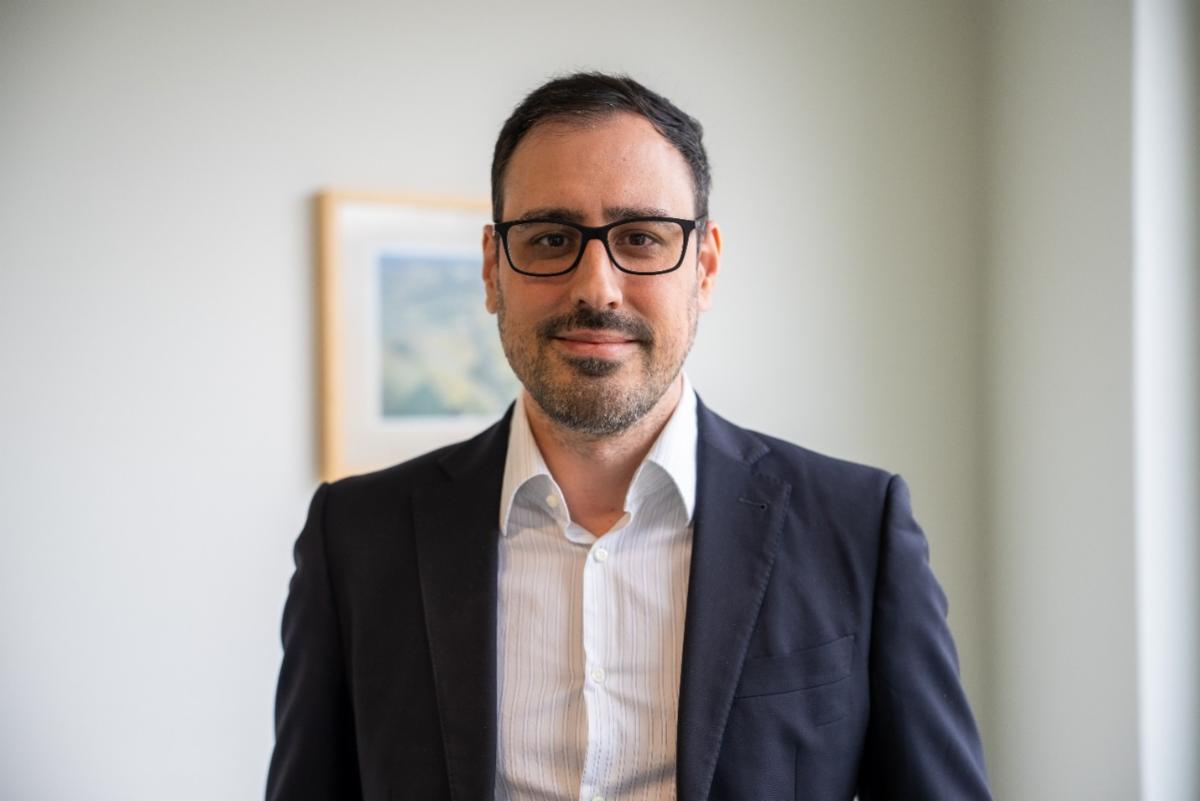
Gonzalo Alcaraz, Director General of the International Road Federation (IRF) | |
IATR is pleased to welcome Gonzalo Alcaraz, Director General of the International Road Federation (IRF), as its newest advisory board member. IRF is the world’s leading organization dedicated to promoting safer, greener, and more sustainable road systems worldwide.
On joining the IATR Advisory Board, Gonzalo said, “It is a privilege to join the IATR Advisory Board at a time when transportation regulators are navigating unprecedented complexity, from new mobility modes to automation and decarbonization. Headquartered in Geneva and active on every continent, IRF has long believed that safer, more sustainable mobility depends on bringing together regulators, industry, and civil society across borders. I look forward to contributing an international perspective, sharing best practices from IRF’s global membership, and working with fellow board members to advance regulatory frameworks that place road safety and sustainability outcomes at the center of innovation.”
Matt Daus, IATR President, said, “We are honored to welcome Gonzalo Alcaraz and the IRF to the IATR Advisory Board. Gonzalo brings an impressive background and a strong commitment to improving road safety and sustainable infrastructure worldwide. IRF has played a vital role in advancing collaboration between governments, industry leaders, and transportation stakeholders across the world, and its global perspective will be an important asset to IATR as regulators continue adapting to evolving mobility technologies and transportation models. We look forward to working closely with Gonzalo and IRF to help advance practical, forward-looking regulatory approaches that prioritize safety, innovation, and public benefit.”
In this role, Gonzalo leads IRF’s international programs, policy advocacy, and member engagement by working with governments, multilateral institutions, and industry leaders to advance road safety, sustainable infrastructure, and connected and automated mobility.
Over a 15-year career spanning IoT engineering, intelligent transportation systems, autonomous fleet management, and transport policy, he has worked in the European private sector before moving into international institutional leadership. He has represented the road sector at major events and forums around the world and mentors early-stage ventures through Techstars accelerator programs. He holds degrees from Universidad Blas Pascal (Argentina), Politecnico di Torino (Italy), and Blekinge Institute of Technology (Sweden), and works in four languages.
Active since 1948, the IRF is an international, membership-based organisation headquartered in Geneva that shapes the future of road and transport infrastructure systems for people and the planet. Mobilising the world’s road transport ecosystem through a trusted platform for collaboration, we provide practical knowledge, policy engagement and capacity building to support countries and industry leaders deliver road systems that are inclusive, safe, green and efficient.
As transportation regulation and technology evolve, more government entities and stakeholders are taking on roles in overseeing, coordinating, and regulating both emerging and established industry participants. IATR members now regulate not only taxicabs and limousines, but also pedicabs, Transportation Network Companies (TNCs), liveries, black cars, app-based firms, jitneys, shuttles, microtransit services, and public and private paratransit. In many regions, they also collect transportation data from licensees and work with technology vendors, automakers, and other businesses connected to for-hire ground transportation providers, drivers, and vehicle owners through permitting, authorization, franchising, and regulation.
This expanding regulatory landscape includes airport authorities, multimodal public transit agencies, local transportation and traffic departments, state highway and transportation agencies, public utilities commissions, consumer affairs agencies, taxi and limousine or for-hire departments, police departments, state agriculture departments, and weights and measures agencies or divisions. It also now includes state Departments of Motor Vehicles, certain federal agencies, international ministries, land transport authorities, and social service regulators responsible for Non-Emergency Medical Transportation. IATR’s diverse membership of government agencies helps the organization collaborate with peer nonprofits that support education and advocacy, reinforcing the mission and objectives of IATR.
In response to this fast-changing landscape of new mobility, oversight, decarbonization, and road safety, IATR includes a range of organizations on its advisory board to ensure that strong guidance, practical insight, and leading practices are shared through conferences, subcommittees, joint projects, and industry hackathons. Advisory board members include Together for Safer Roads, the American Public Transportation Association (APTA), the University Transportation Research Center (UTRC), and the Non-Emergency Medical Transportation Accreditation Commission.
| |
|
Message from IATR President Matthew W. Daus
At the International Association of Transportation Regulators (IATR), our regulators are at the forefront of addressing both the challenges and opportunities facing the mobility paradigm. Our IATR members, partner organizations, and regulated industries will continue on our shared quest to fulfill the mission of our non-profit educational organization - to bring about Multi-Modal Mobility Innovation for All! This mission can best be accomplished through information sharing, collaboration, identifying and promoting best practices, and educating our membership. These educational updates and electronic media clips are affectionately known as “IATR snips” and endeavor to cover all aspects of mobility around the globe - especially news and developments involving safety, technology innovation, multi-modal integration, automation, sustainability, electrification, accessibility, regulatory modernization, and equity.
If you would like more information about the IATR, you can visit our website at www.iatr.global. Current members can renew their memberships when you log in to your IATR portal on the top right-hand side of our website, or click here. If you forgot your membership password, please email our Membership Director, Eric Richardson, at erichardson@iatr.global.
| | | | | |
|
RENEW YOUR MEMBERSHIP FOR 2026:
Weekly news snippets
Access to the membership database
Videos and files from recent conferences
Discounted rates for future conferences, and more!
Renew your membership at http://www.iatr.global or email info@iatr.global for any questions!
| | | | |