|
Daily Transportation News
July 6, 2026
| | | Waymo and Uber Are Parting Ways in Phoenix after Nearly Three Years of Robotaxi Rides | |
|
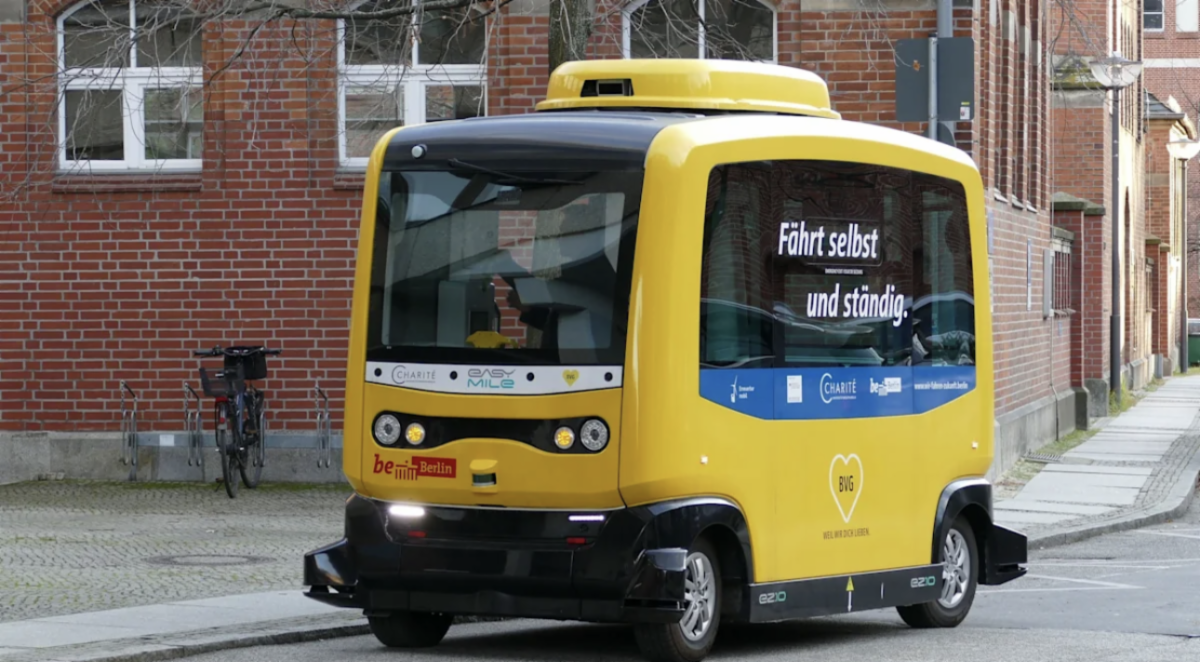
Waymo and Uber have ended their robotaxi partnership in Phoenix, Arizona, the two companies confirmed Monday, closing out a nearly three-year arrangement that served as the first market where the companies worked together.
The ride-hailing portion of the program concluded last month, according to Bloomberg. Waymo said the vehicles it had dedicated to the Uber pilot have been folded back into its own Phoenix fleet and remain available through the Waymo app, as well as through a delivery agreement with DoorDash and a public transit partnership with Via Transportation.
"This was a productive pilot that paved the way for future expansions and partnerships across the globe," a Waymo spokesperson said in a statement. "After hundreds of thousands of trips with Uber, we have integrated these vehicles back into our Phoenix fleet."
An Uber spokesperson described the arrangement as deliberately small in scope. "Phoenix was our first pilot market with Waymo and was an intentionally limited deployment, reaching just over a dozen vehicles dedicated to the program," the spokesperson said. Uber also noted that experience gained in Phoenix accelerated its ability to build out operations in Austin and Atlanta, two markets where the Uber app now gives riders access to hundreds of Waymo autonomous vehicles.
Uber told TechCrunch that the two companies parted ways in Phoenix because they had reached the contracted end date.
Uber said it plans to announce a new autonomous vehicle partner in Phoenix but has not named the company.
Source: Quartz
| | Massachusetts Proposes Aggressive EV Mandate for Rideshare Fleets: Comments Close Tomorrow July 2nd! | |
The Massachusetts Department of Public Utilities (DPU) has proposed sweeping updates to its Transportation Network Company regulations under docket D.P.U. 26-90, and the deadline for public feedback is tomorrow, July 2, 2026.
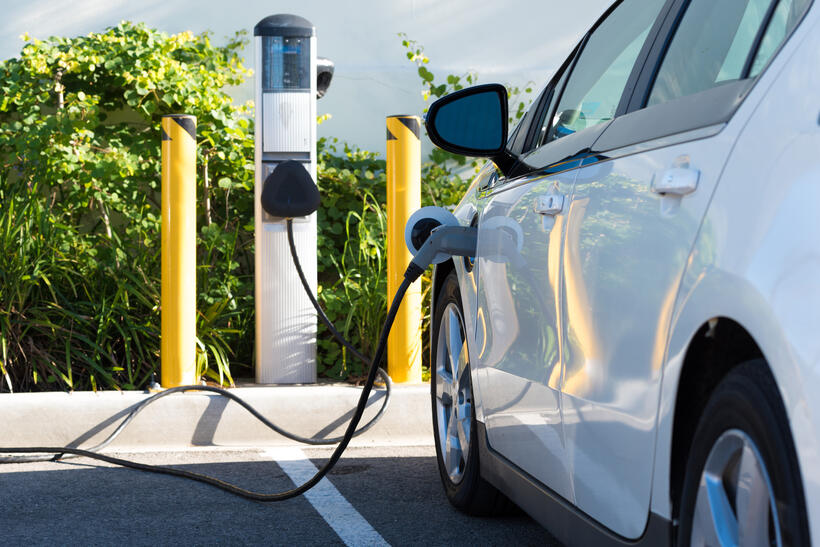
Among a broad slate of changes—including overhauled background checks and increased driver training—is a new greenhouse gas reduction mandate. The proposal would require ridehail companies that rent or lease vehicles to drivers to only offer electric vehicles (EVs) within one year of the rules taking effect. The rule explicitly exempts personally owned vehicles and wheelchair-accessible fleets
Proponents view it as a critical step toward cutting the state's transportation emissions. However, the newly formed App Drivers Union argue the timeline is too aggressive, warning that a lack of robust charging infrastructure could hurt driver earnings due to multi-hour charging delays.
Academic research by Mengying Ju, Elliot Martin and Susan Shaheen, all with the University of California at Berkley, examined the nuanced economic impacts of a similar mandate in California for ridehail drivers and how best to structure a mandate to protect drivers, particularly low-income drivers.
Read more about the DPU Proposed Rules here.
| | |
Transit Pilot Offers Lessons for Expanding Mobility Access
Philadelphia’s Zero Fare transit pilot demonstrates that eliminating fares and enrollment barriers can significantly improve mobility, economic opportunity, and quality of life for low-income residents while strengthening public confidence in government and transit agencies, according to a recent implementation evaluation by the Urban Institute. The study examines Philadelphia SEPTA’s innovative approach to transit assistance, which differs substantially from traditional discounted fare programs.
Click Here to Read More
MARTA Mobility App Launch Provides New, Streamlined Interface for Booking and Managing Trips
The Metropolitan Atlanta Rapid Transit Authority (MARTA) launched its new MARTA Mobility app and web platform. Powered by RideCo, the new scheduling and dispatching system offers riders a faster, easier and more accessible way to manage their travel. The modernized platform allows MARTA riders to have three ways to book, change or cancel their trips: through the new app, a new web portal or by continuing to call MARTA Mobility.
Click Here to Read More
Can ‘Train Daddy’ Fix America’s Busiest Train Station?
Amtrak special adviser Andy Byford has a station to sell you. Byford, once known to New Yorkers as “Train Daddy,” has spent the last month traveling up and down the East Coast seeking buy-in for the Trump administration’s plan to rebuild Penn Station. He’s met with federal officials in Washington. He’s gotten NJ Transit CEO Kris Kolluri to partner on the project. He presented the plan to New York Gov. Kathy Hochul, as well as every elected official who represents the area around Penn Station.
Click Here to Read More
| |
Autonomous Vehicles in Canada: Navigating the Road to a Driverless Future
Autonomous vehicles (AVs) have long occupied a space between science fiction and engineering reality. In 2026, Canada finds itself at an important crossroads. While fully driverless taxis remain uncommon on Canadian streets, significant advances in artificial intelligence, sensor technology, trucking automation, and regulatory development are steadily moving the country toward a future where vehicles increasingly drive themselves. Canada’s approach is notable for balancing innovation with safety, seeking to encourage technological progress while maintaining public confidence.
Click Here to Read More
Canada Allows International Transit Passengers to Skip Border Checks at Three Major Hubs
The Canada Border Services Agency (CBSA) is allowing international travelers connecting through Canada’s busiest airports to skip border check-ins on connecting flights. The CBSA said this week that travelers connecting at three airports—Toronto Pearson (Terminal 1), Montréal–Trudeau International Airport, and Vancouver International Airport—will be able to go directly to their next flight without having to stop at customs.
Click Here to Read More
How the FIFA World Cup Forced Downtown Toronto to Fix Its Gridlock Problem
The World Cup might have shown the way out of Toronto’s usual congestion and commuter chaos, new data suggests. But experts say it will take more ambition and political will to make the FIFA experience the norm. Despite fears that the surge of FIFA attendees would overwhelm the city, getting around Toronto has — generally — been smooth-sailing for commuters. It’s all gone according to a transit-heavy plan that city and provincial agencies have worked on for months after pressing the need for commuting options that don’t involve cars.
Click Here to Read More
| |
Could As Little As 30 Miles Every Day Be the Secret to Passing the Knowledge of London? The LTDA Thinks So
The Licensed Taxi Drivers’ Association (LTDA) is encouraging London Knowledge students to adopt a simple but demanding routine aimed at accelerating their progress through one of the world’s toughest vocational qualifications. In the latest edition of its TAXI magazine, LTDA Executive Anthony Street outlined what he calls the “30 Miles a Day, Four Runs a Day Challenge”, urging students to make daily road experience a central part of their studies.
Click Here to Read More
The Uber Man and the Taxi Dispatch Center – How Thomas Mohnke Conquered an Industry He Had Long Fought Against.
There are statements that raise eyebrows in an industry. "This trench warfare between taxis and rental cars has to stop," says Thomas Mohnke. Anyone looking at this statement in isolation might mistake it for an appeal from a mediator, someone who wants to bring two opposing sides to the table. In reality, it comes from an entrepreneur who has been on one side of this divide for years – specifically, the side that played a key role in creating it in the first place.
Click Here to Read More
Autonomous Driving Firm Autobrains Eyes Robotaxi Growth in Europe, CEO Says
Europe is an emerging but promising market for self-driving 'robotaxis', with the technology set to become far more visible across the region over the next two years, the CEO of Israeli autonomous driving firm Autobrains said on Tuesday. "I think 2026 and 2027 is going to be an inflection point for Europe in terms of robotaxis," Igal Raichelgauz told the Reuters Automotive Europe conference in Frankfurt. Autobrains, which is based in Tel Aviv and has an office in Munich, is developing lower-cost autonomous driving technology built around so-called agentic AI, which it says reduces reliance on expensive sensors and computing power, a key obstacle to scaling self-driving systems.
Click Here to Read More
| |
Mexico City Expands Electric Transit with New Routes
Mexico City is accelerating the electrification of its public transportation network with more than US$38 million already deployed to expand electric Metrobús operations over the last six years, as the capital advances its decarbonization strategy. The city has positioned itself as one of Latin America's leading urban mobility markets, with electric buses increasingly replacing conventional diesel-powered fleets across multiple transit systems.
Click Here to Read More
Sweden Threatens to Block Tesla’s Self-Driving Rollout over Speeding Controls
Tesla’s ambitious push to deploy its autonomous driving software across Europe has hit a major regulatory roadblock. Transportation authorities in Sweden are leading a regional effort to formally oppose the system, citing critical public safety risks linked to the software’s speed management features. Nordic transportation regulators have expressed severe concerns over how Tesla’s autonomous systems handle local traffic laws.
Click Here to Read More
Africa’s Energy Crisis Creates New Transport Infrastructure Opportunity
The African continent faces one of the world’s most severe energy crises, with hundreds of millions of people lacking reliable access to electricity. However, this challenge is increasingly being viewed through a different lens by industry experts and policymakers who see potential for transformative change in how the continent approaches both energy generation and transportation infrastructure.
Click Here to Read More
| | UN Enforces Global Safety Rules for Fully Autonomous Vehicles, Effective January 2027 | |
The United Nations Economic Commission for Europe (UNECE) has finalized a landmark global safety framework establishing standardized regulations for fully autonomous vehicles. Designed to unify a fast-growing driverless market that saw private robotaxi fleets double globally in 2025, the new rules aim to harmonize technical baselines across major international automotive powers. The framework introduces stringent oversight, requiring manufacturers to implement audited safety checks, maintain continuous performance tracking, and log critical safety data throughout the entire lifecycle of an autonomous system.
To navigate complex international treaties, the regulations were adopted via two distinct legal tracks. Over half of the nations in the 1958 international vehicle agreement approved the rules, allowing autonomous vehicles validated in one member country to be sold directly across other participating markets without secondary regulatory checks. Simultaneously, major non-party nations including the United States, China, and Canada voted to adopt the identical core standards into a separate 1998 agreement. While the 1998 track does not guarantee automatic cross-border trade acceptance, bringing the world's largest automotive markets under a unified framework ensures hardware and software will be built to the exact same technical baseline without compromising safety requirements.
Source: UN
| |
|
Message from IATR President Matthew W. Daus
At the International Association of Transportation Regulators (IATR), our regulators are at the forefront of addressing both the challenges and opportunities facing the mobility paradigm. Our IATR members, partner organizations, and regulated industries will continue on our shared quest to fulfill the mission of our non-profit educational organization - to bring about Multi-Modal Mobility Innovation for All! This mission can best be accomplished through information sharing, collaboration, identifying and promoting best practices, and educating our membership. These educational updates and electronic media clips are affectionately known as “IATR snips” and endeavor to cover all aspects of mobility around the globe - especially news and developments involving safety, technology innovation, multi-modal integration, automation, sustainability, electrification, accessibility, regulatory modernization, and equity.
If you would like more information about the IATR, you can visit our website at www.iatr.global. Current members can renew their memberships when you log in to your IATR portal on the top right-hand side of our website, or click here. If you forgot your membership password, please email our Membership Director, Eric Richardson, at erichardson@iatr.global.
| | | | | |
|
RENEW YOUR MEMBERSHIP FOR 2026:
Weekly news snippets
Access to the membership database
Videos and files from recent conferences
Discounted rates for future conferences, and more!
Renew your membership at http://www.iatr.global or email info@iatr.global for any questions!
| | | | |