|
We Grieve in Stacks. We Build in Legacy. Say Their Names.
Hey Urban Triage Community!
We Grieve in Stacks. We Build in Legacy.
I don't know how to open this newsletter with produce pickups and grant awards, like the last two months didn't happen. So I won't.
June and July broke something open in our community, and it happened in a straight, brutal line.
We lost Michael Johnson, CEO of the Boys & Girls Clubs of Dane County, a man who spent sixteen years closing opportunity gaps for our kids and helped put the first monument to a Black leader on the Wisconsin Capitol grounds. Michael’s death landed personally for me. He was not simply another nonprofit executive. He was a fellow Black leader carrying the enormous responsibility of building, leading, and fighting for our community. I understand what that responsibility costs. I understand what it means to carry a community while navigating systems that demand everything from Black leaders and rarely ask what carrying all of it is doing to us. His loss left a space in this community that cannot simply be filled by appointing someone else to his position.
Days later, we lost Anita Howard, the woman half this community called “Mother,” who spent years walking beside families broken by gun violence, organizing Stop the Violence walks so other mothers wouldn't have to bury their babies alone.
Within twenty-four hours of losing her, the Independent Monitor's report confirmed what we already knew in our bones: that Madison police caused Richard Lee Johnson's death and then lied about it.
A few weeks later, we lost Corey Ruiz, shot by Madison police multiple times, at close range, blocks from where Tony Robinson was killed by this same department in 2015.
And after that, Danielle, a Black entrepreneur and businesswoman, was shot nine times by her ex-partner and is fighting for her life. She is still with us, still fighting, and we are holding her in that fight.
This is what systemic violence looks like when it stacks: state violence that killed Richard Lee Johnson and Corey Ruiz, gender-based violence that nearly killed Danielle, and grief with nowhere to land, all landing on a community that is already small, already stretched thin, already surviving in a city, county, and state with some of the worst racial disparities in the entire country.
Anything Black here gets targeted: Black leadership, Black funding, Black analysis, Black education, Black resources, even Black joy. We don't get to grieve one loss at a time. We grieve in stacks because the system that failed each of them is the same system.
Say Their Names
Say his name: Richard Lee Johnson. Thirty-two. Working multiple jobs. Unhoused. One officer drove a knee into his back and shoved his face into the dirt while he begged for help, while three other officers stood by and let it happen. It took ten minutes for anyone to start compressions. Then his family was told he died of an overdose. That was a lie.
Say his name: Corey Ruiz. Shot multiple times at close range and killed blocks from where Madison police killed Tony Robinson in 2015.
We are still waiting on answers. We have been waiting eleven years—since Tony was killed—for accountability and for an honest answer to how we can continue to have the same outcomes while denying that the policies and practices of policing lead directly to those outcomes.
The System Working As Designed
Here's the part I need you to sit with: Wisconsin law allows an officer to use deadly force as a last resort when that officer reasonably believes all other options have been exhausted or would be ineffective, and reasonably believes someone has caused or imminently threatens to cause death or great bodily harm.
Not proof. Not certainty. What the officer claims they reasonably believed.
When the legal authority to take a Black life depends so heavily on an officer's stated belief, and the same system then investigates, validates, and protects itself, these outcomes aren't accidents. They're predictable. This is institutional racism in practice: not one cruel officer, but a system built to protect itself every time.
What We Build in Spite of It
And still, grief this deep and rage this justified are also the exact soil where something permanent can take root. Not instead of the pain. Alongside it.
The question was never whether we'd feel this. It's what we build with it: housed families, fed neighbors, employed youth, supported entrepreneurs, and a Black community that knows how to hold each other steady enough to keep fighting for the long haul.
The work you are about to read is not a pivot away from our grief. It is what Urban Triage has continued to build within that grief, alongside it, and in direct response to the systems that produce it.
So here's what I'm asking of us:
Invest in Black-led institutions with a record of delivering. Not as charity, but as infrastructure.
Take care of each other before the next task. Rest is how you stay in the fight, not a reward for after it.
Show up August 4. The Common Council meets that evening. Come prepared to demand accountability for the policies and practices that continue producing the same outcomes. Register to speak here.
Come to The State of Our Village this fall. Grounding, honest conversation, with room to laugh and dance if that's what you need to do. Details coming soon.
For language that helps us name what we are experiencing, Racial Equity Tools clearly breaks down institutional and structural racism.
Who We Are
And don't forget who Urban Triage is.
Built from the grassroots, we are the only Black-led agency in Dane County doing all of this at once. We sit at the table where decisions are made about funding, advocacy, and programming for our unhoused neighbors. We provide housing and wraparound services. We do not stop at analyzing or naming oppressive systems. We give Black people the knowledge, language, skills, resources, and opportunities needed to navigate and transform a city and county that too often does not see us as human or deserving.
We grow free, organic produce for our neighbors. We train entrepreneurs. We place our youth in jobs.
We are what our ancestors dreamed of, carrying the legacy of the Black Panther movement and the Civil Rights movement forward. Our nonprofit status is a tax classification, not a limit. It doesn't change our deliverables, our work, or our impact in this community.
And even while we carry all of this, we do not stop building. We build because grief requires somewhere to go. We build because our people deserve more than survival. We build because every family we house, every neighbor we feed, every entrepreneur we train, and every young person we employ is part of the future these systems keep trying to deny us.
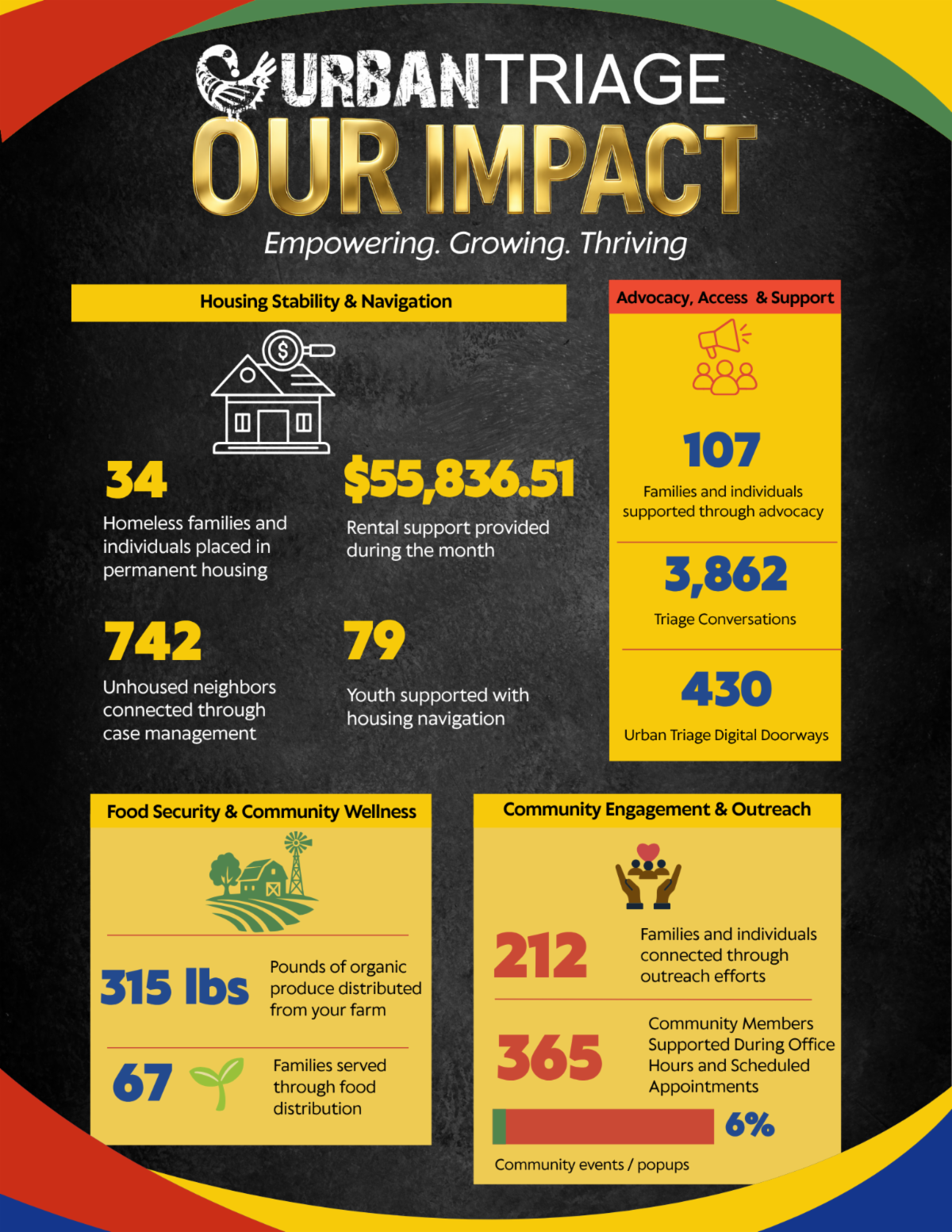
The impact highlighted below reflects Urban Triage’s work during May and June. The opening of this letter also holds what our community endured through July because our work and the conditions surrounding our people cannot be separated.
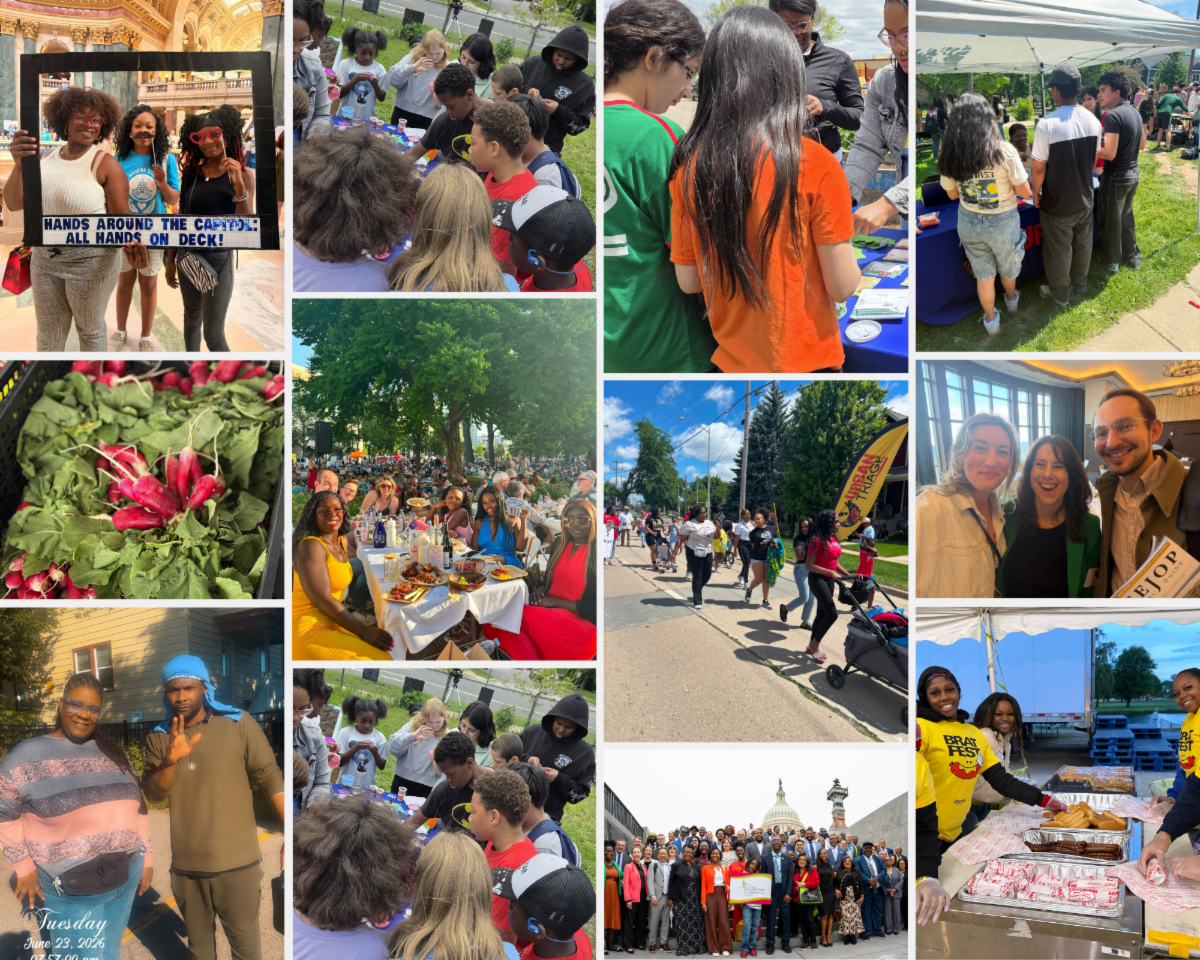
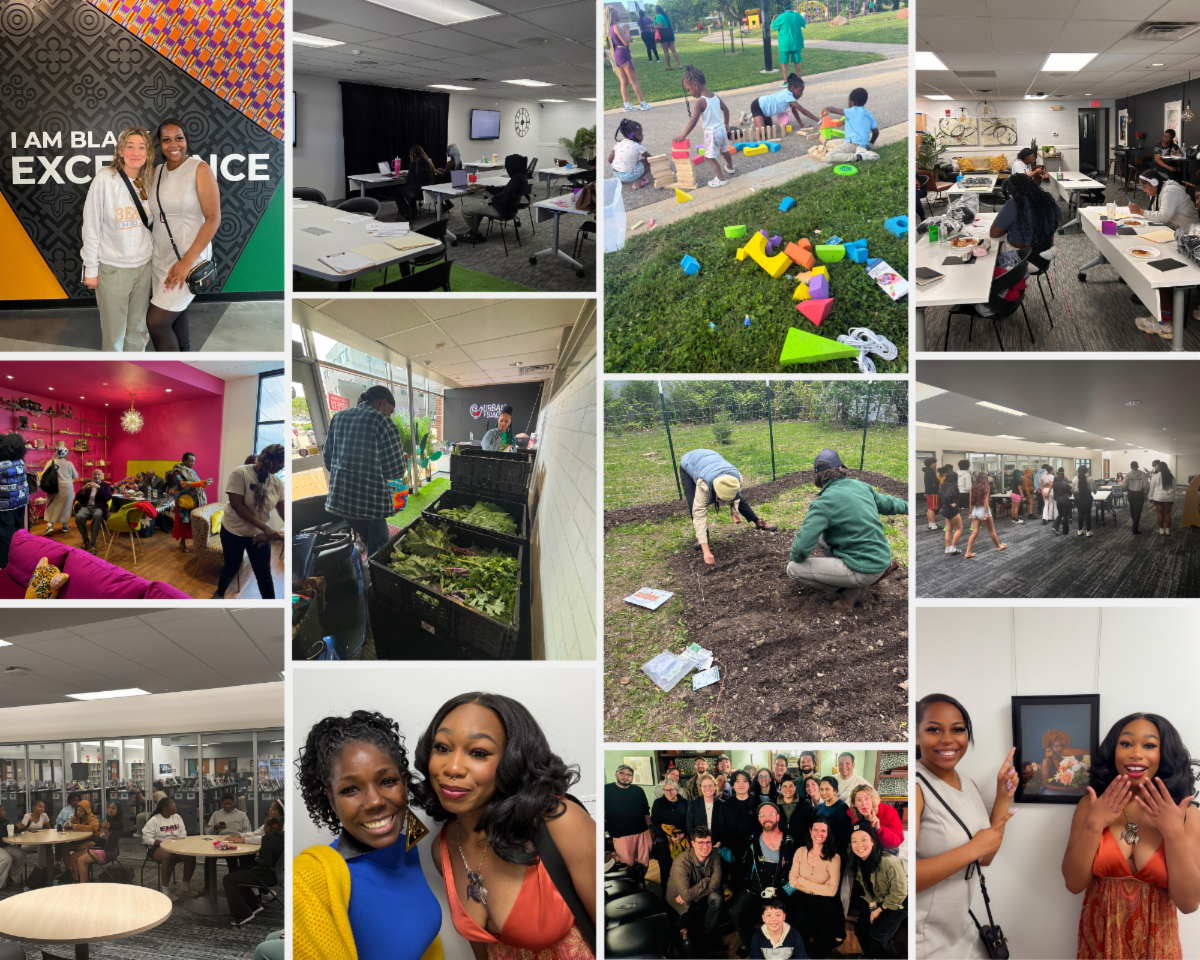
Here's some of what that building looked like during those sixty days.
The Golden Hour: Reclaiming Our Crown
We are still catching our breath. Still feeling the warmth, the music, the food, and the energy of something so much bigger than an event.
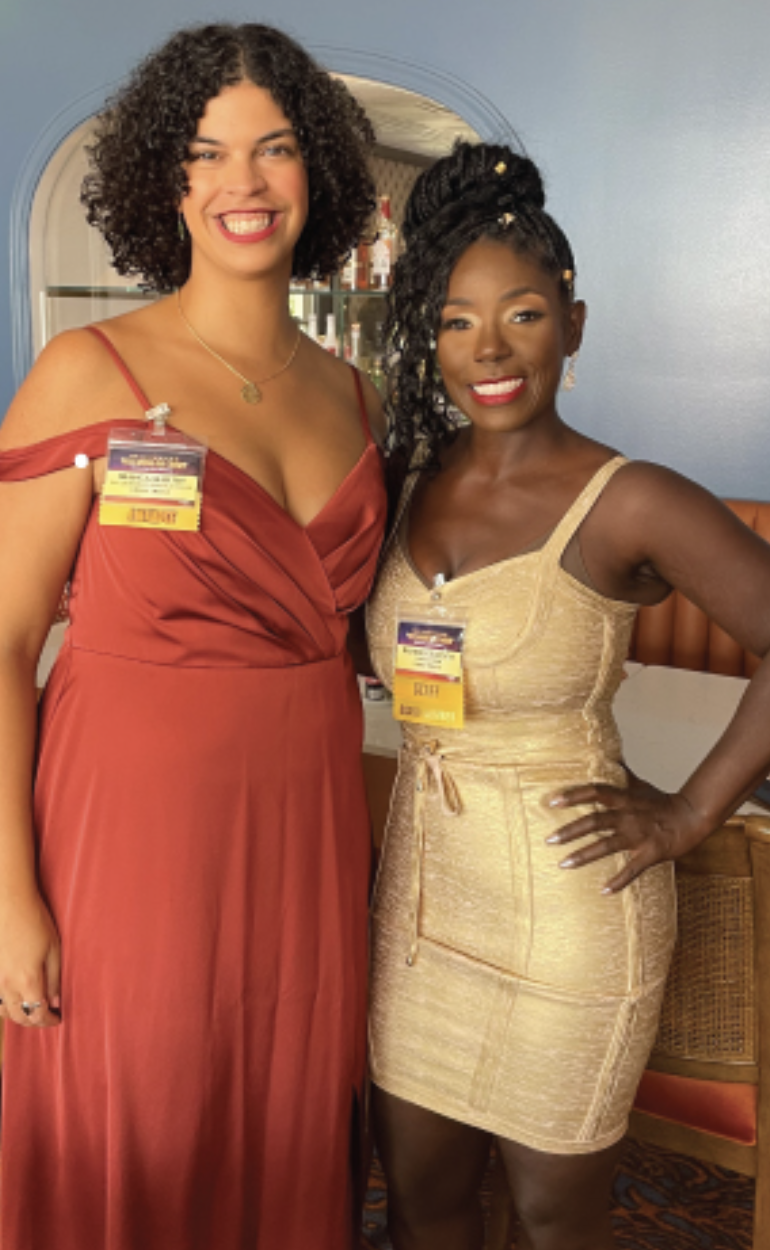
One hundred twenty-five community leaders gathered to celebrate Black excellence. During our Crowning ceremony, we honored two people whose work has shaped how Madison's Black community is seen and heard: Bianca Martin of City Cast Madison received the Reclaiming Our Voice Award, and Rob Chappell and Omar Waheed of Madison365 received The Golden Voice of Truth Award.
Thank you to every sponsor and guest who showed up. Thank you to my team for their hard work in pulling off something this beautiful.
Together, we raised $50,000 to sustain the programs, people, and community infrastructure that allow Urban Triage to keep housing families, feeding neighbors, creating opportunities, and showing up when our community needs us.
This is why Urban Triage exists.
Someone Saw Us
A neighbor recently nominated Urban Triage anonymously for a small community grant—unprompted and unasked.
We didn't go looking for this one. Someone in this community saw our work and decided it deserved to be lifted up. They may never know how much that act meant to us. That kind of recognition, rooted in the people who see our work and the community we actually serve, means more than anything with a corporate name attached to it.
Growing Community, One Harvest at a Time
I couldn't be prouder of our agriculture team. What they have built—free, locally grown produce available at multiple sites across Madison—is nourishing families every single week.
Free Produce Locations—Pick Up While Supplies Last
📍Goodman South Madison Library Community Fridge
2222 S. Park St. | Daily, during library hours
📍Little Tibet
1113 N. Sherman Ave. | Fridays, 12–8 PM
In partnership with Madison Area Food Pantry Gardens
📍Urban Triage Hub
2312 S. Park St. | Thursdays, 1–4 PM
Stop by, and please share this with your neighbors. More families deserve access to fresh, free food.
Looking Ahead: Harvest Festival 2026
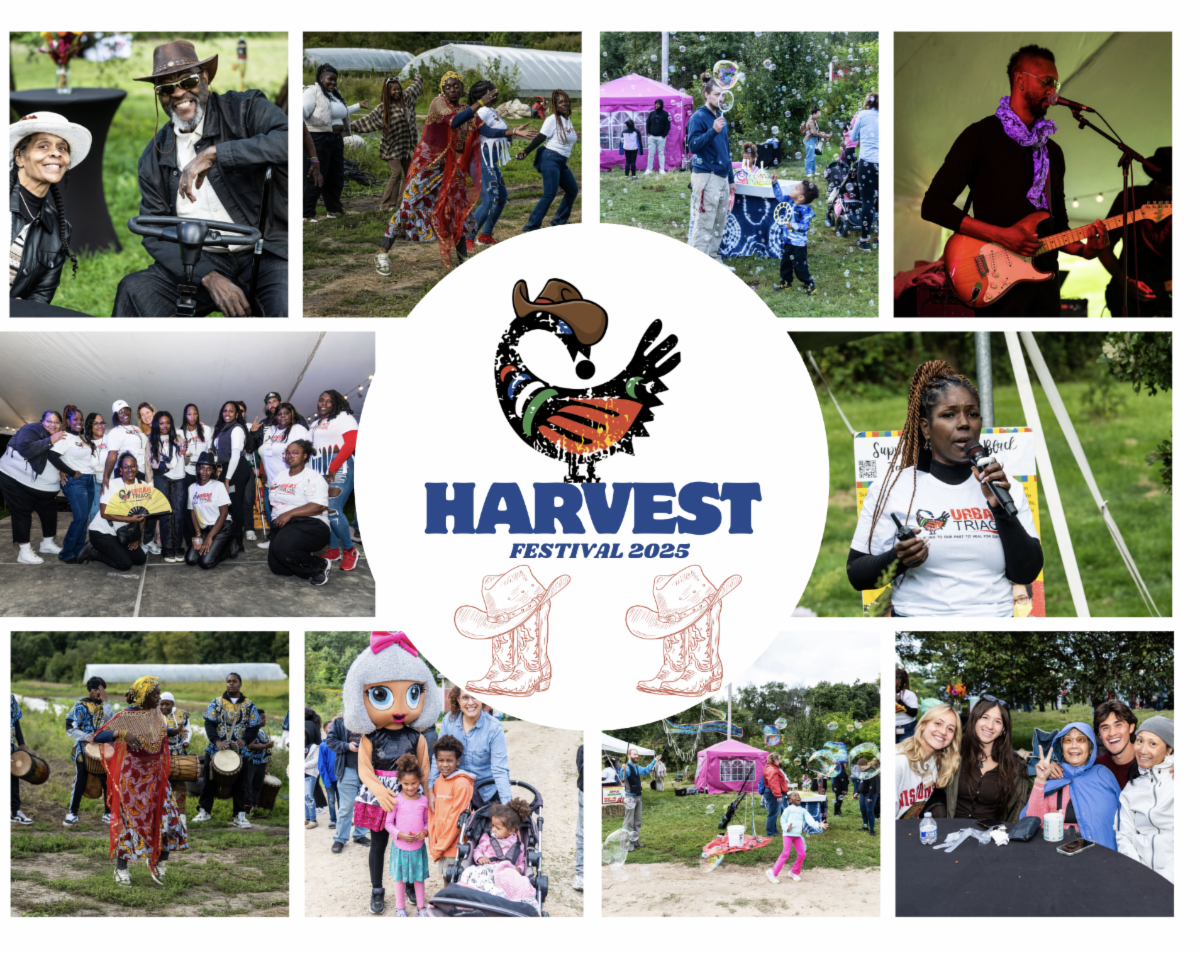
We're excited to invite the community to our FREE 5th Annual Harvest Festival on Saturday, September 19, 2026, from 3:00–8:00 PM at the Farley Center for Peace, Justice, and Sustainability, located at 2299 Spring Rose Road in Verona.
This year's theme, “More Than a Harvest: Black Soil, Bold Futures,” celebrates five years of community, agriculture, and impact. Join us for an afternoon of free food, live entertainment, family activities, and music as we celebrate Black joy and the power of growing together. We hope to see you there!
Before I Go
Taking care of our team is part of how we take care of you. Our office will be closed on the dates listed below while our staff completes Peer Support Training. This training is part of our continued investment in the people who hold our community and strengthens how we support the people who walk through our doors.
🗓️Office Closure and Training Dates:
August 25, 27–28, and 31
September 1, 3–4, 8, and 10
Numbers can't hold grief or joy, but they can show you what showing up looks like when we do it anyway.
The impact infographic that follows reflects Urban Triage’s work during May and June—the last sixty days of this reporting period—in full.
With grief, with rage, with gratitude, and with resolve,
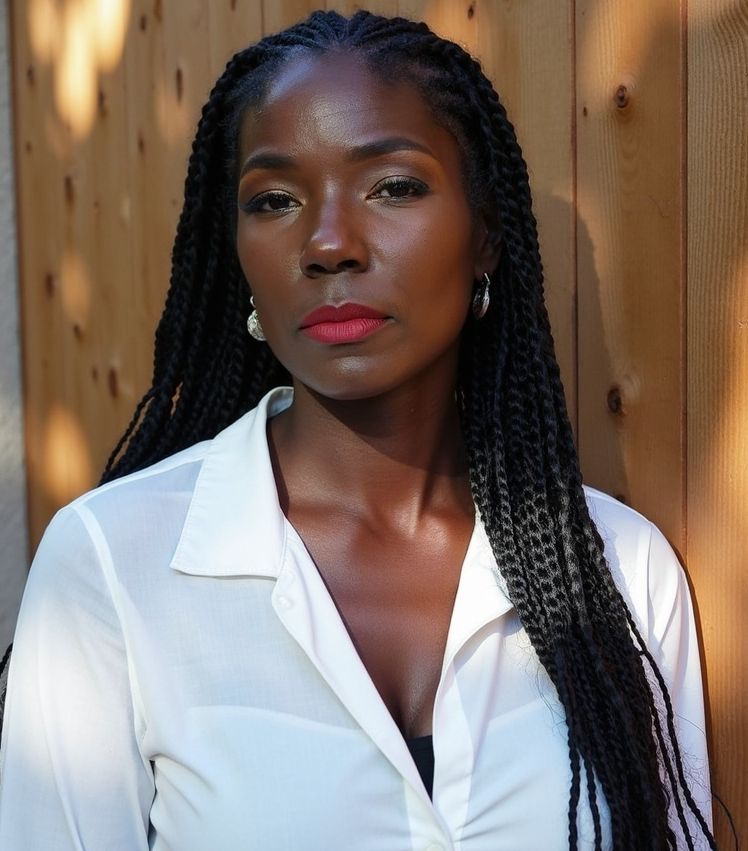
Brandi Grayson
Founder & CEO
Urban Triage, Inc.
|