|
Let Freedom Read!
By Catherine Weller
| |
|
Each year during Banned Books Week booksellers, librarians, and educators recognize the crucial role of free and open access to literature. While we have a year-round keen awareness of challenges to the freedom to read, we “celebrate” Banned Books Week to cast a bright light on books other people don’t want you to read and why.
When I wrote a Banned Books column for our 2016 newsletter, I speculated about changing the moniker “Banned Books Week” because challenges to the freedom to read had evolved. Well - ahem - I was wrong. The landscape of book challenges has changed yet again and we’re seeing more of them than ever. I’m not referring to a handful of parents submitting forms to have a book removed from library shelves or a school curriculum. Oh no, it’s much more than that.
In the past couple of years we’ve seen book challenges gathering steam in troubling ways. A 2022 Florida law instructs school districts to discontinue use of any books with “sexual conduct” in their pages. Arkansas Act 372 will hold booksellers and librarians criminally liable if books meant for adults or older minors could be accessed by younger people. This year Texas passed a law requiring booksellers, publishers, and other vendors to retroactively rate all books sold to school districts for sexual content using vaguely defined criteria and labels. Our own Utah State Legislature passed HB374 in 2022, a law designed to remove books in schools deemed to contain “pornographic content.”
All of the above legislation has all been challenged or modified. They clearly violate “…the First and Fourteenth Amendments by, among other things, compelling speech, imposing unconstitutional prior restraints, regulating speech with impermissibly vague and overbroad terms, imposing unconstitutional content-based restrictions…” (American Booksellers Association, 2023). At this point, all preliminary injunctions have been upheld by the courts in which they were filed. This is regardless of whether the ruling judge was appointed by a Democrat or a Republican. In Utah, the standards were so vague the legislature had to modify their legislation because the Bible was successfully challenged in Davis County. Why was the challenge successful? Because the legislature didn’t require a work be examined in context, enabling a person to cherry pick biblical passages to support their ban request. Now intent is clarified but a work still does not have to be reviewed with consideration to context. That is the case for all these laws and legislation being considered in other states.
The most troubling aspect of these laws is this is the government telling you what your children can and cannot read.
| |
|
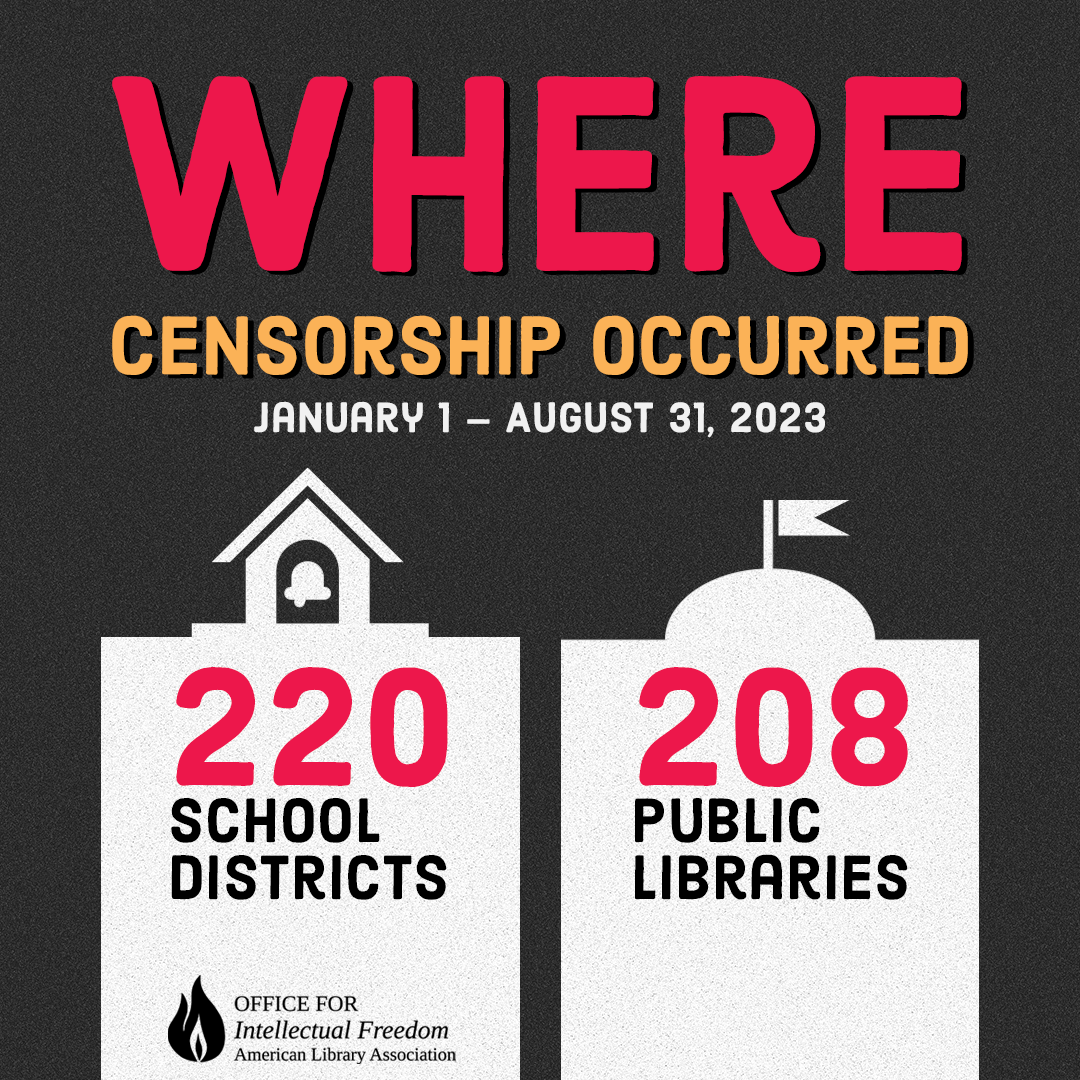
At the same time, school boards and libraries across the nation are experiencing unprecedented, highly coordinated challenges to books or types of books available to the reading public. They are similar to governmental attempts to tell people what they can read in that they almost all target certain types of books. Typically they’re works about or by people of color and/or the LGBTQ+ community. A PEN America study showed 30 - 41 percent of books challenged since 2021 contain characters of color or discussion of race. During the same period, a quarter to a third of banned books contain LGBTQ+ characters or themes. Presumably, the books are most often kid’s books because people are concerned about protecting the vulnerable in our society. Sometimes that is true. But in reality the books are mostly targeted because it is easier to inflame sentiments when discussing children.
Books and the ideas they contain are proxies in America’s current intense political polarization and resulting culture war. As the American Booksellers Association’s CEO Allison Hill wrote in her recent testimony to the US Senate Judiciary Committee,
| |
"These books are banned or challenged under the guise of not being “age appropriate,” but this ignores the fact that the books are written and published to help children navigate complex topics and are selected by trained professionals following set policy guidelines. Of course it is important to ensure that children are reading age-appropriate material. Nobody is better equipped to make these judgments than booksellers and librarians, who draw on years of experience and in-depth knowledge of literature to curate their shelves for their communities. We have no qualms with parental input, either, and believe a parent should be involved in their child’s education. That does not mean parents should be allowed to dictate what other people’s children are allowed to read. Yet in many instances across the country, a small group of would-be book banners would force their own preferences on the majority of parents who value a diverse selection of books to choose from." | |
|
|
To put a fine point on it, Weller Book Works believes the right of others to choose what anyone else – or anyone else’s child – reads stops at their front door. We also strongly believe governmental book bans have no place in the United States of America; that in a free society we explore ideas; that in reading and talking about difficult subjects we expose them to the light and struggle towards enlightenment and a better world. This doesn’t mean we think books should exist without criticism. Challenging ideas is everyone’s right. And so is choosing and reading books.
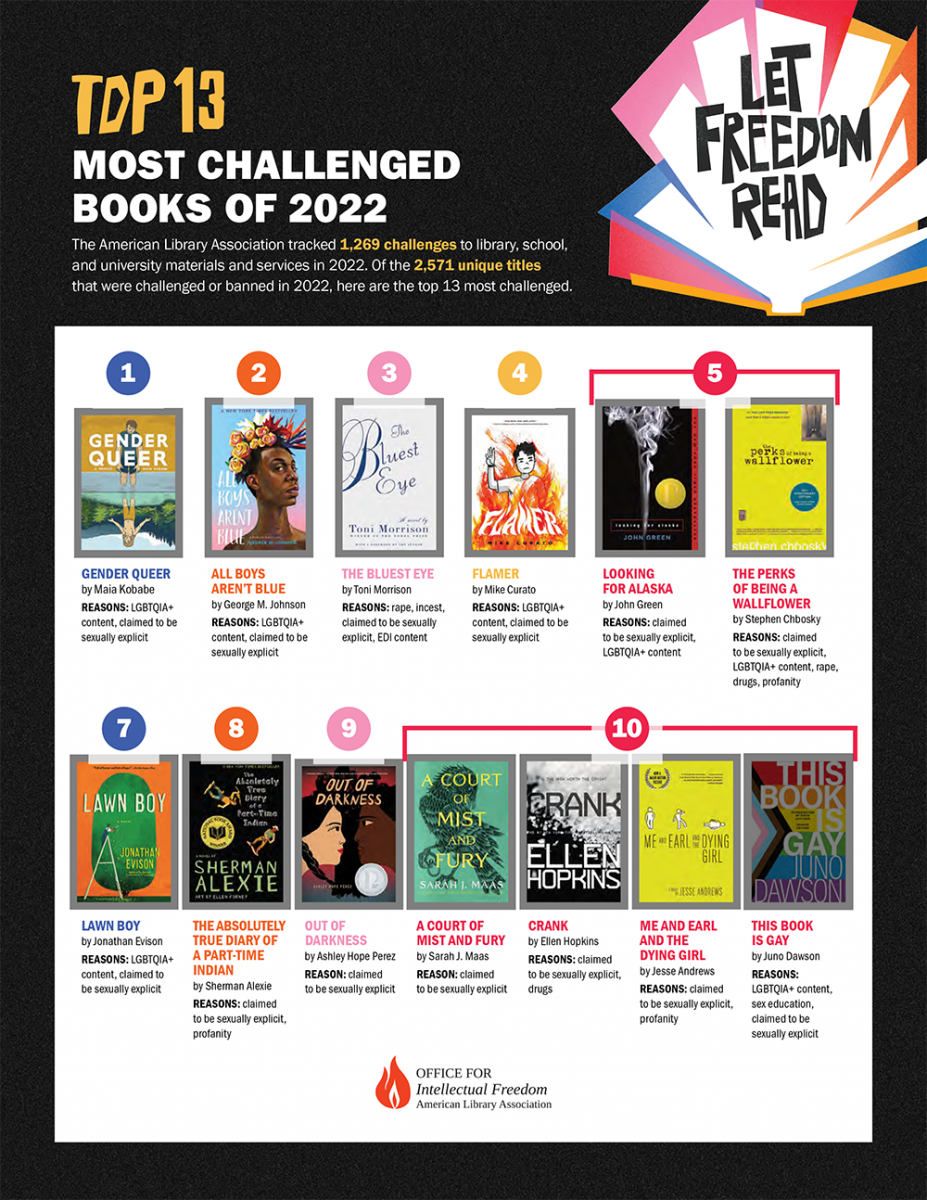
I urge you to go to bannedbooksweek.org for more information. You can also visit the American Library Association’s Banned Books page or their compilation of the Top 13 Most Challenged Books of 2022. Finally, join us in helping defend books from censorship on Let Freedom Read Day, October 7. You can contact a decision maker, support an advocacy organization, buy or check out and read a challenged book, or send a note of encouragement to an author whose work has been challenged.
As Aleksandr Solzhenitsyn – no stranger to censorship himself – wrote, “Woe to that nation whose literature is disturbed by the intervention of power. Because that is not just a violation against "freedom of print," it is the closing down of the heart of the nation, a slashing to pieces of its memory.”
| |
|
For the October 27th Collectors' Salon, Chrissy Nichols asks, "Who were you as a child and what did you read? Can you remember the excitement you felt learning to read a favorite book? The books we read as children shape the adult readers and collectors we might become.” October’s will be an interactive Salon. Educator, reader, and salon friend Chrissy Nichols invites you to bring a favorite book from childhood and tell us who you were as an early reader when you turned those pages for the first (or 100th) time. Bring a book that you loved as a child or young adult and join us for a group reminiscence, a gathering gathering.
Join us Friday, October 27. We start at 6:30.
This will be the last Collectors' Book Salon of 2023.
| |
RECEIVE 20% OFF WHEN YOU PURCHASE DURING JULY & AUGUST
| |
|
By Timothy Egan
Viking Press
Hardcover $30.00
Best Wellers' Price $24.00
Reviewed by Frank Pester
| |
|
“Those who cannot remember the past are condemned to repeat it.”
– George Santayana
The Historian Timothy Egan has once again written a book that comes alive on its pages. This time it is not only an engaging read, but a timely one. In a day when so many are pushing their agendas, we could learn from this book how easy it is for a dogma to infiltrate our society.
During America’s Jazz Age- the Roaring Twenties, a time of “Great Gatsby” frivolity- a uniquely American hate group rose to power, threatening our way of life: the Ku Klux Klan. Not the old Confederacy variety, but a group of wide encompassing hatred, not only persecuting Black people but also immigrants, Jews, and Catholics. Egan writes about the man who brought all this to being: D.C. Stephenson.
D.C. Stephenson blew into Evansville, Indiana pretty much unknown and poor, but realized his thirst for fame and wealth through the Ku Klux Klan. His plan was to go through the local churches, to drive in crowds and extract a fee. His Klan was oriented to the family and he hid their intentions by selling the public on Americanism. Stephenson propagated abstinence, yet he was a raving alcoholic; he preached virtue, but was a rapist. The Klan soon became accepted because they used certain social conditions to stir fear in the general populace. One was prohibition, which was seen as a crutch for the flood of immigrants coming into the country- Irish and Greek immigrants met and drank at their local pubs. Secondly, the liberation of women and the dawning of the flapper age. Thirdly, the great migration of Black people into the Northern states. The movie, Birth of a Nation, was seen by one out of every four Americans, and is called “the greatest racial propaganda film of all times,” by Egan. Black people in the film were portrayed as savage simpletons and a threat to white women. When a white woman is being attacked, it is a hooded Klan member who comes to the rescue.
At its height, the Klan’s membership numbered in the hundreds of thousands. Local law enforcement agencies, political offices, and religious leaderships were infiltrated and soon the Klan directed the law. One out of every three males in Indiana was a Klan member. Wanting the Klan to be family oriented, Stephenson created a Women’s Klan and even one geared for kids, known as the Ku Klux Kiddies. It is a dark period of History that Egan vividly portrays in his book.
Book reviews should be geared toward making the reader want to buy and read the book, so I am not going to go into the spoiler aspect of the subtitle of the book, just let me say that the woman who stopped the Klan experienced terrible events, being raped by Stephenson and throughout the trial she would not stop telling her tale. Madge Oberholtzer was a 28-year-old teacher and a Suffragette. She cut her hair in a bob and attended speakeasies, and when her job was on the chopping block, she went to Stephenson for help. Stephenson called the trial a “Witch Hunt,” sound familiar? Even when he was going to court for this case, happening during an election year, politicians who claimed Klan ideas were being elected in droves. It was her final testimony which convicted Stephenson and exposed the agenda of hatred which drove the Klan.
This book will draw you in and give you a glimpse of American History which should not be forgotten. It’s a dark work, but there is hope in the end, just as there is hope for us in our times.
| |
|
Edited by Shane Hawk and Theodore C. Van Alst Jr.
Knopf Doubleday Publishing Group
Paperback
$17.00
Review by Name Alechia Brulé
| |
|
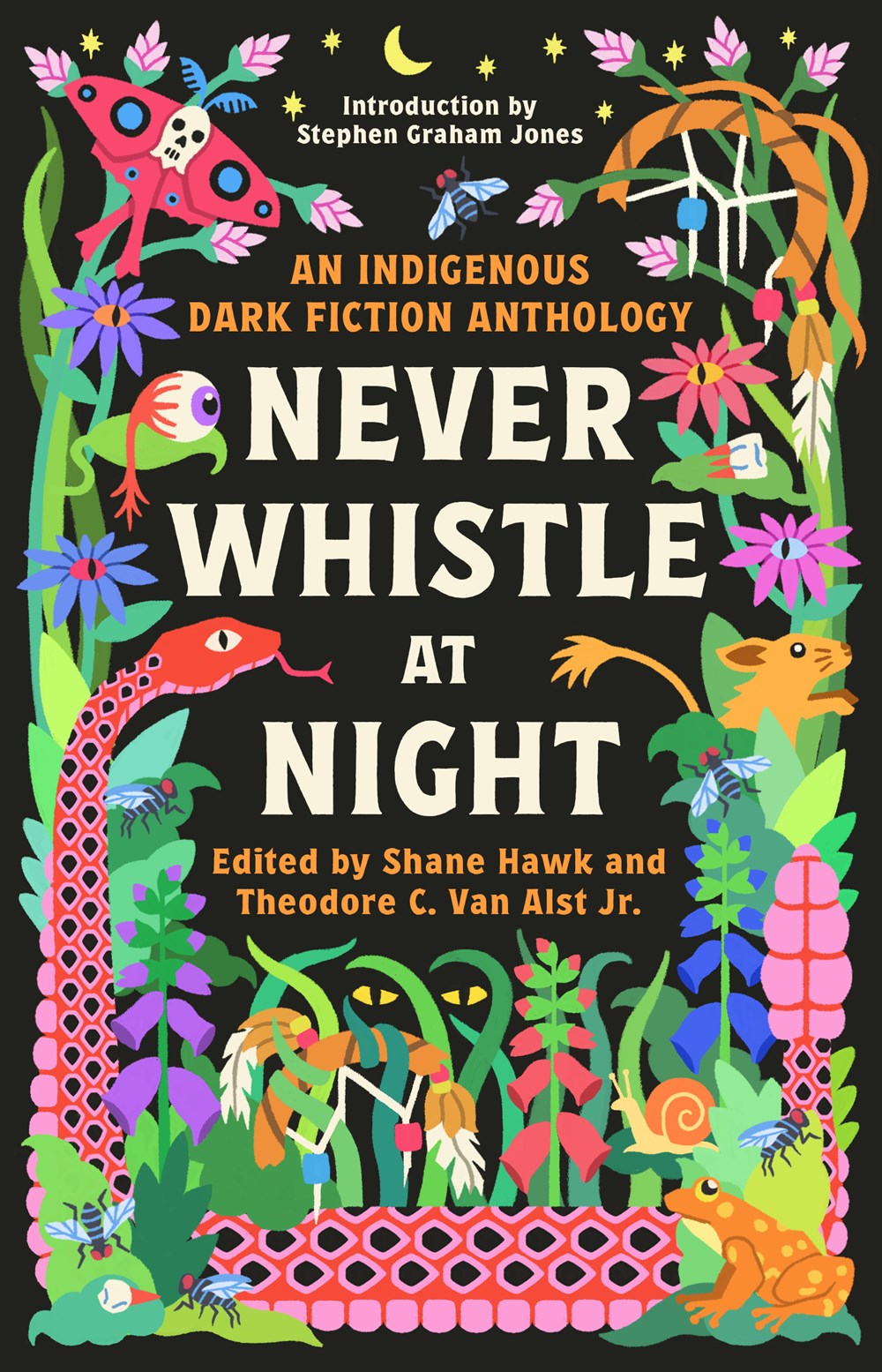
Never Whistle at Night: An Indigenous Dark Fiction Anthology should be on your radar. This book is great for Indigenous Heritage Month, short story enthusiasts, speculative fiction readers, spooky season lovers, folk tale fans, and thriller consumers. I was impressed by this book as each tale feels like a heavy-hitter. Even the foreword by Stephen Graham Jones gave me goosebumps with advice like, “don't look back at all.” Both an ominous warning and solid general life advice. The opening was an impactful start to an anthology that never let up on storytelling strength. These authors, both prominent and debut, expertly craft mini worlds with unique atmospheres, multidimensional characters, and heavy consequences. With undead, spirits, serial killers, wendigos, curses, racists, haunted dolls… there's something lurking on every page. There is a bit more emotion than in traditional horror, as most stories are melancholic, with a sprinkling of humor. Themes of folklore, traditions, and colonialism are all found throughout this collection, however, for me, the main takeaway is talented writing that snapshots the human condition. How we handle pressure, disappointment, fear, trauma, survival, failure, loss is all explored here.
Whatever you do, do not look back, and never whistle at night.
| |
The Afternoon I Fell In Love with Armistead Maupin | |
|
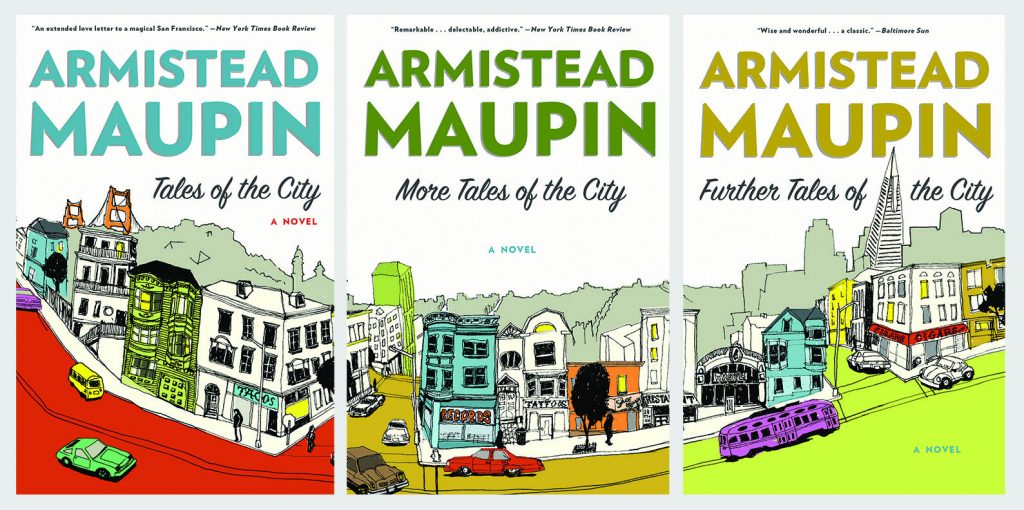
Tales of the City
By Armistead Maupin
Harper Perennial
Paperback
$16.99
Reviewed by Wade Brown
| |
|
The year was 1991. The place was West Hollywood, California. The location was A Different Light Bookstore on Santa Monica Boulevard. I walked in to my first LGBTQ+-branded retail space, excited in my newly-embraced orientation and eager to explore. Arriving at the front counter, I said, “Hi! I just came out of the closet. What should I read?” Without hesitation, the cute young man behind the counter said “Tales of the City by Armistead Maupin. It’s required reading.” I bought the book right then and there.
The cute young man was right.
Maupin’s valentine to a magical San Francisco began life as serialized fiction in the San Francisco Chronicle newspaper in the mid-1970s. As of this writing, the Tales saga has grown into a nine-novel series that’s inspired four award-winning television miniseries. The story of Mary Ann Singleton, a naïve young woman who moves from Cleveland, Ohio to the City by the Bay and is shocked and delighted by what she finds there has enthralled countless fans worldwide.
In the novel, the year is 1976. It’s post-Stonewall Uprising, pre-AIDS pandemic, and the sexual revolution is in full swing. Mary Ann finds a place to live at the enchanted apartment house at 28 Barbary Lane and meets her fellow tenants – friendly neighborhood homosexual Michael (“Mouse”) Tolliver, cynical but loyal Mona Ramsey, and handsome but womanizing Brian Hawkins. Benignly presiding over all is Barbary Lane’s landlady, the majestic Mrs. Madrigal. Mary Ann’s adventures with these characters and many others uncover secrets, create new ones, take her places she never imagined existed, and change her utterly.
The nine novels that comprise the Tales saga were published over the span of 1978 to 2014 and were written contemporaneously, so they are time capsules of the periods they are set in. Yet Maupin’s keen sense of human nature and longing render the stories universal rather than dated. The reader finds themselves relating strongly to the characters while marveling at the period details captured in the pages.
I’ve loved these books since the moment I read the iconic first line of the first book: “Mary Ann Singleton was twenty-five years old when she saw San Francisco for the first time.” Mary Ann’s quest to discover who she is, who she wants to be, and her journey to become that person, were captivating to me as a newly-out gay man. Now, as I rapidly approach “seasoned elder” status in the LGBTQ+ community, the story of her self-discovery is a cherished, sacred text.
| |
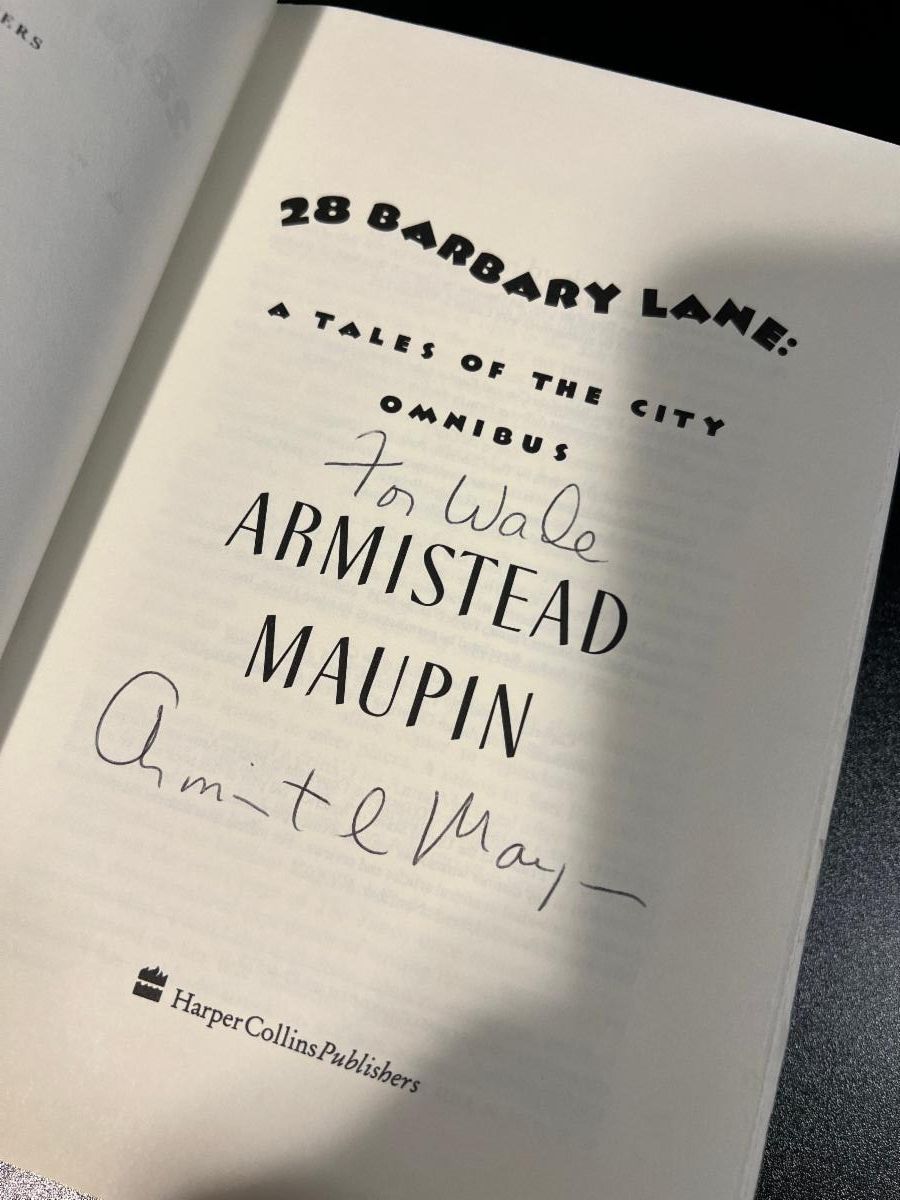
Armistead Maupin’s novels have been companions to me during my life. I’ve grown up with his characters and love them dearly. He is a supremely gifted storyteller who has been compared to Dickens, Wilde, and Chekhov. I treasure his work and revisit it frequently. When I had the rare opportunity to meet him at a book-signing he was warm and friendly, and took several minutes to speak with me. Those minutes with him will always be a fond memory, and the copies of his books he inscribed for me will always have a cherished place on my bookshelf. A new novel is coming in 2024, and I’ll be first in line to buy it. And I know that that afternoon, I’ll fall in love with Armistead Maupin all over again. | |
|
|
By Armistead Maupin
Harper Perennial
Paperback
$15.99
Reviewed by Wade Brown
| |
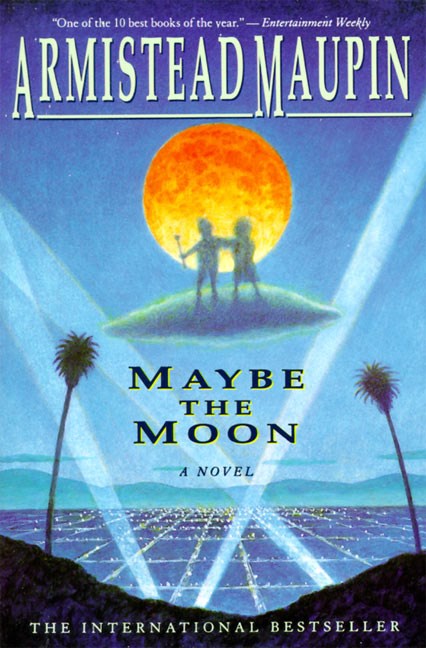
Maupin’s first non-Tales novel, published in 1992, is the story of Cadence Roth. Cady is an actress and singer, who starred in one of the biggest box-office hits in Hollywood history. She is also a little person, measuring 31 inches tall, and was completely invisible inside the costume she wore playing the part. Armed with that blockbuster credit on her resume, she tries to get someone, anyone, in Hollywood to cast her in a part that doesn’t involve her being hidden inside a costume and/or playing a magical creature. Her struggle to be seen (in more ways than one) is hilarious and heartbreaking. The novel, comprised of journal entries written by Cady, is written in a voice that’s startling in its originality and tenderness. It’s impossible not to fall in love with Cady. My love for her and this book is boundless. Maybe the Moon is my favorite novel of all time. | |
|
By Armistead Maupin
Harper Perennial
Paperback
$15.99
Reviewed by Wade Brown
| |
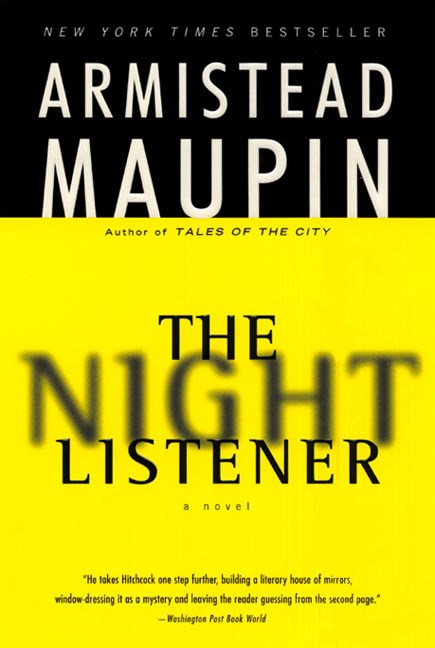
The author’s darkest novel, The Night Listener, was published in 2000. Gabriel Noone, a blocked writer and radio host in the process of separating from his partner of ten years, is contacted by a 13-year-old fan. Pete Lomax is a young man with a tortured past, being the victim of years-long sexual abuse at the hands of his parents and their friends. Now escaped from that life and adopted by a kindly nurse, Pete has written a book about his experience and wants his idol, Noone, to read it. A warm friendship grows between them, with both Noone and Pete becoming more and more dependent upon it. But when Noone’s partner learns that Gabriel and Pete have never actually met in person, he questions whether the young fan actually exists. Fearing the worst, Noone embarks on a feverish quest for the truth. Maupin’s affinity for the works of Alfred Hitchcock is nowhere more centered than in this novel. The Night Listener is a thriller of the mind – a story about how the way we perceive other people reveals more about us than about them. | |
|
Click here for our October events newsletter.
And, as always, view our events calendar to see all of our upcoming events.
We host both virtual and in-person events, and we look forward to seeing you soon.
| |
|
Come visit us!
SUNDAY 12-5
MONDAY-THURSDAY 10-8
FRIDAY & SATURDAY 10-9
| |
|
Can’t make it to the store?
Support your local indie from home!
Order by phone or online, then pick up at the store or the curb! We also ship!
| |
|
Give us a call at 801-328-2586.
Shop new books on our website.
Browse our entire inventory of new, used and rare books on Biblio.com.
Listen to audiobooks from Libro.fm.
Read ebooks from Kobo.
| | | | |