|
|
WE RISE & WIN Together
We the Descendants:
Black History and Democracy
| |
|
"But one thing is sure and that is the fact that since the fifteenth century these ancestors of mine and their other descendants have had a common history; have suffered a common disaster and have one long memory."
— W.E.B. Du Bois
"I’ve heard several comments from people that was talking about ‘with the people. For the people. And by the people.’ Being a Black woman from Mississippi, I’ve learned that long ago that’s not true. It’s ‘with the handful. For a handful. By a handful.’ But we going to change that, baby. We are going to change that because we going to make democracy a reality for all of the people of this country."
— Fannie Lou Hamer
| | | | |
|
Legacy and Liberation
By Somava Saha, WE in the World
Over the last year, together with the Institute for Healthcare Improvement and People Power Health, WE in the World supported four convenings designed to help us reflect on what ancestors who have gone before us have to teach us about being better ancestors in this moment.
We learned how John Lewis's Voter Rights Act not only safeguarded voting rights for Black people, but opened the doors for immigration and created a nation of opportunity. We learned about how Fannie Lou Hamer safeguarded not only the right to vote but built cooperative models to advance economic justice. We reflected on the role of the Black Panthers in reimagining new systems--and how these led to our modern day paramedic systems and school lunch programs.
Black civic leaders taught us--and continue to teach us--how to build a more perfect union with courage and perseverance, how to connect and build solidarity by connecting across movements and vital condition pain points across communities. This issue focuses on the legacy of Black leaders to advancing civic health in the US and around the world--and invites us to consider how Black ancestors and Black history are part of our collective history.
| | | | |
|
Three Ancestors Who Show Us How to
Transform Pain to Power
| | |
John Lewis
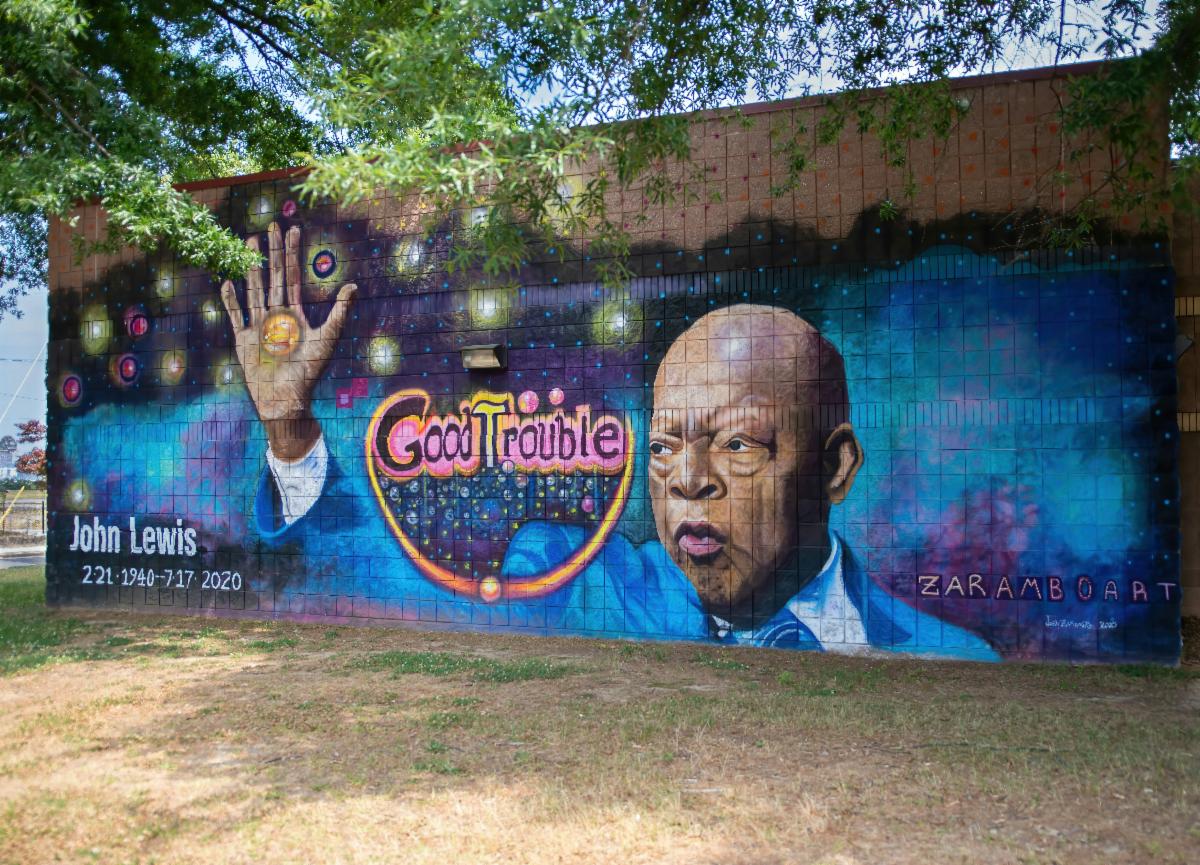
John Lewis teaches all of us how to build on legacy, to create good trouble when it matters, to persist and endure in the long road to justice. The Voting Rights Act of 1965, considered by many to be the most significant piece of civil rights legislation in recent history, prevented the imposition of limits on voting based on racial discrimination, outlawed literacy tests and other mechanisms enacted by jurisdictions to discriminate against poor and racially marginalized groups, and required bilingual ballots to be provided. It provided a critical check and balance to any proposed measure of state-based discrimination.
| |  | |
Fannie Lou Hamer
This animated short describes how Fannie Lou Hamer turned her pain (from a hysterectomy she didn't agree to after a pregnancy loss, to losing her spot in school, to being beaten in a jail) into economic and civic power for her community and every community. By providing food and housing and education support to Black communities, the Freedom Farm Cooperative she founded gave communities more freedom to participate in action for democracy and justice. Fannie Lou Hamer showed us how systems of injustice operated then and now--and how we can all reimagine to build the world we want.
Consider how these same methods might apply to the history we are all witnessing today.
| | |
Video: CBS Sunday Morning | |
Rev. Jesse Jackson
In 1988, the Reverend Jesse Jackson ended his outsider campaign for president with a stirring speech for the history books: "We must never surrender. America will get better and better. Keep hope alive! Keep hope alive! Keep hope alive!"
In a decade when America was turning against big government, Jackson ran on a message of economic support and faith-based compassion for the working class and poor of all backgrounds. He called it his "Rainbow Coalition."
Although Jackson fell short of the Democratic nomination that year, and in an earlier race in 1984, his two campaigns produced a surge of new voter registration, and received more than 10 million primary votes. Read the full article here.
--- Excerpt from "Remembering The Rev. Jesse Jackson, an American original"
| | | Rev. Dr. Otis Moss III, senior pastor of Trinity United Church of Christ in Chicago, Illinois, speaks about how the current enforcement practices, particularly action by ICE, echo past racial injustices. | | | | |
Drawing on the Legacy of Black Leaders and Liberation Movements Around the World | | |
The Long March to Freedom
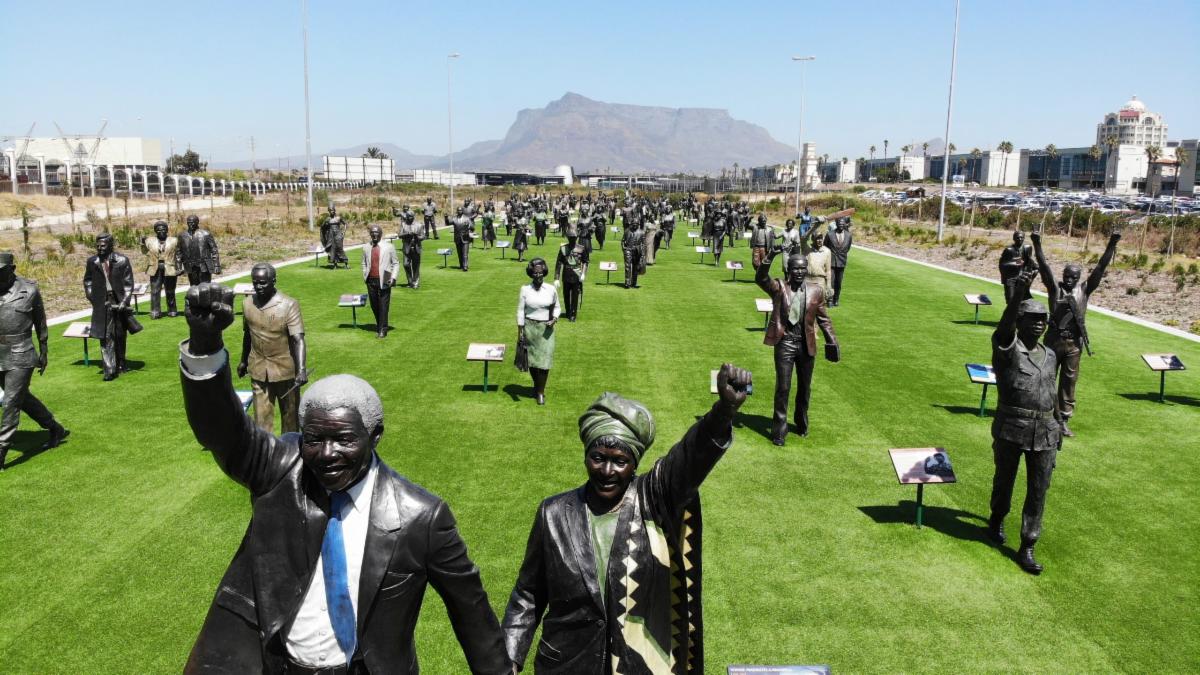
How do you tell the story of a 350-year journey of liberation? The Long March to Freedom exhibition in Cape Town, South Africa, does it through 100 life-size bronze statues honoring figures from South Africa and around the world who took part in the struggle for freedom and democracy in South Africa from 1652 to now.
| | | | | |
|
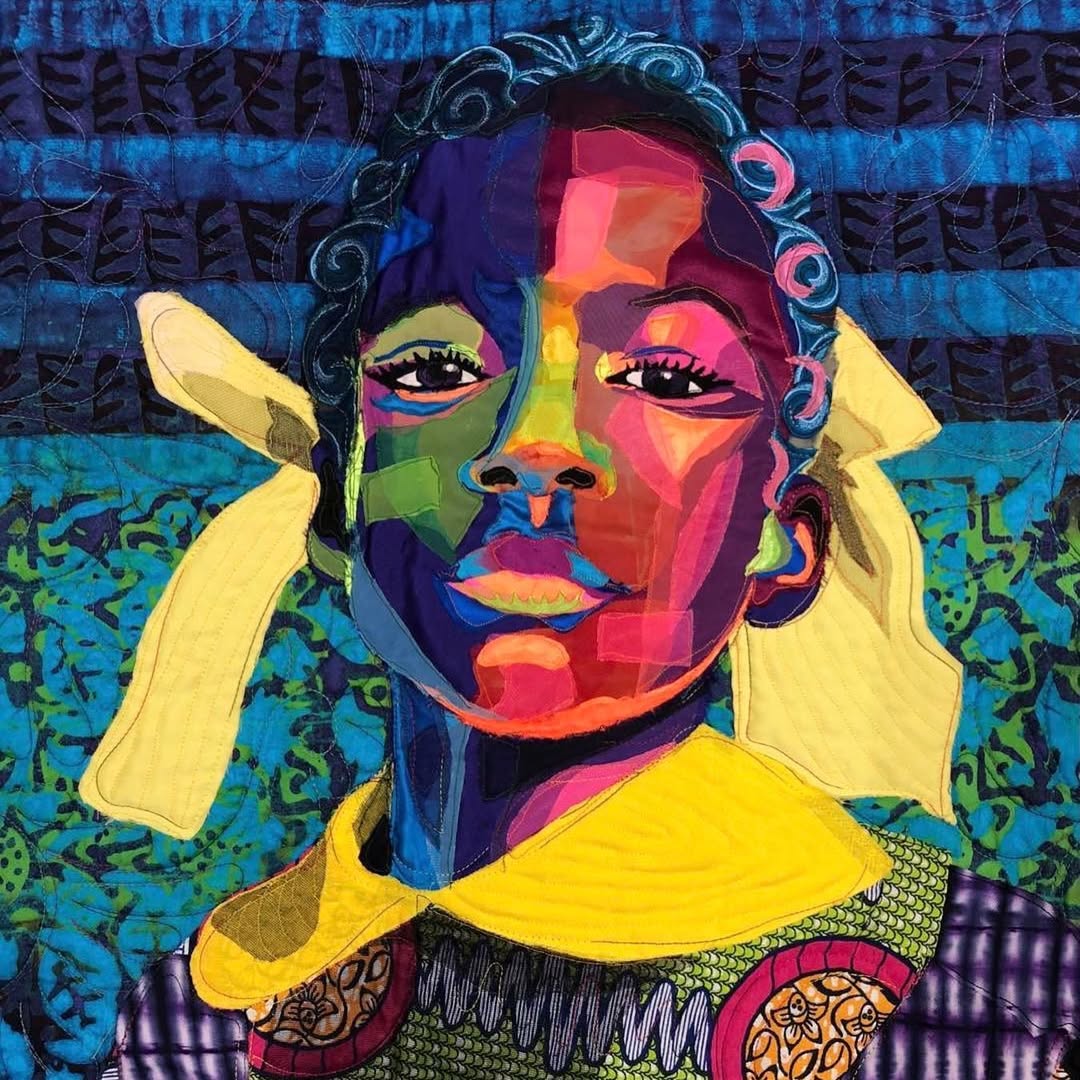
Bisa Butler exclusively presents the Black figure, using personal and historic images as the basis for her portrait quilts.
About her focus on Black people and their narratives, she says:
“I never want my artwork to show my people in a bad light. We are people who’ve come a long way. We do struggle still. There’s still a lot of social ills that are affecting my people, so I want to address that, but I also don’t want this paternalistic view, like ‘oh poor them.’ I’m not interested in that. I’m more interested in seeing ‘look what we can do.’
--- Excerpt from "Bisa Butler’s Portraits: Representation in and for 2020" by Susan J. Musich, Sixty Inches from Center
| Image: Bisa Butler. The Princess, 2018. Collection of Bob and Jane Clark. © Bisa Butler. The textile piece portrays a young girl with various patterns and bright colors making up limbs, dress, face, and hair. | | | | |
| |
The People's Score: A Proposed Methodology to Score Federal Legislation for Fairness
Source: Urban Institute and PolicyLink
The People’s Score works to establish the foundation for a new legislative scoring approach. By assessing how well proposed bills could improve fairness in outcomes, we support an accountable, responsive democracy.
| | | | |
chromatic.black: Radical Imagination and Storytelling for Social Transformation
The artist-activist collective chromatic.black uses imagination and storytelling approaches rooted in Black radical tradition and abolitionist frameworks to ignite our ability to envision and architect new realities.
| | | | | |
|
|
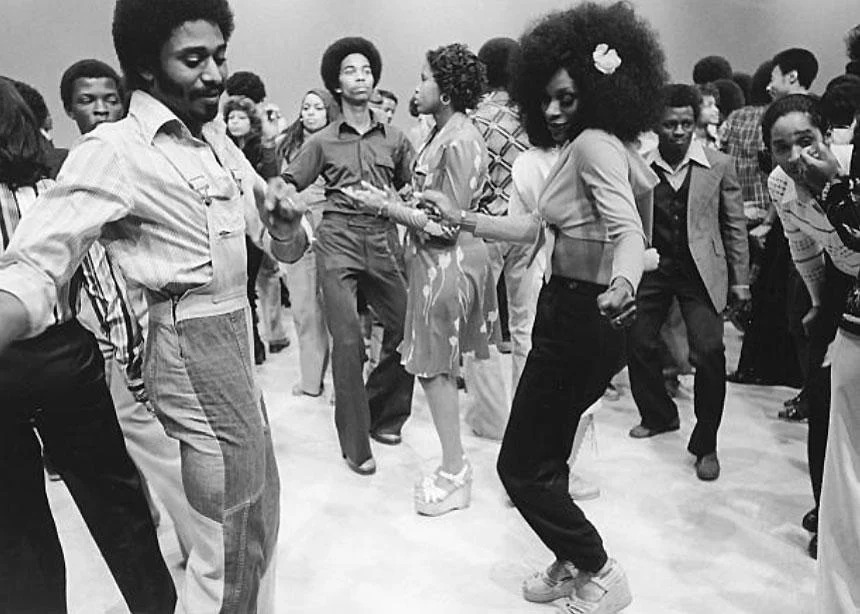
Soul Train
This televised musical program featured in-studio dancers showcasing the latest moves. The show brought African American cultural expression into millions of non-black households. Photo circa 1970.
Credits: Michael Ochs Archives via Getty Images
| | |
Black is Beautiful: The Emergence of Black Culture and Identity in the 60s and 70s
Source: NMAAHC
The mid-1960s saw a surge of appreciation and commitment to black history and culture among black people—not only in the US, but across Africa, the Caribbean and in Europe. At the heart of this surge, the phrase “black is beautiful”.
More than a catchphrase, “black is beautiful” became a philosophy that translated the ‘embrace of black culture and identity’, black history as ‘a worthy legacy’, pride in black achievement, and the emotional and psychological well-being of black people. It was a cultural revolution that wove into most major aspects of black people’s lives at the time, and its legacy endures today
| |
The Black History of Public Health: From Legacies of Racism and
Resistance to Futures of Equity and Justice
Source: Community Commons
| | |
"Just like individual health is shaped by inherited genetics and sociocultural patterns, community health is shaped by the cultures, perspectives, practices, and systems we collectively inherit from our pasts. In the United States, our cultural inheritance—legacies passed down through generations—includes deep-rooted structures of violence and hierarchies of racialized power that pre-date the U.S. itself. Our cultural inheritance also includes legacies of resistance, strength, resilience, and leadership that transcend oppression and offer solutions to some of our nation’s most entrenched problems." - Serin Bond-Yancey , Community Commons
| | | | | |
| | |
The history of Black History Month, one hundred years in
Source: Code Switch (NPR)
In this podcast, historian Jarvis Givens unpacks his new book “I’ll Make Me A World: The 100-year Journey of Black History Month” and highlights the radical intention behind the design of Black History Month—not simply learning some fun facts about famous African Americans, but “as an opportunity for Black communities to learn about the aspects of their history that had been downplayed, diminished, or even actively suppressed.”
| | | | |
Get Involved: From Then to Now | |
| | | |
|
‘Brightness in Black’: your stories for Black History Month
Source: Story Corps
History is alive and taking place around us every day. Instead of seeing history as a thing of the past, what if we took part in making history by contributing our own stories to a ‘dynamic portrayal of Black life in America for generations to come’?
This is your invitation from Story Corps this Black History Month.
| | | |
Black History Month Resource Guide for Educators and Families
Source: Center for Racial Justice in Education
“At Center for Racial Justice in Education, we believe that the histories, futures, stories, and voices of Black people should be centered, honored, and uplifted in school curricula every day. We also acknowledge the importance, relevance and origins of Black History Month… As we enter February, the Center for Racial Justice in Education is providing resources to be used beyond the scope of this one-month.”
| | |
Reimagined
‘Reimagined’ is a weekly newsletter by magician, speaker, author and equity activist Nicole Cardoza “highlighting news, stories, conversations and actions to reimagine how we live, work and stay well.”
| | | | |
| |
| |
| |
| |
|
Center for Hispanic Policy, Research, and Development (CHPRD)
Funding: up to $75,000
Deadline: February 25, 2026
Overview:
The Center for Hispanic Policy, Research, and Development (CHPRD) just opened FY 2027 grant opportunities in New Jersey, with awards up to $75,000 across categories like Hispanic entrepreneurship, workforce development, youth investment, community services, and health and wellness.
The application deadline is February 25, 2026, at 1:00 PM ET via SAGE.
| | | |
Funding: $17,000
Deadline: March 4, 2026
Overview:
The Foundation for Louisiana is seeking an Evaluation Consultant to conduct a summative evaluation of its Truth, Racial Healing, and Transformation (TRHT) initiative, a multi-year effort supporting racial justice, healing, and community leadership across New Orleans and Baton Rouge.
This six-month contract ($17,000) involves designing an evaluation framework, facilitating stakeholder reflection, and capturing stories and lessons from grantmaking focused on healing justice, narrative change, and movement-building.
Evaluators with experience in equitable evaluation, racial justice initiatives, and participatory or community-engaged methods are especially encouraged to apply. Priority will be given to Louisiana-based consultants.
| | | |
LOIs due: March 27, 2026
Overview:
Letters of Interest are now open for Facing Change: Sustainable Pathways, a new two-year grant program supporting sustainability, capacity, and resilience for small nonprofits in Worcester and Worcester County. The program offers unrestricted, multi-year funding plus facilitated peer cohorts for community-rooted organizations with budgets under $500,000. LOIs are due March 27—don’t miss this opportunity to invest in your organization’s long-term stability
| | | |
Funding: $50,000
Deadline: March 31, 2026
Overview:
Know an individual leader doing bold, community-rooted work in the U.S. who hasn’t gotten the recognition (or funding) they deserve yet?
The Robert G. Wilmers Integrity Prize is offering a $50,000 award to an individual advancing the greater good across fields like social justice, education, environment, law, medicine, nutrition, and more (plus two $5,000 finalist prizes).
Applications are due March 31, 2026 at 9:00 pm ET.
| | | |
Funding: $50,000
Deadline: Rolling
Overview:
The Foundation for a Healthy High Point offers free grant writing support to eligible nonprofits serving Greater High Point (High Point, Jamestown, Archdale, and Trinity) that have identified an external funding opportunity of at least $50,000 aligned with social determinants of health and upstream solutions. Applications are rolling, decisions are made within two weeks, and if approved, the Foundation pays the grant writer directly, removing one of the biggest barriers to pursuing large state, federal, or national foundation grants.-
Eligible organizations must:
• Be a 501(c)(3) for at least 3 years
• Serve High Point, Jamestown, Archdale, or Trinity
• Be pursuing a grant outside Guilford County of $50,000+
• Align with focus areas like healthcare access, economic stability, housing, education, and community conditions
Applications are accepted year-round, reviewed on a rolling basis, and organizations are typically notified within two weeks. This is an especially powerful opportunity for small and mid-sized nonprofits that don’t have full-time development staff but are ready to go after transformational funding.
| | | | | |
| Well-Being and Equity In The World Institute252 Daniel Webster Highway #1017 Nashua, NH 03060 US | | | | |