|
Our Company | Contact Us | FAQs | Privacy Policy
Securities offered through LPL Financial, Member FINRA/SIPC. Investment advice offered through Stratos Wealth Partners, a registered investment advisor. Stratos Wealth Partners and Weave Wealth Partners are separate entities from LPL Financial.
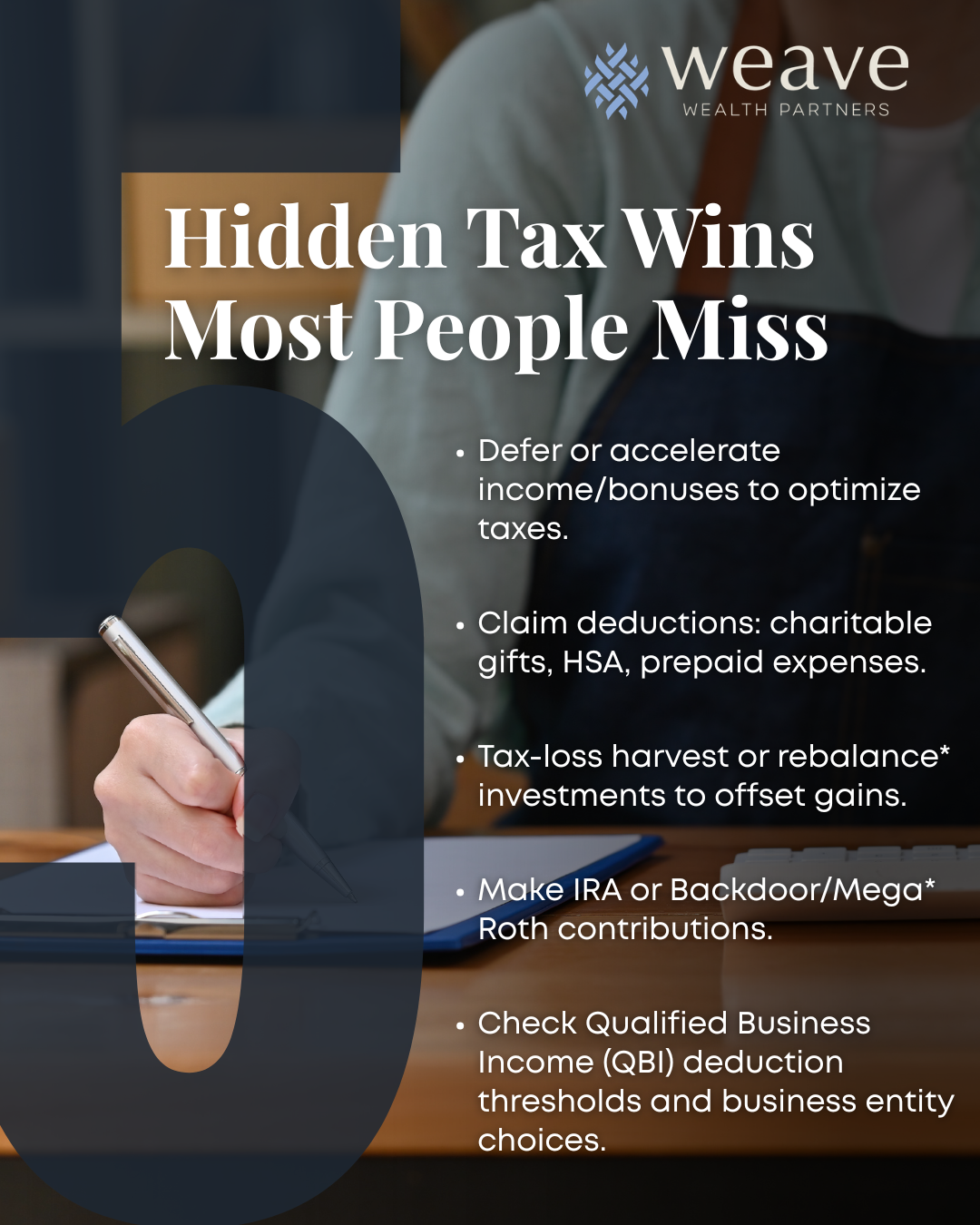
*All investing involves risk including loss of principal. No strategy assures success or protects against loss. Rebalancing a portfolio may cause investors to incur tax liabilities and/or transaction costs and does not assure a profit or protect against a loss.
A Roth IRA conversion - sometimes called a backdoor Roth strategy - is a way to contribute to a Roth IRA when income exceeds standard limits. The converted amount is treated as taxable income and may affect your tax bracket. Federal, state, and local taxes may apply. If you're required to take a minimum distribution in the year of conversion, it must be completed before converting.
To qualify for tax-free withdrawals, you must generally be age 59½ and hold the converted funds in the Roth IRA for at least five years. Each conversion has its own five-year period, and early withdrawals may be subject to a 10% penalty unless an exception applies. Income limits still apply for future direct Roth IRA contributions.
This material is for informational purposes only and does not constitute tax, legal, or investment advice. Please consult a qualified tax professional regarding your individual circumstances.
|