November 20
Kindergarten Information Night (for parents of second-year Primary students)
5-6 p.m.
Great Room
November 21
Lower Elementary (6-9) Information Morning (for current kindergarten parents)
9 a.m.
Learning Commons
WMS Family Involvement Group Third Thursday Nature Walk
3:25 p.m.
WMS Woods (meet in Peace Park)
November 26
Grandfriends' Day
Classroom start times - 11 a.m.
November 27
Thanksgiving Break
November 28-29
Thanksgiving Break
Building closed - no classes or child care
December 3
Giving Tuesday
December 3-5
Celebration of Reading
Crafts and read-alouds after school; books available for purchase all day (7 a.m.-6 p.m.)
- Tuesday - Toddler Tales
- Wednesday - After-School Snack (snacks provided from 3-4 p.m.)
- Thursday - Coffee Break (coffee provided)
Learning Commons/Lobby
December 4
Lower Elementary Information Night (for parents of current kindergartners)
5-6 p.m.
Great Room
December 5
Coderrific Academy Demonstration
3:35 p.m.
Learning Commons
|
|
|
|
|
Giving Tuesday
Thank you to everyone who has contributed to WMS's 2019-20 Annual Fund so far. We are off to a fantastic start with more than $34,000 raised toward our $90,000 goal.
Your gifts help provide professional development opportunities to our staff, materials for our classrooms and enrichment programs, financial assistance for families who otherwise would not be able to afford a WMS education, and so much more.
If you haven't already contributed to the annual fund, it's not too late!
Giving Tuesday is less than two weeks away. Stay tuned: homeroom parents will be sharing Giving Tuesday details, including a donation-matching opportunity, in the next few days.
|
|
Starting this month, in an effort to make the Wednesday Weekly a quicker read, we're featuring updates for parents about only three of the six specials classes. This month, you'll read about what students have been up to in
art
,
Maker (STEAM) Studio
and
Spanish
. Stay tuned for what's been going on in
P.E.
,
music
and
technology
in early January.
|
|
At the
Primary level,
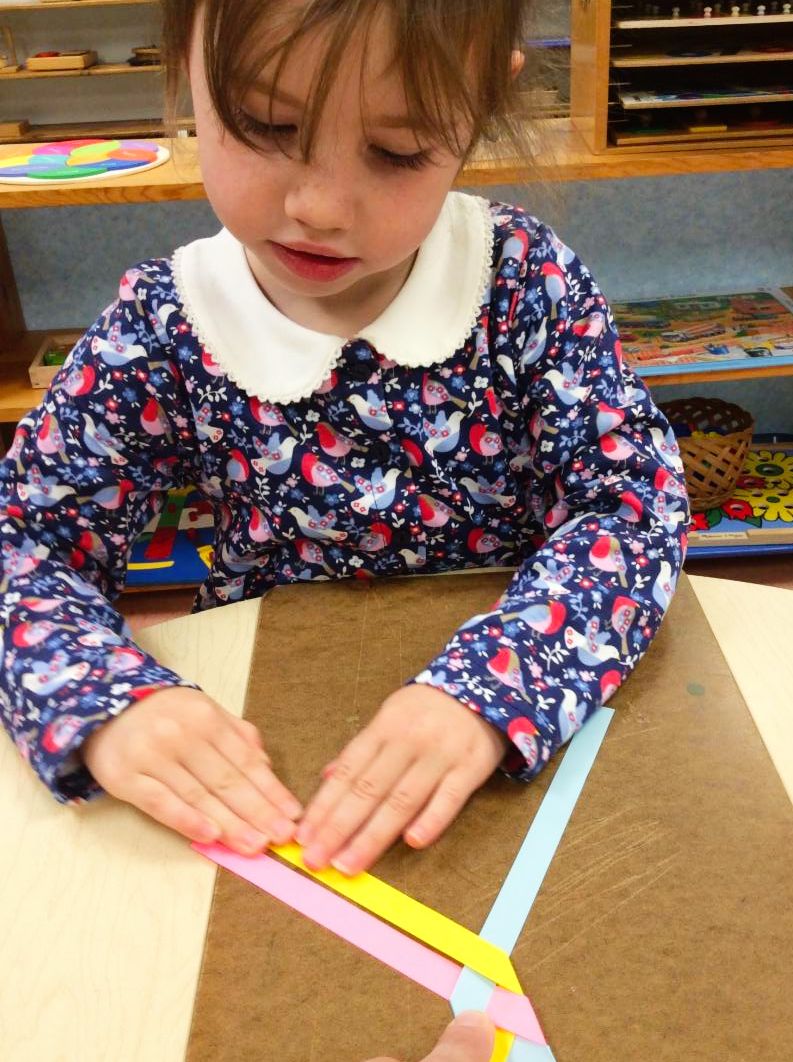
Room 17 children have been paper-braiding, which involves learning folding steps and creasing each fold. Some children have detected color patterns as well as the patterns of the movement.
Rooms 16 and 20 continue to explore leaf printing with watercolor paint. As part of this project, they are learning basic leaf nomenclature. Tying into
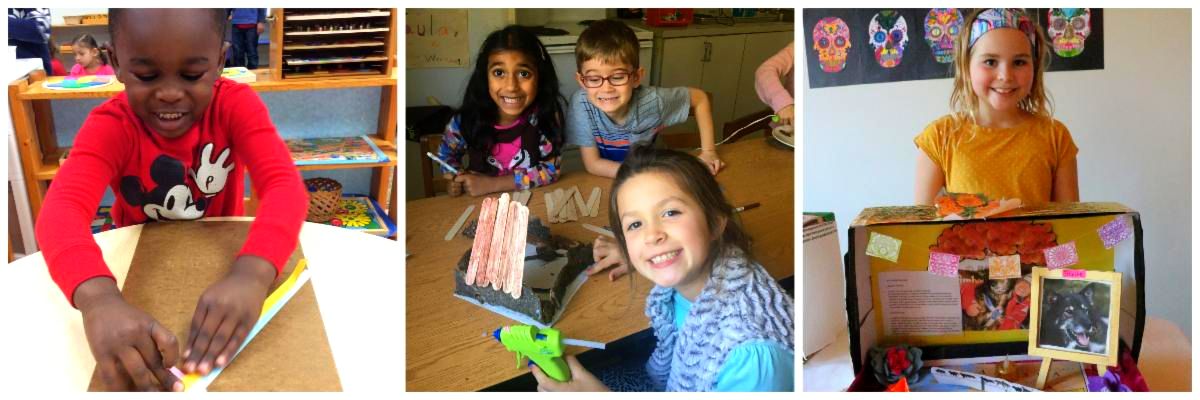
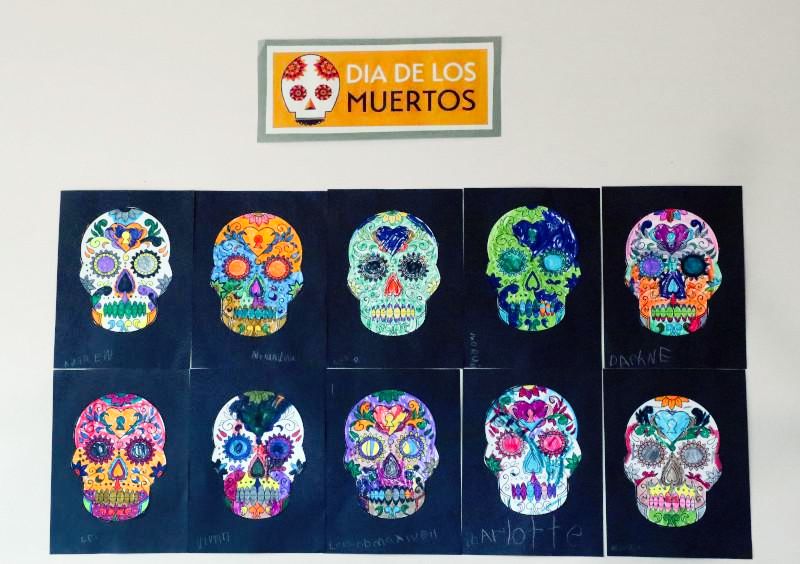
Room 19's recent study of Dia de Los Muertos, students continued work on their sugar skulls. After casting their skulls with plaster, they began adding color and designs with puffy paint.
|
|
Kindergartners are starting projects that focus on shape. Last week, they worked on relief printing using geometric shapes.
Lower Elementary (6-9) students have been working hard to draw life-size skeletons inside their body tracings. As they finish drawing the bones, they are adding white shading. The final step of this project will be to add a little whimsy - students will draw shoes on their skeletons. One student is looking forward to drawing cowboy boots on her skeleton!
|
|
At the
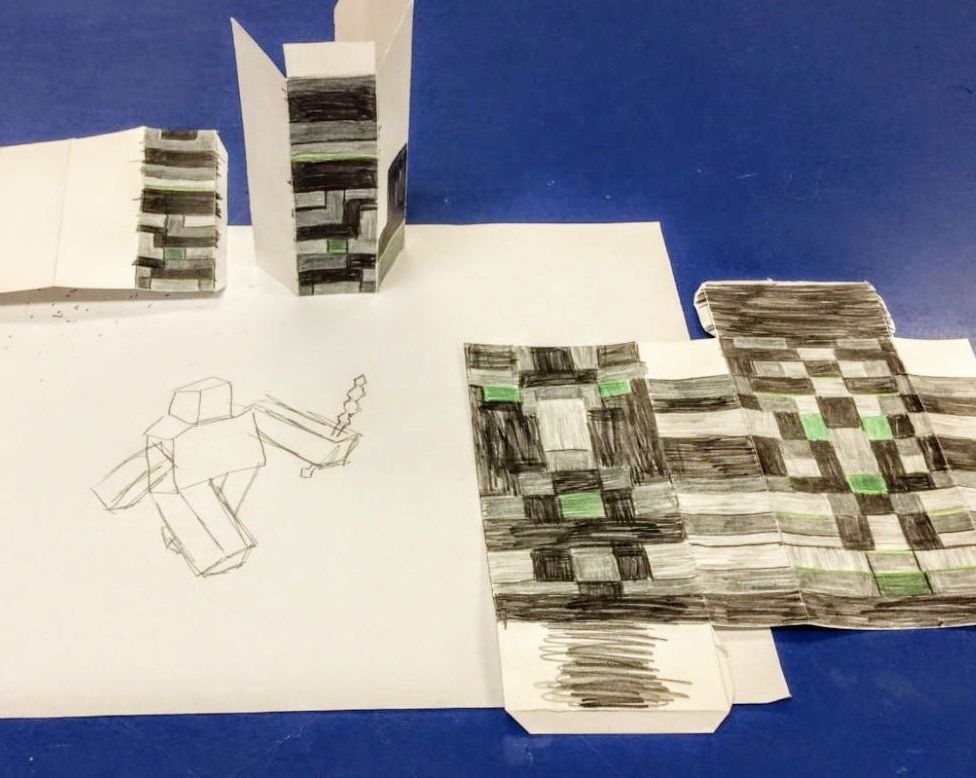
Upper Elementary (9-12) level, students pursue different art projects based on goals they set at the beginning of the school year. Among these projects, fifth-graders Jayce and Campbell are making geometric paper sculptures, which they will glue together and assemble once they are all cut out and colored.
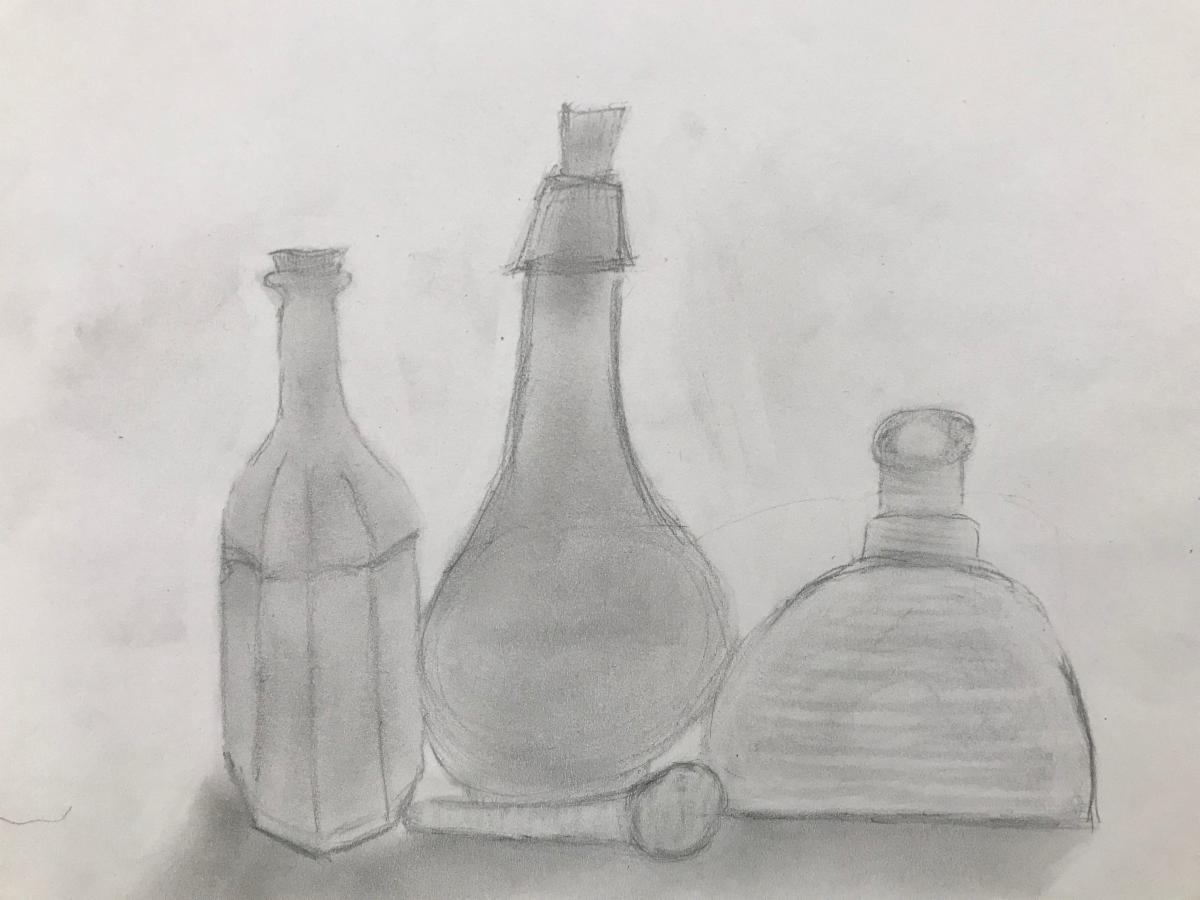
Middle School students have been studying and practicing various drawing techniques, including contour, line, negative space, and shading. They used these techniques to create a still-life drawings of objects found around the classroom. They will soon begin working on a unit studying the seven elements of art.
|
|
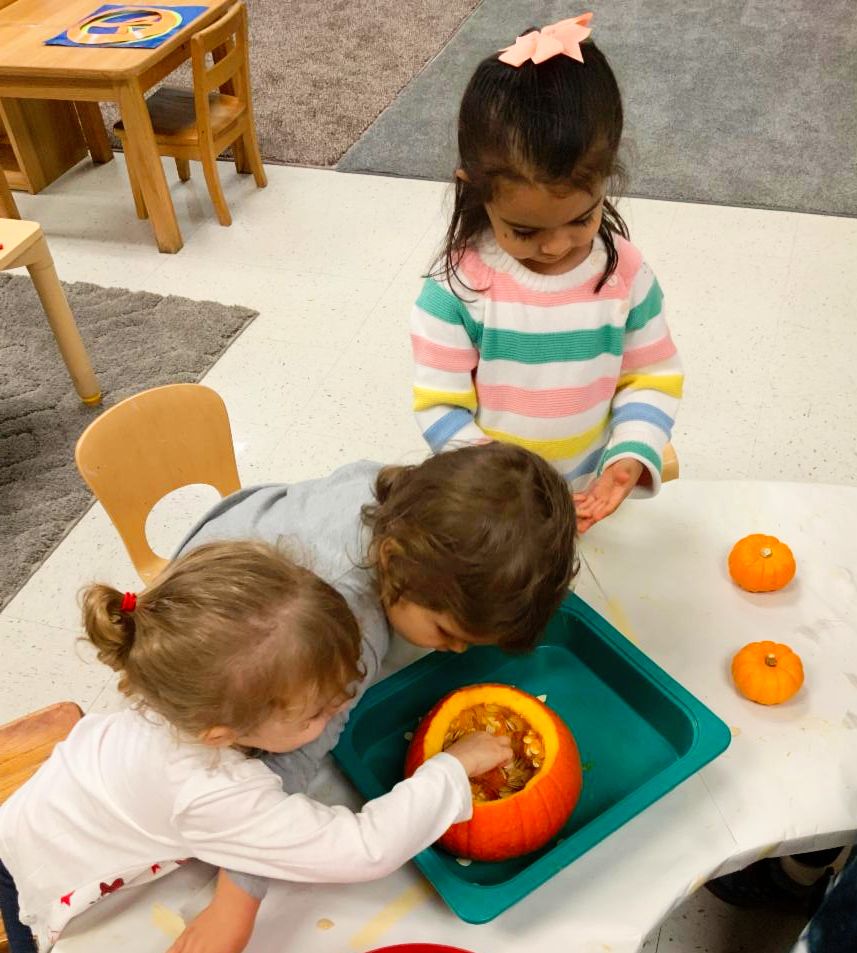
Toddlers started the month by making connections between their body parts and the parts of a pumpkin (flesh, skin, brain). They found it really funny that another name for the pumpkin's fibrous strands is the “brain." They also began learning about North American artist Charley Harper, who is known for representing birds and other animals using simple geometric shapes. In the weeks ahead, they will begin using geometric shapes to create their own versions of Harper's animals.
Primary students wrapped up their pumpkin studies by depicting the life cycle of a pumpkin through shapes on a pumpkin geo board. This week they kicked off a unit inspired by
"Ada Twist, Scientist." They will learn the term “hypothesis,” make predictions and record observations for chemical reactions including soda geysers, a fizzing rainbow, “elephant toothpaste” and color fireworks.
|
|
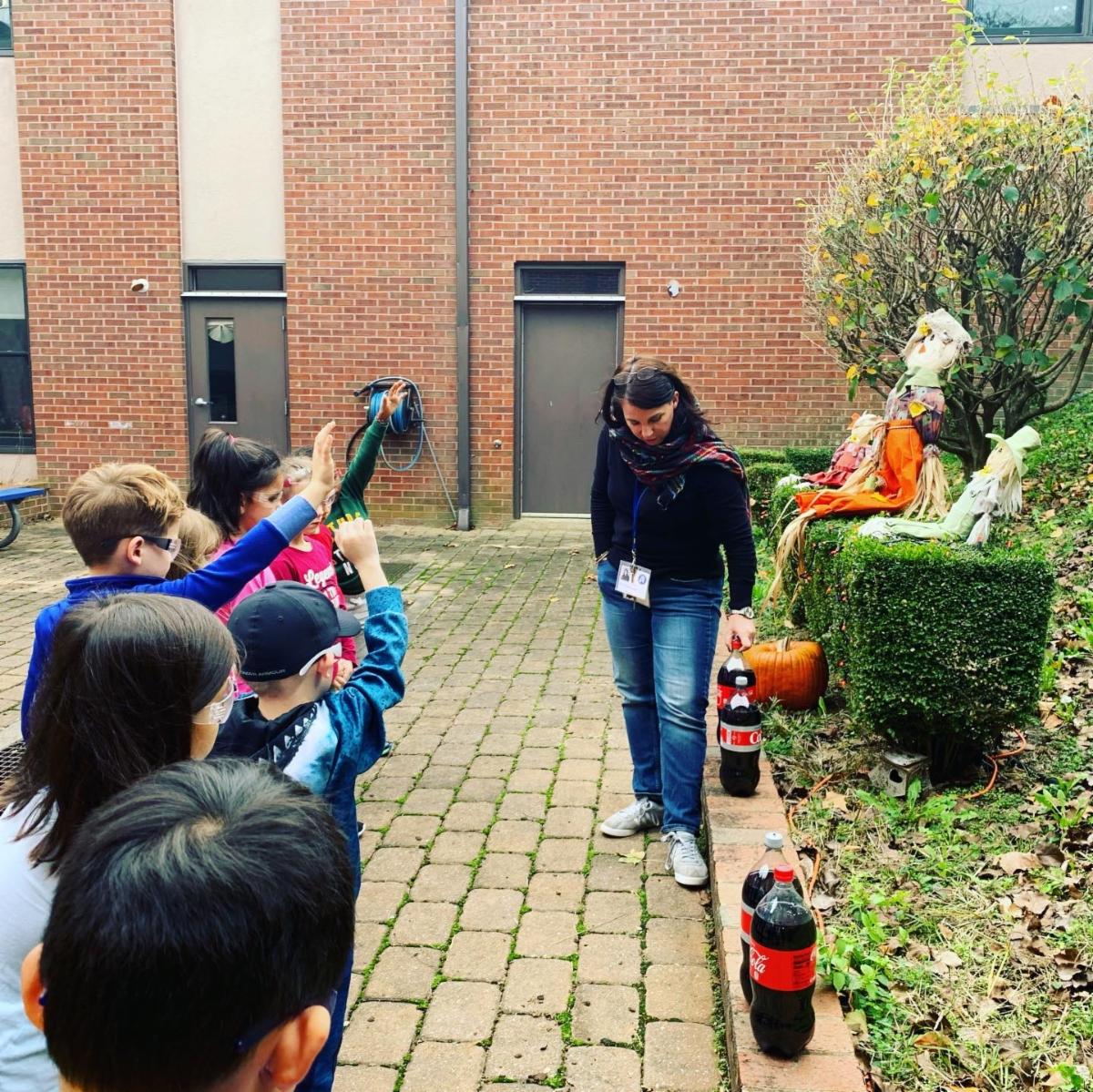
Also inspired by “Ada Twist: Scientist,”
kindergartners have been discussing the scientific method. They made and recorded their own hypotheses during
a recent soda geyser experiment.
|
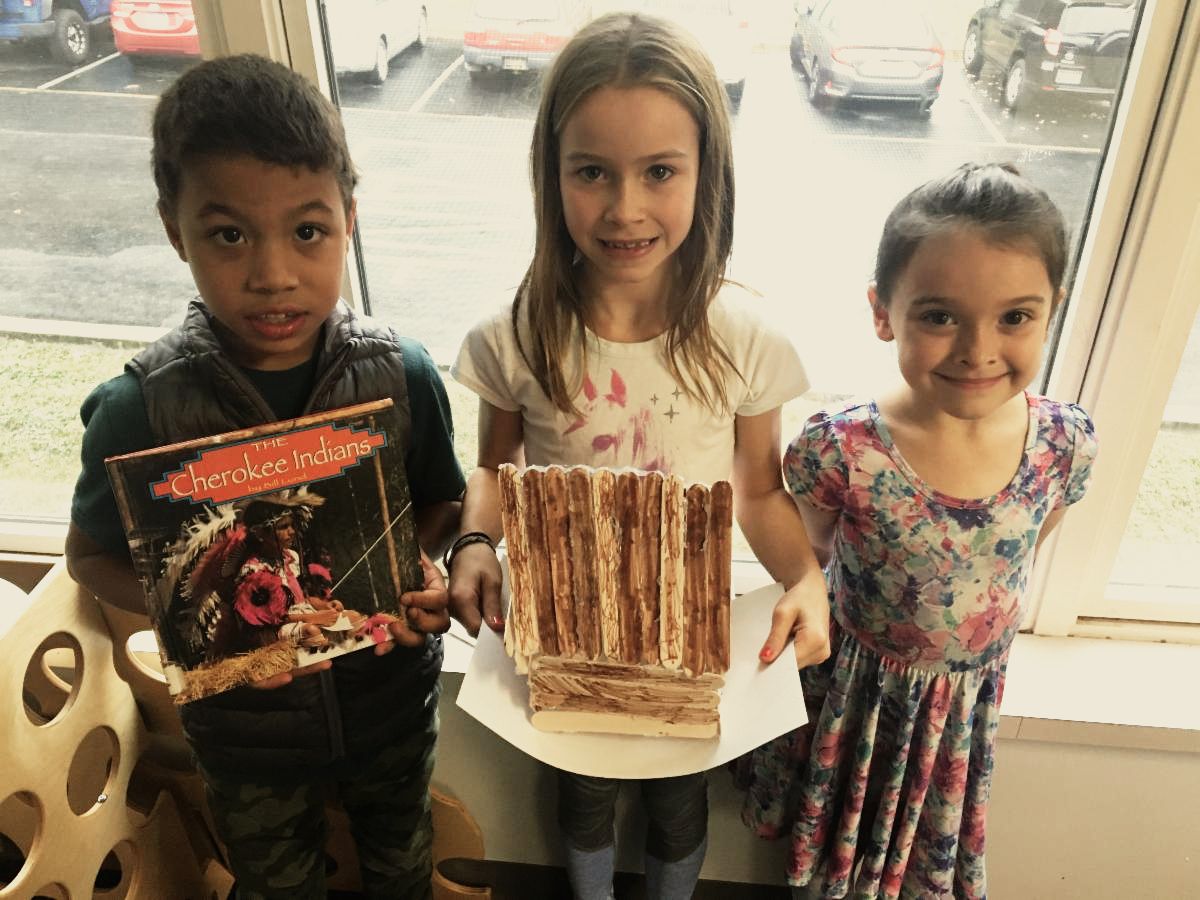
After completing their Native American houses,
Lower Elementary (6-9) students are learning about the pioneers. They learned about Laura Ingalls Wilder and her “Little House in the Big Woods” series, and started work on a quilting project. They also made their own walnut and berry ink and wrote with it using a feather pen.
|
|
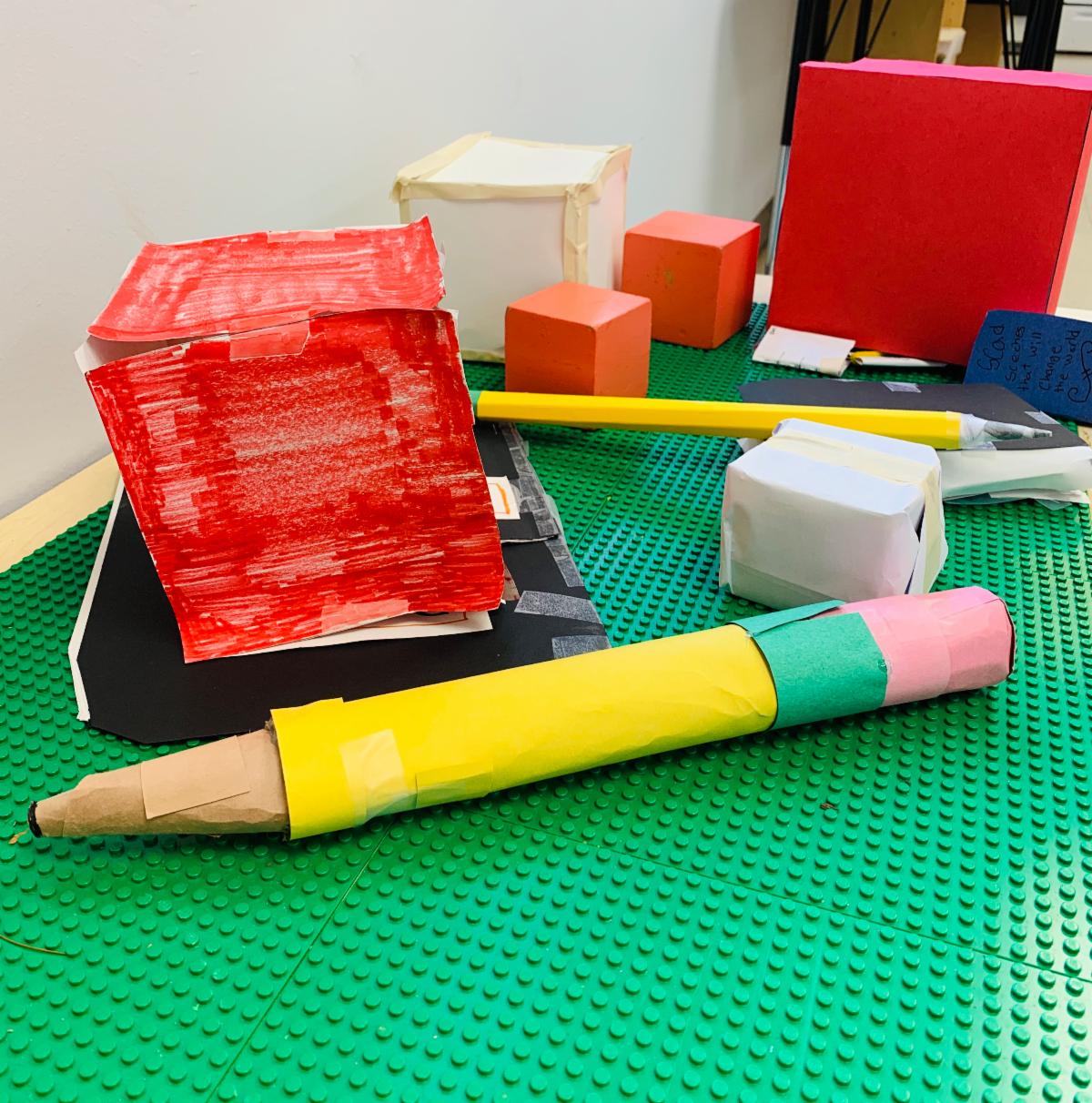
Upper Elementary (9-12) students completed their scale models of everyday objects including pencils, writing journals, Montessori pink tower cubes or erasers. Now they're learning to use 3D printers with help from Tinkercad tutorials. Students will make models of homes and buildings from around the world.
In December, kindergarten, elementary and middle school students will participate in the
Hour of Code using several different websites, apps and robots to code.
We'll cover
middle-schoolers'
Maker Studio work in January's technology entry.
|
|
Primary students recently wrapped up a unit about "el ciclo de vida de una mariposa" (the life cycle of a butterfly), and observed similarities and differences between English and Spanish words about the life cycle. They learned the four stages of the life cycle in Spanish and made "mariposas" to take home. Ask your child how to say butterfly in Spanish!
Kindergartners used Bee-Bot to help them name the four stages of a butterfly's life cycle in Spanish. They also explored "partes de la calabaza" (parts of a pumpkin) after singing "Cinco Calabazas."
|
|
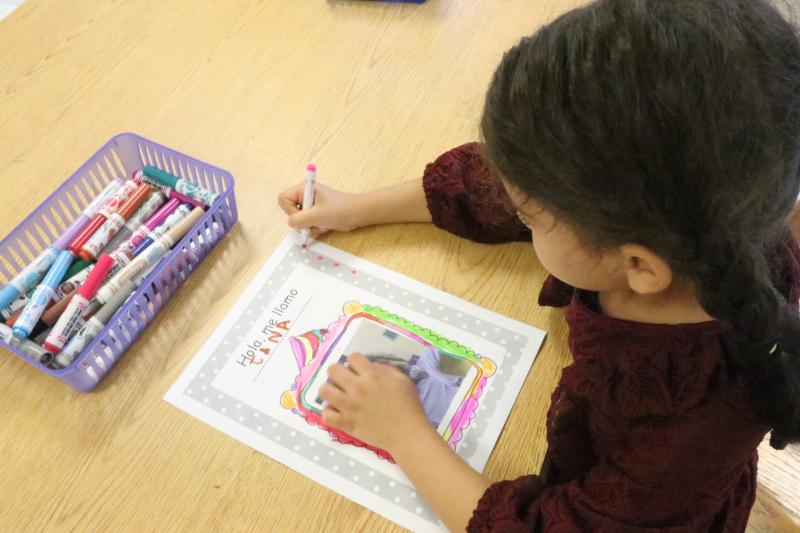
Lower Elementary students recently explored the Mexican cultural celebration of Dia de Los Muertos. They learned how Mexicans honor their loved ones by setting up an altar, making "ofrendas" (offerings) and painting their faces with calaveras (skulls). They also made skull masks to decorate the Spanish classroom.
Also in celebration of Dia de los Muertos,
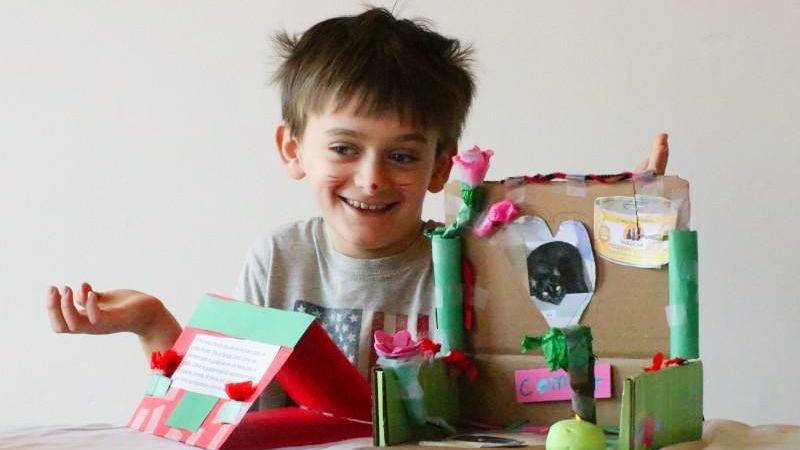
Upper Elementary students created altars in honor of a loved one. A few students honored Maria Montessori, while others dedicated their altars to a relative or pet. They also made connections and comparisons between Dia de Los Muertos and Halloween.
|
|
In
middle school Spanish, seventh-graders are learning to discuss pastimes, weekend activities and sports. They will be studying word stress and accent marks, and verbs including ir (to go), stem-changing verbs and verbs with irregular yo (I) forms.
Eighth-graders are learning to describe clothing, express preferences in a store, and negotiate and pay for items. They will be using indirect object pronouns, demonstrative adjectives and pronouns, the "preterite" tense, and the verbs saber and conocer, which both mean “to know.”
|
|
|
|
The Wednesday Weekly shares WMS news and events that are relevant to the families in our community.
Please send submissions to
wednesday-weekly@wmsde.org
by 4:30 p.m. on the Friday prior to the issue in which you wish to include your information. Content may be edited for length and style and may be held for a future issue due to space constraints.
|
|
|
WILMINGTON MONTESSORI SCHOOL
WWW.WMSDE.ORG
|
|
Copyright © 2019. All Rights Reserved.
|
|
|
|
|
|
|