Weed Watch!

Colorado Weed Management Association

1st Quarter Newsletter 2023

February, the end of winter is in sight, or is it? Some of us may be eager to get our spring weed control started and others may still be clinging to their skis, praying for snow well into April.


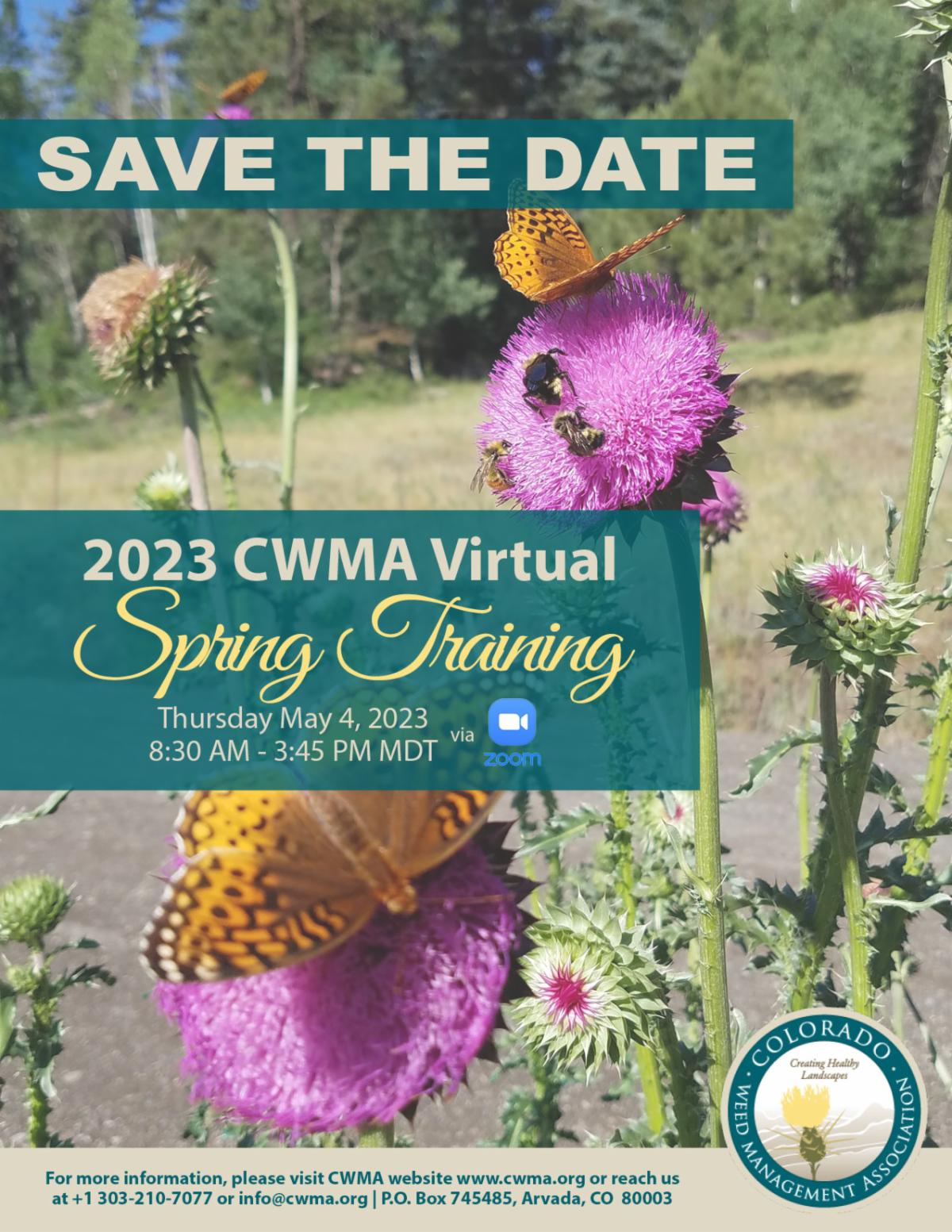
Either way, your CWMA Board of Directors are hard at work to bring you the 2023 Spring Training and increase the value CWMA brings to its membership.


We enjoyed seeing you all at the Winter Training and thank you for your support.


Earn ALL your core credits for your CO applicators license in ONE day.  


The following credits are will be submitted by CDA, subject to change:

AS Applicator Safety                           

EP Environmental Protection

2 x LR Laws and Regs 

PF Pesticides and Their Families

PS Public Safety                                    

UP Use of Pesticides     

Click for more info!


Northern Colorado Big Game Critical Winter Range Restoration Project


by Alex Wendorf, Larimer County Parks and Open Lands Weed Specialist

A new cooperative of land managers has been awarded a grant from the National Fish and Wildlife Foundation for the Northern Colorado Big Game Critical Winter Range Restoration Project. This project aims at long-term control of invasive winter annual grasses by treating 4,385-acres of cheatgrass and feral rye across seven open space properties managed by Larimer County Natural Resources, Colorado Parks and Wildlife, the City of Fort Collins Natural Areas, Boulder County Parks and Open Space, and Jefferson County Open Space.


The open spaces include Cherokee State Wildlife Area, Eagles Nest, Coyote Ridge Natural Area, Devil’s Backbone, Bobcat Ridge Natural Area, Hall Ranch, and Matthews/Winters Park. As a result of this project, vegetation communities on these lands will become more resistant and resilient to future disturbances, such as wildfire and drought, and provide critical habitat for native plants and wildlife. The properties are in critical elk and mule deer winter range and concentration areas. The restoration of cheatgrass and feral rye-infested habitat is by far the best way to improve overall native plant diversity and cover, that in turn provides critical habitat for big game, as well as small mammals, reptiles, birds and pollinators.


It is also worth highlighting that the mountain mahogany plant communities at these properties are extremely rare globally and found only in the northern part of the Colorado Front Range, southern Wyoming, and northern New Mexico.


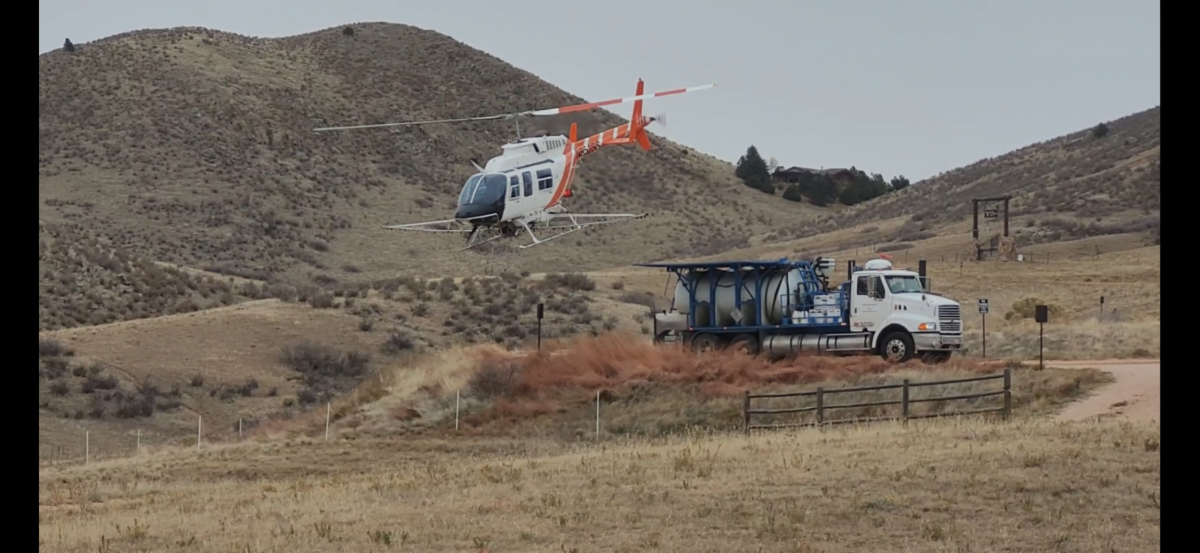
An aerial herbicide application from helicopter will be utilized to adapt to varying terrain limitations, provide application uniformity, applicator safety and efficiency. In addition to herbicide applications, the project includes vegetation monitoring through transects in treated and non-treated areas, photopoints of treated areas to document habitat changes, and the use of a GIS tool, RangeView, to determine cheatgrass densities in treatment areas. 


At the 2022 Colorado Weed Management Association Winter Training, project partners were honored to receive the CWMA Partnership Award for the Northern Colorado Big Game Critical Winter Range Restoration Project. The Partnership Award recognizes local groups or organizations that have advanced the objectives of weed management through technique, team efforts, and communication or education efforts.  


CWMA Online Training: Easy to Use at Home or Work!


Technician Training

Sit down and relax while training both new hires and returning technicians with these two new training offerings. These courses take the weight off the supervisor and cover all of the categories required by the Colorado Department of Ag for classroom instruction. Some additional training is required and a licensed applicator must be available to answer questions during the training.


Live Webinars

Learn from the experts and interact with other participants in live, one-hour sessions about a variety of topics.


Online Courses

These courses give you on-demand access to credible, curated and convenient online training activities. We currently have two options: one for those seeking CE credits and one for people who are not. Click here to see the full list of courses and their registration links.


CWMA Online Education for CE Credits!


Need credits? CWMA has you covered year round with online education approved by the Colorado Department of Ag! 


Attend a live webinar or take an on-demand course that offer CEC’s, under $40 for CWMA members!

Find Education and CE Credits
 

Weed Awareness Campaign

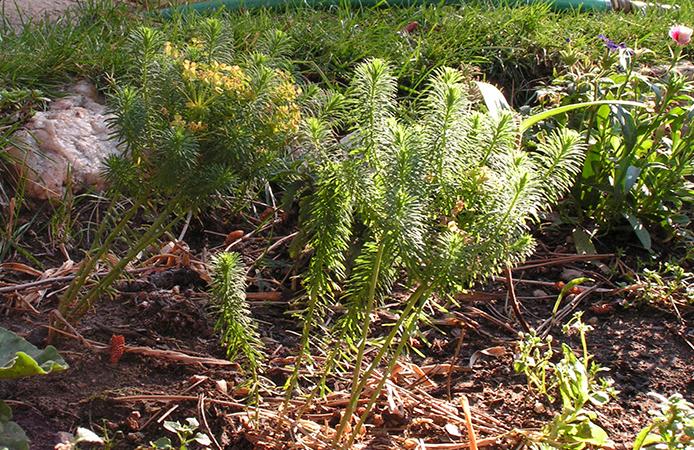
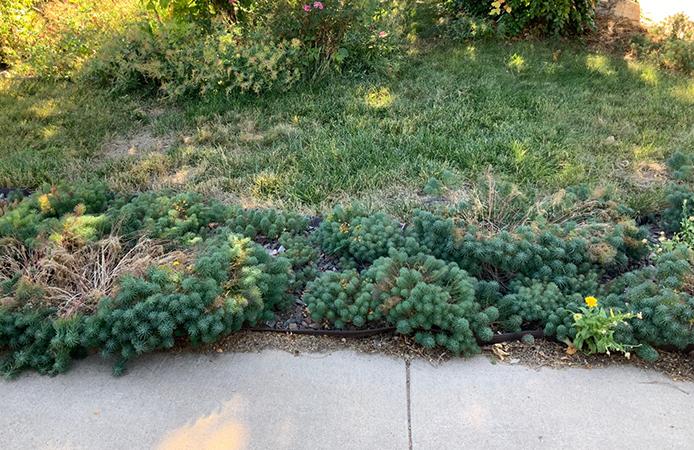
February Weed of the Month: Cypress Spurge (Euphorbia cyparissias)

prepared by Alicia Doran, Jefferson County Invasive Species Management Coordinator and Pest Inspector

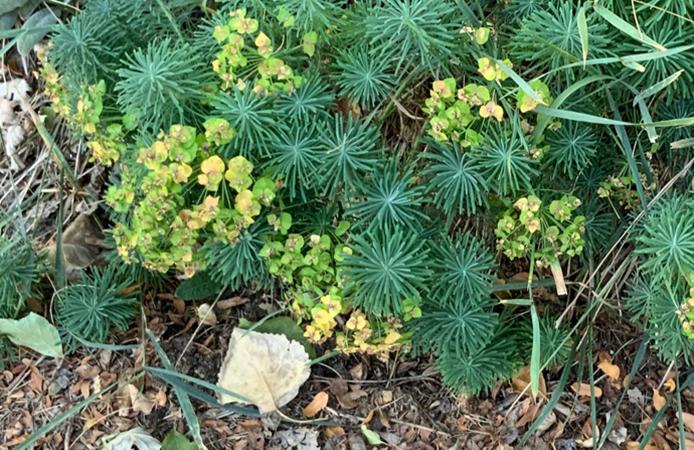
Cypress spurge is a List A perennial that is an escaped ornamental. Originally from Eurasia, it was first reported in the US in 1858 and in Colorado in 1895. It is not very common in Colorado but can be found in landscaped areas and has been found escaping into natural areas.


The plants usually grow to less than 16 inches tall but may reach up to 26 inches tall. It forms dense patches of multiple slender stemmed plants. The stems may branch in the upper half of the plant. Leaves are narrow, less than 1/8 inch wide and about 1 inch long. Flowers are reduced and have a pair of yellowish-green bracts beneath. Flowers occur in spring through early fall and become reddish later in the season. Roots can be 15 feet deep and woody rhizomes spread horizontally up to 35 feet. 


There are both seed and non-seed producing populations. The seeded varieties form seed pods that contain one to three seeds. The sticky seeds explode when the pods ripen. The seed producing varieties will sometimes hybridize with Leafy spurge (Euphorbia virgata formerly known as Euphorbia esula). The genetics of Cypress spurge are complicated including both diploid and tetraploid types.


The plants contain toxic latex that is irritating to skin and eyes and causes rashes and blisters on lips and skin. Most native animals and livestock do not feed on it.


RESOURCES


USDA Fire Effects


Invasive.org


Wisconsin Dept of Natural Resources


PHOTO CREDITS


Alicia Doran


Jefferson County Invasive Species Management


Learn more about the campaign 

 
Your CWMA Membership:
What's New?

Are you looking for some education for your staff, the public, or even children? Check out our new Education Library and choose what's best for you. We have a ton of new resources from weed identification, weed management and more.

Check out our new member portal! You can use the members-only online portal to search for other members in the directory, renew your membership, register for CWMA events and update your contact information.

Need help promoting CWMA? Let us know how we can assist you.

Monica Groh, CAE
Colorado Weed Management Association


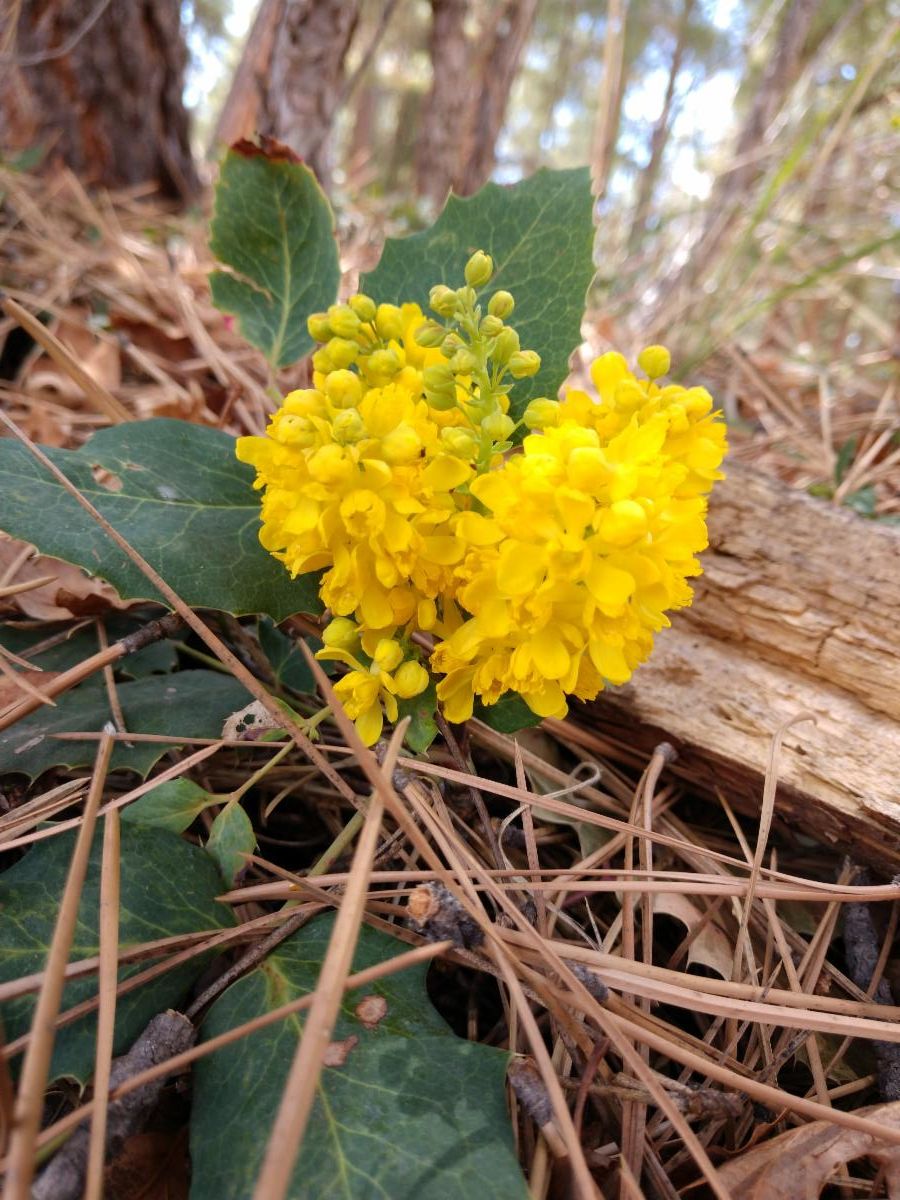
Native Plant Spotlight: Creeping Mahonia, Mahonia repens

By Ethan Proud, Archuleta County Weed and Pest Supervisor

Creeping mahonia, goes by many names...most including the word creeping. Its list of common names include: creeping Oregon grape, creeping barberry, and prostrate barberry. Its growth habit is a subshrub, and it grows low to the ground and spreads through stolons. It's bright yellow flowers appear in the middle of spring, and give rise to blue berries later in the year. In the fall the leaves turn bronze to maroon. It forms an attractive ground cover in native ecosystems and gardens.


The berries are edible but edible and can be used to make jelly or wine.

 
Call for Submissions: Are You a Writer or Have a Story to Tell?

If you have a success story or event you'd love to share...we want to help!

Colorado Weed Management Association is always looking for new content, exciting stories in integrated management, and alerts on new weed species!

Send in an article, write up, or pictures and we can share them in our quarterly newsletter.
Email submissions to the Communications Committee. Please limit pieces to 500 words.

All submissions are subject to review.

Newsletter contributors have to be CWMA members.


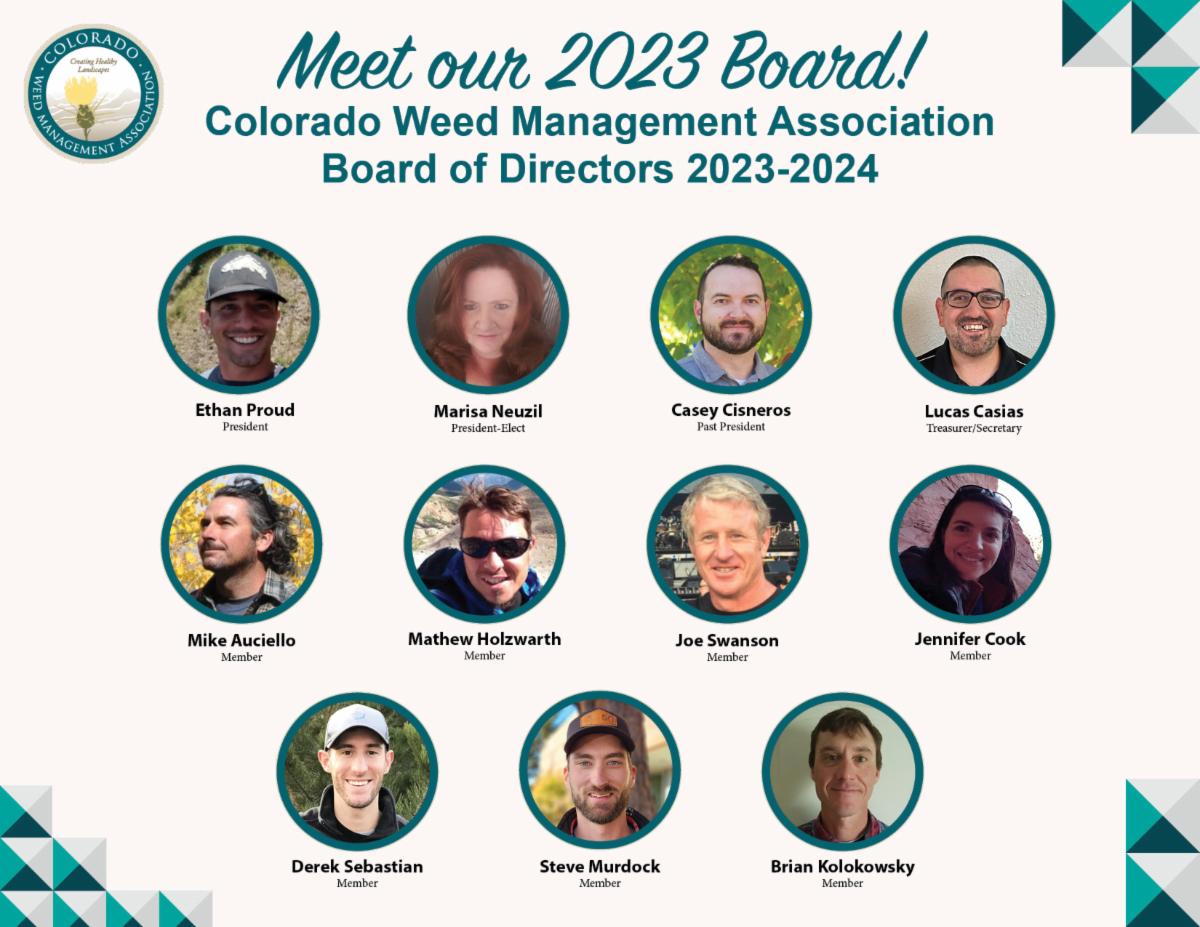
President:


Ethan Proud

eproud@archuletacounty.org


President Elect:


Marisa Neuzil

tellerparkcd@gmail.com


Past President:


Casey Cisneros

cisnerct@co.larimer.co.us


Secretary/Treasurer:


Lucas Casias

lucas.casias@costillacounty-co.gov


Executive Director:


Monica Groh

info@cwma.org


www.cwma.org

PO Box 745458

Arvada, CO 80003

(303) 210-7077


Board of Directors:


Derek Sebastian

derek.sebastian@bayer.com


Mike Auciello

mauciello@fcgov.com


Joe Swanson

jswanson@bouldercounty.org


Jennifer Cook

jennifer.Cook@colostate.edu


Mathew Holzwarth

mathew.holzwarth@longmontcolorado.gov


Brian Kolokowsky

deeprootcare@gmail.com


Steve Murdock

smurdock@co.jefferson.co.us


How can CWMA work for you?


Do you want to make a difference with CWMA? Would you like to influence the direction that CWMA is leading? Join a committee by reaching out to the chairs and co-chairs listed below.


Training and Education 


Marisa Neuzil

tellerparkcd@gmail.com


Ethan Proud

eproud@archuletacounty.org


Marketing and Communications


Mathew Holzwarth

mathew.holzwarth@longmontcolorado.gov


Legislative


Joe Swanson

jswanson@bouldercounty.org


Membership, Nominations and Scholarship


Mike Auciello

mauciello@fcgov.com


Want to join a committee but don't know where to start? Contact us for more info!

 
Job Opportunities:

Looking to further your career in stewardship, conservation, and natural resources? CWMA shares job postings from natural resource employers!

To view job listings and descriptions, click here.

To post a job, click here.
  
 
Sustaining Partners

Not a sustaining partner but want to be? Join here.