|
Starting a Business Costs Money; Some Schools Have Some
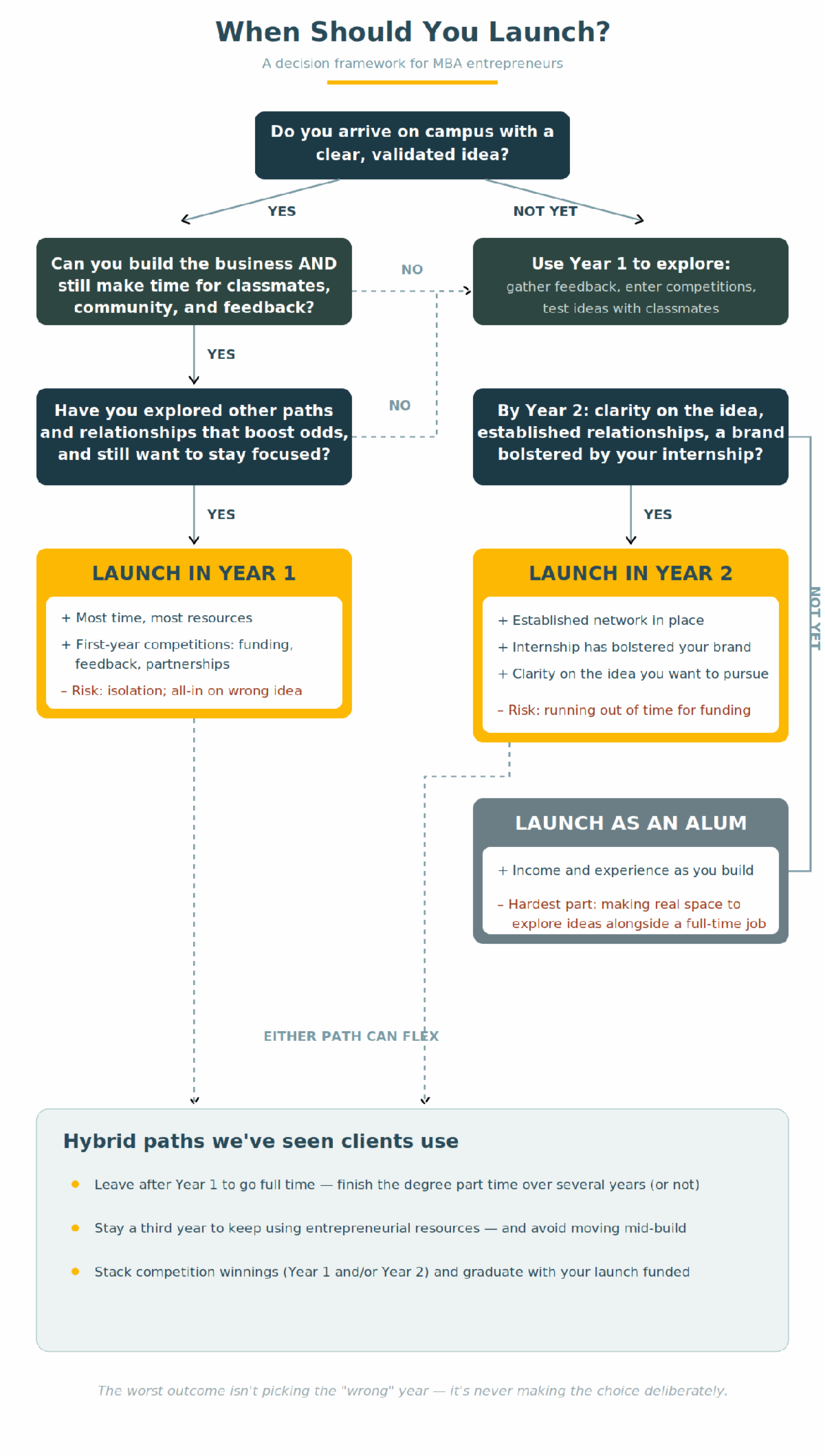
A number of schools offer funding opportunities in first year, second year, or both, and they can be incredibly helpful. In recent years, we've seen clients graduate with more than enough financing to actually fund the start of their business.
The numbers at top programs are real money, not token prizes:
Harvard Business School awards $75,000 grand prizes in each track of its annual New Venture Competition, with hundreds of thousands of dollars in total cash and in-kind prizes distributed each year. Recent MBA winners include Rea Savla (MBA 2024), whose venture Solara — an on-demand solar irrigation service for farmers in India — took the $75,000 Social Enterprise grand prize.
Chicago Booth's Edward L. Kaplan New Venture Challenge is arguably the most lucrative student competition in the country: in a recent year it awarded a record $1.6 million across its finalist teams, with the first-place team, Andes STR, taking home more than $660,000 in investment. The NVC's track record speaks for itself — Grubhub and Braintree (the company behind Venmo) both launched through this competition while their founders were Booth students.
Columbia runs the Startup Columbia venture competition, which distributes more than $200,000 in non-dilutive cash grants each year to student founders, alongside Columbia Business School's own ecosystem of programs — summer startup grants, the Build Lab accelerator for second-years, and the Entrepreneurial Greenhouse for graduating students.
MIT's $100K Entrepreneurship Competition awards a $100,000 grand prize plus additional prizes across multiple phases throughout the year — and its alumni roster includes companies like HubSpot and Akamai. Because it's open to teams across MIT, Sloan MBA students frequently partner with engineering and PhD classmates, which is itself a co-founder matchmaking opportunity.
UC Berkeley Haas hosts LAUNCH, the UC system's startup accelerator and competition, with tens of thousands of dollars in prize money at its annual Demo Day and a track record as a feeder into Y Combinator and top-tier VCs. Hiroki Koga (MBA 2017) won LAUNCH with Oishii Farm — the vertical farming company whose premium strawberries have since become famous well beyond campus.
The takeaway: if funding your launch is a concern, the availability and timing of these programs should factor into both your school choice and your launch timeline. Many of these competitions begin in first year — which strengthens the case for engaging early, even if you don't go all-in until later.
|