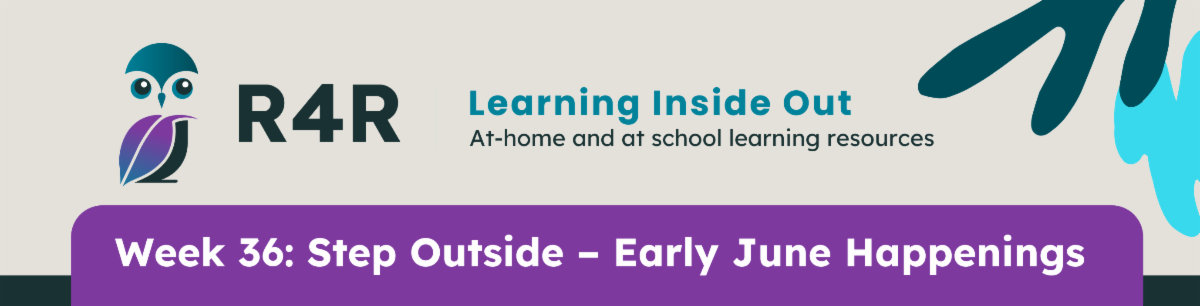
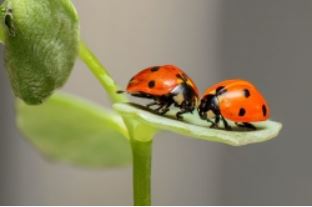
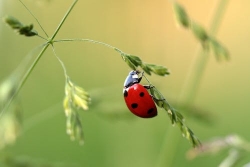
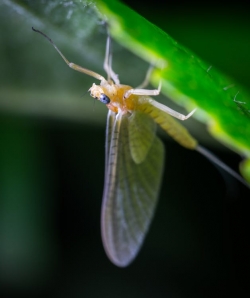
This week's LIO is all about insect diversity and behaviour during this time of the year! While we might sometimes overlook insects and consider them annoying, many of them play extremely important roles in maintaining the health and wellbeing of our ecosystems.

Students will learn about the journey of insects in our surroundings and discover some key tips and tricks about how we can identify and observe these fascinating bugs. The warm weather during this time of the year is also the perfect opportunity to discover insects in near-by lakes, streams, and ponds!
 

Grades K-3

Bug Study

The fascinating world of bugs comes to life in this outdoor activity in which students investigate the miniature creatures that inhabit a naturalized area of the schoolyard. Using only a few simple materials and their senses, students describe how organisms move, classify plants and animals and investigate how tiny animals meet their survival needs. The hands-on learning experience will strengthen scientific inquiry skills and help foster an appreciation for these often loathed yet essential members of our natural world.


Activities

  • Watch Some Bugs to learn more about backyard bug behaviour
  • Read Invent an Insect aloud and then have students invent their own insects to learn more about insects' physical characteristics and anatomy
  • Bugs: Small but Mighty provides suggestions for outdoor experiences
  • Check out Critters Crafts, a series of arts and crafts projects inspired by everything from creepy crawlers to beautiful butterflies 
  • Play some interactive insect and pest games, or try to ace the quizzes on bug trivia
  • Get outside and Create a Critter this activity will encourage creativity and use natural modelling materials to explore insect behaviours and adaptations
What did you think of Bug Study?

Grades 4-6

Get to Know Insects

This well-designed outdoor activity introduces students to insect diversity, distribution and behaviour. Students are given simple collecting and observing tools and assigned two different locations to investigate, collect, and describe any specimens they uncover. After completing the activity, students share highlights with their classmates. Suggestions for an effective debriefing are provided.


Activities

  • Watch Facts About Insects to learn some fun and interesting facts about insects 
  • Bugging Out has students use invertebrates they find in a nearby green space to practice making scientific observations and to design and conduct an experiment
  • Participate in a Bug Watch where students explore the area around the school and use this worksheet to record their insect discoveries
  • Use the Nature Companion app to learn more about the different insects in your region
  • Use the Invent an Insect lesson plan to have students create their own unique insect
What did you think of Get to Know Insects?

Grades 7-12

Bugs - Clues to the Environment

This resource involves students in a bio-monitoring project of a local waterway.  Aquatic invertebrates are known to exhibit different tolerances to pollution and, as a result, are commonly used to assess the health of aquatic ecosystems and monitor changes in water quality. Instructions for locating, sampling and identifying aquatic insects are provided, along with the background information students will need to analyze the data they collect.


Activities

  • Get outdoors and complete the Bugs-Clues to the Environment activity to learn more about macroinvertebrates that live in a particular habitat
  • Use the simple key in the field or the more detailed dichotomous key if working at school to identify the macroinvertebrates sampled
  • Complete the Adopt an Insect Report where students "adopt" a specific insect, then cruise the web to complete the worksheet with information about their minibeast. From food sources to life cycles, students gain insight into the life of their insects. Allow time for students to analyze similarities and differences between their insects
  • Use these scavenger hunts as your students explore a local nature area or your schoolyard. The pdf version contains three scavenger hunts with difficulty levels ranging from easy to hard
  • The Insect Investigations Encounter Kit suggests many activities designed to bring hands-on materials and inquiry based activities to the classroom
What did you think of Bugs - Clues to the Environment?
 
About Learning Inside Out

Above you will find a selection of activities, broken down by various grade levels. These guides will be released weekly and archived on our Learning Inside Out page, so you can always access the full catalogue.

All activities have been modified from resources on our R4R database, simplified and adapted for both outdoor learning in the school yard or at-home as needed. The activity descriptions above should contain all the information and links that you need!

If you'd like to view the full original resource on R4R, including curriculum connections for every province/territory, click the activity title.

We want this guide to work for you, so your feedback is invaluable to us.
Use the feedback button at the bottom of this Guide, or email us at info@LSF-LST.ca. We would also love to see photos of students engaging in the activities, please e-mail us any pictures or videos you have!
 
Let us know how this helped your learning and teaching from home or at school indoors and (hopefully) outdoors and what you'd like to see more of by filling out our brief feedback form!
Follow us on social media for continued weekly highlights & other exciting opportunities through the school year!
Facebook  Twitter  Instagram  Linkedin  
Please share widely with any parents and teachers in your life!
Learning for a Sustainable Future (LSF) is a Canadian charity with over 25 years of experience working within the education system. Our Resources for Rethinking (R4R) database is an award-winning collection of resources that are peer-reviewed by certified teachers and connected to curriculum in all provinces and territories. R4R is recommended on many Ministry of Education websites.