Florida Legislative Session- Week 4 | | Recap of "Capitol Conversations" as we ADVOCATE in 2025 | |
SB 794 - Mandatory Human Reviews of Insurance Claim Denials
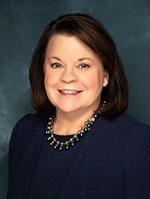
Senator Jennifer Bradley, R Fleming Island
CS/SB 794 prohibits an insurer from relying on the decisions provided by an algorithm, an artificial intelligence (AI) system, or a machine learning system as the sole basis for an insurer to deny a claim. The bill specifies that an insurer’s decision to deny a claim or any portion of a claim must be made by a “qualified human professional (QHP)."
READ MORE
FAVORABLE by Banking & Insurance - 2 remaining committee stops
| |
SB 1568 - Mandatory Electronic Prescribing
Senator Jason Brodeur, R Lake Mary
Mandates electronic prescribing, removing exceptions in current Florida law. The following exceptions are removed, impacting both a patient's ability to price shop and/or have a written prescription for off-hour pharmacy access.
Specifically these exceptions in current would be removed under the bill:
- The practitioner determines that the use of e-prescribing would delay a patient’s access to a drug thus adversely impacting the patient’s medical condition;
- The practitioner determines that it is in the best interest of the patient, or the patient determines that it is in his or her own best interest, to compare prescription drug prices among area pharmacies. The practitioner must document such determination in the patient’s medical record.
Though a vast majority of prescriptions are appropriate for e-prescribing, physicians need discretion in scenarios when doing so would delay access to the medication or remove the patients ability to find the best price.
READ MORE
| |
FAVORABLE by Health Policy - 2 remaining committee stops
HB 1297 up in last committee stop on Monday, March 31
| |
SB 172 - Health Care Practitioner Specialty Titles and Designations
Senator Colleen Burton, R Lakeland
CS/SB 172 amends existing legislative intent under s. 456.003, F.S., relating to the regulation of health care professions and finds that the health, safety, and welfare of the public may be harmed or endangered by unlicensed practice or misleading representations by health care practitioners.
The bill amends ss. 458.3312 and 459.0152, F.S., to specify that only physicians who are board certified may use a defined list of medical specialist titles and designations—such as “cardiologist,” “dermatologist,” or “orthopedic surgeon”— and authorizes the Board of Medicine (BOM) and the Board of Osteopathic Medicine (BOOM), respectively, to add other titles by rule.
*Note: family physicians and emergency physicians (the two board certifications that include the term physician) are not included in the listing of board certified physicians due to the controversy over who can use the term "physician."
READ MORE
FAVORABLE by Health Policy - 1 remaining committee stops
| |
SB 1842 - Out-of-network Providers
Senator Colleen Burton, R Lakeland
Addresses the responsibilities of health care practitioners when referring patients to other providers for nonemergency services.
- Requires practitioners or their employees to confirm if the referral provider is in the patient’s insurer network at the point of service.
- Exempts practitioners from this requirement if the patient declines confirmation or refuses to share necessary insurance information.
- Mandates that practitioners notify patients in writing about potential extra costs when referred to out-of-network providers or for uncovered services, with this notice to be documented in the patient’s medical record.
- Subjects practitioners to disciplinary action for noncompliance without good cause.
READ MORE
| |
FAVORABLE by Health Policy - 2 remaining committee stops
HB 1101 in last committee stop on Monday, March 31
| |
SB 152 - Protection from Surgical Smoke
Senator Tracie Davis, D Jacksonville
SB 152 requires hospitals and ambulatory surgical centers to, by January 1, 2026, adopt and implement policies that require the use of a smoke evacuation system during any surgical procedure that is likely to generate surgical smoke
The bill defines:
- Smoke evacuation system: equipment that effectively captures, filters, and eliminates surgical smoke at the site of origin before the smoke makes contact with the eyes or respiratory tract of occupants in the room; and
• Surgical smoke: the gaseous byproduct produced by energy-generating devices such as lasers and electrosurgical devices. The term includes, but is not limited to, surgical plume, smoke plume, bio-aerosols, laser-generated airborne contaminants, and lung damaging dust.
READ MORE
| FAVORABLE by HHS Appropriations - 1 remaining committee stop | |
SB 734 - Actions for Recovery of Damages for Wrongful Death
Senator Clay Yarborough, R Jacksonville
Amends provisions related to the recovery of damages in wrongful death cases in Florida.
Deletes restrictions preventing adult children and parents of adult children from recovering specific damages in cases of medical negligence.
READ MORE
|
- A late filed amendment FAILED but would have specified that complaints, investigative reports, settlements, final orders, findings from disciplinary proceedings, and prior adverse medical incident reports concerning a health care provider or facility would be discoverable and admissible as evidence in legal actions. The FAILED amendment would have also permitted the disclosure of the existence of insurance coverage to the jury.
FAVORABLE by Rules - no remaining committee stops
House companion, HB 6017 PASSED House (104-6)
| |
SB 1346 - Fentanyl Testing
Senator Tina Polsky, D Boca Raton
CS/SB 1346 creates s. 395.1042, F.S., entitled “Gage’s Law” to require a hospital emergency department to test a patient for fentanyl if the patient is receiving emergency services and care for a possible drug overdose or poisoning and the hospital conducts a urine test to assist in diagnosing the individual. The bill specifies that if the urine test comes back positive for fentanyl, the hospital must perform a confirmation test as defined in s. 440.102(1), F.S., and maintain the results of the urine test and the screenings as part of the patient’s clinical record.
READ MORE
| FAVORABLE by Health Policy - 2 remaining committee stops | |
SB 1606 - Patient Access to Records
Senator Erin Grall, R Fort Pierce
Under current Florida law, hospitals, ambulatory surgical centers, and health care practitioners are required to provide requested patient health records to patients, residents, and their legal representatives in a “timely” manner.
In the absence of a specific statutory deadline, the federal Health Insurance Portability and Accountability Act (HIPAA) standard of 30 calendar days applies.
For electronic health information, the federal Information Blocking Rule also generally applies, requiring access without unreasonable delay.
SB 1606 standardizes the timeframe for responding to patient records requests for patients, residents, and their legal representatives. The bill amends various sections of the Florida Statutes to require health care providers and practitioners to furnish requested records within 14 working days of a request. Providers and practitioners who maintain electronic health record systems must deliver the records in the format chosen by the requester. In addition, the bill requires providers and practitioners to allow access for the inspection of original records, or suitable reproductions such as microforms, within 10 working days of receiving a request. Providers may impose reasonable conditions to protect the integrity of the records.
READ MORE
| |
Retained in Health Policy - 2 remaining committee stops
HB 1083 to be heard in its last committee stop on Monday, March 31
| |
HB 649 - Autonomous Practice by a Certified Registered Nurse Anesthetist
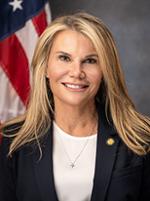
Rep Mike Giallombardo, R Cape Coral
Expands the scope of practice for certified registered nurse anesthetists (CRNAs) in Florida, allowing for autonomous practices under certain conditions.
- Exempts autonomous advanced practice registered nurses (APRNs) certified as CRNAs from requiring onsite medical direction when administering anesthesia, subject to facility protocols.
- Permits CRNAs, whether operating under a protocol or autonomously without one, to perform tasks such as assessing patient health risks, determining anesthesia type, ordering preanesthetic medication, and administering various anesthetic techniques.
- Allows CRNAs practicing autonomously under section 464.0123 to perform all acts authorized within their specialty without an established protocol.
- Enables APRNs registered for autonomous practice to engage in primary care, place special venous and arterial lines, and manage patient care in health care facilities autonomously, with abilities to admit, manage, and discharge patients.
- Grants autonomous APRNs the power to sign documents that are typically required to be signed by physicians, with certain exceptions.
READ MORE
| FAVORABLE by Health & Human Services - no remaining committee stops | |
HB 947 - Evidence of Damages to Prove Medical Expenses in Personal Injury or Wrongful Death Actions
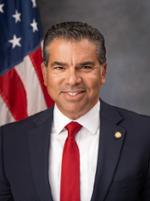
Rep Omar Blanco, R Miami
Amends Florida Statutes to change the admissibility of evidence for medical expenses in personal injury and wrongful death cases.
- Allows for any court-approved evidence demonstrating the actual value of medical treatments or services, no longer strictly limited to predefined criteria.
- Permits inclusion of amounts health care coverage is obligated to pay, reasonable and customary rates, or amounts paid under a letter of protection for past unpaid charges.
- Entitles the inclusion of similar evidence types for future medical treatments or services.
- Specifies that all amendments apply to causes of action accrued after March 24, 2023, and for which final judgment has not been entered by July 1, 2025.
READ MORE
| FAVORABLE by Judiciary - No remaining committee stops | |
HB 1181 - Motor Vehicle Insurance
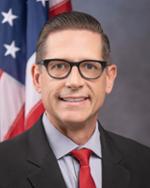
Rep Danny Alverez, R Tampa
- HB 1181 repeals the personal injury protection (“PIP”) coverage requirement under Florida’s Motor Vehicle No-Fault Law and increases the minimum bodily injury liability coverage limits from $10,000 per person and $20,000 per incident to $25,000 per person and $50,000 per incident.
- Moving to a mandatory bodily injury system delays payments to health care providers until fault is determined.
READ MORE
| Member debate questioned the potential impact of eliminating PIP and requiring mandatory bodily injury coverage, focusing on whether it would raise costs for some drivers or lower overall premiums. Supporters argued the change would modernize Florida’s outdated coverage requirements and reduce fraud, while opponents worried about shifting expenses to health care providers and increased rates for drivers carrying only minimal insurance | FAVORABLE by Civil Justice - 2 remaining committee stops | |
HB 731 - Standardized Tests for Admission to Medical Institutions of Higher Education
Rep Lauren Melo, R Naples
Creates requirements for standardized admissions tests at medical higher education institutions.
Requires these institutions to mandate a standardized admissions test that evaluates knowledge and critical thinking skills in science and medical training for admission.
READ MORE
| FAVORABLE by Government Operations - 1 remaining committee stop | |
HB 647 - Advanced Practice Registered Nurse Services
Rep Dana Trabulsy, R Naples
Amends Section 382.008 of Florida Statutes, affecting protocols regarding death and fetal death registration and certification.
- Expands the definition of "primary or attending practitioner" to include advanced practice registered nurses (APRNs) providing hospice care under a written protocol with a licensed physician.
- Allows APRNs providing hospice care, in addition to other specified medical personnel, to file certificates of death or fetal death electronically when no funeral director is present.
- Permits these same APRNs to furnish medical certification of cause of death to the funeral director and to provide necessary medical or health information for fetal death registration within 72 hours post-expulsion or extraction.
- Enables APRNs providing hospice care to sign and date corrections on permanent death or fetal death certificates.
READ MORE
| FAVORABLE by Health Professions - 1 remaining committee stop | |
HB 1299 - Department of Health
Rep Michael Yarkosky, R Clermont
The bill revises several provisions of Florida law relating to the state’s health care workforce, health care services, and health care practitioner licensure and regulation related to the Department of Health. The revisions include:
- Saving the definition of “messenger ribonucleic acid vaccine,” from repeal;
- Expanding the Patient’s Bill of Rights and Responsibilities to prohibit discrimination based on vaccination status;
- Requiring additional reporting from medical marijuana treatment centers (MMTCs) and certified medical marijuana testing laboratories (CMTLs) relating to actual and attempted theft, loss, or diversion of medical marijuana;
- Revising the requirements for licensure by endorsement under the Mobile Opportunity by Interstate Licensure Endorsement Act;
- Defining the term “party state,” in the Physical Therapy Compact; and
- Adding dental and dental hygiene students to the list of practitioners eligible for sovereign immunity under the Access to Health Care Act.
READ MORE
| FAVORABLE by Health Professions - 2 remaining committee stops | |
HB 355 - Emergency Opioid Antagonists in Public K-12 Schools and Postsecondary Educational Institutions
Rep Jose Alverez, R Kissimmee
Expands the range of emergency opioid antagonists public K-12 schools and postsecondary educational institutions can use and maintain.
- Authorizes public schools to purchase and maintain a supply of any U.S. FDA-approved emergency opioid antagonists, not limited to naloxone, for overdose events.
- Ensures that school district employees who administer such emergency opioid antagonists are immune from civil liability, in compliance with specified statutes.
- Revises the definition of "emergency opioid antagonist" to include any FDA-approved drug that can be used in emergency treatment of opioid overdoses, no longer specifying naloxone hydrochloride only.
READ MORE
| FAVORABLE by Health & Human Services - No remaining committee stops | |
HB 803 - Acupuncture 1181
Rep Jose Alverez, R Kissimmee
Revises and updates terminology and regulations around the practice of acupuncture in Florida.
- Replaces the term "oriental" with "eastern" in various contexts including defining acupuncture and eastern medicine.
- Redefines "acupuncturist" as a practitioner of the healing arts, clarifying their role as a primary health care provider.
- Expands the definition of "prescriptive rights" in acupuncture to include the administration of various supplements and medications through injection, while excluding certain drugs like corticosteroids and controlled substances.
- Modifies licensure qualifications, requiring completion of a 4-year course of study in eastern medicine and a board-approved national certification process.
READ MORE
| FAVORABLE by Health Professions - 1 remaining committee stops | | |
May 2
END of the 2025 Legislative Session
| | |
Was this email forwarded to you and you want to join our email list?
| | | | | |