RBGWA - Logo - Full Color.png
 

RBG Wealth Weekly

October 6, 2023


Ladies and gentlemen, the weekend! In this space each week, Greg and I share some of our favorite articles, notes, and graphics from the past week along with our commentary. Please feel free to provide feedback and forward along to others if you enjoy. We appreciate you taking the time to read. 


If you are a client, we truly appreciate your business. If you are not a client, please click below to learn more about our firm and contact us.

Visit our Website
 

Articles of the Week

September 2023 Market Summary


“Stocks continued to decline in September as the Dow Jones Industrial Average fell 3.4%, the S&P 500 slipped 4.8%, and the NASDAQ ended 5.8% lower. Around the world, Emerging Markets were down 2.6%, and EAFE sank 3.4%. September’s declines dragged equities into the red for Q3. The Dow posted a 2.1% decline in Q3, the S&P 500 ended the quarter down 3.3%, and the NASDAQ 3.9% finished lower.


For the second straight month, Energy was the only US stock sector to post a positive return. Real Estate was the top laggard in September, tumbling 7.2%.


Regular gas prices topped $4 per gallon for the first time since October 2022. The higher gas prices resulted from a surge in crude oil prices. WTI crude oil briefly reached $90 per barrel in September–the first time since November 2022–while the price of Brent surged 7.7% to $94.01. Mortgage rates reached 20-year highs last month and pushed even higher in September. The 30-year mortgage rate surpassed 7% for the first time since April 2002.


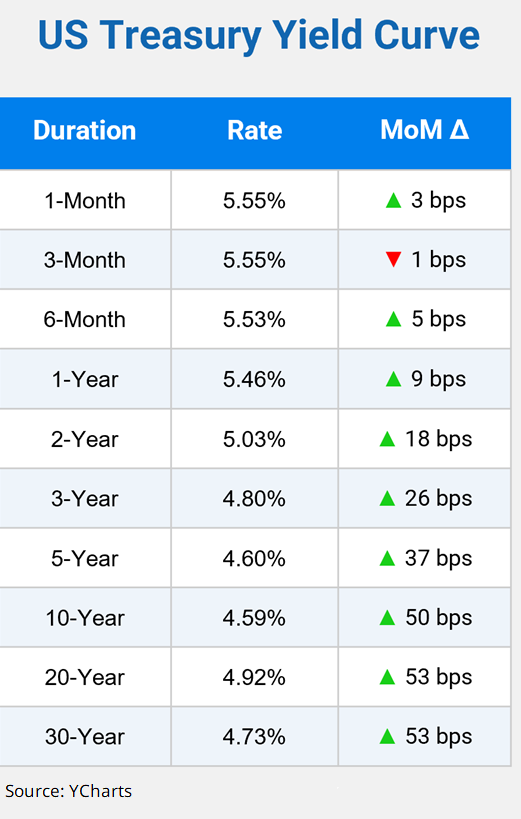
Yields on longer-term treasuries increased in September as T-Bills ended the month broadly unchanged. The 20-year and 30-year bonds each rose by 53 basis points. The 10-year’s 50 basis point increase helped reduce the inverted 10-2 treasury yield spread to -0.44%.”


Rising intermediate and long-term interest rates were the single biggest detractor to equity (and bond) market performance last month. And, the 10-year Treasury yield is up another 0.24% (as I write this on 10/6) since month end.


To state the obvious, higher rates have both economic and market impacts: A) Higher borrowing costs for businesses and consumers as well as tighter lending conditions and B) Intrinsically lower valuations for stocks under discounted cash flow models (higher discount rate/cost of capital) as well as relative valuation in the ultimate competition for capital investment.

3rd Quarter Economic and Market Outlook


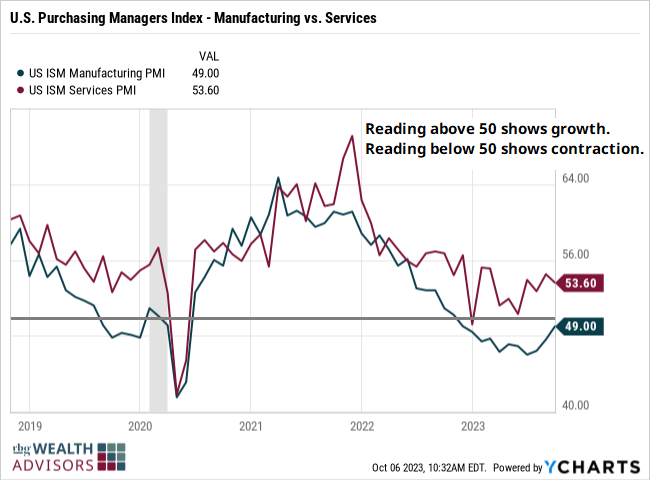
“At a high level, we're currently seeing a 'tale of 2 economies': While the market for services has expanded steadily since the beginning of the year (with both employment and the price of services growing in kind), the U.S. manufacturing sector, by the measures of employment and service prices, has been in a recession for nearly 12 months. 

And even though numerous signs are pointing to the looming possibility of a more widespread economic downturn – including the reduction of household savings, reduced lending, and the resumption of student loan payments for many borrowers – the job market remains strong. Furthermore, inflation, though down from its peak in early 2022, remains above the Federal Reserve's long-term target of 2% despite the bank's attempts to tamp it down.


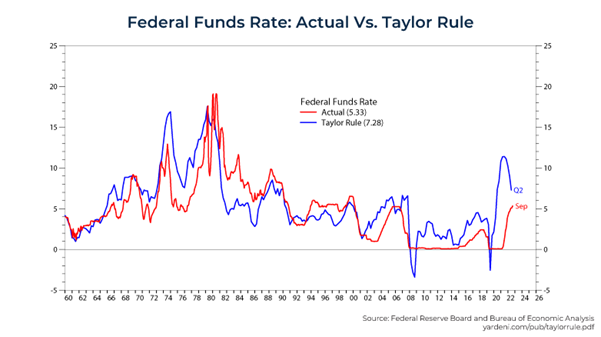
What's driving many of the economic conditions today are higher interest rates resulting from the Fed's efforts to fight inflation. But while these high rates might be enough to tip the country into a recession if we were in 'normal' times, there has been so much liquidity in the economy – both as a residual effect of the economic stimulus programs of the COVID-19 pandemic and the more recent Inflation Reduction Act and legislation subsidizing green energy and semiconductor manufacturing – that it's possible the Fed may need to hike rates even further (and keep them high for longer than expected) to achieve its inflationary goals.

The expectations for the future economic outlook also appear in the valuations of equities, which tend to reflect how markets anticipate that corporate earnings will grow in the future. Yet again, the numbers tell a different story depending on where you look: While growth stocks (particularly for large companies) are trading at historically high valuations, value stocks are trading as if we were already in a serious recession.”


Larry Swedroe released a detailed economic and market outlook. I especially enjoyed the breakdown of the dichotomy between the manufacturing and services economies. We’ve talked a lot this year about the mixed signals that the economy is sending. It’s also important to note how large the American services sector is compared to goods manufacturing, housing, etc.


It’s a balanced take on markets and even dips into some opportunities and segments that are non-correlated to economic cycle risk for downside protection.

You've Just Inherited an IRA: What Do You Do Now?


“In this article, we are focusing on non-spouse beneficiaries who inherited IRAs from people who died after Dec. 31, 2019. This group is now known as ‘non-eligible designated beneficiaries’ and will feel the biggest impact of [the SECURE Act]. The now-infamous ‘10-year rule’ applies to them. At the highest level, it says that the retirement account must be emptied by Dec. 31 10 years after the date of death. This accelerates distributions for many, which can have adverse tax consequences, and it requires a new level of tax planning to maximize after-tax income…


When the initial SECURE Act went into effect, it didn’t appear to matter when the account owner died. The 10-year rule applied to all non-eligible designated beneficiaries. If an account owner died in 2020, the beneficiary account would have to be emptied by Dec. 31, 2030. How and when the beneficiaries took those distributions didn’t matter. IRS Publication 590-b reinforced this point.


However, in February 2022, the IRS issued proposed regulations seeking to split this new group of beneficiaries into two: those who inherited from a decedent before their [required minimum distributions (RMDs) started] and those who inherited from a decedent who died after their [RMDs started]:


If the decedent died before their required beginning date: The 10-year rule, as it was initially interpreted, stands. The account must be fully withdrawn by Dec. 31 of year 10. In years one through nine you are not required to do anything. This would lead the competent planner to increase distributions in lower-income years and decrease distributions in higher-income years to mitigate the tax consequences of withdrawals.


If the decedent died after their required beginning date: The 2022 proposed regulations, emphasis on ‘proposed,’ introduce an additional component: regular stretch distributions. The beneficiary would have to take RMDs as they would have before SECURE 1.0, in every year. Any additional amounts left in the account would have to be fully distributed at the end of the 10-year period.”


The process for non-spouse inheritors of IRAs has gotten more punitive from a tax standpoint and is slightly more complicated after SECURE Acts 1 and 2. Instead of keeping those investments in a tax-deferred account and stretching out required distributions over their lifetime, they now have to be distributed over 10 years. However, the amounts are dependent on the age of the decedent.


This was a nice clean explanation of the 10-year rule and how the IRS through publication and now proposed regulations impacts the distribution rules for heirs. It also touches on the benefit of an advisor for tax-efficient withdrawal strategies.

Read More
 

Graph of the Week

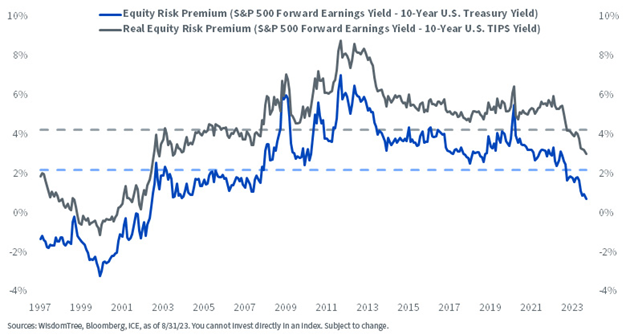
“The S&P 500 is currently priced at 19 times next year’s earnings, resulting in a 5.1% forward earnings yield. Using the Rule of 72 with that forward yield, an investment would double and maintain purchasing power in about 14 years, over two decades earlier than the 36-year horizon using today’s real bond yields.


The current 3% equity risk premium is also consistent with the long-term 3% average premium of equities over bonds from over 200 years of data in Professor Siegel’s Stocks for the Long Run.”


Note that the earnings yield in some sectors and further down the market cap spectrum are well over 7%. There are opportunities and reasons to own fixed income, but not to the degree to prohibit ownership of equities.

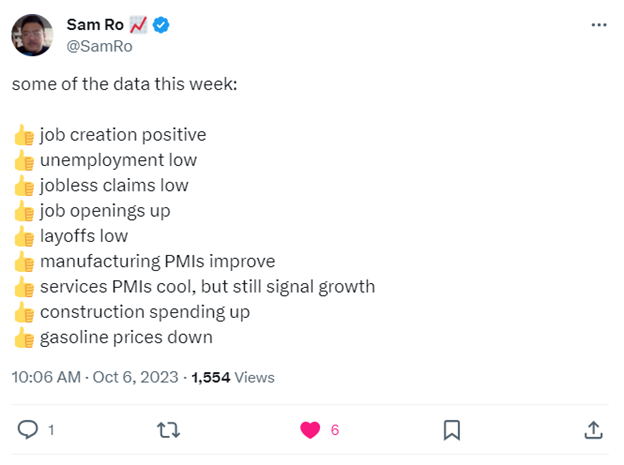
Tweet (or maybe X) of the Week

Thanks for reading. Have a great weekend!


Guidance for today. Growth for tomorrow.


RBGWA - Logo - Full Color.jpg

Tim Ellis, CPA/PFS, CFP®

CIO and Wealth Advisor

RBG Wealth Advisors

O: 901.244.2891 | C: 662.444.1415

E:  tellis@rbgwa.com

A:  5100 Wheelis Dr., Ste. 211, Memphis, TN 38117

W: rbgwa.com

LinkedIn  Twitter  Facebook

RBG Wealth Advisors LLC is a registered investment adviser. Information presented is for educational purposes only and does not intend to make an offer or solicitation for the sale or purchase of any specific securities, investments, or investment strategies. Investments involve risk and, unless otherwise stated, are not guaranteed. Be sure to first consult with a qualified financial adviser and/or tax professional before implementing any strategy discussed herein. Past performance is not indicative of future performance.