|
VOR's Weekly News Update
VOR is a national non-profit organization
run by families of people with I/DD and autism
for families of people with I/DD and autism.
| | |
VOR's Annual Fall
Winter
Fundraising Campaign!
This is the most important time of year for our fundraising.
Most of our membership renewals and donations
will come in the next eight weeks.
| | |
It's Make-It-Or-Break-It Season for VOR.
Like that little squirrel pictured above, gathering nuts for the months ahead, so it is with VOR.
The contributions we receive in the our fall/winter fundraising campaign cover a significant portion of our expenses in the year ahead.
Please contribute,
so that we may continue to help families like yours.
| | |
VOR Podcasts
Episode 5 - Roslyn Leehey
| | |
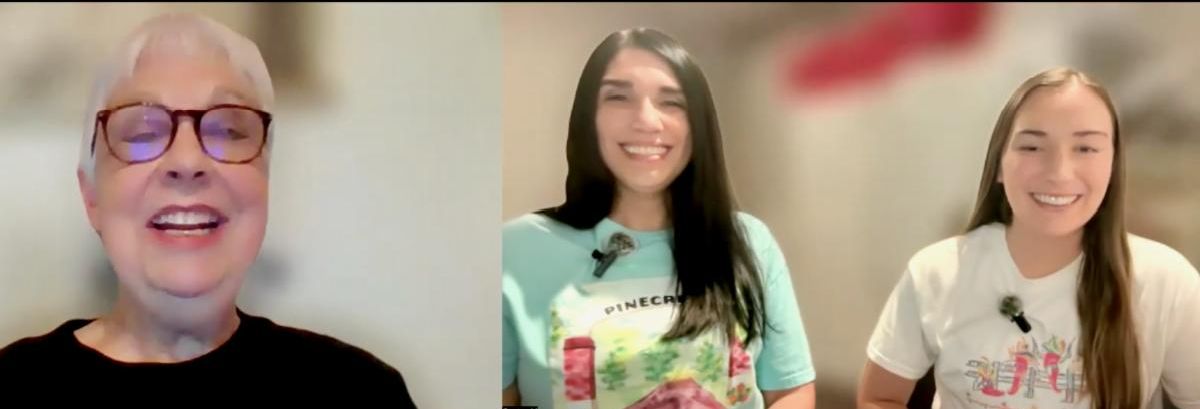
This week, Casey and Brenna speak with VOR's Roslyn Leehey about her son Teddy, the services he receives in an HCBS group home, and their shared experiences.
Many of you have met Roslyn as the host of our
VOR Networking Meetings.
This is your chance to hear her tell her story!
See this, and other Brenna and Casey's other podcasts
on our YouTube page!
| | Only a Few Hours Left to Order! | | |
Express your gratitude to the
Direct Support Professionals
in your life
with a little something extra this year...
| | |
Once again, we have partnered with See's Candies in our 2025 Year-End Fundraising Campaign.
See's has agreed to give us a share of the profits for each box sold.
The idea is not to replace our regular appeal for donations,
but to enhance our fundraising efforts by offering delicious See's Candies to our folks who wish to send gifts to family and friends over the holidays.
The last day to order is December 5, 2025
~~ Free Shipping on all orders over $75 ~~
(Except to PO Boxes as extra packaging is required)
| |
Strengthening the Home and Community-Based Services (HCBS) Grievance Process
By David Machledt, Health Law. Org, December 1, 2025
Executive Summary
In May 2024, the Centers for Medicare & Medicaid Services (CMS) finalized regulations meant to improve access to key Medicaid services for people with disabilities. Parts of the new regulations requires states to revamp how they receive and resolve issues that people using Home and Community Based Services experience while receiving services. This includes new requirements for addressing critical incidents and establishing a grievance process for individuals receiving Medicaid HCBS. This brief reviews the new federal requirements and situates them in the context of related oversight and monitoring processes. It provides advocates with suggestions and ideas for how to build and test a grievance process responsive to the needs of people using HCBS. It also points to promising approaches that some states have already implemented.
Go to article
Download publication
| |
5 Key Facts About Medicaid and Provider Taxes
Authors: Alice Burns, Elizabeth Williams, Anna Mudumala, Elizabeth Hinton, and Robin Rudowitz
KFF, December 1, 2025
The 2025 reconciliation law imposes significant new restrictions on states’ ability to generate Medicaid provider tax revenue, including prohibiting all states from establishing new provider taxes or from increasing existing taxes as well as reducing existing provider taxes for states that have adopted the Affordable Care Act (ACA) Medicaid expansion. Medicaid is jointly financed by the federal government and the states, with the federal government guaranteeing states federal matching payments with no pre-set limit. In federal fiscal year (FFY) 2024, the federal government paid 65% and states paid 35% of total Medicaid costs. States are permitted to finance the non-federal share of Medicaid spending through multiple sources, including state general funds, health-care related taxes (referred to as “provider taxes” throughout this brief), and local government funds.
States are now facing a more tenuous fiscal climate due to slowing revenue growth, increasing spending demands, and growing fiscal uncertainty, due in part to the 2025 reconciliation law. The Medicaid provisions in the new law, including new provider taxes restrictions, are estimated to reduce federal Medicaid spending by $911 billion (or by 14%) over a decade, with wide variation in how the effects will be felt across the states. The cuts to Medicaid coupled with other changes in the 2025 reconciliation law and changes to the ACA marketplace coverage could increase the number of people by 14.2 million when everything is fully implemented. Those that support the new limits on provider taxes say that providers and states receive federal matching funds without expending their own money, which can “inflate a state’s Medicaid match.” However, provider taxes are a key source of Medicaid funding and limiting them could exacerbate existing state budget challenges and result in lower provider payment rates or reductions in Medicaid coverage, potentially compounding the effects associated with increases in the number of people without health insurance.
This issue brief uses data from KFF’s 2025-2026 survey of Medicaid directors to describe states’ current provider taxes, explore how the 2025 reconciliation law changed the federal rules governing provider taxes, and summarize potential impacts of the changes across states.
Continued (Report synopsis)
| |
HHS Officially Rescinds Nursing Home Minimum Staffing Rule
By Joyce Frieden, Medpage Today, December 2, 2025
Nursing home providers praised the move, while one patient group called it "very disappointing"
The Trump administration on Tuesday rescinded a Biden-era rule that required a minimum number of healthcare staff in nursing homes.
The Department of Health and Human Services (HHS) said Tuesday in a press release
it is taking the action "after determining the final rule imposed by the Biden administration disproportionately burdened facilities, especially those serving rural and tribal communities, and jeopardized [patients'] access to care."
"Today's decision to repeal these provisions, in alignment with the One Big Beautiful Bill Act, underscores HHS's commitment to practical, sustainable approaches to improving nursing home care, and allows for further opportunity for engagement with community and tribal stakeholders," the release stated.
"Safe, high-quality care is essential, but rigid, one-size-fits-all mandates fail patients," HHS Secretary Robert F. Kennedy Jr. said in the release. "This administration will safeguard access to care by removing federal barriers -- not by imposing requirements that limit patient choice."
Mehmet Oz, MD, MBA, administrator of the Centers for Medicare & Medicaid Services (CMS) said in the release that "At CMS, our mission is not only to improve outcomes, but to ensure those outcomes are achievable for all communities. We cannot meet that goal by ignoring the daily realities facing rural and underserved populations. This repeal is a step toward smarter, more practical solutions that truly work for the American people."
The rule, enacted in May, 2024 by the Biden administration, required nursing homes that participate in federal programs such as Medicare and Medicaid to meet a total nurse staffing standard of 3.48 hours per resident day (HPRD), which must include at least 0.55 HPRD of direct registered nurse (RN) care and 2.45 HPRD of direct nurse aide care, according to a CMS fact sheet. Facilities could use any combination of nurse staff (RNs, licensed practical nurses [LPNs] and licensed vocational nurses, or nurse aides) to account for the additional 0.48 HPRD needed to comply with the total nurse staffing standard, the agency said. The rule also required nursing homes to have an RN on site 24 hours a day, 7 days a week, to provide skilled nursing care.
Nursing home and hospital groups praised the rule's rescission. "The CMS staffing mandate repeal is a much-needed recognition of the very real barriers that our nursing home members navigate in recruiting and retaining staff," Katie Smith Sloan, president and CEO of LeadingAge, an association of nonprofit aging services providers, said in a statement. "We will continue to engage with federal policymakers and advocate for meaningful investments in the long-term care workforce and the advancement of smart policies to realize the necessary numbers of trained and qualified nurse aides, registered nurses, licensed practical nurses, and other [nursing home] caregivers."
But nursing home consumer groups felt otherwise. "We were very disappointed by CMS's announcement today," Sam Brooks, director of public policy for the National Consumer Voice for Quality Long-Term Care, a patient advocacy group, wrote in an email to MedPage Today. "Even though it claimed the rescission was in part due to congressional and judicial developments, it repeated the often-debunked lines from the nursing home industry that there are not enough staff and that rural facilities will be harmed. Both of these claims are not true."
"The rule had numerous opportunities for exceptions, meaning that nursing homes with legitimate hiring challenges would be exempted from compliance," he continued. "Further, there was no evidence rural facilities would have a harder time complying [than] non-rural facilities.... The real problem is that nursing homes treat workers poorly and cannot retain them."
"Most disheartening was that CMS offered no plan to address the staffing crisis in nursing homes," Brooks added. "Instead, it is returning to the status quo, which results ... in residents suffering and dying because nursing homes are not staffed adequately."
Read the full article here
| | |
Many of VOR's family members with I/DD or autism receive services covered by both Medicaid and Medicare. Billing between the two silos can be problematic - sometimes nightmarish. The agencies continue to work on this challenge, but there is a long way to go before the red tape can be removed.
How Federal-State Collaboration Can Continue To Advance Integrated Care For Dually Eligible Individuals
By Molly Knowles, Nancy Archibald, Allison Buffett, Lisa Harootunian, and Kamryn Perry, Health Affairs,
December 4, 2025
This is the latest in the Health Affairs Forefront featured topic, Medicare and Medicaid Integration. The featured topic includes analysis, proposals, and commentary that will inform policies on the state and federal levels to advance integrated care for those dually eligible for Medicare and Medicaid.
Foundational misalignments between Medicare and Medicaid can make it very difficult for dually eligible individuals to access the care and services they need. As one dually eligible enrollee told The People Say, a website that shares stories from older adults on the issues that affect them most, “Half the time, if you try to get the [medical] equipment you need ... you don’t get it ’cause you have to go to a Medicaid doctor to get it. Then there’s other stuff that Medicare won’t pay [for] that I could surely use… It’s frustrating.”
The responsibility for designing and implementing programs that integrate Medicare and Medicaid benefits, administrative systems, and financing for dually eligible individuals largely rests with states. Yet, strong federal leadership has been essential in guiding and supporting states in these efforts. These federal-state partnerships have expanded access to integrated care programs for millions of dually eligible individuals nationwide.
Yet, with the passage of the 2025 Budget Reconciliation Bill (HR 1), states face significant shifts in priorities. The law introduces substantial Medicaid eligibility and financing reforms, including “community engagement” (work) requirements for certain populations, more frequent eligibility determinations, and a projected $900 billion reduction in federal Medicaid spending over 10 years, according to Congressional Budget Office and KFF analyses. As states focus on implementing these mandated reforms, they will likely have limited bandwidth and resources to pursue new or enhanced integrated care programs. In this context, continued federal support will be critical to sustaining bipartisan progress toward advancing integrated care.
This Forefront article examines opportunities for federal leadership to support Medicare-Medicaid integration in an evolving policy landscape. Drawing on the experiences of states transitioning from the federal Financial Alignment Initiative (FAI) to integrated Medicare Advantage dual-eligible special needs plan (D-SNP) programs, it highlights states’ transition plans and the value of federal support for their work. Several of these state perspectives are included below.
The Need For More Integrated Care
Medicare and Medicaid programs cover different services and have distinct administrative processes and financing mechanisms. In the US, 13 million people are dually eligible for both programs, many of whom have high rates of multiple chronic physical and behavioral health conditions, need long-term services and supports (LTSS), and experience significant health-related social needs. The lack of coordination between the programs often results in fragmented care, avoidable service use, and higher costs. In 2021, dually eligible individuals made up 19 percent of Medicare enrollees, but accounted for 35 percent of Medicare spending. Similarly, they represented 13 percent of Medicaid enrollees but drove 27 percent of Medicaid expenditures. In response, state and federal policy makers have sought to integrate care to reduce inefficiencies and improve health outcomes for dually eligible individuals.
Progress In Developing Integrated Care Programs
Over the past decade, a growing number of states across the political spectrum have implemented programs that integrate the delivery, financing, and administration of Medicare and Medicaid through managed care models. These integrated models include Medicare-Medicaid Plans operating under FAI demonstrations, with approximately 239,000 enrollees; the Program of All-Inclusive Care for the Elderly (PACE), with more than 71,200 dual-eligible enrollees; and D-SNPs, which enrolled more than six million enrollees (as of August 2025). While evidence varies, these managed care models have the potential to reduce administrative redundancies, ensure state Medicaid program integrity, increase access to high-value home- and community-based care, improve enrollees’ care experience, and produce better outcomes.
While managed care models vary in their level of integration, they stand in contrast to fee-for-service Medicare and Medicaid, which currently do not offer integration options. However, there is emerging interest in using the Centers for Medicare and Medicaid Services’ (CMS’s) Innovation Center demonstration authority to test an accountable care organization (ACO)-based model for dually eligible individuals in fee-for-service Medicare. State insights into implementing and overseeing systems of care for dually eligible populations will be valuable for CMS to draw on if it pursues an ACO demonstration.
Read the full article here
| |
Recent Medicaid Reforms Will Benefit People With Disabilities
From the National Center for Public Policy Research, December 4,2025
While the left whines about recent Medicaid reforms, Able Americans Director Rachel Barkley is confident that people with disabilities will benefit from the changes.
In a recent Fox News story, Rachel outlined the provisions she is excited about:
Rachel Barkley, Director of the National Center’s Able Americans Program, which promotes free-market policy reforms for people with disabilities, said she is confident that Republicans’ reforms to Medicaid will “directly improve” the lives of those living with disabilities.
Among the reforms Barkley praised were the implementation of the Helping Communities with Better Support (HCBS) Act, which she said “expands access to Medicaid home- and community-based services for individuals with disabilities and their caregivers,” while simultaneously increasing transparency and accountability for those waiting for care.
Barkley also highlighted new tax provisions ushered in by Republicans that she said will serve to promote financial security for those with disabilities.
But importantly, Barkley added, the GOP reforms — such as new work requirements — serve to ensure that disabled people are given the priority within Medicaid that they deserve.
Continued
| | |
The following editorials, and the article in the NY Times between them that they reference, focus on the shortage of caregivers for the aging community.
Our families in the I/DD and autism communities may see a parallel to their own experience.
As America Faces a Caregiving Catastrophe, We Need to Name the Real Villains
By Neal K. Shah, Common Dreams, November 29, 2025
I can tell you from firsthand experience that we’re not in a “sudden” caregiving crisis. It’s a catastrophe 50 years in the making.
f you want to understand how deeply broken America’s caregiving system is, consider this: The New York Times just published a sprawling 4,000-word essay America’s Caregivers are in Crisis about one family’s elder care crisis – a daughter juggling two increasingly fragile parents, a shattered leg, a ruptured tube, a father disoriented from chemo and dementia – and somehow still came away blaming the collapse mostly on the latest round of Medicaid cuts and immigration restrictions. Convenient targets, for sure. But focusing there is like pointing at the last flake of snow on an avalanche and calling it the cause.
To be clear, I think the Times story is heartfelt, beautifully written, and painfully familiar to millions of families. My own caregiving experiences have been challenging, leading me to leave behind my career to become a full-time caregiver due to the guilt, strain, and lack of care support.
But the framing in the Times essay? It’s exactly the kind of superficial diagnosis corporate America loves, because it distracts from decades of bipartisan neglect, profiteering, demographic denial, and policy choices that handed the future of eldercare to private equity chains, insurance middlemen, and unpaid women.
I can tell you from firsthand experience that we’re not in a “sudden” caregiving crisis. It’s a catastrophe 50 years in the making. And it didn’t happen by accident. It happened because political leaders, both Democrats and Republicans, were too busy pleasing donors and protecting corporate interests to address the unavoidable math of an aging nation.
Read the full opinion piece here
| |
'We Had No Idea What Was Coming’: Caring
for My Aging Father
By Michelle Cottle, the New York Times, November 24, 2025
The first sign of trouble arrived by text. On Dec. 17 at 2:33 p.m., my younger sister, Melissa, pinged me from Houston to say that our 78-year-old father had veered off course while driving himself to a medical appointment.
“He has missed his exit,” she wrote. “I don’t want to call him and tell him because he will be pissed that I am tracking him. What do we do?”
This was not the first time Dad had gone rogue while driving. Just the day before, he had cruised in aimless circles around unfamiliar neighborhoods for over an hour, dismissing worried calls from our mother. But this time he was missing lab appointments related to his bladder cancer.
The hospital called our mother to ask why my father hadn’t shown up, alerting her to the situation. Mom called Dad, who claimed to be stuck in traffic — true only if “stuck in traffic” meant driving in circles.
Dad eventually drifted home — after burning up 49 miles over the course of nearly two hours and missing two appointments. He tried to shrug off the whole episode, but something was clearly off. Mel and I agreed that I should at least talk with him about hitting the pause button on driving. (Spoiler: That did not go well.)
We had no idea what was coming.
Caring for an aging loved one is a journey — and not a low-key pleasure trip with a clear itinerary you can plan and pack for. The road is constantly dipping and turning to accommodate the vagaries of aging. I, for instance, have lost count of how many bones my mother has broken in recent years.
Rolling through his 70s, my father, Bill, a Navy veteran and a retired nuclear energy executive, was a force of nature: active, social, independent. Until he wasn’t. In August 2024, he was diagnosed with bladder cancer. And just like that, my sister and I were scrambling to address his proliferating health needs, as well as to assume his role supporting our medically fragile mother, Brenda.
The latter was what worried Dad. Facing months of chemotherapy followed by surgery, he never expressed anxiety about his prognosis. He did share his fear of being unable to take care of Mom. I assured him that Mel and I could handle whatever lay ahead.
You can see where this is going. Faster than you can say “chemo brain,” my family’s caregiving experience spiraled into a chaotic spectacle that was part harrowing medical drama, part sitcom.
Read the full editorial here
| |
Another Broken Campaign Promise: Trump Has Failed Family Caregivers
By Martin Burns and MaryLiz Burns, Common Dreams, November 30, 2025
Instead of following through on his proposed tax credit for family caregivers, Trump has made their lives even harder with Medicaid cuts and immigration crackdowns.
In a searing op-ed in the New York Times entitled “'We Had No Idea What Was Coming’: Caring for My Aging Father,” opinion writer Michelle Cottle shares her caregiving story and discusses how we as a nation support our family caregivers today. The substance and the emotions of Cottle’s essay will be all too familiar to anyone who has been a caregiver. In particular, the fact that no matter how much you know about health policy or navigating bureaucracy, or think you knew—when you are caregiving for someone you love, you realize you know far too little. For most of us, one of the first steps on a caregiving journey is the realization that you are alone and have to build your support team.
Caregiving was a hard task before Trump was reelected. Trump did not create the unrelenting and cruel world that family caregivers must navigate. He did, however, make it much harder. Cottle summarized this pain:
While caring for loved ones is a deeply personal charge, the weight of that responsibility is influenced by public policy in areas ranging from taxes to labor law to entitlement spending. In his 2024 campaign, Donald Trump promised a tax credit for family caregivers. “They add so much to our country and are never spoken of, ever, ever, ever, but they’re going to be spoken of now,” he vowed during a rally at Madison Square Garden the week before Election Day. Back in office, however, Mr. Trump promptly abandoned the idea. It was not among the raft of tax cuts in his domestic policy bill. Worse still, he has taken steps likely to make families’ caregiving burdens far heavier. Two major moves stand out. One is the slashing of Medicaid. The other is the broad-based assault on immigration. Together, those actions risk upending a caregiving ecosystem already under strain, throwing millions of families into crisis.
Let’s look at Cottle’s claims one by one. The most grievous blow that the Trump administration has wielded against America’s caregivers is the cuts to the Medicaid program which provides 61% of the nursing-home care in this country. According to the University of California at Berkeley School of Public Health, the One Big Beautiful Bill Act (OBBB), which Trump signed into law on July 4, 2025, includes cuts to Medicaid of almost $1 trillion over the next 10 years.
In addition to providing care in an institutional setting, Medicaid pays for a substantial amount of care for people in their homes. As the Kaiser Family Foundation reports, “Over one-third of Medicaid spending pays for long-term care, with most of the spending paying for home care—also known as ‘home- and community-based services’ or HCBS. Medicaid pays for almost 70% of all home care spending in the US, nearly all of which is provided through optional services.” The bottom line in all of these statistics is that Medicaid is the lifeblood of America’s caregivers.
Another way Trump has made life even harder for caregivers is through his immigration policies. As Cottle explains:
As Mr. Trump throttles the flow of immigrants into the United States, families are likely to have more and more difficulty finding help. Already, the cancellation of the temporary protected status of hundreds of thousands of migrants is causing upheaval. “We’re seeing a jarring, sudden loss of workers, of people who are being sent back” to their home countries, said Katie Smith Sloan, the head of LeadingAge, an association of community-based organizations that provide services for seniors.
Caregivers often depend on immigrants to provide care for our loved ones. You also know, if you have been on the frontlines of caregiving, how wonderful so many of these people are. Surely, if we can have an H-1B visa category to bring skills we do not have here in the USA, we can figure out a category for those who help us take care of our most vulnerable.
Finally, there is the question of the tax credit for caregiving. For all of Trump’s praise for his self-styled “One Big Beautiful Bill,” why did he not put in a simple tax credit that would benefit family caregivers? When you review a list of the tax changes in the OBBB, leaving out a tax credit for caregiving stands out as especially egregious. Furthermore, to add insult to injury, too many members of Congress and opinion writers have been silent on Trump’s refusal to provide the promised caregiving tax credit.
Continued
| |
To Address Disability Caregiver Crisis, Feds Look To AI
By Michelle Diament, Disability Scoop, December 2, 2025
Federal health officials are launching a multimillion-dollar competition to attract new ideas for how technology can transform caregiving for people with disabilities and others.
The U.S. Department of Health and Human Services is launching a $2 million Caregiver Artificial Intelligence Prize Competition.
Through the initiative, the agency plans to fund innovative ideas that use AI to support both paid and family caregivers in providing care at home as well as ways to support employers in the caregiving workforce to strengthen efficiency, scheduling and training.
“We’re calling on the engineers, scientists, innovators, entrepreneurs across the country to harness artificial intelligence to make caregiving smarter, simpler and more humane,” HHS Secretary Robert F. Kennedy Jr. said in announcing the new effort recently.
“AI can transform caregiving by delivering on-demand support, predicting health risks before they happen, monitoring wellbeing and automating paperwork so that caregivers can focus on what matters most: the care and compassion of the people whom they seek to help,” Kennedy said. “Our goal is simple — to create tools that are effective, safe and affordable for every American family that needs them.”
Nearly 1 in 4 American adults provide care to an adult or child with a complex medical condition or disability, according to a recent report from AARP and the National Alliance for Caregiving. The groups found that most family caregivers are unpaid and their responsibilities often leave them struggling financially. In addition, many family caregivers say they feel isolated and have difficulty maintaining their own health.
Meanwhile, the workforce of paid direct support professionals has been in crisis for years with low pay leading to perpetually high turnover rates.
Read the full article here
| |
Georgia - Federal Medicaid cuts could limit access to services for people with disabilities
By Dominique King, The Current, November 27, 2025
In the 17 years since giving birth to son Eli, Michelle Heyman has become a master at the complex bureaucratic hurdles of Medicaid, the federal health insurance available to low-income children, the elderly and disabled in Georgia.
The federal funding pays for expensive and intensive daily care that the Heymans need to keep Eli living at home with his family. Despite the scrupulous attention she pays to compile the documents necessary to keep these benefits, Heyman discovered in February that Eli had been cut off from those programs without warning, sending the family into chaos.
“You have to send in like a thousand pages of documentation in order to renew. And you have to fax it all. You have to fax every page,” Michelle Heyman said. “I gotta make calls, I gotta fill out records requests for every single person that he sees: therapists, doctors, school stuff, on a very tight timeline.”
Spending cuts passed last summer by Congressional Republicans, including the steepest cuts in Medicaid in a generation, have the Heymans worried that more disruption is coming their way. More than 200,000 Georgians with disabilities rely on Medicaid for health care and services, and many of these families, as well as medical providers and health care advocates are uncertain about what the spending changes will mean.
Georgia’s Republican congressional caucus says families like the Heymans have nothing to worry about, as the new spending law doesn’t affect Medicaid funding for disabled children.
However, D’Arcy Robb, executive director of the Georgia Council on Developmental Disabilities, sees a more pessimistic future. She says it’s possible that waiver programs like the one Eli and other disabled Medicaid recipients rely on to stay out of assisted living facilities could be cut as state agencies struggle to pay for other services directly cut in the federal budget.
Federal and state governments are required to pay for care for disabled Medicaid recipients in nursing homes. But nursing homes are not obligated to have all the services available via waiver programs like the one Eli relies on for his quality of life.
Eli’s mother, who managed to renew benefits for her after last spring’s snafu, says the ongoing uncertainty about whether this funding will continue from the state is terrible to live with.
“Generally when we’ve had travails in the past, we have been able to figure out how to work around them and move on,” said Heyman, a former health communication specialist. “Uncertainty is awful to live with on a day-to-day basis.”
The state’s Medicaid agency, the Department of Community Health, did not reply to requests for comment.
Continued
| |
Medicaid cuts aren’t just numbers, they’re life-changing to Florida families
By Sneha Subhash, The Sun-Sentinel, November 28, 2025
‘If you have a kid with special needs, you literally have to be a millionaire,’ one mother says
Jennifer Wiedmeyer used to take her 10-year-old son, Hayden, to a long list of doctors, including cardiologists, immunologists and therapists, all part of the careful routine that kept him healthy and growing. Born with DiGeorge syndrome, a rare genetic disorder that weakens his immune system, Hayden once saw as many as 13 specialists.
These treatments were once covered through Children’s Medical Services, a Florida program that supports children under 21 who qualify for Medicaid, until his coverage was unexpectedly dropped in 2023.
“I actually learned about it when I went to make an appointment for him,” said the Fort Myers mom. “They called me back and said, ‘Well, actually, you don’t have insurance.’ That’s how I found out.”
As states navigate the effects of President Donald Trump’s One Big Beautiful Bill Act, Medicaid programs are facing significant reductions. Florida falls into the group of states where children are at the greatest risk of losing Medicaid coverage.
With as many as 2.3 million children in Florida on Medicaid, for kids like Hayden, the threat to their insurance means the possibility of not receiving vital treatments and medications.
Hayden has five heart conditions, most of which don’t cause significant problems. Still, because he previously underwent surgery to repair vascular rings and has a small hole in his heart, he requires regular monitoring. Hayden’s routine echocardiogram and EKG, which are typically scheduled every two years, have been overdue since April 2024. Wiedmeyer says without insurance, she cannot afford to take her son for medical care.
Continued
| | |
The following article details a report issued by Disability Rights Arkansas (DRA) and presented to local news outlets. The Arkansas parent group FF/CFR (Friends and Family of Care Facility Residents) is undertaking an independent investigation. It has identified significant misrepresentations in DRA's report.
After a representative of FF/CFR (a member of VOR!) initiated a FOIA request for access to the information cited in the report, DRA retaliated by filing a lawsuit against her, and against the Attorney General of the State of Arkansas.
Conway Human Development Center scrutinized for alleged 'malnutrition' in Disability Rights Arkansas report
By Maya Ellison, THV-11 News, December 2, 2025
For years, Reagan Stanford and her team at Disability Rights Arkansas (DRA) have been documenting what they call serious concerns inside the Conway Human Development Center.
"Most of these were guardian complaints that they reached out directly to disability rights Arkansas," Stanford said, who is the DRA's Abuse and Neglect managing attorney.
Their 43-page report outlines what they described as "systemic failures in nutrition management and clinical oversight," based on cases reviewed between 2023 and 24.
The report cites delayed or missing documentation and staffing shortages, including an example where a resident was documented as having eaten two meals, but video footage showed he did not eat at all.
"We've seen them, like, give someone a few bites, and then there's no indication that the person is full, and then they just go through, you know, like they move on and throw the plate away," Stanford said.
The 66-year-old facility currently houses about 470 people, according to the report.
Disability Rights Arkansas explained that there is one dietary services director and one clinical dietitian for the facility, something that Stanford said is not adequate.
"We've seen where people have been completely skipped over or like they didn't get them, maybe, like the one, and that's something we've seen in more than just the case that's highlighted here, that he was so sedated that I think he was not, you know, like he'd be sleeping a lot, and was often not brought to the meal," explained Stanford.
Additional findings listed in the report include:
- Twelve cases of malnutrition that were documented between February 2023 and January 2025.
- Hospitalizations for malnutrition.
- Persistent failures to follow hospital recommendations and maintain accurate dietary records.
The report also stated: "Sparked by three serious complaints in 2023-2024, the review expanded when DRA noted that 32% of CHDC residents who died between February 2023 and February 2024 were underweight. At the time of death, and that CHDC repeatedly failed to acknowledge or correct deficiencies even when notified directly."
Continued
| |
Some of Virginia’s most vulnerable allowed to die without anyone trying to save them: dLCV
By Ryan Nadeau and Ben Walls, WRIC-8 News, December 1, 2025
Dozens of people with disabilities receiving state-licensed care were allowed to die without anyone trying to save them, according to a new report from the disAbility Law Center of Virginia (dLCV).
dLCV is a state legal and advocacy organization that aims to ensure people with disabilities are safe from abuse, neglect and discrimination.
Over the course of multiple years, dLCV took a look at trends in 181 cases of unexpected death among people with Intellectual and Developmental Disabilities (IDD) under the watch of providers licensed by the Virginia Department of Behavioral Health and Developmental Services (DBHDS).
This research was reportedly prompted by concerns about a “lack of autopsies” and “inaccurate death certificates” among state-licensed providers, with the goal being “identifying preventable patterns and strengthening protections for this vulnerable population,” dLCV said.
On Monday, Dec. 1, the agency released an 18-page report detailing the “alarming trends” researchers found. This includes staff failing to appropriately respond to life-or-death emergencies, as well as preventable choking deaths caused by a lack of supervision.
“Our most disturbing finding was that providers often did not respond appropriately when they found someone who was unconscious or unresponsive,” dLCV said.
The average age of death of the patients in these cases was 50 years old, but the youngest was only 19 and the oldest was 83. The majority died in group homes, but some died in hospitals, supported residential homes and emergency rooms, among other locations.
In nearly half of the cases studied, these patients had little to no verbal skills — meaning it could be very difficult or even impossible for them to communicate their suffering. They therefore relied heavily on the observations of their caretakers.
Continued
| |
Minnesota pauses disability services licensing during fraud investigations
By Alyssa Chen, The Minnesota Reformer, December 3, 2025
The Minnesota Department of Human Services has issued a two-year moratorium on licensing for Home and Community-Based Services, a Medicaid program that helps people with disabilities receive care in their home or a community, such as group homes, instead of in nursing homes or hospitals.
DHS will stop issuing new licenses and cancel existing applications starting in January, according to a letter from the agency’s Temporary Commissioner Shireen Gandhi to lawmakers dated Monday. The Legislature passed a law this year allowing DHS to pause licensing if it finds that new applications are growing beyond program needs.
There are currently 2,549 active licenses and 2,314 pending applications as of mid-November, according to the letter. Compared to 2015-2019, the past five years have seen an increase in disability waiver recipients, i.e., people who need services, of 25%, much smaller than the 55% increase in the average annual number of licenses and 283% increase in new applications for licenses. Gandhi said DHS compared the growth in provider licenses to the growth in people seeking services to conclude that it should no longer accept new applications.
Still, providers warned that the decision will harm the disability community. A statement from the Association of Residential Resources in Minnesota, which represents disability service providers, said they were only notified Tuesday, and that the “sweeping, system-altering policy” decision was made “in complete secrecy.”
Josh Berg, a service director at Accessible Space, an assisted independent living provider, said that the decision to stop licensing new providers is “a really clear example of [DHS] saying that they don’t have things under control.”
Continued
| |
New York - Commentary: Managed care for Medicaid's behavioral health services has been a disaster
By Lauri Cole, the Times-Union, December 5, 2025
It’s been 10 years since the Cuomo administration imposed a managed-care model on Medicaid’s behavioral health services, allowing mostly for-profit health plan “middlemen” to oversee mental health and substance use disorder care for New Yorkers under Medicaid.
The use of this managed-care model has been a costly experiment, not only in financial terms, but in the number of lives lost or endangered. It places an unnecessary burden on taxpayers, restricts access to care and threatens the viability of community-based treatment providers.
When Gov. Kathy Hochul releases her executive budget in January, she must remove community-based mental health and substance use disorder services from the state’s Medicaid managed-care program. By eliminating the middlemen, the state can save hundreds of millions of dollars per year and ensure that more funding goes to the actual care New Yorkers need.
Over the last decade, insurers have been paid handsomely by the state despite failing to comply with federal and state parity laws and other laws, regulations and contract provisions put in place to protect both Medicaid members and other taxpayers.
For instance, their contracts require the insurer to allocate a certain amount of their state funding for actual services for Medicaid members. The majority of insurers failed to comply with the requirement — and continue to do so. However, they were paid as if they achieved the metric. This allowed insurers to collect interest on funds they had failed to earn and failed to spend on services for New Yorkers in need of care, while they sat back and waited for the state to come calling for the money.
In 2022, Attorney General Letitia James investigated the state’s health insurance plan provider directories for their mental health networks and found that 86% of providers listed were misleading or “ghost” providers — unreachable, not in-network, or not accepting new patients.
Restrictive health plan networks, the attorney general found, are misleading and limit an individual from getting the care they require. These harmful barriers often lead to far more costly emergency care — and often to tragic outcomes.
Insurers are required to reimburse fiscally fragile safety-net providers on time and in full. Despite the numerous laws New York has passed to reiterate these rules of the road, the insurers have an abysmal payment record. That leaves community-based providers waiting months and sometimes years to receive funds they are owed by the insurers. As a consequence, these providers are unable to meet increased demands for care. The result: long waits for New Yorkers who need mental health and substance use disorder help now.
Meanwhile, providers have to spend scarce resources to hire additional staff and even attorneys to push insurers to pay for the services they have already delivered.
At a time when three million New Yorkers are living with mental illness, and one-third do not get the treatment they need, we can’t let insurers line their pockets with state payouts while they delay and deny care to Medicaid members.
Continued
| | Fighting Cuts to Special Education: | |
California students with disabilities face ‘terrifying’ special ed cuts after Trump changes
By Carolyn Jones, KPBS News, December 4, 2025
Sleep is a rare commodity at Lindsay Crain’s house. Most nights, she and her husband are up dozens of times, tending to their daughter’s seizures. The 16-year-old flails her arms, thrashes and kicks — sometimes for hours.
But these days, that’s not the only thing keeping Crain awake. The Culver City mother worries about how President Donald Trump’s myriad budget cuts could strip their daughter of services she needs to go to school, live at home and enjoy a degree of independence that would have been impossible a generation ago.
“Every family I know is terrified right now,” Crain said. “We still have to live our everyday lives, which are challenging enough, but now it feels like our kids’ futures are at stake.”
Trump’s budget includes nearly $1 trillion in cuts to Medicaid, which funds a wide swath of services to disabled children, including speech, occupational and physical therapy, wheelchairs, in-home aides and medical care. All children with physical, developmental or cognitive disabilities – in California, nearly 1 million – receive at least some services through Medicaid.
Meanwhile, at the U.S. Department of Education, Trump has gutted the Office of Civil Rights, which is among the agencies that enforce the 50-year-old law granting students with disabilities the right to attend school and receive an education appropriate to their needs. Before that law was enacted, students with disabilities often didn’t attend school at all.
“We have a delicate web of services that, combined, support a whole child, a whole family,” said Kristin Wright, executive director of inclusive practices and systems at the Sacramento County Office of Education and the former California state director of special education. “So when the basic foundational structure is upended, like Medicaid, for example, it’s not just one cut from a knife. It’s multiple.”
Republicans have also suggested moving the office of special education out of the Department of Education altogether and moving it to the Department of Health and Human Services. Disability rights advocates say that would bring a medical – rather than a social – lens to special education, which they described as a major reversal of progress.
Trump has chipped away at other rights protecting people with disabilities, as well. In September, the U.S. Department of Transportation said it would not enforce a rule that requires airlines to reimburse passengers for damaged or lost wheelchairs. Trump has also repeatedly used the word “retarded,” widely considered a slur, alarming advocates who say it shows a lack of respect and understanding of the historical discrimination against people with disabilities. It’s all left some wondering if the administration plans more cuts to hard-fought rights protecting people with disabilities.
Continued
| |
Ed Department Sued By Disability Advocates Over Plans To Outsource Programs
By Michelle Diament, Disability Scoop, December 4, 2025
Disability advocates and education stakeholders are challenging the Trump administration’s steps to dismantle the U.S. Department of Education, arguing in a lawsuit that the actions will harm kids with developmental disabilities.
The Arc of the United States and a coalition of educators, school districts, and employee unions say in an amended lawsuit filed late last month that the Education Department’s plan to transfer management of dozens of programs to other federal agencies is illegal.
“In recent weeks, the administration announced plans to move more than 100 programs into agencies that have little or no experience running them. These transfers strip the department of its core functions and threaten to unravel the systems that help schools serve students with disabilities and other historically marginalized groups,” said Katy Neas, CEO of The Arc, who previously served as a top official in the Education Department’s Office of Special Education and Rehabilitative Services, or OSERS.
In November, the Education Department said that it would enter into six agreements with four other federal agencies to “co-manage” programs covering K-12, postsecondary education and more. The actions are seen as a workaround to move forward on the Trump administration’s goal of shuttering the Education Department without approval from Congress.
So far, the agreements do not include OSERS — which houses offices overseeing implementation of the Individuals with Disabilities Education Act and vocational rehabilitation — or the Office for Civil Rights, known as OCR, which handles disability discrimination complaints, but it’s unclear if that will remain the case.
Earlier this year, President Donald Trump said that he would move oversight of “special needs” programs to the Department of Health and Human Services and a senior Education Department official said last month that the agency is still “exploring” options for both OSERS and OCR.
“Moving the IDEA to a different department is not only unlawful, but would also weaken the critical systems that ensure students with disabilities can learn, grow, and thrive,” the lawsuit argues. “The Department of Education is the only federal agency with the expertise and infrastructure to uphold the IDEA’s promise.”
The suit indicates that efforts in recent months to fire nearly all staff responsible for administering IDEA — which are currently on hold — violate the law and that terminations at OCR and the closure of most of the office’s regional branches mean that the civil rights office has “all but stopped functioning.”
The updated complaint comes in a case known as Somerville v. Trump, which was initially filed in March by the Somerville Public School Committee, the Easthampton School District, the American Federation of Teachers, AFT Massachusetts, AFSCME Council 93, the American Association of University Professors and the Service Employees International Union. The coalition is represented by Democracy Forward and the matter has been consolidated with another case, New York v. McMahon.
Continued
| |
Opinion: Parents are ready to fight gutting of special education support
By Jonathan Salazar, Cleveland. Com, November. 28, 2025
Tomorrow, while many Americans will still be gathered with families and loved ones after Thanksgiving, parents of children with special needs will not be able to shake their looming anxiety. Tomorrow, we should be celebrating 50 years of the Individuals with Disabilities Education Act and its predecessor laws, and giving thanks for all it has done for our kids. Instead, we’re worried about what the future holds under the Trump administration.
Public Law 94-142, the Education of All Children Act, also known as the Education for All Handicapped Children Act, became law on Nov. 29, 1975, and was updated as the Individuals with Disabilities Education Act (IDEA), last reauthorized in 2004. It guarantees the right for all children to receive a “free and appropriate education.” Without it, there would be no Individualized Education Plans (IEPs), special education services, or intervention specialists. Children wouldn’t receive speech, physical, or occupational therapy services in school. Before IDEA, only one in five children with disabilities received an education.
Any parent whose child is on an IEP knows that, even in the most supportive school district, the disability-education process is often full of frustrations – largely because it has never been fully funded by the federal government. Schools in underresourced districts and states are even less likely to be able to provide all the services a child might need.
Parents and children with successful IEPs know how transformative they can be. The team at the Cleveland schools’ Louisa May Alcott School has been incredible for my two boys. Now that their school is slated to be merged into another building, it’s more critical than ever that they get the support they need to ease their transition. We need Ohio’s U.S. senators and members of Congress to fight for our kids.
That’s why I joined Parents United for Public Schools last month to meet with the staff of Sens. Bernie Moreno and Jon Husted of Ohio. We explained what IDEA means for our kids and countless children across Ohio.
It’s the dyslexic child who felt stupid until the right interventions finally clicked. Or the little boy with ADHD who couldn’t focus and disrupted his entire class until his team incorporated sensory breaks into his day. Or the nonspeaking girl who communicates using an augmentative and alternative communication device (AAC) and is readily accepted by her typical peers because they have always been around students with learning differences.
Yet U.S. Secretary of Education Linda McMahon has fired nearly every staffer in the federal department’s Office of Special Education, which distributes grant funding and investigates civil rights complaints. Now, the Trump administration wants to move the office to the U.S. Department of Health and Human Services. HHS Secretary Robert F. Kennedy Jr. has made it very clear that he sees our kids as patients needing to be cured, not young learners full of promise.
IDEA is an education law, not a health care law. It is meant to ensure that our children are properly educated. Giving tax cuts to billionaires while gutting the Department of Education and moving the Office of Special Education to HHS sends a clear message to parents of children with special needs: The Trump administration doesn’t care about helping our kids reach their full potential. Perhaps President Donald Trump and Secretaries McMahon and Kennedy don’t see our kids as worthy of educating at all.
Continued
| | |
Please share this offer with your loved one's
Direct Support Professionals!
VOR ❤️s OUR
DIRECT SUPPORT PROFESSIONALS!
Our loved ones' caregivers are essential to their health, safety, and happiness.
In appreciation of their good work and kind hearts, VOR offers free digital memberships to any DSP who would like to receive our newsletter.
We encourage our members to speak with their loved ones' caregivers to extend this offer of our gratitude.
If you are a Direct Support Professional interested in receiving our newsletter and e-content, please write us at
info@vor.net
with your name, email address, and the name of the facility at which you work. Please include the name of the VOR member who told you of this offer.
| | |
[Please click on blue link to view information about the bill]
VOR SUPPORTS:
H.R.6137 / S.3211 - Rep.Brian Fitzpatrick (R-NJ) and Sen. Maggie Hassan (D-NH) - A bill to require the Office of Management and Budget to consider revising the Standard Occupational Classification system to establish a separate code for direct support professionals
H.R.4796 - Rep. Laura Friedman (D-CA) - Restoring Essential Healthcare Act -To amend Public Law 119-21 (The One Big Beautiful Bill Act) to repeal the prohibition on making payments under the Medicaid program to certain entities.
H.R.4807 - Rep Greg Landsman (D-OH) - Protect Our Hospitals Act - To amend Public Law 119-21 to repeal certain changes to provider taxes under the Medicaid program.
H.R.1262 & S.932 - Rep. Michael McCaul (R-TX) and Sen. Markwayne Mullin (R-OK) "Give Kids A Chance Act" - To amend the Federal Food, Drug, and Cosmetic Act with respect to molecularly targeted pediatric cancer investigations. This bill would renew research into pediatric cancers and includes increasing funding for rare diseases, some of which cause Intellual and developmental disabilities and autism.
H.R.1509 & S.752 - Rep. Lori Trahan (D-MA) & Sen. Chuck Grassley (R-IA)
Accelerating Kids' Access to Care Act -
This bill would amend titles XIX and XXI of the Social Security Act to streamline the enrollment process for eligible out-of-state providers under Medicaid and CHIP, and streamline enrollment under the Medicaid program of certain providers across State lines.
H.R.2598 & S.1277 - Rep Jared Huffman (D-CA) and Sen Chris Van Hollen (D-MD) The IDEA Full Funding Act
To amend part B of the Individuals with Disabilities Education Act to provide full Federal funding of such part.
S.2279 - Sen. Josh Hawley (R-MO)
A bill to repeal the changes to Medicaid State provider tax authority and State directed payments made by the One Big Beautiful Bill Act and provide increased funding for the rural health transformation program.
H.R.1950 - Rep. Mark Pocan (D-WI) - Protect Social Security and Medicare Act
To protect benefits provided under Social Security, Medicare, and any other program of benefits administered by the Social Security Administration or the Centers for Medicare and Medicaid Services.
S.779 & H.R.1735 - Sen. Alex Padilla (D-CA) & Rep. August Pfluger (R-TX)
To amend title XIX of the Public Health Service Act to provide for prevention and early intervention services under the Block Grants for Community Mental Health Services program
H.R.2491 & S.1227 - Rep Kat Cammack (R-FL) & Sen. Edward Markey (D-MA) - The ABC Act
To require the Administrator of the Centers for Medicare & Medicaid Services and the Commissioner of Social Security to review and simplify the processes, procedures, forms, and communications for family caregivers to assist individuals in establishing eligibility for, enrolling in, and maintaining and utilizing coverage and benefits under the Medicare, Medicaid, CHIP, and Social Security programs
VOR OPPOSES:
H.R.2743 & S.1332 - Rep. Bobby Scott (D-VA) & Sen. Bernie Sanders (I-VT) Raise the Wage Act - A bill to provide increases to the Federal minimum wage and for other purposes. VOR opposes the provision in this bill that would phase out section 14(c) and sheltered workshops for indiviiduals with I/DD and autism.
S.2438 - Transformation to Competitive Employment Act (Sen. Chris Van Hollen (D-MD) - A bill to assist employers providing employment under special certificates issued under section 14(c) of the Fair Labor Standards Act of 1938 in transforming their business and program models to models that support people with disabilities through competitive integrated employment, to phase out the use of such special certificates, and for other purposes.
| |
836 South Arlington Heights Road #351
Elk Grove Village, IL 60007
Toll Free: 877-399-4867 Fax: 877-866-8377
| | | | |