|
VOR's Weekly News Update
VOR is a national non-profit organization
run by families of people with I/DD and autism
for families of people with I/DD and autism.
| |
Registration is Open!
VOR's 2026 Legislative Initiative
June 8 - 10
Washington D.C.
We are proud to announce that we will be returning to Capitol Hill this June.
We have a limited number of hotel rooms avaialable, at the ridiculously low price of $178 per night for a single room, $269 per night for a double.
Please register for the initiative now to reserve your rooms.
| | |
A Little Help From Our Friends:
Massachusetts I/DD Lawsuit Series - Part 3
| | |
From our friends at the Saving Wrentham and Hogan Alliance, we are happy to share the third installment in their five part series on the history of legal battles in Massachusetts.
Boulet v. Cellucci: When “Community Living” Meant Waiting Without Services
Saving Wrentham and Hogan Alliance, February 27, 2026
Massachusetts has long claimed to be a national leader in community living for individuals with intellectual and developmental disabilities (IDD). Although the state often tells families that adults with IDD are ‘not entitled’ to services, federal law says otherwise — and the Boulet lawsuit made that unmistakably clear.
For thousands of people with IDD, “community living” meant being placed on a waitlist with no residential supports. Boulet revealed a truth Massachusetts still avoids: eligibility means nothing when the state refuses to provide the services federal law requires.
Boulet v. Cellucci was filed in 1999 on behalf of more than 3,000 individuals who had been found eligible for Department of Developmental Services (DDS) but were receiving no residential habilitative supports. To understand the magnitude of this failure, it helps to look at another case decided the very same year. Seen side by side, the contrast is stark. While Olmstead—a Georgia case—clarified a federal requirement to provide community services when appropriate, Boulet exposed Massachusetts’ failure to provide even the most basic services to people already deemed eligible.
Case Overview
- Plaintiffs: Five adults with intellectual disabilities, including Edmund Boulet, acting through their parents/guardians.
- Defendants: Massachusetts state officials, including then-Governor Argeo Paul Cellucci and officials from the Department of Mental Retardation (DMR, the predecessor to today’s Department of Developmental Services).
- Legal Basis: The plaintiffs cited the Medicaid Act, specifically 42 U.S.C. § 1396a(a)(8), which mandates that Medicaid assistance be provided “with reasonable promptness” to all eligible individuals.
To understand why the Boulet plaintiffs were entitled to services, it’s important to look at how federal Medicaid law defines ICF/IID services and the rights that flow from that definition.
Individuals Were Entitled to Services According to Federal Law, but the State Did Not Provide Them
Families were entitled to residential habilitation under federal law because intermediate care facilities for individuals with intellectual disability (ICF/IID) services are a federally defined Medicaid benefit under 42 U.S.C. § 1396d(d), and once a person is eligible, the state must provide those services with “reasonable promptness” under 42 U.S.C. § 1396a(a)(8).
Families were also entitled to Home and Community-Based Services (HCBS) waiver services because federal law allows HCBS only as an alternative to ICF/IID care. Once a person meets the ICF/IID level of care, the state must provide either institutional habilitation or an HCBS waiver slot that substitutes for it. The HCBS waiver does not replace the ICF/IID entitlement; it exists because of it, and individuals who qualify for ICF/IID care have a federal right to receive either the institutional service or its community‑based equivalent.
The claim that “there are no entitlements” is simply false.
Once a state includes ICF/IID services in its Medicaid plan, federal law makes those services an entitlement for every eligible individual. HCBS waivers exist only as an alternative to ICF/IID care, not a replacement for it. Individuals who meet ICF/IID level of care are entitled to either institutional habilitation or its community-based equivalent — and states must provide those services with reasonable promptness.
So why do states continue to deny these federally mandated services? Not because the entitlements don’t exist, but because no federal lawsuit has compelled compliance. Without litigation or federal oversight, states routinely violate Medicaid requirements while telling families they have no rights. Disability organizations and uninformed attorneys often echo these claims, reinforcing the false narrative that services are discretionary.
Read the full editorial here
| |
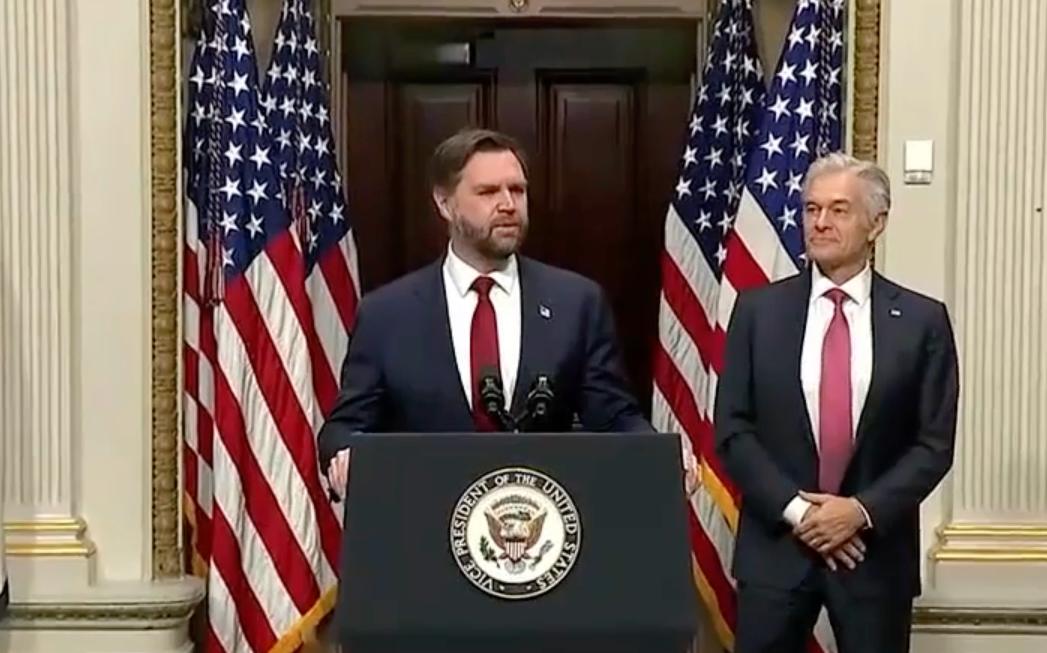
Vance says administration is pausing some Medicaid funding to Minnesota because of fraud concerns
By Associated Press & Callan Gray, KSTP News, February 26, 2026
Vice President JD Vance announced Wednesday that the Trump administration would “temporarily halt” some Medicaid funding to the state of Minnesota over fraud concerns, as part of what he described as an aggressive crackdown on misuse of public funds.
Vance, who made the announcement with Dr. Mehmet Oz, the administrator for the Centers for Medicare and Medicaid Services, said the administration was taking the action “in order to ensure that the state of Minnesota takes its obligations seriously to be good stewards of the American people’s tax money.”
Wednesday’s move is part of a larger Trump administration effort to spotlight fraud around the country.
That effort comes after allegations of fraud involving day care centers run by Somali residents in Minneapolis prompted a massive immigration crackdown in the Twin Cities, resulting in widespread protests. President Donald Trump, in his State of the Union address on Tuesday, announced Vance would spearhead a national “war on fraud.”
Oz, who referred to people committing fraud as “self-serving scoundrels,” said the federal government would hold off on paying $259 million to Minnesota in funding for Medicaid, the health care safety net for low-income Americans.
Oz said the administration was notifying Minnesota’s Democratic Gov. Tim Walz as he was making the announcement publicly. Messages sent to Walz’s spokespeople were not immediately returned.
In a post on X, Walz said, “This has nothing to do with fraud. The agents Trump allegedly sent to investigate fraud are shooting protesters and arresting children. His DOJ is gutting the U.S. Attorney’s Office and crippling their ability to prosecute fraud. And every week Trump pardons another fraudster.”
He added in a second post, “This is a campaign of retribution. Trump is weaponizing the entirety of the federal government to punish blue states like Minnesota. These cuts will be devastating for veterans, families with young kids, folks with disabilities, and working people across our state.”
Minnesota Human Services Commissioner Shireen Gandhi released the following statement:
“Today’s announcement is part of a broad and sustained attack by the federal government on Medicaid in Minnesota. Deferring $259 million will significantly harm the state’s health care infrastructure and the 1.2 million Minnesotans who depend on Medicaid. The federal government chose to ignore more than a year of serious and intensive work to fight fraud in our state.”
Read the full article here
|
Related statement:
National Health Law Program Condemns Administration’s Politicized Freeze of Medicare and Medicaid Funds
Editorial from NHeLP, February 26, 2026
The National Health Law Program (NHeLP) strongly condemns the Centers for Medicare & Medicaid Services’ decision to cut off $259 million in Medicaid funding to Minnesota and freeze enrollment of new durable medical equipment suppliers in Medicare. These actions escalate a troubling pattern of weaponizing fraud rhetoric to justify harmful cuts to essential health care programs for millions of low-income people across the country.
NHeLP also condemns the administration’s announcement that Vice President JD Vance will lead a new federal “fraud” task force. Elevating this initiative to the highest levels of government signals a political strategy designed to give cover to deeply unpopular Medicaid cuts that will harm families and communities. These actions by the administration come on the heels of this same president issuing pardons to multiple people who have been convicted of billions of dollars in Medicaid and Medicaid fraud.
“Cutting off government funding under the guise of fraud prevention is not routine oversight. It is an assault on Medicaid and Medicare, and it is placing peoples’ lives in the crosshairs,” said Jane Perkins, Litigation Director at NHeLP. “We will continue to use every legal tool available to make sure eligible people do not lose access to the health care they need.”
Read the full editorial here
| |
Respite Care Program Extended Under New Federal Law
By Shaun Heasley, Disability Scoop, February 24, 2026
A program supporting respite care for families of those with disabilities and other needs is being renewed just months after backers worried it was in jeopardy.
Tucked inside the government spending package signed by President Donald Trump earlier this month is a five-year extension of the Lifespan Respite Care Program.
The program, which supports a system of community-based respite care services nationally, is slated to get $11 million this year, up from $10 million.
“Respite care helps to reduce mental stress and physical health issues that caregivers may experience, keeping them healthy and families intact,” said U.S. Sen. Susan Collins, R-Maine, who sponsored the measure. “With this bill now signed into law, quality respite will remain more available and accessible to family caregivers and their loved ones.”
As recently as last May, however, the program’s survival was in question. At the time, a widely circulated budget document leaked from the Department of Health and Human Services indicated that the Trump administration wanted to eliminate funding for the respite care program altogether.
Continued
| |
Adults with intellectual and developmental disabilities face severe mental health disparities
University of Washington School of Medicine via New-Medical, February 20 2026
Adults with intellectual and developmental disabilities, such as autism and Down syndrome, experience substantially higher rates of anxiety and depression than the general population of adults, researchers reported today in JAMA Network Open.
The study, based on data from 44,000 adults, provides the first national estimates of mental health symptom prevalence, healthcare treatment and access barriers facing this population.
"Our findings paint a distressing picture of the mental health and healthcare for people with these disabilities in the United States. Historically, society has not taken the needs of this population as seriously as it should, so in that respect, our findings aren't surprising. But the scale of burden is shocking."
- Dr. Dimitri Christakis, senior author, professor of pediatrics, University. of Washington School of Medicine
Among the key findings:
- Study-population adults were nine times more likely to report diagnosed anxiety (56.8% versus 10.6% %) and depression (56.9% versus 9.9%) than general-population adults.
- Daily symptom frequency was also markedly higher: 48.9% of study-population adults experienced daily anxiety (versus 7.7% among general-population peers), and 24.2% experienced daily depression (versus 1.3%).
- Only 40% of study-population adults reported receiving counseling or psychotherapy in the previous year, while 40% and 37% reported using psychiatric medication for anxiety and depression, respectively, in that span. These treatment patterns indicate an overreliance on medication instead of counseling, the authors said.
- Study-population adults were five times more likely than general-population peers to delay therapy due to cost (17.4% vs. 3.4%) and to forgo mental health care entirely because of expense (18.6% vs. 3.2%). This finding is notable, Christakis said, "given that many individuals with intellectual and developmental disabilities are covered by Medicaid."
The study authors called for several actions, among them:
- Increased Medicaid reimbursement rates for mental health practitioners who serve individuals with intellectual and developmental disabilities.
- Integration of disability status into routine public health surveillance.
- Expansion of training programs in disability-informed mental health care.
Read the full article here
Download the JAMA - OPEN report here
| |
Immigration uncertainty increases costs, threatens continuity of care, industry advocates tell Congress
By Kimberly Bonvissuto, McKnight's Senior Living, February 23, 2026
The loss of foreign-born staff members due to ongoing uncertainty related to immigration status is increasing costs and threatening the continuity of care for older adults, senior living leaders told members of Congress last week.
In response to a congressional oversight inquiry on current White House immigration policy, LeadingAge and the Massachusetts Senior Care Association, the state affiliate of the American Health Care Association / National Center for Assisted Living, shared how Temporary Protected Status terminations and related policy changes are leading to the abrupt loss of experienced certified nursing assistants, nurses, dietary aides, housekeepers and other essential staff members in assisted living communities, memory care communities, nursing homes and other settings.
Led by US Sen. Elizabeth Warren (D-MA), more than 50 Democratic members of Congress sent letters to LeadingAge, MSCA and several unions representing direct care workers, asking them to share how the end of TPS for people from Haiti would affect the aging services workforce and the older adults in their care.
To date, approximately 1.5 million people on TPS have been stripped of their legal immigrant status, according to the members of the Senate and House of Representatives. The termination of TPS for Haiti was scheduled to go into effect Feb. 3 and affect more than 300,000 Haitians in the country, but a federal judge paused it. The Trump administration filed an appeal of that pause, leaving the status of thousands of Haitians in legal limbo as an appeals court considers the case.
Since Jan. 20, LeadingAge President and CEO Katie Smith Sloan said, members across the country have experienced “tangible and disruptive” effects from TPS terminations, the cancellation of humanitarian parole and other immigration policy changes. She said the effects no longer are anticipated or theoretical, as providers are actively losing authorized workers and struggling to maintain adequate staffing in assisted living communities, nursing homes and other senior living and care settings.
“Members report that long-tenured certified nursing assistants, dietary aides and nurses who know clients’ and residents’ clinical needs, routines and preferences are being lost, often abruptly,” Sloan wrote in a response letter. “In competitive labor markets, providers are already seeing heightened competition among hospitals, nursing homes and home health agencies for a shrinking pool of qualified workers.”
Read the full article here
| | |
For the past several weeks, newspapers in Utah have been printing stories about Utah's state Protection and Advocacy agency, Disability Law Center (DLC), and its lack of responsiveness to the needs of the I/DD population in the state. Family advocates have called it "Anti-Family", legislators have debated its purpose and its activities, and most recently, the Utah News Dispatch ran an editorial, "With friends like Utah's Disability Law Center, who needs enemies?"
This week the Dispatch printed a response from two members of the DLC:
Utahns with disabilities don’t need more enemies
By Adina Zahradnikove and Nate Crippes, Utah News Dispatch, February 20, 2026
For almost 50 years, the Disability Law Center (DLC) has served Utah as the state’s Protection and Advocacy Agency (P&A), providing free legal services statewide by enforcing and advancing the legal rights, choices, and opportunities of Utahns with disabilities. There are 57 organizations like ours, serving every state and territory in the country. Recently, our agency and our network have come under attack, highlighted in a recent opinion piece.
The P&A network was created in the 1975 with the Developmentally Disabled Assistance and Bill of Rights Act (DD Act). When amended in 2000, it was noted that the purpose of the DD Act “is to assure that individuals with developmental disabilities and their families participate in the design of and have access to needed community services, self-determination, independence, productivity, and integration and inclusion in all facets of community life, through culturally competent programs” including the work of the P&As like the DLC.
The Cicero Institute, an Austin-based organization with only nine years history and no meaningful ties to Utah, has offered a punitive approach to treatment and services for Utahns with disabilities, including the expansion of forced treatment and institutionalization. In the Nov. 20, 2025, Homeless Services Board meeting, they recommended an expansion of “civil commitment processes to include substance abuse and expanding involuntary psychiatric holds beyond 72 hours for a maximum of 60 days for certain substance abuse cases,” and allowing “civil commitments to include repeated and continuous violations of the social order.” The expansion of civil commitment, forced treatment, and institutionalization are not novel ideas. They roll back decades of progress in behavioral health treatment.
Utahns deserve solutions that lift people up — not lock them away. These proposals may sound like progress, but they divert resources from what truly works: affordable housing, community mental health, and wraparound supports that keep families stable and individuals thriving. Institutionalizing our most vulnerable neighbors will not solve homelessness — it will hide it, at a staggering cost to taxpayers and human dignity. We can choose a better path: invest in housing, expand proven services, and build a system rooted in compassion and evidence.
The research cited by the opinion piece is questionable. The Government Accountability Office report referenced actually notes that that those with mental illness “can face abuse, neglect, and rights violations in both institutional and community treatment settings… and that state (P&A mental illness) programs play an important role in reducing these serious issues for this vulnerable population.” We file nine federal reports each year that we’re happy to share because we’re proud of our work, and we can cite our sources.
While we continue to work with our Legislature and Sen. Todd Weiler on his resolution regarding the DLC’s designation as Utah’s P&A, it is unfortunate that an out-of-state entity that has never spoken to the DLC and knows little about the work of the P&As would use this opportunity to attack. Organizations dedicated to protecting the rights of people with disabilities should be celebrated, not diminished. We can only hope the Utah State Legislature agrees.
Read the full editorial here
| |
Utah - Why Medicaid cuts hurt Provo’s pocketbook (Opinion)
By Marsha Judkins, (Mayor of Provo, Utah), Deseret News, February 22, 2026
As Provo’s newly elected mayor and a lifelong Republican, I believe in fiscal responsibility, local control and practical solutions. That’s why it’s important to be clear about this reality: When the federal government cuts Medicaid, our communities become less affordable and less livable for everyone.
The affordability crisis facing Utah families isn’t just about rising housing costs, health care and grocery prices. It’s also about the hidden costs that appear when essential services disappear. When Washington, D.C., cuts Medicaid funding, those costs don’t go away — they are pushed down to cities and counties, and eventually picked up by taxpayers.
Here’s what happens. Counties are legally required to provide mental health and substance abuse services, which are primarily paid for by Medicaid. For example, local programs like Wasatch Behavioral Health (Utah County) and/or Optum Health (Salt Lake County) are able to serve our most vulnerable residents because Medicaid makes that care possible. When Medicaid funding drops — or when eligible people lose access to Medicaid — counties face an impossible choice: raise taxes, cut other services or watch treatment programs collapse. Every option makes life more expensive and less stable for residents.
The math is straightforward. Counties must match at least 20% of state behavioral health funding. When federal Medicaid dollars shrink, our local dollars buy less care. The gap grows quickly, and we can find that it’s our friends, families and neighbors — not just strangers — who are at risk. The impact is felt across our entire community.
When people can’t access mental health care or addiction treatment, we see the results in our communities every day. Families end up in crisis. Domestic violence and homelessness increase. Public spaces become less safe. Businesses struggle and property values decline.
Research shows that Medicaid expansion reduces arrests by 20-32% in participating counties, and drug-related arrests drop by up to 41%. Homelessness declines as well.
Cutting Medicaid at the federal level creates a cascade of problems: more people in crisis, more pressure on police and emergency services, and ultimately higher costs for everyone. Law enforcement becomes the front line for health crises instead of focusing on public safety.
Medicaid isn’t perfect. It needs oversight, accountability and continual improvement. But it is the system we have — and right now, it is far more cost-effective to fund care upfront than to pay later through jails, emergency rooms and social instability.
Continued
| |
Bill seeks to address abuse and neglect in New Hampshire’s disability care system
By William Skipworth, New Hampshire Bulletin, February 27, 2026
Following high-profile reports of abuse, neglect, and untimely deaths, a bipartisan group of New Hampshire state senators have proposed legislation aimed at protecting people with disabilities in state care from future abuse and neglect.
“This is a very vulnerable community, some of the most vulnerable people that are living amongst us,” Sen. David Rochefort, a Littleton Republican and sponsor of the bill, said at a legislative hearing last week. “And it’s the state’s responsibility and duty to ensure that not only they’re getting care, but if that care is lacking, there’s accountability for that.”
In New Hampshire, people with intellectual and developmental disabilities are legally entitled to state-funded and -directed care services. To provide this care, the state contracts with a network of private agencies across the state. This is overseen by the Department of Health and Human Services’ Bureau of Developmental Services and is funded by Medicaid and other public funding sources.
In November, the Bulletin published a series of articles that uncovered rampant and systemic abuse and neglect committed by caretakers against people with disabilities within this system. State records obtained by the Bulletin revealed that there were 467 credible reports of abuse, neglect, and exploitation in the system investigated by the state, and 119 deaths across the system from January 2023 through the first six months of 2025.
If enacted, Senate Bill 670, would create a Developmental Services Oversight Commission made up of lawmakers, state officials, representatives of private providers, advocates, parents of people with disabilities, and people with disabilities themselves. The commission would be responsible for reviewing performance measures, satisfaction surveys, licensing and certification data, caretaker training guidelines and best practices, and suggesting ways to improve the system. The commission would provide feedback on proposed rule changes and laws related to the system, and release a quarterly report of its findings and recommendations.
As part of a series titled “A System of Harm,” the Bulletin reported on the December 2022 death of Stephen Weidlich Jr., a young man with physical and developmental disabilities who was found dead behind the care home where he lived, and the July 2019 death of Christine Marie Bill, a woman with disabilities who was found dead after overheating in a hot, sealed car in Andover. In its reporting, the Bulletin discovered that the state’s Vulnerable Adult Review Fatality Committee — a committee formed in 2008 to review concerning deaths of people with disabilities or otherwise vulnerable adults and provide recommendations to prevent future similar tragedies — wasn’t notified of either death.
SB 670 also seeks to revamp this committee. The bill, if enacted, would redefine “preventable death” under state law as “one in which a reasonable intervention, based on the conditions, circumstances, or resources available at the time, might have prevented the death.” Lawmakers, in consultation with the Attorney General’s Office, have discussed amending this definition to be more targeted. The legislation would compel the state’s chief medical examiner and other pertinent state agencies to report preventable deaths to the committee. The bill would also specify who serves on the committee: the attorney general, the chief medical examiner, state officials overseeing the system, representatives of advocacy organizations, law enforcement officials, and others. Previously, the attorney general chose members at his or her discretion.
Continued
| |
State Budget Cuts to Medicaid Are Unnecessary and Would Leave Kentucky Worse Off
By Dustin Pugel, Kentucky Center for Economic Policy, Bebruary 23, 2026
As introduced, the upcoming biennial budget includes major cuts to large, state-funded programs as lawmakers contend with falling revenues from recent income tax cuts. Medicaid, as the second single largest appropriation in the budget, has become a prime target. Last year, the General Assembly formed the Medicaid Oversight and Advisory Board (MOAB) to review the program. And this year, the House has proposed several policies that would reduce enrollment and utilization through House Bill (HB) 2, along with over $800 million in Medicaid cuts in the initially-proposed budget.
To justify these cuts, lawmakers have asserted that state spending is ballooning and unsustainable. But a closer look at recent cost trends in Medicaid paints a different picture.
Between 2010, the year the Affordable Care Act passed Congress, and 2019, spending on a per-enrollee basis remained stable. It wasn’t until 2020 that per-enrollee Medicaid spending began to climb in Kentucky and across the country. In addition to COVID-19 related increases in health care spending, this cost spike coincided with the advent of Kentucky’s State Directed Payment (SDP) programs which were enacted and expanded by the legislature. These programs provide supplemental payments, primarily to hospitals, to bolster their standard reimbursements which are very low compared to commercial insurance.
There are four SDPs in Kentucky, though by far the two largest are designed to pay university and private hospitals. Since 2020, they have grown from $929 million to just over $5 billion. As of fiscal year 2025, those SDPs represented just under a quarter of the total Medicaid budget. Without the state directed payments, Medicaid spending would have been generally stable since 2020.
Last summer, H.R. 1 made deep cuts to how states can levy provider taxes and how they can provide SDPs. Because of these cuts, both agency and federal spending will begin to fall in 2028, regardless of what the General Assembly enacts through HB 2 or the state budget.
Policies that reduce enrollment won’t save much money in the short or long run
Despite the fact that Medicaid cost growth has almost entirely stemmed from restricted agency and federal funds, lawmakers are attempting to reduce General Fund spending on Medicaid in the upcoming biennium. Specifically, HB 2 includes many policies designed to reduce enrollment through increased paperwork among expansion enrollees – those eligible under the Affordable Care Act’s expansion of coverage to all adults under 138% of the federal poverty level regardless of their health condition.
However, the federal government’s share of spending for Medicaid expansion is 90%, compared to its share of the cost of everyone else on Medicaid, which is 72%. The higher match rate for expansion enrollees, and the fact that there are fewer expansion enrollees than traditionally-eligible enrollees, means reducing expansion enrollment will not be an effective cost-cutting measure for Kentucky.
Read the full article here
| |
A Connecticut woman wants the nation to end a practice she calls ‘dehumanizing.’ Many are fighting with her.
By Helen I. Bennett, The Hartford Courant, February 23, 2026
For Irma Rappaport, a circumstance during which an essential caregiver can’t do an in-person visit for a loved one in long-term care can be “dehumanizing.”
Rappaport knows this from her own experience as her now late mom, Lillian Felix, was in long-term care during the pandemic, when access to such facilities was extremely limited.
Now, Rappaport, an Orange resident, is among those fighting for a federal Essential Caregivers Act, which would assure that residents of long-term care can retain the right to in-person access to a designated essential caregiver. This would apply even during circumstances where such visits would be restricted by emergency orders.
Connecticut adopted such a law, and it allows long-term care facility residents, or their representative, to designate a primary and a secondary “essential support person” who is able to visit the resident despite general visitation restrictions for other visitors. It applies to people living in nursing homes and managed residential communities that provide assisted living services, records show.
But the law only applies to Connecticut and advocates believe it is necessary to enact a similar measure on the federal level.
“I have head heartbreaking stories from constituents who were separated from their loved ones in long-term care during the pandemic, even families forced to miss a parent or grandparent’s final moments,” said U.S. Rep. John Larson, D-Conn., who supports the federal bill.
“We can never allow the isolation that took place to happen again. That’s why I teamed up with Senator Blumenthal and our Republican colleague, Claudia Tenney from New York, on a bipartisan bill that guarantees visiting access during future emergencies and also protects the safety of nursing home residents,” Larson said. “Congress owes it to the steadfast advocates who have bravely come forward with their stories to pass the Essential Caregivers Act.”
Continued
| |
The autism ‘magic pill’ almost killed my son
By Jane Wills, The Conservative Woman (UK), February 21, 2026
I HAVE reservations about sharing this story. It makes me look stupid and naïve. I was crazily reckless in relation to the health and life of our son. It’s hard to believe that it happened.
However, the fact that it did points to something that needs to be said.
I can’t be the only parent of a child with severe autism who sometimes dreams of finding a magic pill to calm everything down.
The Devil whispers in your ear in the small hours of the morning when you can’t sleep because of the noise your offspring is making. He’s back whispering when you want to join in with other people at a social event, but you can’t. He even recruits foot soldiers in your family and community who advise you to stop holding out.
Even though we know that ‘health’ interventions made our son sick, we can all too easily reach for more when times get hard or expectations are high. We are vulnerable to the seductions of the pharmaceutical industry even when we know what they do. It is easy to be sucked into iatrogenic markets for medical products that are very bad for our health and once sick you are in greater need of some help.
Last week I found myself lying on a cold tiled floor next to our precious son who looked as if he was dying. He was having a full-blown seizure in front of our eyes. His face was the palest it has ever been. His eyes were rolled back. He was covered in sweat. He was foaming at the mouth. His body was shaking. He had blood on his temple and the back of his head due to hitting the corner of the wall and a cupboard when he fell. It was truly terrifying.
I’ve been having flashbacks ever since. I can’t think about it without my heart racing, my toes curling up and anxiety hitting my stomach. I really thought he was going to die.
My heart goes out to all the autism parents whose children suffer like this over and over and over again, year after year after year.
We were in Lanzarote and it was the final day of a three-week holiday. The seizure came out of the blue just before lunch. He had a second, about eight hours later when sitting on the sofa after his tea. We got him to bed and sat holding his hand as he slept and we wept.
My husband and I went into panic and shock.
Our first fear was that he would die in the night.
Our second, that we wouldn’t be able to get him home on the plane the next day.
Our third, that this was the new normal for our wonderful son. Would he be struck down by seizures for the rest of his life?
It was only after getting home that we had the time to try to understand what had happened and why.
We had made the terrible decision to take the drug lorazepam with us on holiday. We were given it by the doctor for ‘emergency use’. We were seduced by the idea that there was an easy way of calming things down. We should have known better.
It turns out that seizures are known to be a rare ‘paradoxical reaction’ as well as a dangerous side effect following withdrawal of lorazepam.
In the second half of the holiday, we saw all the usual behaviours associated with dysregulation developing in our son. His ‘autism’ was getting worse. This started with putting his fingers in his ears, making loud noises and running fast. Then the insomnia kicked in. When he woke in the early hours and couldn’t go back to sleep, we remembered the pills. We tried one and it worked very well. When the noise happened again the following night we resisted and sat it out, but the next night we went for the pills.
Without thinking about it properly, and not seeing any obvious negative side effects, we ended up using nine 1mg doses (well within the recommended dosing limit) on seven nights across an eight-day period. After stopping the drug on the ninth day, we had the seizures the following day (about 60 and 68 hours after the last dose). This short treatment period was enough to accustom his brain to the calming effect of the drug and without it he went into seizure.
Lorazepam is a fast-acting benzodiazepine that is used to treat seizures, agitation, anxiety and insomnia. It works by increasing the effect of Gamma-Aminobutyric Acid (GABA), the primary inhibitory neurotransmitter in the human body. While GABA calms the brain it also improves bowel movements and that week our son went to the toilet every morning as though it was the most normal thing in the world. We stopped using his usual laxative (oxypowder) and put it down to being away rather than associating it with the GABA effect.
I know it’s a ridiculous cliché because it should never have happened, but we are now trying to learn from the horror. The experience has taken us back to some fundamental questions about the role and significance of neurotransmitters in explaining the behaviours and comorbidities associated with autism. It’s highlighted how imbalanced his system must be.
Continued
| | |
Please share this offer with your loved one's
Direct Support Professionals!
VOR ❤️s OUR
DIRECT SUPPORT PROFESSIONALS!
Our loved ones' caregivers are essential to their health, safety, and happiness.
In appreciation of their good work and kind hearts, VOR offers free digital memberships to any DSP who would like to receive our newsletter.
We encourage our members to speak with their loved ones' caregivers to extend this offer of our gratitude.
If you are a Direct Support Professional interested in receiving our newsletter and e-content, please write us at
info@vor.net
with your name, email address, and the name of the facility at which you work. Please include the name of the VOR member who told you of this offer.
| | |
[Please click on blue link to view information about the bill]
VOR SUPPORTS:
H.R.6137 / S.3211 - Rep. Brian Fitzpatrick (R-NJ) and Sen. Maggie Hassan (D-NH) - A bill to require the Office of Management and Budget to consider revising the Standard Occupational Classification system to establish a separate code for direct support professionals
H.R.6766 / S.3492 - Rep. Claudia Tenney (R-NY) and Sen. Richard Blumenthal (D-CT) - Essential Caregivers Act - To amend titles XVIII and XIX of the Social Security Act to require skilled nursing facilities, nursing facilities, intermediate care facilities for the intellectually disabled, and inpatient rehabilitation facilities to permit essential caregivers access during any period in which regular visitation is restricted.
H.R.4796 - Rep. Laura Friedman (D-CA) - Restoring Essential Healthcare Act -To amend Public Law 119-21 (The One Big Beautiful Bill Act) to repeal the prohibition on making payments under the Medicaid program to certain entities.
H.R.4807 - Rep Greg Landsman (D-OH) - Protect Our Hospitals Act - To amend Public Law 119-21 to repeal certain changes to provider taxes under the Medicaid program.
H.R.1262 & S.932 - Rep. Michael McCaul (R-TX) and Sen. Markwayne Mullin (R-OK) "Give Kids A Chance Act" - To amend the Federal Food, Drug, and Cosmetic Act with respect to molecularly targeted pediatric cancer investigations. This bill would renew research into pediatric cancers and includes increasing funding for rare diseases, some of which cause Intellual and developmental disabilities and autism.
H.R.1509 & S.752 - Rep. Lori Trahan (D-MA) & Sen. Chuck Grassley (R-IA)
Accelerating Kids' Access to Care Act -
This bill would amend titles XIX and XXI of the Social Security Act to streamline the enrollment process for eligible out-of-state providers under Medicaid and CHIP, and streamline enrollment under the Medicaid program of certain providers across State lines.
H.R.2598 & S.1277 - Rep Jared Huffman (D-CA) and Sen Chris Van Hollen (D-MD) The IDEA Full Funding Act
To amend part B of the Individuals with Disabilities Education Act to provide full Federal funding of such part.
S.2279 - Sen. Josh Hawley (R-MO)
A bill to repeal the changes to Medicaid State provider tax authority and State directed payments made by the One Big Beautiful Bill Act and provide increased funding for the rural health transformation program.
H.R.1950 - Rep. Mark Pocan (D-WI) - Protect Social Security and Medicare Act
To protect benefits provided under Social Security, Medicare, and any other program of benefits administered by the Social Security Administration or the Centers for Medicare and Medicaid Services.
S.779 & H.R.1735 - Sen. Alex Padilla (D-CA) & Rep. August Pfluger (R-TX)
To amend title XIX of the Public Health Service Act to provide for prevention and early intervention services under the Block Grants for Community Mental Health Services program
H.R.2491 & S.1227 - Rep Kat Cammack (R-FL) & Sen. Edward Markey (D-MA) - The ABC Act
To require the Administrator of the Centers for Medicare & Medicaid Services and the Commissioner of Social Security to review and simplify the processes, procedures, forms, and communications for family caregivers to assist individuals in establishing eligibility for, enrolling in, and maintaining and utilizing coverage and benefits under the Medicare, Medicaid, CHIP, and Social Security programs
VOR OPPOSES:
H.R.2743 & S.1332 - Rep. Bobby Scott (D-VA) & Sen. Bernie Sanders (I-VT) Raise the Wage Act - A bill to provide increases to the Federal minimum wage and for other purposes. VOR opposes the provision in this bill that would phase out section 14(c) and sheltered workshops for indiviiduals with I/DD and autism.
S.2438 - Transformation to Competitive Employment Act (Sen. Chris Van Hollen (D-MD) - A bill to assist employers providing employment under special certificates issued under section 14(c) of the Fair Labor Standards Act of 1938 in transforming their business and program models to models that support people with disabilities through competitive integrated employment, to phase out the use of such special certificates, and for other purposes.
| |
836 South Arlington Heights Road #351
Elk Grove Village, IL 60007
Toll Free: 877-399-4867 Fax: 877-866-8377
| | | | |