|
VOR's Weekly News Update
VOR is a national non-profit organization
run by families of people with I/DD and autism
for families of people with I/DD and autism.
| |
VOR's 2026 Legislative Initiative
June 8 - 10
Washington D.C.
We are proud to announce that we will be returning to Capitol Hill this June.
This is your chance to share with members of Congress about the issues that affect us, as families of individuals with I/DD and autism.
We have a limited number of hotel rooms available, at the ridiculously low price of $170 per night for a single room at the Placemakr Dupont Circle,
located in the heart of DC's historic Dupont Circle neighborhood.
Our room count is filling fast, so
Please register for the Initiative now to reserve your room
| | Perspectives on Medicaid: | |
Essay: The Waiting Is the Point:
Time, Suffering, and Medicaid
By Zachary Schulz, Public Books, March 24, 2026
n American health care, waiting is not just a burden. It is a tactic. The woman who waits six months for a home health aide, the disabled child stuck on a waiver list for years, the cancer patient navigating insurance denials as her tumor grows—each confronts the same unspoken truth: their time only matters when it generates a bill.
This is not a glitch in an otherwise functional system. It is the system. US health policy conditions patients to surrender control over their own time.
As of 2023, nearly 820,000 people were on Medicaid’s Home- and Community-Based Services (HCBS) waiver waitlists across 41 states and the District of Columbia. These hundreds of thousands of people experience an average wait time of 39 months. While not all applicants are prescreened for eligibility, many meet the medical and financial criteria; nevertheless, they still face long delays that postpone or block the care they need to live safely at home.
This bureaucratic maze of waivers, state discretion, and federal oversight does more than delay care. It reshapes how people experience illness, aging, and vulnerability. It is a system where eligibility does not guarantee access, diagnosis does not ensure treatment, and being recognized as needing care does not mean receiving it.
Nowhere is this more visible than in the structure of Medicaid HCBS waitlists: a living archive of structured absence.
An Archive of Absence
The HCBS waiver program allows states to provide long-term services in homes or community settings, instead of institutions. These services are critical for people with disabilities, older adults, and individuals with chronic conditions who seek to avoid nursing homes or hospitals. Because HCBS waivers are optional under federal law and subject to enrollment caps set by each state, every state designs its own version of the program. There is no federal guarantee of timely access or equitable delivery.
While nearly 820,000 individuals are on waitlists, thousands more have not even made it that far, remaining effectively locked out of services for which they qualify. These are not casual applicants. They are individuals who meet stringent medical and financial criteria, but are denied care only due to inadequate state funding. While they wait—often for years—their needs escalate. Family caregivers, often unpaid and unsupported, shoulder the burden, facing chronic stress, social isolation, and neglect of their own health.
To call this a “waitlist” is misleading. It is not a queue with predictable movement. It is a ledger of delay, a bureaucratic limbo that records not the presence of care, but its persistent absence. It is a list of people whose needs remain unmet due to sustained policy and funding shortfalls.
The Logic of Denial by Design
HCBS waivers are often promoted as flexible tools for states. They allow state governments to cap enrollment, restrict services to specific regions, and narrowly define eligibility—options not available in uniform Medicaid state plans. These waivers expand critical access to care, but they also give states broad authority to limit it. In doing so, they institutionalize rationing with minimal federal oversight.
A core requirement of HCBS waivers, particularly those authorized under Section 1915(c) of the Social Security Act, is “cost neutrality.” That is, states must prove that providing home- and community-based care will not cost more, on average, than institutional care.
At first glance, this requirement seems fiscally sound. But in practice, it often slows program expansion. States can only offer or extend services when they can document that doing so will be less expensive than institutionalization. This pushes state policymakers toward caution, delay, and risk aversion.
The cost-neutrality provision was introduced in the Omnibus Budget Reconciliation Act of 1981, which created Section 1915(c) and ushered in the waiver era. It was framed as a compromise, allowing states to innovate with more flexible care models as long as they did not spend more than the status quo. Four decades later, the terms of that compromise still shape the program: states must control costs before they can improve timeliness or expand eligibility.
While HCBS waivers have proven to be highly cost-effective in many cases, structural and administrative hurdles continue to limit access. States must submit detailed documentation, navigate multilayered oversight, and manage labor-intensive renewal processes that can stall even minor improvements. Such burdens discourage states from pursuing program changes even when those changes would expand or streamline care, according to the Medicaid and CHIP Payment and Access Commission (MACPAC), a nonpartisan legislative branch agency.
This creates a deep contradiction at the core of HCBS policy. Care is delayed not because it is inefficient. Instead, HCBS care takes time because, in order to be approved, it must first prove it is cheaper than institutionalization. This logic is often explained away as fiscal discipline, but pragmatically it operates as a system of structured denial. Waiver renewals require time-consuming justification, and even small adjustments can trigger additional layers of review. The result is a system in which delay is not accidental or avoidable. It is the mechanism through which care is regulated, delivered, and withheld.
In this context, waiting is not a policy failure. It is the policy itself.
Continued
| |
The Perfect Storm is Here for Medicaid Long-Term Services and Supports: Part 2
The nation’s long-term care system is broken. We need durable solutions.
By Cindy Mann, Melinda Dutton, and Stephanie Anthony, The 80 Million, March 26, 2026
- Last week, The 80 Million focused on the need to stabilize Medicaid home and community-based services (HCBS) in the face of unprecedented fiscal, policy and political headwinds.
- Stabilization is essential to protect access to care, but the vulnerability of HCBS reflects deeper structural problems in how long‑term care is financed and delivered in the United States.
- Without durable reform to fix its structural problems, our nation’s long‑term services and supports (LTSS) system, a lifeline for older adults and people with disabilities, will remain fragile and ill-equipped to deal with rapidly growing demand — to the detriment of families and state and federal Medicaid budgets.
Medicaid was never designed to function as the nation’s primary long‑term care insurer, yet here we are. Medicaid is the nation’s primary payer for long-term care, also known as LTSS, including nursing facility care and HCBS. HCBS allow older adults and people of all ages with disabilities to receive services and supports in their own homes and communities, which can delay or avoid nursing facility care altogether.
Medicaid’s role in providing LTSS is not widely understood. Two in five adults “incorrectly believe that Medicare is the primary source of coverage for people who need nursing or home care,” according to a recent KFF issue brief. But it is Medicaid that has stepped up, paying for over half of all LTSS and providing HCBS to over 5 million people, including many who receive all of their other health care through Medicare. As with all Medicaid financing, LTSS is jointly funded by states and the federal government, with some states picking up a full 50% of the ever-mounting costs of LTSS.
Also not well understood, but true: Medicaid long‑term care coverage is not just for the poorest Americans, it is very much a middle-class benefit. The cost of LTSS is more than most of us can afford, and yet most of us will need these services at some point in our lifetime. Because private long‑term care insurance is rare and Medicare LTSS coverage is extremely limited, many families quickly exhaust their savings to pay for care and then rely on Medicaid. That broad reliance means that the pressures on Medicaid LTSS can and will ripple widely, affecting middle‑class families as well as those with the lowest incomes.
Short-term stabilization is essential, but not enough
The current crisis facing HCBS underscores a deeper truth: The U.S. long‑term care “system” is not a system at all. It is a patchwork approach that relies heavily on Medicaid — and therefore state and federal financing — with stark differences in services and eligible populations across states. As [we] discussed last week, nearly all HCBS are optional for states, which makes them particularly vulnerable to cuts if federal Medicaid funding drops (as initiated by H.R. 1) — and generally when state budgets are under stress. These structural weaknesses are becoming far more acute as the country confronts a rapidly aging population — the so‑called “silver tsunami” as Baby Boomers turn 80 this year — that is dramatically increasing demand for LTSS. As people live longer, often with chronic conditions and cognitive and functional limitations, the mismatch between need and the way long‑term care is financed and delivered is widening.
This problem cannot be solved through marginal policy adjustments or short‑term fixes. Without fundamental reform, the pressures facing the long-term care system, and HCBS in particular, will intensify making the system of care increasingly fragile as more people than ever depend on it.
Continued
Read Part 1, from last week, here
| |
Opinion: Republicans did not cut Medicaid
By Sally C. Pipes, The Washington Times, March 26, 2026
Democrats have made a striking claim central to their midterm message: that Republicans have “cut” Medicaid by as much as $1 trillion.
It’s a powerful line. It’s also misleading.
According to the nonpartisan Congressional Budget Office, Medicaid spending is projected to rise every year for the foreseeable future, totaling more than $8.3 trillion from 2027 to 2036. Federal spending alone is expected to grow from roughly $700 billion annually today to nearly $1 trillion by 2036.
In Washington, apparently, slightly slower spending growth counts as a “cut.”
By any reasonable interpretation, Republicans are not slashing Medicaid spending. They are trying to prevent the program from eating up an even bigger share of the Treasury, largely by targeting waste, fraud and ineligible enrollment.
That effort matters, given how dramatically Medicaid has expanded in recent years.
During the pandemic emergency, the federal government effectively barred states from removing ineligible beneficiaries from Medicaid rolls. Enrollment surged from about 80 million people in early 2020 to more than 94 million by 2023, a roughly 17% increase.
Not all those enrollees were eligible. One estimate from the Paragon Health Institute suggests that 6.6 million Medicaid beneficiaries in 2024 did not qualify for the program, at a cost of nearly $37 billion annually to taxpayers.
At the same time, improper payments — including fraud, billing errors and payments to ineligible recipients — have soared. Paragon estimates that improper payments in Medicaid exceeded $100 million in each and every year of the Biden administration. Over the past decade, such payments have totaled more than $1 trillion.
In short, Medicaid spending hasn’t just grown. It has grown faster than the country can responsibly sustain and enabled massive amounts of impropriety.
The budget law enacted by Republicans last year aims to address those problems, in large part by restoring basic program integrity.
For instance, the law requires states to conduct more frequent eligibility checks for certain Medicaid enrollees. That is hardly radical. Medicaid is a means-tested program. Ensuring that beneficiaries meet eligibility requirements is a basic administrative responsibility.
The law also establishes work or community engagement requirements for able-bodied, working-age adults who gained coverage under the Affordable Care Act’s expansion of the program. These individuals must work, train or volunteer 80 hours per month in exchange for taxpayer-funded coverage.
The legislation also places new limits on states’ use of provider taxes. Financing arrangements allow states to inflate Medicaid spending on paper to attract additional federal matching funds.
The feds provide at least one dollar for every dollar a state spends on Medicaid. Provider taxes game that formula by extracting money from providers, returning it to them in the form of higher reimbursement rates and collecting a commensurate amount from the federal government for their troubles.
The new law does not eliminate the practice; it caps its growth and curtails further expansion.
None of these changes constitutes “cuts” in any meaningful sense. There are attempts to tighten oversight and reduce improper spending in a program that now costs hundreds of billions of dollars each year.
Even with these reforms, Medicaid spending will continue to rise substantially.
Continued
| |
New Fact Sheet Series Breaks Down Health Care Cuts and Impacts in H.R. 1
Press Release from Families USA, March 26, 2026
With every state in the country now grappling with how it will implement the significant new bureaucratic barriers and severe budget shortfalls resulting from federal health care cuts, the national consumer group Families USA announced a new series of fact sheets to explain further the health care cuts in H.R. 1 passed by Congress, break down how the Trump administration intends to enforce the law, and explain the harmful impacts and implications for health care consumers.
Released monthly, the fact sheets will dissect the deepest cuts to health care, explain what state advocates and policymakers need to know about the new bureaucratic barriers and outline concrete next steps they can take to mitigate harm and protect millions from losing coverage.
“Even in the context of the biggest cut to Medicaid and the biggest rollback of health coverage ever passed in Congress, the details and the decisions of state policymakers matter in determining how many millions will keep or lose coverage. Our analysis and advocacy seek to help mitigate the damage from massive coverage losses and closed hospitals and clinics,” said Anthony Wright, executive director of Families USA. “President Trump and his allies in Congress took a wrecking ball to our health care system and now states are grappling with the fallout. We must work urgently to blunt the worst of this damage and protect people from being pushed or priced off their health coverage.”
H.R. 1 imposed significant new restrictions on states’ ability to generate the revenue they need to cover state Medicaid expenses, including by narrowing their ability to obtain flexibility in how they tax health care providers. In February, the Centers for Medicare & Medicaid Services (CMS) issued a final rule on how it will implement new restrictions on these so-called “uniformity waivers.” Certain states are at greater risk of impact than others. CMS has identified nine provider taxes that are currently considered noncompliant under the new law, representing $24 billion in revenue for Medicaid programs in impacted states. This lost revenue threatens to force state cuts to benefits, eligibility, services, and providers.
Read the press release here
The first fact sheet in the series is available today, “Dissecting the Deepest Cuts: Medicaid Provider Taxes and New H.R. 1 Restrictions.”
A video explainer of the fact sheet is available here.
| |
Medicaid cuts could add pressure to already-stressed psychiatric units
Between 2023 and 2024, 126 hospitals across the US shut down their inpatient psychiatric units.
By Nada Hassanein, Stateline, March 23, 2026
Federal Medicaid cuts could exact a heavy toll on psychiatric units at hospitals across the country, many of which are already struggling to keep their doors open but provide essential mental health care to people who need it.
Psychiatric units are costly and, like labor and delivery services, typically lose money for hospitals and tend to be reimbursed at lower rates than other health services. In contrast, some specialty units, such as cardiovascular care, are lucrative: Cardiologists can generate up to seven times their salaries for hospitals.
Between 2023 and 2024, 126 hospitals across the U.S. shut down their inpatient psychiatric units, according to data provided to Stateline by the American Hospital Association.
“(Psychiatric units) are often in the red, and, for lack of a better word, kind of subsidized by the rest of the health system,” said Sarah Steverman of the National Association for Behavioral Healthcare. Steverman oversees regulatory affairs and is the liaison for a committee of hospital psychiatric unit administrators and clinicians.
The One Big Beautiful Bill Act that President Donald Trump signed into law last year will add to the strain, Steverman and other experts say.
The law is projected to cut federal Medicaid spending by an estimated $886.8 billion over the next decade, largely because new work requirements will push people off the rolls, according to estimates by the Congressional Budget Office. CBO estimates that it could increase the number of people without health insurance by 7.5 million in 2034.
Those cuts will have a significant effect on mental health care because Medicaid, jointly funded by the federal government and the states, covers more people with mental illness than any other public or private insurer — roughly 29% of the estimated 52 million nonelderly adults with mental illness, or about 15 million people, according to health research group KFF.
Behavior health policy experts say the Medicaid changes will force hospital psychiatric units to provide care to many more people who don’t have insurance. Even before the law, Medicaid often didn’t fully reimburse hospitals for the cost of mental health care, unit administrators said.
Along with increasing the number of people without insurance, the One Big Beautiful Big Act places new limits on states’ ability to maximize federal funding and reimburse providers.
The federal government allows states with contracted Medicaid managed care organizations running their Medicaid programs to direct them to pay providers more. But beginning in 2028, the One Big Beautiful Bill Act will cap these state-directed payments, forcing state Medicaid programs to reduce reimbursement rates by 10 percentage points each year until they reach either 100% or 110% of what Medicare pays.
The federal law also caps provider taxes, a strategy states have used to boost the Medicaid dollars they get from the federal government.
As a result, states will face the choice of replacing the lost federal money with state dollars, scaling back services or providing coverage to fewer people.
Conservatives who have backed the Medicaid cuts say such tools are accounting tricks that states have used to draw down more federal money. Some have even called the provider taxes a “money laundering” scheme. Eliminating them, they say, will force states to be more accountable for their Medicaid spending.
“States are gaming the system — creating complex tax schemes that shift their responsibility to invest in Medicaid and rob federal taxpayers,” Dr. Mehmet Oz, the administrator of the federal Centers for Medicare & Medicaid Services, said in a news release last year.
But Angela Kimball, chief advocacy officer at Inseparable, a mental health advocacy organization, said the tools are essential, and that the cuts will be detrimental.
“For the mental health system, and particularly for facility-based care, it (Medicaid) is the financial foundation. And when you simultaneously reduce who’s covered, what providers get paid, and limit the tools states have to make up the difference, you’re not just trimming around the edges; you’re undermining the whole structure,” Kimball said.
The mental health field is also struggling with workforce shortages across states, especially in rural areas. As of December 2024, more than 122 million Americans lived in designated mental health professional shortage areas.
Continued
| |
CMS: We’re launching a new pilot program to help children with complex conditions
We hope to connect physical health, behavioral health, and community support
By Mehmet Oz and Abe Sutton, STAT News, March 24, 2025
Our public health programs are failing the children who need them most.
Together, Medicaid and the Children’s Health Insurance Program (CHIP) cover half of all children who have complex medical and behavioral needs or are at risk of developing them, but the current fee-for-service model doesn’t treat them holistically.
The family doctor doesn’t talk to the physical therapist. The physical therapist doesn’t talk to the behavioral specialist. None of them talk to the school counselor. The burden of coordinating care falls on parents, who spend endless hours meeting with providers, filling out forms, and listening to hold music. For many, it feels like a full-time job.
This flawed system makes it inevitable that some children fall through the cracks.
When providers communicate, young patients get the care they need to stop chronic conditions from worsening. Research shows, for example, that children with autism who begin receiving “psychosocial interventions, speech therapy, and behavioral or pharmacological treatment” before their second birthday have better social and communication skills as adults.
When communication between providers breaks down, kids miss out on those benefits. Children who might have led fairly normal lives with the right preventative interventions end up needing more drastic care. High- and rising-risk youth covered by Medicaid are 56% more likely to visit an emergency room and 53% more likely to be admitted to a hospital, compared to their peers on private insurance. In some cases, children may have to drop out of school or even leave their homes to receive care in institutional settings.
No parent wants to watch their child suffer. That’s why today, the Centers for Medicare and Medicaid Services is announcing a new pilot program to turn this shoddy patchwork of care into a seamless tapestry.
It’s called ASPIRE — which stands for Accelerating State Pediatric Innovation Readiness and Effectiveness — and it will transform how states use Medicaid and CHIP funds to treat “high-risk” youth with complex conditions, as well as “rising-risk” children with risk factors for developing those conditions.
We’ve set aside $125 million to help up to five states test a whole-child approach that connects physical health, behavioral health, and community support over eight years. Coordinating care this way makes it easier to identify warnings signs and provide early interventions that preserve kids’ quality of life.
Continued
| |
Federal cuts exacerbate budget fights in red states
By Natalie Fertig, Politico, March 25, 2026
Republican-led states facing major budget shortfalls in 2026 are facing an awkward reality: President Donald Trump’s signature tax and spending bill is making their problems worse.
Federal tax cuts approved by Republicans as part of the megabill, coupled with new requirements for Medicaid and the Supplemental Nutrition Assistance Program, are costing some states as much as $450 million this year in added costs and lost tax revenue, further squeezing budgets that were already stretched thin. Legislatures are now considering cuts and reallocations, including a cut to child care subsidies in Missouri, a 5 percent reduction across state agencies in Arizona and a $22 million cut from disability services in Idaho.
“We’re stealing from Peter to pay Paul,” Idaho Republican state Rep. Jordan Redman said recently. Aligning Idaho’s state tax with Trump’s federal tax cuts is estimated to cost the state $155 million in 2026 and $175 million in 2027, according to the governor’s office. “It’s put us in a predicament where now we’re trying to figure out, ‘Ok, what programs do we keep? What programs do we cut?’”
Trump has already struggled to sell Americans on many provisions of his “big, beautiful bill,” from Medicaid and SNAP cuts to tax changes that provide the most benefit to the wealthiest 10 percent of Americans. Now Republicans, many of whom support the president’s tax policy, are now facing the prospect of unpopular state-level spending cuts or new taxes that might make selling Trump’s “big, beautiful bill” harder, especially as the president drifts from messaging on the law and affordability to other major issues, including the war in Iran.
“The feedback I’m hearing from citizens is that extra few bucks on their [return] at the end of the year, because of the taxes they didn’t have to pay, comes secondary to wanting us to take care of the things that government needs to be invested in,” said Idaho GOP Sen. Jim Guthrie. “Which is your infrastructure and your roads and bridges and schools and also your Medicaid population.”
In Iowa, federal cuts added nearly $350 million to a more than $1 billion budget hole, the Iowa Legislative Services Agency confirmed to POLITICO. Many of these preexisting deficits were caused by the end of Covid-era relief funds and state-level tax cuts.
Continued
| |
Indiana - Don’t balance waiver budgets on caregivers’ backs
By Mike Miller, Indiana Capital Chronicle, March 25, 2026
I’m a Republican dad in Indiana. I believe in working hard, taking care of your family, and not asking government to do what we should do ourselves. My wife and I have lived those values. We’ve built a life around them.
But I’m writing this with knots in my stomach, because nobody who hasn’t lived it understands what “personal responsibility” looks like when you’re the parent of an adult child with significant disabilities who needs care and supervision all day and all night. Responsibility doesn’t come in eight‑hour shifts. It comes 168 hours a week.
Indiana recently took public comment on Medicaid amendments for the Community Integration and Habilitation waiver, Family Supports waiver, Health and Wellness waiver, Traumatic Brain Injury waiver, and the 1915(b)(4) waiver. The projected effective date is August 1, 2026. No matter what party you belong to, if you love someone who relies on these services, you need to read what’s being proposed — and you need to speak up.
Here is why I am speaking up.
The Family Supports Waiver draft contains a limit that looks tidy in a spreadsheet but collides with the real world. It says, in plain language, that “the maximum number of hours of (personal attendant care) services that may be reimbursed when provided by (legally responsible individuals) must not exceed an aggregate of forty (40) hours per week per waiver participant.” It also states that attendant care hours reimbursed when provided by paid relatives and legal guardians who are not legally responsible individuals “must not exceed forty (40) hours per week per paid Relative caregiver and/or paid Legal Guardian caregiver.”
Forty hours.
I want you to picture what that means for a family living this. A week is 168 hours. Forty hours is not “most of it.” It’s not even close. If my daughter needs supervision, hands‑on support, and safety assistance across the day and night, then cutting paid caregiving off at 40 hours doesn’t reduce need — it creates a gap. And if your answer is “then hire someone else,” I want you to come sit at my kitchen table and help me make those calls.
Direct support professionals are already scarce. Turnover is brutal. The state knows this. Indiana’s own Direct Service Workforce Plan says the state needs a workforce that is “well‑trained, reliable and stable” and focuses its strategies on “wages and benefits,” among other areas. When families tell you the direct service workforce is thin, it’s not a political talking point. It’s our daily reality.
That is why the Family Supports Waiver draft’s list of planned changes is alarming. The purpose statement includes implementing a live-in caregiver rate reduction. In the real world, rate reductions do not float in midair. They land somewhere. They land on provider margins. They land on staffing. They land on wages. And when wages are too low to keep people in the job, families lose the workers they finally found. If we squeeze caregiver pay while also imposing a hard ceiling on hours, we are not fixing a system, we are destabilizing it.
Let me say something that may surprise people who assume families like mine are trying to “game the system.” Most of us would rather not be paid caregivers. Most of us would rather be parents, husbands, wives, and neighbors — and have a stable, professional workforce available for the hardest shifts. But when there are no workers, families become the workforce. When the workforce turns over, families fill the gaps. When the workforce burns out, families are the backup plan — again.
And here’s the part people don’t want to talk about: families cannot do that and also keep a job the way the world expects. Some families can’t work outside the home at all. Some try to run a small business in the cracks between care tasks and sleepless nights. Many are one crisis away from losing their income.
That is why these waiver changes hit working families like a punch in the throat. If you cap paid caregiving at 40 hours a week, you are not only limiting reimbursement, you are limiting the ability of a household to make ends meet when the household has been forced, by necessity, to structure work around 24/7 care. Single parents will be hit hardest. A married couple can sometimes hand off caregiving and try to keep one paycheck afloat. A single parent cannot. A single parent cannot leave a person with significant disabilities alone. A single parent cannot “just pick up extra hours” to cover the financial loss from a policy change. When Indiana makes rules that ignore that reality, the rule does not spread pain evenly — it concentrates it on the most trapped and exhausted families.
[I]if you cap caregiver hours, add red tape, and reduce reimbursement in a thin labor market, you create the conditions that push families to the breaking point. When families break, people don’t magically become independent. They end up in emergencies, and emergencies often end up in higher-cost settings. This is not compassionate. It’s not conservative. It’s not efficient.
I am still a Republican. I still believe in work, family, and local community. But I also believe this: if our state is going to say “keep people at home,” then our state cannot make “home” financially impossible and physically unsafe.
Indiana can do better than a one-size-fits-all program. Indiana can do better than balancing budgets on the backs of caregivers and the people who need them. And Indiana can certainly do better than pushing families toward institutionalization while publicly claiming the opposite.
If you are a legislator, a state official, or a fellow Hoosier reading this, please don’t dismiss this as politics. This is a dad asking for help to keep his daughter safe at home, and to keep his family’s life from collapsing under rules that do not match the real world.
Read the full article here
| |
Maryland - As budget wraps up, restoration of disability services funds looking unlikely
By Bryan P., Sears, Maryland Matters via News from the States, March 27, 2026
A final spending plan for fiscal 2027 will likely not include additional money for developmental disabilities services, legislative leaders said Thursday.
The House of Delegates gave final approval Thursday to its version of a $70.8 billion budget, which will go to a conference committee Friday to resolve small differences with a Senate plan passed a week ago.
Included in both budgets is a $126 million cut to the Development Disabilities Administration — less than the $150 million requested in Gov. Wes Moore’s (D) original budget proposal, but still stinging to advocates, as it follows $164 million in cuts to the DDA last year.
And while the program overall is receiving an increase in funding — albeit a smaller than anticipated — there will be some pain. Many of the cuts fall to programs for individuals in self-directed care.
Advocates traveled to Annapolis this week to push for restored funding as the House wrapped up budget debates.
A last-ditch amendment offered Thursday by a Republican delegate offered hope of restoring a portion of the cuts to the programs.
“I didn’t vote for any restoration of any funding for issues that typically you might have thought I would, and there’s one reason why you do that, and the reason is because this budget, very sadly, has a massive, massive cut for the folks in our state who can very much least afford it, and who are really the only people that I think you should all agree are the folks the government should officially be helping the people with severe disabilities,” said Del. Lauren Arikan (R-Harford), who sponsored the amendment.
Arikan’s amendment proposed restoring about $150 million in cuts made by the Senate and preserved in the House version of the budget.
Continued
| |
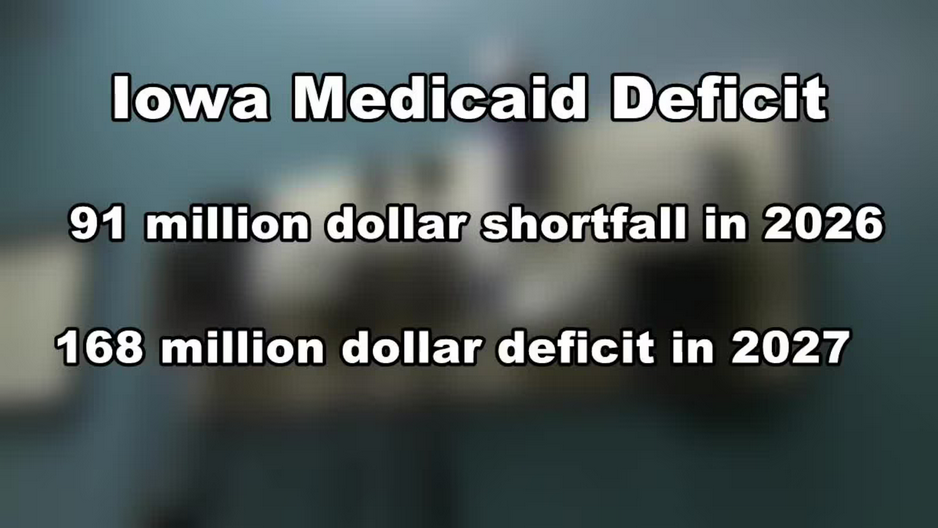
Iowa House passes health insurance tax to cover Medicaid gap
By Isabella Warren, WOWT First Alert. March 20, 2026
| | |
House lawmakers have passed a bill that would temporarily raise taxes on certain health insurance plans to help cover a Medicaid funding gap.
The rate would increase from less than 1% to 3.5%. Republicans say the increase will generate millions of dollars to help stabilize the state’s Medicaid program.
But Democrats argue insurers will pass those costs directly to consumers through higher premiums.
“We are not taking care of Iowans when we increase costs. When we increase healthcare costs, we’re making it more and more unattainable. And this new healthcare tax does exactly that,” said state Rep. Megan Srinivas, D-Des Moines.
Insurance company Wellmark warned earlier this week the tax could raise costs by about $115 per person it covers.
Nine amendments were proposed by Democrats to prevent costs from being passed down and all failed.
Republican state Rep. Shannon Lundgren R-Peosta said insurance premiums continue to rise even with tax cuts from previous legislative sessions.
“Not only have the health insurers profits been soaring, they even encouraged a call to action, scaring your constituents into thinking that this body was going to raise your insurance premiums,” Lundgren said.
Continued
| |
Related Story:
Iowa House panel votes to raise certain taxes, transfer money to offset Medicaid shortfall
By Robin Opsahl, Iowa Capitol Dispatch, March 16, 2026
A bill advancing rapidly in the Iowa House would make a one-time tax increase on some health insurers and draw money from the Taxpayer Relief Fund to address the state’s Medicaid shortfall.
House File 2739 was passed by a House Appropriations subcommittee and the full committee Monday. It would increase premium taxes on health maintenance organizations (HMOs) retroactively from the current 0.925% rate to 3.5% between Jan. 1 and Sept. 30, 2026. The rate would be lowered to 0.95% — slightly above the current rate — following this temporary increase. The companion to this bill in the Senate was passed through the committee process last week.
The bill would also include a $296.2 million transfer from the state’s Taxpayer Relief Fund to account for state revenue declines caused by changes made through the federal “One Big Beautiful Bill” Act. The move would accompany a $70.3 million transfer from the state general fund to the Iowa Department of Health and Human Services for the state’s Medicaid program.
Though Rep. Gary Mohr, R-Bettendorf, chair of the Appropriations Committee, called for the Monday discussion to focus on the funding components of the measure, much of the discussion involved the tax increase proposed in the bill. At the subcommittee meeting, Matt McKinney with the Federation of Iowa Insurers said the measure would cause an increase in health care insurance costs for Iowans.
“If you just do the math, it’s a 278% increase in taxes specifically for health insurance companies, which of course don’t just shake money out of the tree in the backyard,” McKinney said. “They collect that through premiums from businesses and insureds.”
He also said because the measure was retroactive, it would create lasting uncertainty within the insurance industry — an important economic driver in the state that makes up roughly 11% of the state’s gross domestic product. McKinney said some insurance companies were concerned that tax increases could expand to other, non-HMO insurance plans in the future, and could look at moving outside of Iowa if taxes are raised significantly.
“It’s no surprise that we’ve all been aware of in the next five to seven years, we’re looking at a $600 million shortfall in Medicaid costs in the state of Iowa. The state of Iowa is financially in a position to be able to afford to cover the $600 million. But we think a better approach is, why would the state — the taxpayers of Iowa — have to fund $600 million of expenses for Medicaid, and those who make a profit in this business, the insurance companies, collect the profits but pay nothing to that $600 million? I don’t think that’s fair for the taxpayers of Iowa.”
He said he believed the temporary increase was a “fair” way to approach the issue, saying current estimates from Republicans have found the tax hike would generate between $140 million and $150 million — meaning “the taxpayers of Iowa are still going to be on the hook for $450 million.”
But Democrats and advocates like Phil Jeneary, executive director of Iowans for Affordable Healthcare, said the tax increase on HMOs will be paid for by taxpayers, who will see higher health insurance premiums.
“I’m not here to defend the insurance companies,” Jeneary said, "but increasing taxes on HMOs would result in health insurance costs rising for Iowans who already are seeing higher rates as federal Affordable Care Act premium tax incentives expired earlier in 2026."
During the committee meeting, Rep. Megan Srinivas, D-Des Moines, said the measure is projected to result in a family of four paying roughly $500 more in health care premiums each year.
“When people are living paycheck to paycheck, talking about whether they can afford gas this month versus a dozen eggs, we’re looking at this bill increasing costs on Iowa families,” Srinivas said. “A $115 per belly button is the premium increase for the year. … And this isn’t just a temporary increase, because we’re looking at after this September 30th deadline, we’re increasing the (base tax) even more, and that cost is going to go on Iowans, making health care more and more unaffordable.”
Read the full article here
| |
Another Related Story:
Iowa lawmakers back away from a bad idea
By Todd Dorman, The Gazette, March 22, 2026
Sometimes, showing up can make a difference under the Golden Dome of Wisdom, still redder than a blizzard warning.
This past week saw the passing of the Legislature’s second funnel deadline, which is supposed to pare down its agenda for the home stretch toward April adjournment.
One idea that died without debate in the House Human Resources Committee would have enshrined former Gov. Terry Brastad’s executive order privatizing Medicaid in state law. That would mean a new governor, say, Democrat Rob Sand, couldn’t dump managed care with his own executive order. He would have to ask the Legislature to approve any changes. Good luck.
Senate File 2422, which would make Medicaid privatization the law of the land, among other concerning changes to public assistance, is among a handful of bills that would reduce the next governor’s authority. Sand is no fan of privatized Medicaid, so he could take it down like a big buck from his tree stand.
But that portion of the bill will be axed, Republicans said. And it met its unceremonious end just days after Iowans who had to fight with managed care companies to provide adequate care to loved ones told their stories at the Capitol.
The Gazette’s Tom Barton covered the subcommittee hearing. It drew families who insist that locking in privatization, making needed changes more difficult, is a very bad idea.
Stacey Ring of Council Bluffs has a 20-year-old son who receives Medicaid funded treatment through a waiver covering the cost of needed care for his intellectual disabilities.
“We waited a month for our son’s service plan to be reviewed. Only to have them make a decision to reduce his services by about 50 percent when his needs had not changed,” Ring told lawmakers.
“My primary message to you today is that I strongly oppose any legislation that makes rescinding the managed care system more difficult. We need an exit strategy for what is rapidly becoming a failed experiment,” Ring said.
Kay Marcel has a 45-year-old son with an intellectual disability and chronic health conditions.
“We have had, in the last three years, two denials of services,” Marcel said. “Thankfully, before an administrative law judge, those appeals were successful and the services were restored. But I just wait for the next time when we submit a plan of care to go through that again.”
“Do not lock this state into a system that, frankly, from my opinion and our experience, has been pretty much a disaster from the beginning,” Marcel said.
Wendy Andersen of Treynor told lawmakers about her nightmarish experience obtaining lifesaving medication for her 17-year-old son, who has tuberous sclerosis, epilepsy and developmental disabilities.
The managed care company denied coverage for a chemotherapy medication he had taken for six years to prevent tumor growth in his brain. The managed care provider, that we pay with our tax dollars, decided he no longer needed it.
Andersen waited through the week before Christmas for someone to approve the drug.
“At 7 p.m. on Christmas Eve the button was finally pushed,” Andersen said. “On Christmas morning the best present we received was a courier delivering our son’s medication.”
Read the full article here
| |
New Hampshire - Legislation to improve NH disability system oversight heads for House vote after Senate approval
By William Skipworth, New Hampshire Bulleting, March 27, 2026
After the New Hampshire Senate passed a bipartisan bill aimed at strengthening oversight of care for people with intellectual and developmental disabilities in the state, the House is preparing to vote on the legislation, which was introduced as a response to reports of abuse, neglect, and untimely deaths.
The bill targets the state’s developmental disability system. In New Hampshire, people with intellectual and developmental disabilities are legally entitled to care services, including residential care and day programming. To administer that care, the state contracts with a network of private providers.
“The genesis of this bill came after a series of articles published by the New Hampshire Bulletin that came out detailing abuse and neglect within our disability system,” state Sen. David Rochefort, a Littleton Republican and sponsor of the bill, said during a legislative hearing Wednesday, “including highlighting some tragic deaths that could’ve been prevented and quite frankly never should’ve happened. We recognize the fact that the individuals in this system, the individuals affected by this, are some of our most vulnerable people in our communities.”
According to state records obtained by the Bulletin, there were 548 credible reports of abuse, neglect, and exploitation (though the Department of Health and Human Services told the Bulletin earlier this month that it discovered its own data may include overcounts, but did not provide an updated number) from 2023 through 2025. Records also show 144 deaths in this system across the same time period. The Bulletin also learned the personal stories of some of the victims, including a man physically beaten by his caretakers, a violent rape, and a young man found dead in the woods behind his care home.
Senate Bill 670 seeks to establish the Developmental Services Oversight Commission to identify issues before they turn into tragedies. Made up of lawmakers, state officials, family members, and people with disabilities themselves (among others), the commission would be tasked with evaluating data on system performance and best practices and suggest ways to improve the system.
Continued
| |
Idaho - ‘Our schools are not medical centers’: Lawmakers debate over special education bill
By Becca Savransky, Idaho Statesman, March 23, 2026
For school districts, educating students with disabilities who need services like a nurse or an ASL interpreter can be costly. Complex services can run a bill tens of thousands of dollars and be especially difficult for rural districts to afford.
Last week, lawmakers advanced a bill to start to address the significant gap in Idaho’s special education funding. At the same time, they questioned whether school districts should be responsible for providing certain services for students with disabilities in the first place.
The bill would create a $5 million fund to help provide money for those services, which advocates say are essential to giving students with disabilities the public education they’re entitled to.
Although the committee ultimately voted Friday to send the bill to the House floor, where it faces its final hurdle before it can go to the governor’s desk, lawmakers focused much of their debate on whether these costs should be absorbed by the health entities.
“I think most people are terrified to say anything, because you don’t want to seem uncompassionate, you know, but some of this seems like it should be in Health and Welfare and not in education,” said Rep. Dale Hawkins, R-Fernwood, the chairman of the House Education Committee. He later added: “I don’t see a future in turning our classrooms into hospital rooms being bright.”
Federal education law requires that all students with disabilities have access to a free and appropriate public education. Idaho has long struggled to adequately fund special education, and it faces a growing budget gap between what the state provides to educate students with disabilities and what schools spend. Officials most recently estimated the deficit to be more than $100 million.
When the federal government passed what is now known as the Individuals with Disabilities Education Act, or IDEA, about 50 years ago, the government said it would provide up to 40% of the excess costs to educate students with disabilities. That money has never materialized, leaving states to shoulder much of the cost.
This year, Idaho lawmakers passed a joint memorial calling on the federal government to better fund special education. The memorial said the shortfall in federal funding for special education has “placed a growing financial burden” on taxpayers, schools and families and limits resources available for students with disabilities. But states must provide education programs to all students.
Before Congress passed IDEA, nearly 2 million children with disabilities were excluded from public schools, according to the federal Department of Education. Many were forced to live in state institutions in poor conditions where they didn’t receive adequate services or an education, according to the department. Since then, millions of students have benefited from a public education.
Lawmakers heard testimony Friday from several people with children with disabilities and those who work with students in special education. People who testified in support of the measure said this bill wouldn’t solve Idaho’s special education funding problem, but it would represent a step that could help school districts.
Under the bill, districts could be reimbursed for costs for individual students that exceed $30,000, if they have exhausted other options, including federal funds like school-based Medicaid. The bill taps into one-time, existing state funding.
One parent shared that the behavioral supports provided to her son in school at a young age allowed him to thrive in high school and will mean he can go on to find meaningful employment as an adult. Others testified about students with traumatic brain injuries or other disabilities who require several therapies per week, which can be costly.
During debate, some legislators pointed to the challenge of adhering to federal mandates without enough money. Rep. Clint Hostetler, R-Twin Falls, said the federal government has “hog-tied” the state in many ways and encouraged a larger conversation about the system as a whole. “
What scares me is the precedent we continue to set with this,” he said.
He asked when these types of services turn from “traditional education duties” into health care at school. Hostetler called the stories “heart-wrenching scenarios” but warned that “everyone is going to lose if we continue down this path.”
Lawmakers acknowledged schools have an obligation to educate, but Hawkins said it seems like “health and welfare and those types of issues have now been pushed into the school.” The responsibilities represent an “overwhelming burden” to schools, he said.
“Our schools are not medical centers. Our teachers are not nurses, doctors, counselors or any of those other things they are being asked to be more and more of,” Hawkins said. “We seem to be losing our grip on what schools were intended to be.”
Read the full article here
| |
U.S. Department of Justice Finds St. Louis County Special School District’s Restraint and Seclusion Practices Discriminatory
By John Anders, Jennifer Smith, and John Swinney of Franczek P.C. via J. D. Supra, March 24, 2026
The United States Department of Justice concluded its years-long investigation into the seclusion and restraint practices of Special School District of St. Louis County, finding that the District’s practices violated Title II of the ADA. The DOJ found that the District treated seclusion and restraint as a routine response to student behavior rather than a last-resort safety measure.
Key Findings
The DOJ based its finding on the frequency and pervasiveness of the use of seclusion and restraint. The District reported secluding over 300 students almost 4,000 times and restraining 150 students 777 times. One district school, with an enrollment of fewer than 100 students, secluded or restrained every one of its students at least once during the investigative period. Individual students experienced extraordinary use of seclusion and restraint, including one student who spent 101 hours combined in seclusion and another student who was restrained 372 times.
The DOJ found that the District violated Missouri law and District policy “routinely and systematically” by employing widespread use of seclusion and restraint without adequate justification such as imminent danger of physical harm, for student noncompliance, verbal conduct, and other minor behavior infractions. The District frequently continued seclusion of students long after the resolution of any imminent danger, sometimes for hours as determined arbitrarily by timers rather than a live safety assessment of the situation. The District also routinely implemented seclusion in cases of student self-harm or suicidal ideation, which reportedly exacerbated those behaviors and led to severe incidents requiring emergency response.
The DOJ also identified unsanitary and harmful conditions present during student seclusion with little to no intervention by staff, including bleeding, urination, defecation, vomiting, and other trauma responses to isolation without access to bathroom facilities. The District also used dangerous supine restraints over 400 times, sometimes without justification of imminent danger and contrary to safer alternatives.
Despite the “staggeringly high” numbers described in the DOJ’s findings, the DOJ, having relied on the District’s self-reporting, suspects massive underreporting based on discrepancies between data sheets and incident reports provided by the District.
The DOJ concluded that the District failed to provide necessary student interventions by relying on outdated or missing Functional Behavior Assessments, generalized Behavior Intervention Plans, and lacking plans for student elopement. The District moved some students to shortened schedules or homebound placement without added behavioral services.
In general, the District did not implement proper oversight and record-keeping practices, which resulted in a failure to internally address the pattern of improper seclusion and restraint and led to delayed parent notification and reports lacking required details.
Continued
| |
Georgia seeing a surge in special education complaints
By Andy Pierrotti, Decaturish, March 24, 2026
A growing number of Georgia parents allege their school districts are violating the law by failing to provide required special education services, according to an Atlanta News First investigation.
Georgia Department of Education records show formal complaints against school districts have more than doubled in recent years, from 156 in 2021 to 318 last year. In fiscal year 2025, the state found districts were out of compliance 190 times.
The surge in complaints reflects several concerning trends identified by the Georgia Department of Education’s dispute resolution division. A 2025 presentation produced by the division showed more complaints are being filed by current school staff; more complaints are being filed in districts that historically had few complaints; and more complaints involve multiple students, indicating systemic issues.
The most common violations found in fiscal year 2025 involved the provision of a free appropriate public education; implementation of individualized education programs; and development, review and revision of Individualized Education Programs (IEPs).
An IEP is a legally binding document that outlines specialized instruction, goals, services, and accommodations for students with disabilities. It’s a customized plan, developed by a team including parents, teachers, and specialists, detailing how the school will meet a specific child’s unique learning needs to help them succeed academically.
Robyn Painter, an attorney who represents Georgia families with disputes against districts, said she’s getting more calls from parents than her law firm can handle.
“We’re not talking about a child who may just need extended time on tests,” said Painter, who worked at the U.S. Department of Education for a decade. “People don’t call me unless they’re facing real situations. Unfortunately, I’ve had to turn people away.”
Fayette County family’s battle
The complaint data includes families like Chip Glazier, whose dispute with the Fayette County School District exemplifies the struggles parents face when advocating for their special needs children.
Glazier has spoken at nearly every Fayette County school board meeting over the past nine months, demanding the district provide his 18-year-old daughter Megan with a one-on-one paraprofessional and other accommodations.
Megan has a rare cognitive gene disorder - Atypical Prader-Willi Syndrome - that affects her ability to learn and impacts her eating habits. “Megan’s brain doesn’t talk to her stomach,” Glazier said. “She could eat herself to death if left unchecked.”
For four years, Glazier and his wife have asked the district to provide their daughter with the one-on-one support throughout the school day. Glazier said the resource is required under federal law and provided by other districts to students with similar needs.
The district has repeatedly denied their request. “They do everything in their power to not provide the services required by a free and appropriate education,” Glazier said.
Allegations of retaliation
Glazier hired an attorney in 2022 to try to resolve the dispute. Afterward, he claims the district stopped cooperating with Megan’s IEP and delayed meetings. Then, something unexpected happened: a visit from Georgia Child Protective Services (CPS) to investigate alleged maltreatment.
According to agency records, the school district alerted CPS because “Megan pulled the fire alarm” and made “suicidal statements.” The district claimed her parents refused to take their daughter for a mental health evaluation.
“That is 100% false,” Glazier said. “They knew we had an appointment the next week, and we told them that.” The Peachtree City father said he was stunned and embarrassed when state investigators came to his home.
“But then you realized why it happened, and it’s all in a series of retaliatory processes against us because we advocate for our child,” he said.
Painter said the district’s actions are typical. “I was not surprised,” she said. “I see that with parents whose child, for whatever reason, is posing a difficulty with the district.”
Read the full article here
| | |
Please share this offer with your loved one's
Direct Support Professionals!
VOR ❤️s OUR
DIRECT SUPPORT PROFESSIONALS!
Our loved ones' caregivers are essential to their health, safety, and happiness.
In appreciation of their good work and kind hearts, VOR offers free digital memberships to any DSP who would like to receive our newsletter.
We encourage our members to speak with their loved ones' caregivers to extend this offer of our gratitude.
If you are a Direct Support Professional interested in receiving our newsletter and e-content, please write us at
info@vor.net
with your name, email address, and the name of the facility at which you work. Please include the name of the VOR member who told you of this offer.
| | |
[Please click on blue link to view information about the bill]
VOR SUPPORTS:
H.R.6137 / S.3211 - Rep. Brian Fitzpatrick (R-NJ) and Sen. Maggie Hassan (D-NH) - A bill to require the Office of Management and Budget to consider revising the Standard Occupational Classification system to establish a separate code for direct support professionals
H.R.6766 / S.3492 - Rep. Claudia Tenney (R-NY) and Sen. Richard Blumenthal (D-CT) - Essential Caregivers Act - To amend titles XVIII and XIX of the Social Security Act to require skilled nursing facilities, nursing facilities, intermediate care facilities for the intellectually disabled, and inpatient rehabilitation facilities to permit essential caregivers access during any period in which regular visitation is restricted.
H.R.4796 - Rep. Laura Friedman (D-CA) - Restoring Essential Healthcare Act -To amend Public Law 119-21 (The One Big Beautiful Bill Act) to repeal the prohibition on making payments under the Medicaid program to certain entities.
H.R.4807 - Rep Greg Landsman (D-OH) - Protect Our Hospitals Act - To amend Public Law 119-21 to repeal certain changes to provider taxes under the Medicaid program.
H.R.1262 & S.932 - Rep. Michael McCaul (R-TX) and Sen. Markwayne Mullin (R-OK) "Give Kids A Chance Act" - To amend the Federal Food, Drug, and Cosmetic Act with respect to molecularly targeted pediatric cancer investigations. This bill would renew research into pediatric cancers and includes increasing funding for rare diseases, some of which cause Intellual and developmental disabilities and autism.
H.R.1509 & S.752 - Rep. Lori Trahan (D-MA) & Sen. Chuck Grassley (R-IA)
Accelerating Kids' Access to Care Act -
This bill would amend titles XIX and XXI of the Social Security Act to streamline the enrollment process for eligible out-of-state providers under Medicaid and CHIP, and streamline enrollment under the Medicaid program of certain providers across State lines.
H.R.2598 & S.1277 - Rep Jared Huffman (D-CA) and Sen Chris Van Hollen (D-MD) The IDEA Full Funding Act
To amend part B of the Individuals with Disabilities Education Act to provide full Federal funding of such part.
S.2279 - Sen. Josh Hawley (R-MO)
A bill to repeal the changes to Medicaid State provider tax authority and State directed payments made by the One Big Beautiful Bill Act and provide increased funding for the rural health transformation program.
H.R.1950 - Rep. Mark Pocan (D-WI) - Protect Social Security and Medicare Act
To protect benefits provided under Social Security, Medicare, and any other program of benefits administered by the Social Security Administration or the Centers for Medicare and Medicaid Services.
S.779 & H.R.1735 - Sen. Alex Padilla (D-CA) & Rep. August Pfluger (R-TX)
To amend title XIX of the Public Health Service Act to provide for prevention and early intervention services under the Block Grants for Community Mental Health Services program
H.R.2491 & S.1227 - Rep Kat Cammack (R-FL) & Sen. Edward Markey (D-MA) - The ABC Act
To require the Administrator of the Centers for Medicare & Medicaid Services and the Commissioner of Social Security to review and simplify the processes, procedures, forms, and communications for family caregivers to assist individuals in establishing eligibility for, enrolling in, and maintaining and utilizing coverage and benefits under the Medicare, Medicaid, CHIP, and Social Security programs
VOR OPPOSES:
H.R.2743 & S.1332 - Rep. Bobby Scott (D-VA) & Sen. Bernie Sanders (I-VT) Raise the Wage Act - A bill to provide increases to the Federal minimum wage and for other purposes. VOR opposes the provision in this bill that would phase out section 14(c) and sheltered workshops for indiviiduals with I/DD and autism.
S.2438 - Transformation to Competitive Employment Act (Sen. Chris Van Hollen (D-MD) - A bill to assist employers providing employment under special certificates issued under section 14(c) of the Fair Labor Standards Act of 1938 in transforming their business and program models to models that support people with disabilities through competitive integrated employment, to phase out the use of such special certificates, and for other purposes.
| |
836 South Arlington Heights Road #351
Elk Grove Village, IL 60007
Toll Free: 877-399-4867 Fax: 877-866-8377
| | | | |