Mountain and Clouds - By Alexander Calder - In the Hart Senate Office Building. Originally the clouds were built to revolve on giant pulleys around the top of the building. They were deemed unsafe, and made stable. The clouds were later removed entirely. Now they have been restored, and though still not mobile, it's great to see Calder's artwork with both the mountain and the clouds. Thanks to Gayle Gerdes for the photo. | | |
VOR's Weekly News Update
VOR is a national non-profit organization
run by families of people with I/DD and autism
for families of people with I/DD and autism.
| | |
NBC News story, featuring VOR's Hugo Dwyer. Unfortunately, the full article requires a paid subscription, but we have excerpted several sections for our members.
How Trump’s homelessness crackdown became a sweeping retreat from disability rights
By Mike Hixenbaugh and Colleen Long, NBC News, October 2, 2026
| | |
This article is part of “Disabled and Denied,” a series examining cuts to Medicaid home care and the fallout for disabled people and their families.
In a secret meeting at the White House complex this summer, an aide to Stephen Miller laid out the plan: To make it easier for states to round up and institutionalize mentally ill homeless people, the Trump administration was pushing a drastic policy change that would weaken the rights of millions of disabled Americans.
Hugo Dwyer, one of those seated around the wooden conference table, couldn’t believe what he was hearing.
The strategy described by Miller’s aide, Daniel Wasserman, threatened to roll back decades of progress in the disability rights movement — all to serve the president’s demand to clear homeless encampments in U.S. cities.
“I really cannot support this,” Dwyer, an advocate for people with intellectual disabilities, recalled telling Wasserman. “You’re talking about forcing people into institutional settings.”
The June 16 meeting with advocates and conservative think tank leaders at the Eisenhower Executive Office Building, which NBC News is revealing for the first time, came two days before the Trump administration did exactly what Wasserman previewed: The Department of Justice issued a sweeping legal opinion that repudiated decades of federal disability policy rooted in the landmark Supreme Court ruling Olmstead v. L.C.
Hailed by lawyers and activists at the time as the “Brown v. Board of Education of the disability rights movement,” the 1999 Olmstead ruling said that disabled people had a right to be integrated into their communities — not forced to live apart from society in institutions marred by a history of abuse and neglect.
The 39-page DOJ opinion took a sledgehammer to that ruling. The June memo declared that states had no federal civil rights obligation to help disabled people stay in their homes through programs that millions of Americans rely on to live independently or to care for their loved ones.
Disabled people and their advocates were horrified. Some fear that without the federal government enforcing their right to live on their own, they will have no choice but to move into institutions. Families who want to keep their disabled relatives at home worry that they will need to quit jobs or drain savings to pick up the caregiving slack. And many are concerned that the administration’s stated goal of combating homelessness could return the country to an era when people with serious mental illness were routinely confined in psychiatric hospitals against their will.
The fallout has already begun. Since issuing the memo, the Justice Department has abandoned or weakened at least five investigations, lawsuits or settlement agreements rooted in Olmstead, according to court filings, investigative findings letters and former DOJ officials who worked on the cases.
In Florida, the Justice Department is seeking to roll back a court order it won to keep medically fragile children out of nursing homes. In Texas, the department walked away from a 16-year lawsuit aimed at helping people with developmental disabilities live in their communities. And in North Carolina, the DOJ moved to end federal oversight of a long-running settlement aimed at transferring adults with serious mental illness out of institutions.
These moves stunned disability advocates who had considered Olmstead settled law with broad bipartisan support.
“There are lives at stake in those cases,” said Jennifer Mathis, a former deputy assistant attorney general who oversaw disability rights enforcement at the Justice Department during the Biden administration. “Olmstead was never on anybody’s hit list before, so that’s why it was so shocking.”
The White House didn’t answer questions about the June meeting or the DOJ memo’s effect on disability rights.
To understand how the Trump administration reached this decision and its impacts, NBC News interviewed five people familiar with internal discussions and a half-dozen former DOJ officials. Reporters also reviewed court filings and internal White House talking points prepared for the June meeting.
The administration’s abrupt turn against Olmstead appears to trace back to one of President Donald Trump’s central fixations since his return to office: aesthetics and cleanliness in the nation’s capital.
Trump decided to pursue a nationwide crackdown on homelessness after complaining about unsightly tent encampments along his motorcade route in Washington, D.C., according to two people familiar with his thinking who spoke on the condition of anonymity because they were not authorized to comment on the matter. His interest dovetailed with a growing political movement to tackle homelessness by banning public camping and forcing people with severe mental illness into treatment.
In July 2025, Trump issued an executive order aimed at doing just that. But that agenda soon collided with disability rights.
For decades, the Justice Department had invoked the Olmstead ruling to challenge states that unnecessarily confined disabled people, including those with psychiatric disabilities, such as schizophrenia and bipolar disorder, as well as physical and developmental disabilities, such as cerebral palsy and Down syndrome. That work initially continued after Trump returned to office — until Miller, Trump’s domestic policy leader, found out about it.
In December 2025, five months after Trump’s homelessness order, the Justice Department secured a settlement from South Carolina to end a lawsuit accusing the state of unnecessarily institutionalizing hundreds of adults with serious mental illness. The agreement required the state to expand community-based treatment, housing and crisis services.
Miller was frustrated, according to a person familiar with the internal discussions who was not authorized to speak publicly. Viewing the settlement and the legal framework underpinning it as obstacles to Trump’s homelessness efforts, he began pressing the DOJ to reconsider its interpretation of Olmstead, the person said, leading to the June memo by the department’s Office of Legal Counsel. Miller’s involvement was first reported by Bloomberg Law.
In a statement, a White House official denied Miller had a role in the DOJ opinion. “We have no control over what legal conclusions they reach,” the statement said.
A Justice Department spokesperson said the memo resulted from a routine request to review existing guidance and clarify the scope of the Olmstead decision.
~~~~~~~
The retreat from Olmstead has spread beyond the Justice Department.
Last year, the Department of Health and Human Services marked Olmstead’s 26th anniversary by framing enforcement of the decision as key to Secretary Robert F. Kennedy Jr.’s mission to “Make America Healthy Again.”
But after the DOJ issued its memo, HHS abruptly switched sides in a lawsuit challenging its own Olmstead rules requiring federally funded programs to serve disabled people in their communities. Citing the memo, HHS joined Texas and four other states in asking a federal judge to eliminate those rules nationwide. A judge approved the request last month.
In a statement, an HHS spokesperson said the agency’s Office for Civil Rights “will continue to investigate and resolve complaints” from disabled people who allege unjustified institutionalization.
“Our commitment to ensuring that individuals with disabilities are treated with dignity, afforded equal opportunity and are able to meaningfully access community services remains unchanged,” the statement said.
All of this comes as states are preparing to absorb nearly $1 trillion in Medicaid cuts over the next decade under Trump’s “big, beautiful bill.” With legislatures looking for ways to reduce spending, disability rights advocates fear the Olmstead reversal is a green light to slash services that allow disabled people to receive care at home.
“That sends a message to states that they should go ahead and proceed with cutting,” Mathis said. “We’re not going to enforce the law here.”
~~~~~~~
As Hugo Dwyer passed through security screenings to enter an office building next to the White House on a Tuesday afternoon in June, he remembers thinking: Finally, someone was going to hear him out.
Dwyer, whose late brother had a developmental disability, was looking forward to telling federal officials that while he supported people’s right to receive life-sustaining care at home, he also believed some people were best served by institutions. And he worried that the Justice Department’s zealous Olmstead enforcement had gone too far in pressuring states to dismantle such facilities.
This view had put Dwyer and his nonprofit, A Voice of Reason, at odds with much of the disability rights movement. Perhaps, he thought after receiving the surprise invitation to meet with White House officials, the Trump administration would be open to a more balanced approach that ensured all disabled people had access to high-quality care in whatever setting served them best.
But as he listened to Wasserman’s pitch, Dwyer realized the White House hadn’t summoned him and other advocates to help shape policy. Instead, officials wanted them to rally public support for a decision that had already been made — one that went far beyond merely preserving long-term care facilities as an option.
“They pretty much thought that I was going to be on board with what they were doing,” Dwyer said. “I’m not sure how I got invited.”
One attendee appeared particularly familiar with the plan and eager to support it, Dwyer said: Devon Kurtz, a policy director at the Cicero Institute, a conservative Texas-based think tank that has championed institutionalizing homeless people with serious mental illness.
Kurtz, who has published papers and op-eds backing the Trump administration’s position on Olmstead, confirmed he attended the White House meeting but declined to describe the conversation.
In an interview, he said it was reasonable for the government to require states to serve people with physical and intellectual disabilities in the community. But he argued that applying the same mandate to people with serious mental illness left too many untreated and cycling through homelessness, jail and prison.
Kurtz dismissed concerns that the Justice Department’s memo would ultimately push people with other types of disabilities into facilities, calling those fears “theoretical.”
Read the full article here
(Again, a subscription is required. However, a month subscription is a good way to support the people who put this story together - and you get the full article!)
| |
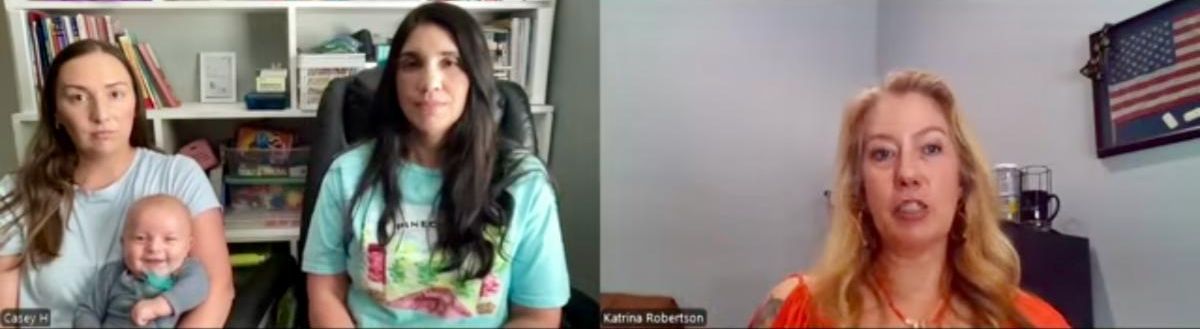
VOR Podcast #6
Brenna and Casey's
Must-See Interview with
Katrina Robertson
| | |
In this podcast, VOR"s Katrina Robertson talks about the challenges her family faced in finding the right services for her son Noah, and her battles with her P&A that lead to her bringing about a state law to provide oversight and accountability for Disability Rights Arkansas.
Click here to watch the podcast
| |
Worries Grow That Disability Services Could Become ‘Impossible To Access’
By Michelle Diament, Disability Scoop, October 1, 2026
Disability service providers across the nation are turning away new referrals and scaling back programs. And, with massive funding cuts on the horizon, they see no relief in sight.
A survey out this week of 524 intellectual and developmental disabilities service providers hailing from every state and Washington, D.C. paints a bleak picture.
Some 85% of providers report that they’ve experienced moderate or severe staffing shortages in the past year. As a result, 55% have declined new referrals and 29% cut back on programs and services for existing clients. More than half of providers indicated that they held off on rolling out new programs.
With no sign of the staffing challenges easing, 48% of providers indicated that they are considering additional program cuts, according to findings from the annual survey conducted by the American Network of Community Options and Resources, or ANCOR, which represents disability service providers across the country.
“The reality is that if we cannot recruit and hire enough direct support professionals into this field, services for the disability community may appear to exist on paper, but will become impossible to access in practice,” said Tom Rice, director of policy and regulatory affairs at ANCOR.
The survey comes at a tenuous moment for service providers.
Last year, Congress approved nearly $1 trillion in cuts to Medicaid, the primary funder of home and community-based services for people with developmental disabilities. That has already prompted some states to consider slashing funds for such services. The survey found that the threat of these state-level changes is influencing decisions by providers, with 56% indicating that they opted not to expand services this year as a result.
“The most troubling finding in this year’s report is how little has changed,” said Barbara Merrill, CEO at ANCOR. “Year after year, providers are telling us that they cannot find enough workers, that they are turning people away, and that they are eliminating or delaying services because they do not have enough staff to deliver those services.”
Among providers who cut programs, residential habilitation, home-based services and day habilitation were the most frequently cited. Nearly 60% of providers say that they serve areas where few or no alternate options exist for people with disabilities. And, more than half of those offering case management said they struggle to connect people with services.
The staffing difficulties experienced by disability providers have been compounded by federal immigration enforcement efforts, ANCOR found, with estimates showing that immigrants account for about 30% of the direct care workforce.
Providers are also coping with payment delays due to a crackdown on Medicaid waste, fraud and abuse, a situation that could impact access to services, the findings show. Nearly half of providers said that they would have to end services within three months if faced with a pause or delay in Medicaid payments.
Continued
|
Trump Administration Gets OK To Scale Back Disability Protections
By Michelle Diament, Disability Scoop, September 28, 2026
The federal government will do away with rules requiring that people with disabilities be served in the community under a settlement with a handful of states that advocates say sidesteps decades of precedent.
U.S. District Judge James W. Hendrix approved an agreement late last week between federal officials and Texas, Alaska, Florida, Louisiana and Montana to remove references to “most integrated setting” in a 2024 update to Department of Health and Human Services’ regulations related to Section 504 of the Rehabilitation Act.
The move cements a striking shift in the federal government’s stance on the rights of people with disabilities to live and be served in the community, advocates say.
“The court’s order accepting the parties’ agreement is inconsistent with 50 years of law,” said Shira Wakschlag, senior executive officer for legal advocacy and general counsel at The Arc of the United States. “The federal government is abandoning its duty to enforce the right of people with disabilities to live in their own homes and communities.”
The judge’s action brings an end to a lawsuit known as Texas v. Kennedy that was first filed roughly two years ago by Texas and 16 states, which has seen numerous twists and turns. Initially, the states sought to ensure that gender dysphoria would not qualify as a disability under the 2024 update to Section 504 regulations. They also asked the court to strike Section 504 in its entirety, but later backed off that claim while continuing to challenge the regulations. All but three states dropped out of the case under pressure from disability advocates, though two states — Louisiana and Montana — opted to rejoin the litigation.
In recent weeks, however, the federal government switched sides in the case citing a June memo from the Justice Department’s Office of Legal Counsel stating that neither the Americans with Disabilities Act nor Section 504 of the Rehabilitation Act “require states to treat mentally disabled patients in the most integrated setting appropriate to their needs.”
Continued
|
Developmental Disabilities Rise to About 20% in US Children
Medscape, October 1, 2026
The prevalence of developmental disabilities among US children aged 3-17 years increased to 20.45% (2023-2024) from 16.73% (2019-2020) according to parent reports. Significant increases were observed for attention-deficit/hyperactivity disorder (ADHD), autism spectrum disorder (ASD), learning disability, and any other developmental delay.
METHODOLOGY
- Researchers analyzed data from the 2019-2024 national household survey in the United States conducted by the National Center for Health Statistics.
- A total of 39,217 children aged 3-17 years were included in the analysis.
- Parents reported whether a doctor or healthcare provider had ever informed that their child had ADHD, ASD, intellectual disability, or any other developmental delay and whether a health professional or school representative had told them their child had a learning disability.
- Weighted prevalence estimates were determined for developmental disabilities overall and for each of the five specific disabilities, both cumulatively and across 2-year time intervals.
- The associations between 2-year time intervals and the prevalence of developmental disabilities were assessed, with adjustment for demographic and socioeconomic factors and level of urbanization.
TAKEAWAY
- The overall prevalence of any developmental disability among children rose from 16.73% to 20.45% between 2019-2020 and 2023-2024 among children aged 3-17 years (P < .001). Statistically significant increases were also observed for ADHD (from 9.52% to 12.00%), ASD (from 3.14% to 4.47%), learning disability (from 7.60% to 8.83%), and any other developmental delay (from 5.47% to 6.35%) during the same timeframe.
- Between 2019-2020 and 2023-2024, the prevalence of ASD rose by 42.4% (P < .001), with the most pronounced relative increase observed among children aged 3-5 years (an increase of 120.5%), those in nonmetropolitan areas (an increase of 85.8%), those with a family income below 200% federal poverty level (an increase of 60.8%), and girls (an increase of 58.3%).
- The prevalence of ADHD among children rose by 26.1% from 2019-2020 to 2023-2024 (P < .001). The most substantial relative gains were observed among those from families with income at or above 200% federal poverty level (an increase of 43.7%), those residing in large metropolitan areas (an increase of 30.2%), non-Hispanic White children (an increase of 35.2%), and girls (an increase of 30.4%).
- Between 2019-2020 and 2023-2024, the overall prevalence of learning disability increased by 16.2% (P < .001) and that of any other developmental delay increased by 16.1% (P = .02), with the largest relative increases seen among non-Hispanic Asian children.
IN PRACTICE
"Given this increasing prevalence, continued monitoring of developmental disability trends in the population may be critical in determining the adequacy and accessibility of services and interventions, particularly among these subgroups of children who have experienced significant increases in prevalence in recent years," the authors wrote.
SOURCE
The study was led by Benjamin Zablotsky, PhD, of the CDC at the National Center for Health Statistics in Hyattsville, Maryland. It was published online on September 22 in Pediatrics.
Continued
|
Opinion: Medicaid Fraud Is Real. So Is the Harm to Families Who Depend on It
By: Robert Naseef, PhD, Autism Spectrum News, September 25, 2026
Reports of Medicaid fraud are deeply troubling, and those responsible should be prosecuted. But fraud has become the justification for policies that make it harder for families to access the medical care and supports they depend on. Our government has the tools to investigate fraud without placing additional burdens on people with disabilities and their caregivers.
Recent reports of fraud and abuse in several states are disturbing, especially because they are making it even harder for families to access the help they desperately need to care for their autistic children and adults at home. Of course, anyone defrauding Medicaid and exploiting individuals with developmental disabilities should be held accountable. However, the response to these cases should not unfairly impact families who legitimately depend on these services every day.
I write from lived experience as the father of a nonspeaking adult whose group home is funded almost entirely by Medicaid.
As states implement changes following H.R. 1, many families are worried about what comes next. Autism Society of America affiliates across the country are reporting that some families are already being required to reapply for waiver services without clear information about the criteria or process. For families already navigating a complicated system, uncertainty alone can be overwhelming.
We should absolutely investigate fraud, strengthen oversight, and hold bad actors accountable. Protecting taxpayer dollars and protecting people with disabilities are not competing goals. We can and must do both.
The true measure of our Medicaid system is not only how effectively it identifies fraud, but whether it continues to protect the children and adults whose lives depend on it. Families like mine should not have to fear losing the services that keep our loved ones safe because of the actions of those who abuse the system.
The Autism Society of America believes every autistic person deserves access to the supports they need, when they need them, in ways that respect their rights, dignity, and autonomy. As policymakers continue efforts to strengthen Medicaid, they must ensure that legitimate beneficiaries are protected and that essential services remain available to those who depend on them every day.
Read the full editorial here
|
As CDC redesigns annual health survey, it removes questions about disabilities
Changes could result in undercounting people with intellectual and developmental disabilities
By O. Rose Broderick, STAT, October 1, 2026
A proposed redesign of the federal government’s annual health survey would result in significant undercounting of Americans with intellectual and developmental disabilities, according to advocates for the vulnerable population.
The National Health Interview Survey has historically undercounted people with disabilities, but the changes are a “head-scratcher,” said Katy Neas, CEO of The Arc, an advocacy group. “If we don’t have the government as a trusted source of data, asking questions about real people and what their real experiences are, we’re never going to get better [health outcomes],” she said.
The proposed changes, and its expected impact, runs counter to health secretary Robert F. Kennedy Jr.’s stated goals of reducing the burden of chronic disease. Adults with intellectual and developmental disabilities face significantly higher rates of chronic conditions such as heart disease, diabetes, and obesity.
In August, the Centers for Disease Control and Prevention’s National Center for Health Statistics proposed an overhaul of the National Health Interview Survey, which has been collecting a broad range of Americans’ health data for researchers and policymakers to make use of since 1957. The overhaul would remove several disability-related questions, even though more than a quarter of Americans have one.
A spokesperson for the Department of Health and Human Services declined to answer questions about why questions tracking certain disabilities were struck from the redesign, but indicated that the changes were driven by a push to lower the cost of data collection.
Continued
|
They were promised protection. Instead, these kids with disabilities died in foster care
By Joseph Shapiro, NPR - All Things Considered, September 30, 2026
The woman who calls 911 says there's a diabetic teen boy in distress, but when police and paramedics arrive at the house in Mesa, Arizona she comes outside to say he's just "pretending that he's dead on the floor" because he wants attention.
When those first responders go inside, they find something tragically different.
Fifteen-year-old Christian Williams isn't breathing. His lips are blue and his heart has stopped.
The small ranch house — lit up from inside in the dark, desert night — is a residential treatment facility for seven young men in foster care. The facility provided specialized mental health care for Christian, who, in the one month since he'd come to the group home, was in and out of the hospital for complications from his Type 1 diabetes.
"I've never even dealt with a diabetic. I don't know anything about that," the woman who called the police, a staffer at the foster care home, tells an officer, recorded on the officer's body camera.
Paramedics begin CPR, steadily pushing on Christian's chest, in an attempt to revive him.
An NPR investigation — including an analysis of federal data on hundreds of thousands of children — shows that kids with disabilities are the largest group that go into foster care.
More significantly, they suffer the worst outcomes in foster care — getting trapped in the system longer than children without disabilities and dealing with lifelong harm.
Disability encompasses a wide range of conditions. In our reporting, we came across children who used wheelchairs, were blind or deaf, had intellectual disabilities or used ventilators and sometimes were sent to foster homes that weren't accessible for them.
But the largest group of children in foster care are those with a behavioral health disability. "Up to 80% of children in foster care enter with a significant mental health need," according to a report from the American Academy of Pediatrics that cites multiple research studies.
There aren't even clear numbers on how many children and youth in foster care have disabilities. Researchers use a broad range: From 25 to 80%.
The lower percentage reflects how disability is counted in federal foster care data. The higher one reflects research suggesting that the vast majority of children and youth in foster care have some mental health issue — either one that contributed to them going into care, or one that resulted from the trauma of being removed from family and going to a foster home.
The federal government keeps and analyzes extensive data on foster care demographics and knows a lot about other populations. Black children make up 24% of the foster care population, according to NPR's analysis. (Add biracial ones, according to the research group Child Trends, and it's 35%.) Hispanic kids represent 21%.
These numbers have helped researchers and policymakers understand how children from these groups, especially from poor families, are disproportionately represented in foster care, and the harm that often results for them and their families. One research study, for example, shows that 53%of Black children in America will be the subject of a child protective services investigation by the time they turn 18.
But the numbers that could give clarity on disabled kids in foster care are harder to come by — partly because of the sometimes hazy definitions of disability but also because of the failure of child welfare providers to even count them.
Read the full article here
| |
Abuse was caught on camera at Choate Developmental Center. The prosecutor offered plea deals
By Beth Hundsdorfer, Capitol News Illinois, September 29,2026
Union County State’s Attorney Tyler Tripp cut a deal with a worker caught on tape beating a resident, allowing the worker to walk free — seven weeks before he filed a federal lawsuit to stop the removal of people with developmental disabilities from a state-operated facility in southern Illinois.
After numerous news reports of residents being whipped, beaten, neglected and abused at the Choate Mental Health and Developmental Center, Gov. JB Pritzker announced a plan in March 2023 to improve residents’ safety. It included installing 75 surveillance cameras and increasing security staff and management presence in resident living areas, but he also warned that Choate’s future depended on correcting these safety conditions.
Then, less than a year later, a camera caught worker John Curtis Spaulding repeatedly hitting a man who had developmental disabilities. No one reported the assault for days — evidence of a continued code of silence at Choate.
Spaulding was indicted in February 2024 on an aggravated battery charge — a felony punishable by two-to-five years in prison.
Then, it happened again.
Another Choate worker, Joseph Clark, was caught on camera abusing a patient and charged with a felony in May 2024.
But despite the videotape evidence in both cases, Spaulding and Clark would join dozens of past Choate employees accused of misconduct and be given the opportunity to enter guilty pleas to misdemeanors in deals that included no jail time.
Capitol News Illinois, ProPublica and Lee Enterprises released an investigative reporting series in 2022 that uncovered abuse and a culture of cover-ups at the state-run facility.
The series found that at least 26 employees were charged with felonies related to the treatment of Choate residents. Despite the dozens of felony arrests and indictments over the years, none of the workers served prison time, with many cases resulting in dismissed charges, probation, or reduced misdemeanor pleas.
Continued
| |
Despite state order, DDS failing to provide records concerning decline in residential population at Wrentham and Hogan Centers
By David Kassel, COFAR Blog, September 30, 2026
Despite an order from the state, the Department of Developmental Services (DDS) has not responded to our public records request for documents relating to the declining residential populations at the Wrentham Developmental Center and the Hogan Regional Center.
We first asked for documents relating to the census at Wrentham and Hogan and both the state and provider-run group home networks on July 24, more than two months ago. We also asked for the Department’s admissions policies to its state-run facilities. The Public Records Law gives state agencies 10 business days to respond to Public Records requests.
After we appealed on August 21 to the state public records supervisor, the supervisor ordered DDS on September 4 to respond to our July 24 request, and gave the Department 10 business days to do so. Those 10 days expired on September 21.
To date, we have heard nothing from the Department since the supervisor’s September 4 order. After notifying the Public Records Division of this on September 22 and again yesterday (September 29), the Division followed up with a “compliance notice” to DDS.
In yesterday’s compliance notice, a Public Records attorney requested that DDS provide “an estimated date” by which the DDS plans to comply with the September 4 order. The next step could be a referral by the public records supervisor of the matter to the state attorney general, who could sue DDS in Superior Court to produce the records.
The records we are seeking include:
1. Data showing the census at Wrentham and Hogan and in state operated and corporate provider-operated group homes in Massachusetts each year from Fiscal Year 2020 through the present;
2. Documents concerning current policies developed by DDS regarding admissions to the above facilities;
3. Documents concerning any current plans to consolidate or close the state facilities or to increase or decrease the number of group homes or beds;
4. Data on the number of requests DDS has received for placements in Wrentham and Hogan and in state-operated and provider-operated homes from Fiscal Year 2020 through the present; and,
5. Any and all written materials provided to family members and guardians from Fiscal Year 2020 through the present that contain information on the process and options for residential placements in the above settings.
Continued
| |
Arizona - Group home nurses go unpaid for weeks amid state investigation of AZ provider
By Justin Lum, FOX 10 Phoenix, October 1, 2026
Many nurses say they haven't been paid for weeks as the state is investigating a company that serves clients with developmental disabilities across Arizona. Legend DDD Services, LLC has gone radio silent, employees say.
FOX 10 made multiple attempts to reach out to Legend DDD Services, with no response, similar results that now former employees of the health care provider say they have dealt with for weeks.
When asked how much they are owed, one licensed practical nurse said, "They owe me about $4,000."
"They owe me $3,000," said Carlota Hilbert, another LPN.
Rosabelle Oben, also a licensed practical nurse, added, "At least $2,000."
Three licensed practical nurses who worked at multiple nursing supported group homes owned by Legend DDD Services say it is hard to get a hold of anyone there. Legend DDD Services is a provider that partners with the state's Department of Economic Security under its Division of Developmental Disabilities.
Meanwhile, FOX 10 confirmed the state is investigating Legend DDD, saying in a statement: "The health, safety and well-being of DDD members is our top priority, and we are committed to ensuring that all providers offer high-quality services to our members. When any issues in services or operations are reported impacting member care, DDD conducts thorough investigations and collaborates closely with our partners to take action when necessary to ensure essential services are available to members."
The investigation does not appear to be about unpaid wages. A spokesperson for the Department of Economic Security says the department does not comment on investigative activity to protect the integrity of the process.
While waiting to get paid, Oben says she and other employees couldn't access the app that controls payroll and schedules.
"I just had to find out one day that I was taken off schedule. And the last time I checked my PayLocity account, I couldn't find any information anymore," Oben said.
Nurses like Hilbert say they are also locked out of their accounts. About a week after Sept. 18, she says management said paychecks would be printed for pickup.
"We arrived at the office, and it was closed on the 25th," Hilbert said.
Hilbert says that is when calls and texts stopped being answered.
"No one will answer us, no one would respond to emails, they won't respond to anyone's texts," she said.
Read the full article here
| | |
Please share this offer with your loved one's
Direct Support Professionals!
VOR ❤️s OUR
DIRECT SUPPORT PROFESSIONALS!
Our loved ones' caregivers are essential to their health, safety, and happiness.
In appreciation of their good work and kind hearts, VOR offers free digital memberships to any DSP who would like to receive our newsletter.
We encourage our members to speak with their loved ones' caregivers to extend this offer of our gratitude.
If you are a Direct Support Professional interested in receiving our newsletter and e-content, please write us at
info@vor.net
with your name, email address, and the name of the facility at which you work. Please include the name of the VOR member who told you of this offer.
| | |
[Please click on blue link to view information about the bill]
VOR SUPPORTS:
S.4889 - Sen. Tim Kaine (D-VA) - The Supporting Our Direct Care Workforce and Family Caregivers Act - A bill to award grants for the creation, recruitment, training and education, retention, and advancement of the direct care workforce and to award grants to support family caregivers.
H.R.6137 / S.3211 - Rep. Brian Fitzpatrick (R-NJ) and Sen. Maggie Hassan (D-NH) - Recognizing the Role of Direct Support Professionals - A bill to require the Office of Management and Budget to consider revising the Standard Occupational Classification system to establish a separate code for direct support professionals
H.R4849 / S.2556 - Rep. Adam Grey (D-CA) and Sen. Chuck Schumer (D-NY) Protecting Health Care and Lowering Costs Act of 2025 - To repeal health-related portions of An Act to provide for reconciliation pursuant to title II of H. Con. Res. 14 (Public Law 119-21, The One Big Beautiful Bill Act)
H.R.8736 - Rep. Glenn Grothman (R-WI) - Restoration of Employment Choice for Adults with Disabilities Act - To amend the Rehabilitation Act of 1973 to ensure workplace choice and opportunity for young adults with disabilities.
H.R.6766 / S.3492 - Rep. Claudia Tenney (R-NY) and Sen. Richard Blumenthal (D-CT) - Essential Caregivers Act - To amend titles XVIII and XIX of the Social Security Act to require skilled nursing facilities, nursing facilities, intermediate care facilities for the intellectually disabled, and inpatient rehabilitation facilities to permit essential caregivers access during any period in which regular visitation is restricted.
H.R.4796 - Rep. Laura Friedman (D-CA) - Restoring Essential Healthcare Act -To amend Public Law 119-21 (The One Big Beautiful Bill Act) to repeal the prohibition on making payments under the Medicaid program to certain entities.
H.R.4807 - Rep Greg Landsman (D-OH) - Protect Our Hospitals Act - To amend Public Law 119-21 to repeal certain changes to provider taxes under the Medicaid program.
H.R.1262 & S.932 - Rep. Michael McCaul (R-TX) and Sen. Markwayne Mullin (R-OK) "Give Kids A Chance Act" - To amend the Federal Food, Drug, and Cosmetic Act with respect to molecularly targeted pediatric cancer investigations. This bill would renew research into pediatric cancers and includes increasing funding for rare diseases, some of which cause Intellual and developmental disabilities and autism.
H.R.1509 & S.752 - Rep. Lori Trahan (D-MA) & Sen. Chuck Grassley (R-IA)
Accelerating Kids' Access to Care Act -
This bill would amend titles XIX and XXI of the Social Security Act to streamline the enrollment process for eligible out-of-state providers under Medicaid and CHIP, and streamline enrollment under the Medicaid program of certain providers across State lines.
H.R.2598 & S.1277 - Rep Jared Huffman (D-CA) and Sen Chris Van Hollen (D-MD) The IDEA Full Funding Act
To amend part B of the Individuals with Disabilities Education Act to provide full Federal funding of such part.
S.2279 - Sen. Josh Hawley (R-MO)
A bill to repeal the changes to Medicaid State provider tax authority and State directed payments made by the One Big Beautiful Bill Act and provide increased funding for the rural health transformation program.
H.R.1950 - Rep. Mark Pocan (D-WI) - Protect Social Security and Medicare Act
To protect benefits provided under Social Security, Medicare, and any other program of benefits administered by the Social Security Administration or the Centers for Medicare and Medicaid Services.
S.779 & H.R.1735 - Sen. Alex Padilla (D-CA) & Rep. August Pfluger (R-TX)
To amend title XIX of the Public Health Service Act to provide for prevention and early intervention services under the Block Grants for Community Mental Health Services program
H.R.2491 & S.1227 - Rep Kat Cammack (R-FL) & Sen. Edward Markey (D-MA) - The ABC Act
To require the Administrator of the Centers for Medicare & Medicaid Services and the Commissioner of Social Security to review and simplify the processes, procedures, forms, and communications for family caregivers to assist individuals in establishing eligibility for, enrolling in, and maintaining and utilizing coverage and benefits under the Medicare, Medicaid, CHIP, and Social Security programs
VOR OPPOSES:
H.R.2743 & S.1332 - Rep. Bobby Scott (D-VA) & Sen. Bernie Sanders (I-VT) Raise the Wage Act - A bill to provide increases to the Federal minimum wage and for other purposes. VOR opposes the provision in this bill that would phase out section 14(c) and sheltered workshops for individuals with I/DD and autism.
S.2438 - Transformation to Competitive Employment Act (Sen. Chris Van Hollen (D-MD) - A bill to assist employers providing employment under special certificates issued under section 14(c) of the Fair Labor Standards Act of 1938 in transforming their business and program models to models that support people with disabilities through competitive integrated employment, to phase out the use of such special certificates, and for other purposes.
H.R.9401 / S.4865 - Rep. Steve Cohen (D-TN) & Sen. Michael Bennet (D-CO) The Latonya Reeves Freedom Act of 2026 - A bill to prohibit discrimination against individuals with disabilities who need long-term services and support. The bill is "softer" than in previous years, yet still biased against institutions (without specifying ICFs) and fails to acknowledge the importance of ICFs and SNFs in a full continuum of care.
| |
836 South Arlington Heights Road #351
Elk Grove Village, IL 60007
Toll Free: 877-399-4867 Fax: 877-866-8377
| | | | |