|
VOR's Weekly News Update
VOR is a national non-profit organization
run by families of people with I/DD and autism
for families of people with I/DD and autism.
| |
VOR Podcast #6
Brenna and Casey's
Must-See Interview with
Katrina Robertson
| |
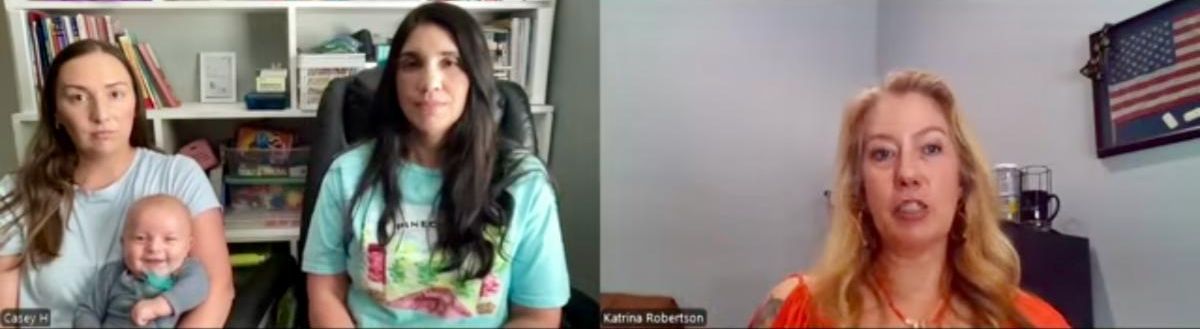
In this podcast, VOR"s Katrina Robertson talks about the challenges her family faced in finding the right services for her son Noah, and her battles with her P&A that lead to her bringing about a state law to provide oversight and accountability for Disability Rights Arkansas.
Click here to watch the podcast
| |
New Video Presentation from our Friends at the Saving Wrentham And Hogan Alliance
HCBS:
From Moral Reform to Medicaid Architecture
This presentation traces five eras of Home and Community-Based Services, from the locked wards of mid-century institutions to the hundred-billion-dollar Medicaid architecture of today. It follows the litigation, the legislation, and the Supreme Court ruling that made community living a legal right — and then asks the question the official narrative avoids: what happened to the people who needed more than community living could provide? This is not an argument against HCBS. It is an argument for honesty about what was lost when one model became the only model — and who was never asked.
Click here to watch the video
| |
|
September is National DSP Month
VOR ❤️s OUR
DIRECT SUPPORT PROFESSIONALS!
Please share this offer with your family's
Direct Support Professionals!
Our loved ones' caregivers are essential to their health, safety, and happiness.
In appreciation of their good work and kind hearts, VOR offers free digital memberships to any DSP who would like to receive our newsletter.
We encourage our members to speak with their loved ones' caregivers to extend this offer of our gratitude.
If you are a Direct Support Professional interested in receiving our newsletter and e-content, please write us at
info@vor.net
with your name, email address, and the name of the facility at which you work. Please include the name of the VOR member who told you of this offer.
| |
DOJ Intercedes in Texas v. Kennedy
Overturns the right for individuals with I/DD and autism to live in the least restrictive setting
VOR has long disagreed with advocates who interpret Olmstead and the Integration Mandate as calling for the closure and elimination of ICFs. We have always held to the wording of Olmstead that forced institutionalization is discrimination, that every person with I/DD deserves to receive services in the least restrictive setting, and that for some individuals, the least restrictive setting may be an ICF.
We believe in Choice. We believe individuals have the right to choose what is most appropriate, and that if the individual lacks the capacity to make informed decisions for their own welfare, that choice belongs to their families or guardians.
We believe in a full continuum of care that supports and funds a full array of residential options and employment opportunities.
We oppose being told by ideologues or by the government that they have the right to make those choices.
This week, the Department of Justice took a giant leap in opposing the rights of individuals to receive services in the least restrictive setting of their choice.
~~~~~~~~~~~~~~~~~~~~~~~~~~
|
Granting DOJ motion, court vacates key ‘integration mandate’ provisions
By Liza Berger, McKnight's Home Care, September 25, 2026
The US District Court for the Northern District of Texas on Wednesday granted the Justice Department’s recent motion to vacate several provisions of the Department of Health and Human Services’ (HHS) Section 504 regulation related to the integration mandate. The move represents a continuing slide away from federal community integration protections and could lead to less home- and community-based services access for people with disabilities, advocates say.
“We remain deeply concerned about the impact that this order will have on the ability of older adults with disabilities to continue to receive services and supports in their communities,” LeadingAge, which represents nonprofit HCBS providers, said in a recent post on its website.
Among the provisions struck:
- The definition of “Most integrated setting” in 45 C.F.R. § 84.10;
- The final sentence of 45 C.F.R. § 84.22(b), Methods: “In choosing among available methods for meeting the requirements of this section, a recipient shall give priority to those methods that offer programs and activities to qualified individuals with disabilities in the most integrated setting appropriate”;
- The general requirement that an HHS recipient administer programs and activities in the most integrated setting appropriate to the needs of qualified individuals with disabilities at 45 C.F.R. § 84.68(d);
- The entire integration provision which includes specific prohibitions against segregation and institutionalization at 45 C.F.R. § 84.76;
- The final sentence of 45 C.F.R. § 84.93(b), Methods: “In choosing among available methods for meeting the requirements of this section, a recipient shall give priority to those methods that offer programs and activities to qualified individuals with disabilities in the most integrated setting appropriate.”
While the action does not change Section 504 or the Americans with Disabilities Act, the Supreme Court precedent established by Olmstead v. L.C. ex rel. Zimring, 527 U.S. 581 (1999), or the Centers for Medicare and Medicaid Services’ home- and community-based services settings rule, LeadingAge pointed out that the order could lead to policy changes hurting access to community-based programs for people with disabilities.
Continued
Read the statement from Leading Age here
| |
State Fiscal Conditions: Context on Medicaid Budgets for FY 2027
By Anna Mudumala, Elizabeth Williams, and Robin Rudowitz, KFF, September 18, 2026
Medicaid is the primary program providing comprehensive health and long-term care to one in five people living in the U.S. and accounts for nearly $1 out of every $5 spent on health care. Medicaid is administered by states within broad federal rules and jointly funded by states and the federal government through a federal matching program with no cap. Overall, the federal government typically pays about two-thirds of total Medicaid costs and states pay one-third, though the matching rate varies by state. States also have flexibility to determine how to finance their share of Medicaid payments, within certain limits. Flexibility in administration and financing results in variation in Medicaid eligibility, benefits, and provider payments across the nation.
Medicaid funding is often central to overall state budgetary decisions as it is simultaneously a significant spending item as well as the largest source of federal revenues for states. According to data from the National Association of State Budget Officers (NASBO), in state fiscal year (FY) 2025, Medicaid accounted for 31% of total state spending for all items in the budget. Medicaid accounted for only 17% of expenditures from state funds (including general funds and other state funds) but accounted for 57% of all expenditures from federal funds.
State fiscal conditions are tightening due to slowing revenue growth and increased spending pressures. This, combined with other budgetary pressures, like the implementation of the 2025 reconciliation law that includes significant reductions in federal Medicaid spending, may increase the likelihood of states enacting Medicaid restrictions. This brief describes current fiscal conditions using the latest state revenue and spending data from NASBO and analyzes how these conditions may impact states’ Medicaid budget decisions going forward.
States continue to experience slow revenue growth following pandemic-era highs. State economic conditions worsened rapidly when the pandemic hit but recovered quickly, leading to a period of record-breaking revenue and spending growth for states. However, tax cuts combined with inflationary pressures, stock market volatility, and changes in consumer consumption patterns led to slowing state revenue growth in FY 2023 through FY 2026. While many states ended FY 2026 with revenues above projected amounts, estimated total revenue growth was 2% compared with 5% in FY 2025, and many states saw declines in revenue collections. States’ enacted budgets for FY 2027 are based on projections of another fiscal year of revenue growth between 2-3%. In addition, recent data along with federal policy changes that impact tax codes and reduce federal funding suggest long-term weakness that may present challenges in future years.
What factors will affect state budgets in FY 2027 and beyond?
State budget priorities may shift after the 2026 elections. As constituents struggle with the cost of living, state legislatures may opt to provide relief through enhancing social support or by enacting tax relief, though both options may become more difficult as fiscal conditions tighten. States are also contending with increasing spending demands from Medicaid, employee health care, education, housing, and disaster response. Following 2026 elections, new governors may shift priorities reflected in state budgets. Of the 37 states with gubernatorial elections (including DC’s mayoral election), there are 19 states where the incumbent is not running and a new governor or mayor may be elected. New governors’ administrations often bring in new policy priorities, new agency staff, and different implementation approaches that may be reflected in future budgets.
Economic changes and recent federal actions, including the passage of the 2025 reconciliation law, create additional budget uncertainty. States’ fiscal outlooks may be affected by continued inflationary pressures and slowing consumer spending. States are also facing uncertainty about tariffs, increasing national debt, and a fluctuating job market. In addition, the 2025 reconciliation law includes significant policy changes and federal funding cuts, such as tax code changes as well as Medicaid and SNAP funding cuts. The implementation of the reconciliation law’s provisions also requires costly administrative and systems changes for many states.
In response to mounting budget pressures and the 2025 reconciliation law, states may reduce Medicaid spending. The combination of tighter state fiscal conditions, other economic factors, and the implementation of the 2025 reconciliation law may result in state reductions to Medicaid spending. The impact of the 2025 reconciliation law will vary across states based on expansion status and reliance on provider taxes and state-directed payments. States have limited options to respond to reductions in federal Medicaid spending (Figure 4). States may try to raise additional revenues or reduce spending in other areas of the budget, though this is likely challenging given tightening state fiscal conditions. Instead, states may seek to restrict Medicaid provider reimbursement rates, benefits, or eligibility to reduce state Medicaid spending. A few states had already implemented Medicaid spending cuts for FY 2026 (and proposed cuts for FY 2027), and Medicaid cuts may ramp up as more provisions of the 2025 reconciliation law are implemented.
Read the full article here
|
Implementation of 2025 Reconciliation Law: Medicaid Managed Care Rate Setting Uncertainty & Potential Plan Exits
By Jada Raphael and Elizabeth Hinton, KFF, September 21, 2026
Managed care is the dominant delivery system for Medicaid enrollees with over three-quarters of Medicaid beneficiaries nationally enrolled in comprehensive managed care organizations (MCOs), accounting for half of total Medicaid spending in FY 2024. The 2025 federal budget reconciliation law is expected to create managed care rate setting challenges for states as the Medicaid provisions impacting enrollment and spending, including program financing changes, work requirements, and more frequent eligibility redeterminations for expansion adults, are rolled out. These changes can create uncertainty about enrollment and acuity as states and their actuaries develop capitation rates.
Amid this uncertainty, executives from Elevance Health said during a July earnings call that they were exiting DC’s Medicaid market and expect to exit additional markets. Since then, Louisiana announced an Elevance Health plan will exit at the end of 2026. While MCO entries and exits in specific states or markets are not uncommon, decisions by Elevance Health and the other large, multi-state parent firms about overall participation in Medicaid markets could have broad implications for states, enrollees, and providers, given their large share of national MCO enrollment. This policy watch examines recent and anticipated managed care rate setting challenges and the potential implications of MCO exits.
States and plans expect to face new rate setting challenges with implementation of the2025 reconciliation law. MCOs are at financial risk for services covered under their contracts, receiving a per member per month “capitation” payment for these services. Capitation rates must be actuarially sound and are applied prospectively, typically for a 12-month rating period, regardless of changes in health care costs or utilization. States may use a variety of risk mitigation tools to ensure payments are not too high or too low, including risk sharing arrangements, risk and acuity adjustments, medical loss ratios (MLR), or incentive and withhold arrangements.
In KFF’s 2025 Medicaid budget survey, many states reported anticipating challenges with projecting the potential impacts of federal policy changes, including work requirements and more frequent eligibility redeterminations for expansion adults, which have implications for member enrollment and acuity (or health risk) on average. Provider tax and state directed payment caps and reductions are also expected to create managed care plan rate setting challenges.
Five for-profit, publicly traded companies – Centene, Elevance Health, UnitedHealth Group, Molina, and Aetna/CVS –account for nearly half of all Medicaid MCO enrollment. These firms have a wide geographic reach in Medicaid, each operating MCOs in 13 or more of the 42 MCO states.
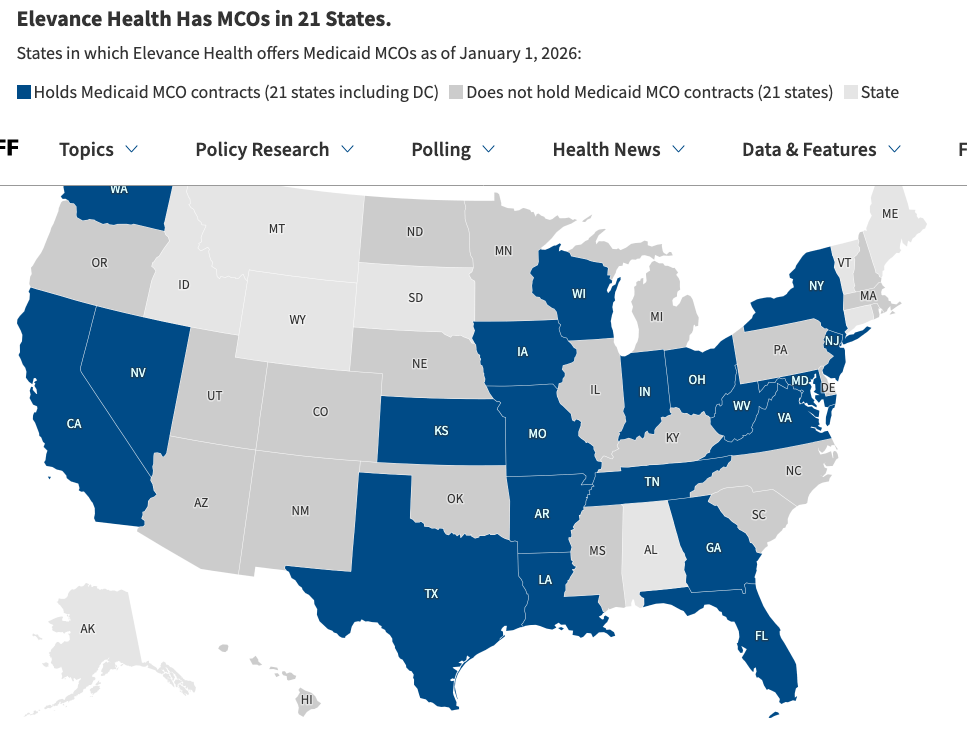
In July 2026, executives from Elevance Health said they expect to exit Medicaid markets over the next 12 to 18 months. During its second quarter 2026 earnings call, executives reported they are reviewing their overall Medicaid portfolio and will plan to exit markets “where the economics don’t support sustainable performance.” Elevance executives did not identify the states/markets where the exits are expected to occur beyond DC, or how many enrollees could be affected. Elevance offers MCOs in 21 states (Figure 2). Its share of Medicaid MCO enrollment varies across states, ranging from 6% to 44% (as of July 2024). Medicaid members account for about 20% of the firm’s overall medical membership. Executives reported that while acuity shifts are moderating and rates are increasingly reflecting experience, utilization remains elevated compared to pre-pandemic levels. The firm expects its full-year 2026 Medicaid operating margin to be -1.75% (the percentage of revenue left over after paying operating costs) and to see incremental acuity pressure in 2027.
| |
The other large for-profit parent firms (Centene, Molina, UnitedHealth, and CVS) did not discuss planning to exit Medicaid markets during their public Q2 2026 earnings calls. However, Centene reportedly plans to exit Arkansas’ Medicaid expansion program in 2027, which uses Medicaid funds to purchase Marketplace coverage, citing current funding challenges.
Managed care plan exits could lead to short-term administrative burden for providers and care disruptions for enrollees. For providers, plan transitions may create additional administrative burden at a time when many may also be helping enrollees navigate new eligibility requirements. Plan transitions may also cause disruptions in care for enrollees if their providers are now out-of-network or they need to obtain new prior authorizations. Disruptions may have more severe consequences for certain populations, such as enrollees who are pregnant or those in the middle of a course of treatment. Federal rules include requirements related to managed care enrollment processes and continuity of care. States can also set requirements for plan transitions through managed care contracts. For example, states can require exiting plans to provide notice of the exit within specified timeframes and to transfer data to the state and the plans receiving their enrollees. States can also set requirements for the receiving plans such as honoring prior authorizations granted by an enrollee’s previous plan and allowing enrollees to see out-of-network providers for a certain period after the transition.
Managed care plan exits could also have longer-term effects on the market. For example, plan exits could result in higher quality of care in the market if lower performing plans exit. At the same time, fewer plans in an (already concentrated) market could reduce competition which could have negative effects on cost, quality, and/or access. State procurement policies and program design can be used to help promote competition and quality in the market by influencing the number and mix of plans in a state.
Read the full article here
| |
Dear VOR Families: Bookmark this link!
New campaign aims to help millions at risk of losing Medicaid coverage under work requirements
“Keep Your Care” will work to help eligible Medicaid recipients maintain their coverage and navigate new rules that are set to launch Jan. 1.
By Julie Tsirkin and Owen Hayes, NBC News, September 23, 2026
In 100 days, on Jan. 1, new federal work and reporting requirements kick in for Medicaid recipients, leaving roughly 10 million Americans at risk of losing healthcare coverage, as states scramble to prepare for the most substantial change to the program in decades.
A new, $2 million campaign called “Keep Your Care,” an independent nonprofit, launched Wednesday. Shared exclusively with NBC News, it aims to educate states and Medicaid recipients ahead of the massive change.
For Melanie and Greg Stephens, who live in a small town outside of Richmond, Virginia, the resources can’t come soon enough. On Aug. 31, the family received a letter in the mail informing them of the new guidelines.
“When I received the letter about all the changes coming up, I had a panic attack because I was like, ‘Oh, my gosh, what does this mean?’” Melanie Stephens said.
As full-time caregivers for their disabled daughter, Rachel, they are exempt from the 80-hours-per-month work or community service requirement that will affect most eligible adults in the new year. But they will still need to prove they are exempt every six months.
“Our concern is not so much on our part because we are thorough,” Greg Stephens said. “Once it leaves us and goes to a Medicaid worker to process, that’s where we are concerned they’re going to miss a deadline or fall through the cracks, and we have no control over that.”
The work requirements, supported by Republicans to address wasteful spending, were passed as part of the “big, beautiful bill” signed into law by President Donald Trump last year. But they could leave eligible recipients without coverage because of the administrative hoops they will now have to jump through, health care advocates argue.
Virginia Health Secretary Marvin Figueroa, in an interview with NBC News, described it as “fighting government for something that you’re entitled to.”
“I go back to just look at the debate that allowed this bill to pass. This is a predictable surprise,” he added. “The discussion was about losing coverage, and I think we’re going to see that across the board.”
Keep Your Care was established by two health care advocacy groups, Caring Across Generations and the Healthcare Education Project, and the Service Employees International Union. The group’s state-level work will focus on Georgia, North Carolina, Illinois, Michigan, California, Virginia and New York, states with Medicaid expansion under the Affordable Care Act where millions stand to lose coverage. The group is working with communities to help eligible Americans maintain coverage, and influence state and local governments on how the new requirements are implemented. Its website will list state-specific information about what is changing, determine the requirements and exemptions that may apply and track reporting deadlines.
Read the full article here
|
Effort Seeks To Improve Dental Care For Those With IDD
By Shaun Heasley, Disability Scoop, September 25, 2026
With $51 million, a new initiative is underway to increase access to dental care for children with developmental disabilities in communities across the country.
The U.S. Department of Health and Human Services said this week that its Health Resources and Services Administration is awarding funds to 28 health centers to help meet the specific dental needs of those with autism, Down syndrome, cerebral palsy and intellectual disabilities.
Families of children with developmental disabilities have long reported struggles accessing dental care, with many providers ill-equipped to support sensory sensitivities, physical and communication differences and other specialized needs.
Federal officials say that participating health centers will use evidenced-based models and test new approaches. Funding will go toward expanding preventive care services, boosting the workforce and developing innovative models.
“A parent shouldn’t have to struggle to find a dental provider who is prepared to care for their child,” said Tom Engels, administrator of the Health Resources and Services Administration. “This investment will help health centers build the skills, services and approaches needed to make dental care more accessible and responsive to children and families — and help us learn what works so successful models can reach more communities.”
Continued
|
The GOP’s $50 billion rural health fund is coming up short, hospital leaders say
The cash amounts to just 5% of the cuts, and comes with plenty of red tape
By Daniel Payne, STAT. September 14, 2026
Last summer, Republican lawmakers were worried.
They were planning to cut $1 trillion from Medicaid over the next decade, and they knew hospitals in their districts and states would suffer.
Before passing their tax-cut law, they added in $50 billion over the next five years. This rural health fund was intended to help health care providers prepare for the new challenges ahead.
When hospital leaders first discussed the idea of the fund with lawmakers, they were hopeful, despite the fund being just 5% of the $1 trillion expected to be cut from Medicaid over the next decade.
“An infusion of cash to sustain operations was going to be critical, and that was the intent of the $50 billion,” said Lisa Harvey-McPherson, vice president of government relations at Northern Light Health.
This cash would have made a major difference, she and other leaders who met with lawmakers said. It would have allowed hospitals to fill the gap for care that wouldn’t be covered through Medicaid after the cuts, or expand charity care.
But by its implementation, the fund changed — both in size and in scope. Hospitals’ hopes for a large cash infusion were dashed.
The fund now focuses on creating new programs to rethink rural health, instead of filling in financial gaps. Added by federal health officials were spending caps, increased focus on achieving political goals — including the Make America Healthy Again priority of tackling chronic disease and diet issues — and ballooning optimism about artificial intelligence.
States were required to submit proposals to receive the funds. Many prioritized bolstering a clinical workforce for rural areas and investing in technology to make care more efficient and accessible, according to a review from the Bipartisan Policy Center.
In recent weeks, the Trump administration has announced some of the initiatives the fund will back, including drone-based drug deliveries and AI image diagnosis in Alaska, expanded remote patient monitoring in West Virginia, medical equipment upgrades in North Dakota, new provider workforce initiatives in Alabama, and prenatal services in Indiana.
The reality of the rural fund has left hospital leaders disappointed. Some have signaled to state leaders that they aren’t interested in the fund in its current form, worried they won’t have the capital required to sustain programs built with the money. Others are taking part — but remain skeptical of the fund’s ability to remake rural care, especially with new challenges on the horizon.
“It’s hard to think about transformation,” said Randy Clark, senior vice president of Northern Light Health who leads three hospitals in the system, “when you’re thinking about survival.”
Continued (Aplogies : There is a paywall for STAT)
|
Doctors and hospitals to see lower Medicaid payments in three dozen states
The change could prompt many of them to refuse to treat Medicaid patients.
By Shalina Chatlani, Stateline, September 24, 2026
New federal rules likely will force three dozen states to reduce their annual Medicaid payments to doctors and hospitals by a total of more than $50 billion — potentially shrinking the number of providers willing to see Medicaid patients, according to a new analysis.
The analysis in the peer-reviewed Health Affairs estimates that the 17 states with the highest provider reimbursement rates will have to cut their spending by between 10% and 25% of their overall Medicaid budgets. Medicaid is the joint state-federal health insurance program for people with low incomes.
“It means that more of these hospitals, (and) a few nursing homes that are wrapped up in our academic medical centers, are going to start limiting the numbers of Medicaid patients that they see,” said Debra Lipson, the independent health policy researcher who authored the report. “It’s going to make it more difficult for people who are on Medicaid to get essential care.”
Medicaid generally pays doctors and hospitals less money than private insurers and Medicare do for the same services. As a result, many providers refuse to care for Medicaid patients.
To address this problem, the federal government in 2016 began allowing the 40 states that contract with Medicaid managed care organizations to require those organizations to pay doctors and hospitals more for certain types of care.
The broad tax and spending measure that President Donald Trump signed in July 2025 places new limits on state-directed payments. Beginning in 2028, the law requires state Medicaid programs to reduce reimbursement rates by 10 percentage points each year until they reach either 100% or 110% of what Medicare pays. States that expanded Medicaid under the Affordable Care Act would be capped at the lower rate.
Supporters of the change say state-directed payments have produced an unreasonable windfall for doctors and hospitals.
But Lipson writes that the new limits are likely to increase the gap between Medicaid payments and the cost of caring for Medicaid patients. As a result, providers are likely to limit the number of Medicaid patients they see. Another possibility, she suggests, is that providers will try to offset the losses by negotiating higher prices with commercial insurers, raising costs for non-Medicaid patients.
The 15 states that spent more than 20% of their fiscal 2024 Medicaid budgets on state-directed payments that were at or near the average commercial rate will have to make the most significant cuts, according to the Health Affairs analysis. Those states are Nebraska, Louisiana, South Carolina, Iowa, Nevada, Arizona, Kentucky, New Mexico, Illinois, Tennessee, Florida, Georgia, North Carolina, Michigan and Mississippi.
Read the full article here
| |
Massachusetts - People with profound autism shouldn't be punished for their inability to communicate
BySusan Senator and Maura Sullivan, WBUR, September 21, 2026
Every 36 minutes, a healthcare worker in Massachusetts is assaulted or threatened on the job. As a state, we cannot accept this. Frontline caregivers, nurses and group home staff deserve safe workplaces, robust protection and the peace of mind that comes with violence prevention protocols and de-escalation training.
But what happens when the offender has a profound developmental or intellectual disability, or severe autism, and has lost control of themselves because they are overwhelmed or confused and doesn’t have the language skills to express that? And what if this incident occurs in the individual’s group home? Should these incidents be considered violent felonies, which, if convicted, might carry the threat of imprisonment?
As the Massachusetts Legislature moves an important healthcare worker protection bill into a conference committee to reconcile House and Senate versions (H.4767 and S.3184), lawmakers are on the precipice of committing a grave injustice against our state’s most vulnerable citizens.
We write this not just as advocates, but as mothers. We both love and care for adult sons with profound autism, Neil and Nat. Roughly 1 in 31 people in the United States are diagnosed with an autism spectrum disorder. Within that population, about 27% live with profound or severe autism — they have deep communication limitations and intellectual disabilities, requiring 24/7 care because they cannot comprehend the physical dangers or legal consequences of their actions. When frustrated by their communication deficits, by abrupt changes in their routines or by overwhelming sensory input or pain, adults with profound autism might exhibit self-injurious behavior, destroy objects, hit, punch or kick others.
Neil is entirely nonverbal; when he strikes out, it is because he is in acute physical pain or because he cannot communicate that he is ill and suffering. Nat has some language, but when he is terrified or overwhelmed, his ability to express what is wrong can elude him entirely.
Over the years, Nat has successfully volunteered at several nonprofits around the greater Boston area. When he does this, he is overseen by a staff person from his day habilitation program. About 10 years ago, Nat became frustrated with an employee at one of these non-profits. He began throwing objects and yelling. The employee called the police. The police arrived and were about to order Nat to the ground, which would have frightened and confused Nat, almost certainly leading to further escalation. But an attending staff member with de-escalation training, who often worked with Nat, intervened. He recalls pleading with the police, asking them not to touch Nat or handcuff him so the situation would not escalate. “I had to stand between Nat and the police officer, saying that he would have to arrest me as well.” He was able to use his training to calm down Nat safely. No one was harmed, but it could have easily gone the other way.
The current legislation ignores the reality of life for people like Nat and Neil. By extending the scope of the criminal assault provision to include residential group homes, the legislature risks criminalizing disability itself. The House bill allows for felony charges for physical assaults on healthcare workers; while the Senate version treats them as misdemeanors, it originally introduced a deeply troubling mechanism that would have allowed immediate, warrantless arrests within that disabled person's own home — even if he lives in a group home.
If the legislature truly wants to protect healthcare workers, the answer is not handcuffs, a trial or incarceration for people like Neil and Nat. The answer is pairing workplace safety with robust, mandatory training on communication anomalies and de-escalation techniques.
Our children cannot speak for themselves in the state house. So we urge the conference committee to retain the Senate’s one-year pause and accountability metrics at an absolute minimum. Lawmakers must remember that a progressive society is measured by how it treats those who cannot communicate their own suffering. We need to protect healthcare workers, but let’s do so without sacrificing the safety, dignity and quality of life of our most vulnerable residents.
Read the full article here
Read a position paper from the indefatiguable Saving Wrentham and Hogan Alliance here
| | |
Can it be? A state P&A may actually be protecting its vulnerable charges.
Utahns are being injured and dying as the state fails to oversee care centers effectively, disability advocates say
By Jessica Schreifels, The Salt Lake Tribune, September 23,2026
Last December, staff at a Millcreek nursing facility took a resident outside to smoke. Because he had been medically determined to be at risk of injury, he was supposed to be watched.
But a staffer at Paramount Health and Rehabilitation left him alone to help another patient, according to a new Disability Law Center report. Then the resident caught fire.
With no staff nearby, other residents tried to save him, the report says. They patted at the fire with their hands, poured liquids on him — including hot coffee — and called out for help. Staff eventually extinguished the fire by wrapping him in a fire blanket.
The man later died from his burns.
That man, the Disability Law Center report says, “had lived at Paramount for several years, had friends who cared about him, and was a Vietnam Veteran.”
After his death, Utah licensors investigated and state records show they determined that Paramount failed to provide adequate supervision. Its punishment was an $11,500 fine.
A new Disability Law Center report connects the resident’s death to broader gaps in state oversight, asserting that the Utah Department of Health and Human Services is not doing enough to protect vulnerable Utahns. As evidence, it also cites the deaths of three men with developmental disabilities who were left in a running vehicle inside a closed garage while in Safe and Sound Services’ care, along with documented harm at Provo Canyon School.
The Disability Law Center has previously and repeatedly documented that Utah doesn’t provide the oversight necessary to protect those who need long-term services, said Nate Crippes, its public affairs supervising attorney, in a statement.
“Too often, Utah has prioritized facilities and profits over the well-being of Utahns with disabilities,” Crippes said, “and we, once again, urge state officials to review our recommendations and make the necessary reforms to protect those in long-term care settings.”
Continued
| |
Shapiro admin rules for Medicaid recipients spark lawsuit from people with disabilities
By Ed Mahon, Spotlight PA, September 18, 2026
Earlier this year, some Pennsylvanians with disabilities and their families won a major victory.
Commonwealth Court struck down two rules that affected people with intellectual disabilities and autism in Pennsylvania’s Medicaid program, saying the state didn’t follow a required process for implementing those rules as regulations and “they must be considered null and void.”
One rule limited how long the program would pay for support services when people traveled out of state, while the second limited how many hours per week relatives could work as paid caregivers. The decisions, one national advocate said, affected “whether people with disabilities have a real choice in where and how they live.”
But Democratic Gov. Josh Shapiro’s administration responded by reimposing similar limits on many of these same Medicaid participants through agreements and consent forms, saying the court’s rulings were about process, not the underlying policies, and arguing the state has a responsibility to protect the integrity and financial stability of the Medicaid program.
The administration gave participants an Aug. 6 deadline to sign new agreements or else they could face an “involuntary termination” from the services they use.
The response drew widespread opposition from families, advocates, and providers. The opposition escalated on Wednesday, as four Pennsylvanians with intellectual and developmental disabilities filed a class action lawsuit challenging the new relative caregiver and travel rules, which their lawyers say “gravely impact” them and their families.
Critics warn the rules — which affect thousands of people — could force some family caregivers to provide uncompensated work, which is an especially critical issue given what some see as a staffing crisis. They also say the rules limit meaningful travel opportunities for people with disabilities and could ultimately lead to a reduction in services, or force people into institutional care.
Gladys Stefany, a Pike County resident, has an adult daughter with disabilities who receives services through Medicaid. Stefany also works with other families to help them self-direct their own care, hire employees, and comply with state rules. She opposes the state’s approach.
“It just seems to me they’re trying to end-run around the court to do what they wanted to do to begin with,” Stefany told Spotlight PA.
The changes the Shapiro administration rolled out following the court rulings this year apply to people in participant-directed services models, which can give people with disabilities or their representatives more control over how care is provided, including by hiring support service professionals.
The revised work–hour rule, known as the “40/60 Rule,” limits the number of hours that Medicaid will pay relatives, legal guardians, and others for certain services. The hours are generally capped at 40 hours per week for a single worker — and 60 hours per week when multiple relatives or legal guardians do the work.
The rule affects in-home and companionship supports, ones in which a caregiver provides supervision and assistance with daily activities, such as eating, toileting, bathing, or dressing, according to the lawsuit. The lawsuit says the new version of the rule is “essentially identical” to the previous one canceled out by Commonwealth Court.
Read the full article here
| |
Illinois - Choate cuts pushed back to June amid lawsuits
By Brandyn-Wilcoxen, WPSD News, September 23, 2026
Employees and patients at Choate Developmental Center may have at least three more months of breathing room with planned cuts pushed back from March to June 2027.
The Illinois Department of Human Services announced in July that it would phase down services at Choate, including eliminating behavioral health unit and developmental disabilities beds outside of the forensic unit.
The reduction in services would come with an estimated 250 jobs cuts.
Anders Lindall, director of public affairs for AFSCME Council 31, representing the unions including employees at Choate and other government facilities, said the new June timeline comes from an IDHS filing with the state's Health Facilities and Services Review Board.
"When they first blindsided people with the announcement of these cuts, they said they would be making them in September," Lindall said. "What they are now saying is that they would continue to move people with developmental disabilities out of Choate and will not complete the facility closure until June of next year."
IDHS has not responded to a reporter's request for comment.
Continued
| |
Connecticut Could Better Ensure That the Department of Developmental Services and Providers Fully Comply With Federal Waiver and State Health and Safety Requirements for Individualized Home Support Services
Office of the Inspector General, US Department of Health and Human Services, September 22, 2026
What OIG Found
Connecticut did not ensure that the provider certification process was followed properly (32 instances for the 81 providers we reviewed), individual plans were reviewed at least annually (6 instances in the 124 individual plans we reviewed), and critical incidents were properly reported and recorded (70 instances).
For the 5 site visits we performed, providers did not complete, as required, criminal background checks (23 instances) and abuse and neglect registry checks (29 instances). In addition, they did not ensure that mandatory training was completed within required timeframes (106 instances).
What OIG Recommends
We made four recommendations, including that the State agency work with DDS to: (1) develop and implement written policies and procedures for the provider certification process; (2) ensure that individual plans are reviewed timely; (3) fully implement its critical incident reporting and monitoring system and take appropriate follow-up action; and (4) ensure providers improve internal controls for criminal background checks, abuse and neglect registry checks, maintenance of records, and training. The full recommendations are in the report.
The State agency concurred with all four recommendations.
Read the ful statement and download the report here
| |
Ohio State study finds patients with developmental disabilities still face kidney transplant disparities despite state laws
Ohio State University, September 21, 2026
State laws to combat disability-based discrimination in the organ transplant process aren’t working, according to new research from The Ohio State University College of Medicine.
The study, published in JAMA Internal Medicine, examines national policies designed to help all patients have a fair chance to receive an organ transplant. Despite 40 states passing laws prohibiting disability-based discrimination in the organ transplant process, people with intellectual and/or developmental disabilities (IDD) are still less likely to receive a kidney transplant compared to those without IDD.
“These findings show how difficult it can be for legal protections to lead to real changes in patient care,” said Brittany Hand, PhD, lead author and associate professor in the Department of Internal Medicine. “Because transplant eligibility decisions involve complex clinical and psychosocial evaluations, discrimination can be difficult to recognize and document.”
Researchers analyzed Medicare Standard Analytical Files from 2013 – 2023 to identify end stage kidney disease patients with and without IDD. Medicare insures qualifying Americans on dialysis and kidney transplant recipients of any age.
The data reveals patients with IDD were evaluated for a transplant 22% less often and received a transplant 38% less often. The study found no evidence that these laws reduced differences in transplant evaluations or transplant rates.
“Legislation alone may not be enough to reduce these differences without complementary efforts to improve transparency and oversight of the entire transplant process,” said Austin Schenk, MD, PhD, transplant surgeon and clinical associate professor in the Department of Surgery.
Continued
| | |
Please share this offer with your loved one's
Direct Support Professionals!
VOR ❤️s OUR
DIRECT SUPPORT PROFESSIONALS!
Our loved ones' caregivers are essential to their health, safety, and happiness.
In appreciation of their good work and kind hearts, VOR offers free digital memberships to any DSP who would like to receive our newsletter.
We encourage our members to speak with their loved ones' caregivers to extend this offer of our gratitude.
If you are a Direct Support Professional interested in receiving our newsletter and e-content, please write us at
info@vor.net
with your name, email address, and the name of the facility at which you work. Please include the name of the VOR member who told you of this offer.
| | |
[Please click on blue link to view information about the bill]
VOR SUPPORTS:
S.4889 - Sen. Tim Kaine (D-VA) - The Supporting Our Direct Care Workforce and Family Caregivers Act - A bill to award grants for the creation, recruitment, training and education, retention, and advancement of the direct care workforce and to award grants to support family caregivers.
H.R.6137 / S.3211 - Rep. Brian Fitzpatrick (R-NJ) and Sen. Maggie Hassan (D-NH) - Recognizing the Role of Direct Support Professionals - A bill to require the Office of Management and Budget to consider revising the Standard Occupational Classification system to establish a separate code for direct support professionals
H.R4849 / S.2556 - Rep. Adam Grey (D-CA) and Sen. Chuck Schumer (D-NY) Protecting Health Care and Lowering Costs Act of 2025 - To repeal health-related portions of An Act to provide for reconciliation pursuant to title II of H. Con. Res. 14 (Public Law 119-21, The One Big Beautiful Bill Act)
H.R.8736 - Rep. Glenn Grothman (R-WI) - Restoration of Employment Choice for Adults with Disabilities Act - To amend the Rehabilitation Act of 1973 to ensure workplace choice and opportunity for young adults with disabilities.
H.R.6766 / S.3492 - Rep. Claudia Tenney (R-NY) and Sen. Richard Blumenthal (D-CT) - Essential Caregivers Act - To amend titles XVIII and XIX of the Social Security Act to require skilled nursing facilities, nursing facilities, intermediate care facilities for the intellectually disabled, and inpatient rehabilitation facilities to permit essential caregivers access during any period in which regular visitation is restricted.
H.R.4796 - Rep. Laura Friedman (D-CA) - Restoring Essential Healthcare Act -To amend Public Law 119-21 (The One Big Beautiful Bill Act) to repeal the prohibition on making payments under the Medicaid program to certain entities.
H.R.4807 - Rep Greg Landsman (D-OH) - Protect Our Hospitals Act - To amend Public Law 119-21 to repeal certain changes to provider taxes under the Medicaid program.
H.R.1262 & S.932 - Rep. Michael McCaul (R-TX) and Sen. Markwayne Mullin (R-OK) "Give Kids A Chance Act" - To amend the Federal Food, Drug, and Cosmetic Act with respect to molecularly targeted pediatric cancer investigations. This bill would renew research into pediatric cancers and includes increasing funding for rare diseases, some of which cause Intellual and developmental disabilities and autism.
H.R.1509 & S.752 - Rep. Lori Trahan (D-MA) & Sen. Chuck Grassley (R-IA)
Accelerating Kids' Access to Care Act -
This bill would amend titles XIX and XXI of the Social Security Act to streamline the enrollment process for eligible out-of-state providers under Medicaid and CHIP, and streamline enrollment under the Medicaid program of certain providers across State lines.
H.R.2598 & S.1277 - Rep Jared Huffman (D-CA) and Sen Chris Van Hollen (D-MD) The IDEA Full Funding Act
To amend part B of the Individuals with Disabilities Education Act to provide full Federal funding of such part.
S.2279 - Sen. Josh Hawley (R-MO)
A bill to repeal the changes to Medicaid State provider tax authority and State directed payments made by the One Big Beautiful Bill Act and provide increased funding for the rural health transformation program.
H.R.1950 - Rep. Mark Pocan (D-WI) - Protect Social Security and Medicare Act
To protect benefits provided under Social Security, Medicare, and any other program of benefits administered by the Social Security Administration or the Centers for Medicare and Medicaid Services.
S.779 & H.R.1735 - Sen. Alex Padilla (D-CA) & Rep. August Pfluger (R-TX)
To amend title XIX of the Public Health Service Act to provide for prevention and early intervention services under the Block Grants for Community Mental Health Services program
H.R.2491 & S.1227 - Rep Kat Cammack (R-FL) & Sen. Edward Markey (D-MA) - The ABC Act
To require the Administrator of the Centers for Medicare & Medicaid Services and the Commissioner of Social Security to review and simplify the processes, procedures, forms, and communications for family caregivers to assist individuals in establishing eligibility for, enrolling in, and maintaining and utilizing coverage and benefits under the Medicare, Medicaid, CHIP, and Social Security programs
VOR OPPOSES:
H.R.2743 & S.1332 - Rep. Bobby Scott (D-VA) & Sen. Bernie Sanders (I-VT) Raise the Wage Act - A bill to provide increases to the Federal minimum wage and for other purposes. VOR opposes the provision in this bill that would phase out section 14(c) and sheltered workshops for individuals with I/DD and autism.
S.2438 - Transformation to Competitive Employment Act (Sen. Chris Van Hollen (D-MD) - A bill to assist employers providing employment under special certificates issued under section 14(c) of the Fair Labor Standards Act of 1938 in transforming their business and program models to models that support people with disabilities through competitive integrated employment, to phase out the use of such special certificates, and for other purposes.
H.R.9401 / S.4865 - Rep. Steve Cohen (D-TN) & Sen. Michael Bennet (D-CO) The Latonya Reeves Freedom Act of 2026 - A bill to prohibit discrimination against individuals with disabilities who need long-term services and support. The bill is "softer" than in previous years, yet still biased against institutions (without specifying ICFs) and fails to acknowledge the importance of ICFs and SNFs in a full continuum of care.
| |
836 South Arlington Heights Road #351
Elk Grove Village, IL 60007
Toll Free: 877-399-4867 Fax: 877-866-8377
| | | | |