|
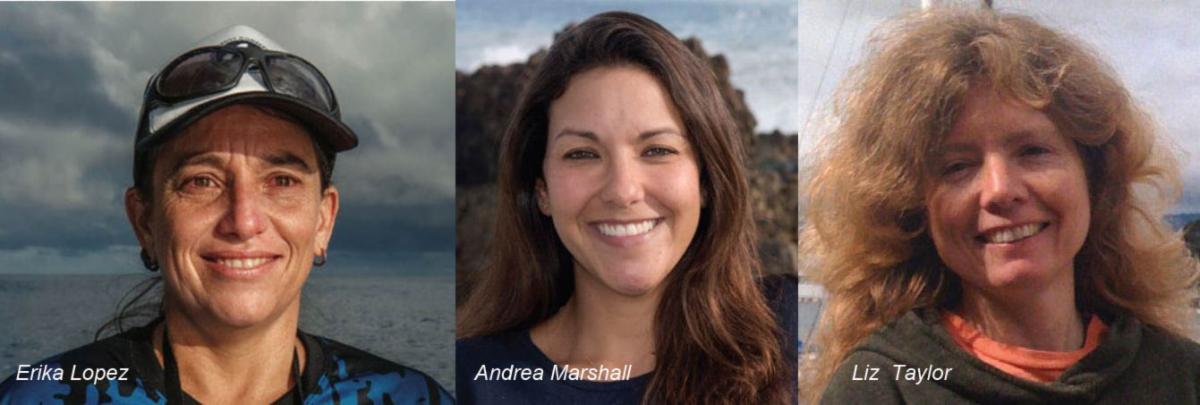
Women Dives Hall of Fame Honors Three Women Protecting Sharks & The Ocean
Erika Lopez is the Executive Director of the Biodiversity Conservation Colombia Foundation that works to conserve and protect the biodiversity of the flora and fauna sanctuary of Malpelo, a small oceanic island in the eastern Pacific Ocean about 500 km (310 mi) west of the Colombian mainland. This iconic hotspot is one of the top sites for migratory sharks in the Tropical East Pacific Marine Corridor connecting the Galapagos Islands(Ecuador), Cocos (Costa Rica), and Coiba (Panama). Erika leveraged partnerships with the Colombian Navy, Colombian National Parks, and ecotourism to protect this region of the world.
Andrea Marshall
Dr. Andrea Marshall is the founder of the Marine Megafauna Foundation in Mozambique, South Africa, that works to protect rays and large marine megafauna. She is a well-known ocean conservationist, a public speaker and educator, and the owner of two travel companies that cater to adventurous, conservation-minded divers.
Liz Taylor
Elizabeth (Liz)Taylor is an explorer, educator, and president of DOER, a designer and builder of submersibles and other subsea systems. She has taken part in over 60 scientific diving and ocean exploration projects, including expeditions under the Explorers Club flag. The daughter of Sylvia Earle, she advocates for shark and ocean protection and has authored a number of articles and white papers. Liz received the prestigious inaugural Wings World Quest innovation award and co-hosts The Ocean Elders’ Dive In with Liz and Sylvia series.
| |
|
Common Sense Prevails
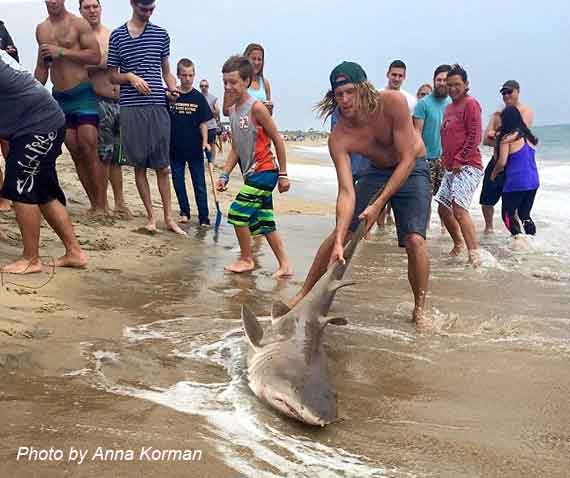
Local tackle store owner Marty Wright decided to host a shark fishing tournament from the beaches and piers in July at the height of tourist season in North Carolina. "A lot of people came to me and said, 'we don't want that here'", said Holden Beach Mayor Alan Holden. "Bloody bait to attract the sharks, and people in the water don't seem to be what is a good idea," he said. Holden and other local mayors convinced Wright to delay the tournament until early October. They eventually went to court where Wright's attorney argued North Carolina’s public trust doctrine said the shore is public property and people can fish anywhere, anytime they want. The tournament was blocked by a judge who agreed tournament would pose a threat to beachgoers.
Back in 2015, when shark fishing from a beach was allowed at Oak Island, Brunswick County, NC, two teens each lost an arm to a shark, and just this past week, the Florida Museum issued a statement that when Simon Nellist was killed by a shark in 2022, the incident "provoked" because he unknowingly swam in an area where fishing was allowed.
A bipartisan bill filed recently would ban shark fishing tournaments from shore from May through October in Brunswick County. Mayor Holden thinks it will solve any potential problems in the future. Rep. Pricey Harrison is a cosponsor of the bill that would outlaw the tournaments. She wishes the ban would cover the entire coast and feels sharks are essential apex predators that are in decline worldwide. "Sharks are a really important part of the ocean ecosystem," Harrison said.
| |
|
Blue Whale Watching in San Diego
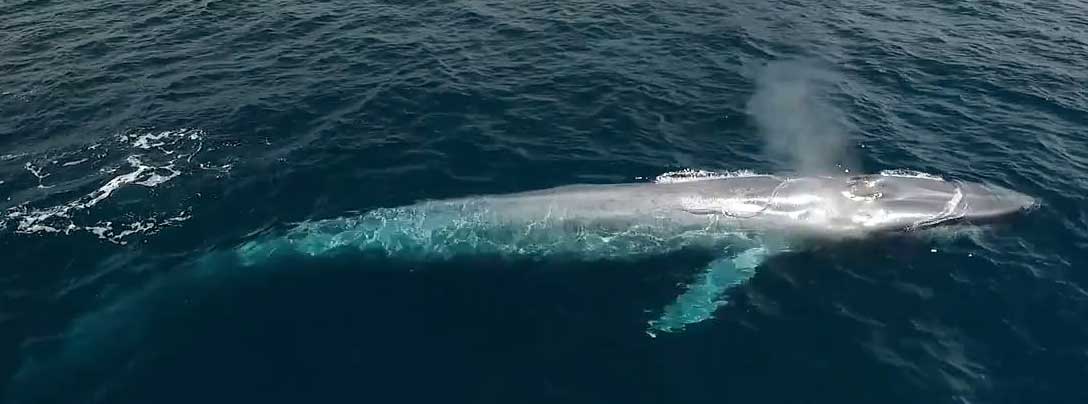
During the summer and fall, pods of blue whales, Balaenoptera musculus, migrate from their southern tropical breeding grounds to the cooler waters of the North Pacific to feed on the rich supply of krill. Reaching lengths of 100 feet blue whales are the largest animals ever known to have lived on our planet. Because the migration takes place out in the deep in addition to blue whales, finback whales (the world's second-largest whale), humpback whales, dolphins and sea lions are often seen.
These ocean giants pass by the coast of San Diego, California, so most blue whale watching tours start in San Diego's Big Bay. The cost of whale watching cruises ranges from luxurious private charters to affordable group cruises. Many cruise companies provide printed information guides, and some have naturalists from the San Diego Natural History Museum or the Birch Aquarium at Scripps to watch for spouts.
| |
|
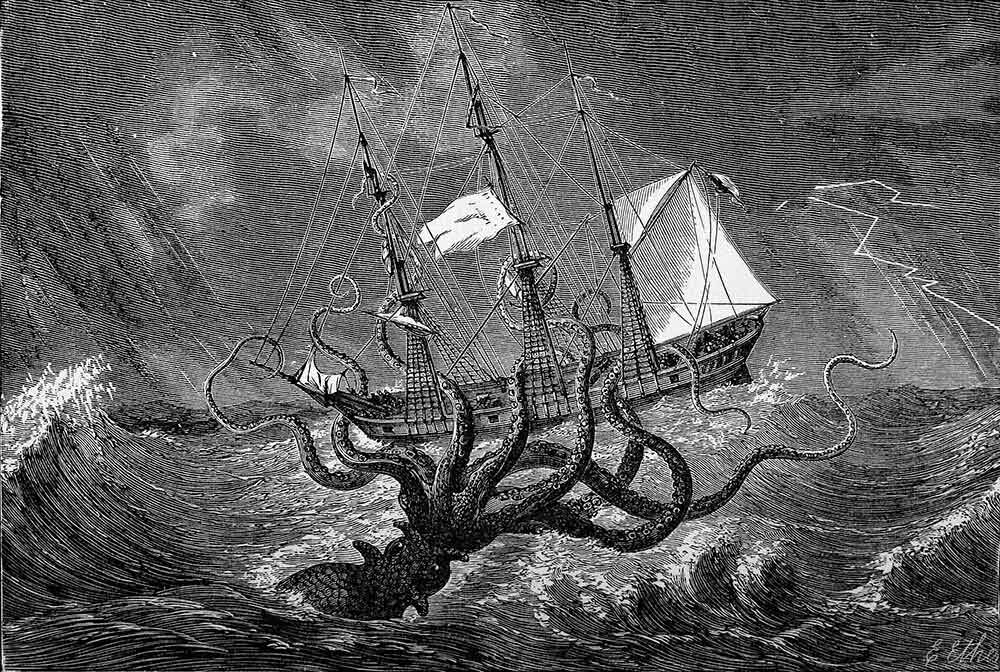
What was the Kraken?
The Kraken was said to be a legendary sea monster of enormous size with many arms that could reach to the top of a sailing ship's main mast. A kraken would wrap its arms around a ship's hull and capsize it. The crew would either drown or be eaten by the monster.
The legend of the Kraken may have originated from sightings of a giant squid, Architeuthis dux, found in the Atlantic and Pacific oceans. This huge cephalopod may grow to 12–15 m (40–50 feet) in length and weigh up to 600 pounds!
But giant squids are not the biggest squids. That title goes to the colossal squid, Mesonychoteuthis hamiltoni, which is only found in the southern ocean around Antarctica. Only eight adult colossal squid have been reported and six of those were found in sperm whales. This giant can grow up to 46 feet in length and weigh up to 1,200 pounds, which is more than twice the weight of a giant squid. This also means it is the largest invertebrate on the planet.
Both creatures are extremely rare and live at deep depths of the oceans. Most of what we know about colossal squid and giant squid comes from sperm whale stomachs.
| |
|
Confirming Stories of Polynesian Navigators
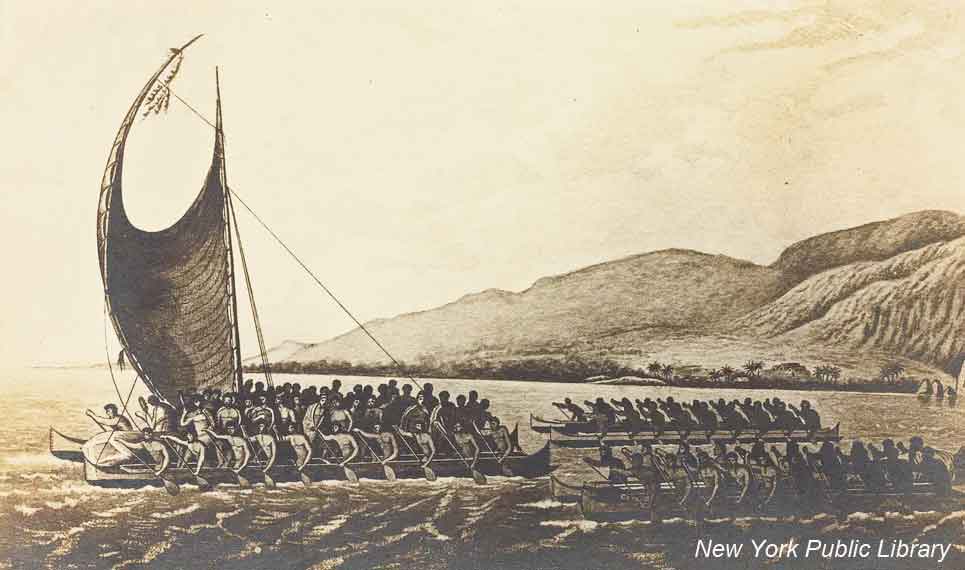
Long before Europeans arrived, Polynesians sailed to islands across the central Pacific. Until recently the stories of their travels survived largely through oral history due to the limited material evidence supporting these accounts.
Geochemical fingerprints of stone artifacts excavated from archaeological sites in central Vanuatu, the Solomon Islands, and the Caroline Islands now provides evidence of multiple long-distance voyages, with stone materials being transported up to 2500 kilometers from their source/
Learn more
| |
|
Documentary Films Available Online
Mission Blue (See on Netflix)
This documentary follows oceanographer Sylvia Earle's campaign to save the world's oceans from threats such as overfishing and toxic waste.
Diving Deep: The Life and Times of Mike Degruy (See on Prime Video)
The story of the enthusiastic underwater filmmaker Mike Degruy who was killed in a helicopter crash in 2012. This documentary is his legacy as a filmmaker and enthusiastic storyteller, and his desire to spread his mission to protect the ocean.
| |
|
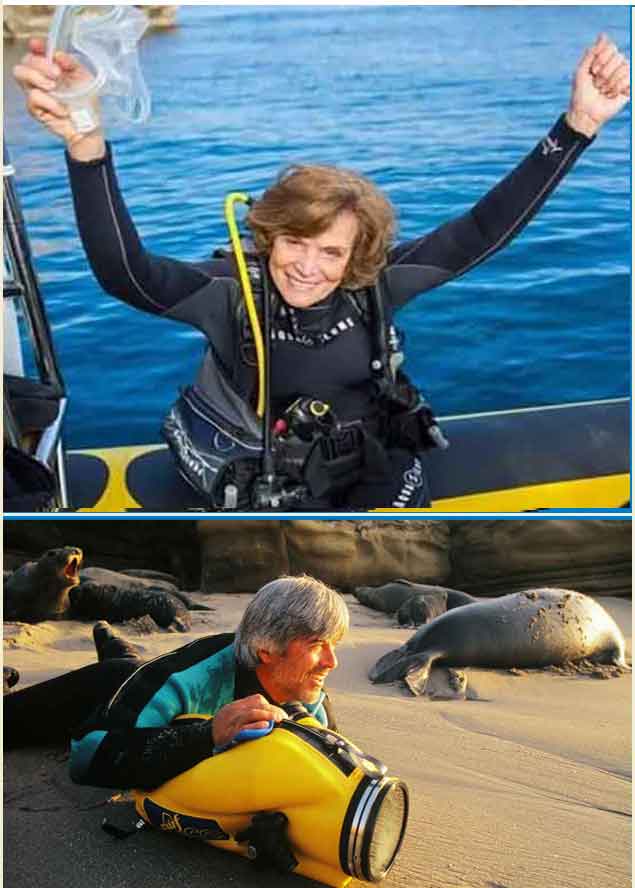
Conch expert Megan Davis joins Dive In
Date: Thursday May 4, 2023
TIME: 3:00 PM Pacific Time
Megan Davis, Ph.D. is a Research Professor at Florida Atlantic University, Harbor Branch Oceanographic Institute. Megan and her team work on queen conch restoration, conservation and community-based partnership projects in Florida, The Bahamas, Puerto Rico, Curaçao, Jamaica and other locations in the Caribbean.
DIVE IN with Liz Taylor and Sylvia Earle is a casual, free-flowing, and educational conversation and encourages ocean and nature enthusiasts of all ages to join. Sylvia, Liz, and Megan will take questions via Q & A text from the attendees.
Register Here
| |
|
Horseshoe Crab Walk
DATE: Friday May 5th
TIME: 6:30 pm - 8:00 pm
Location: B Lot at Sandy Hook National Recreation Area, New Jersey.
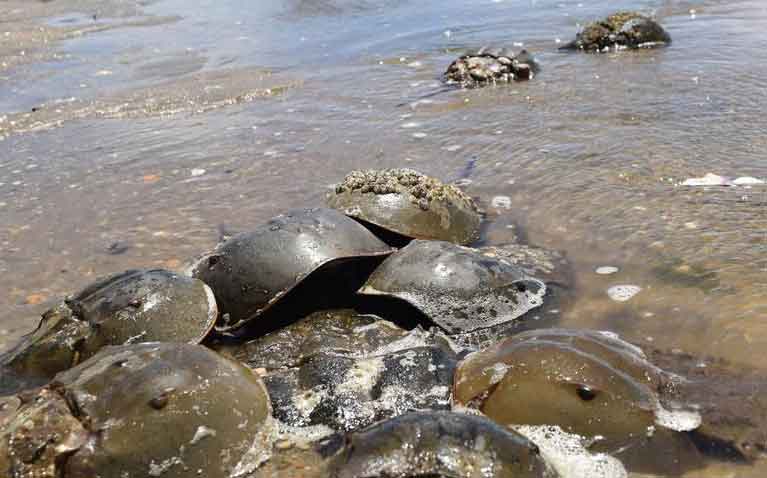
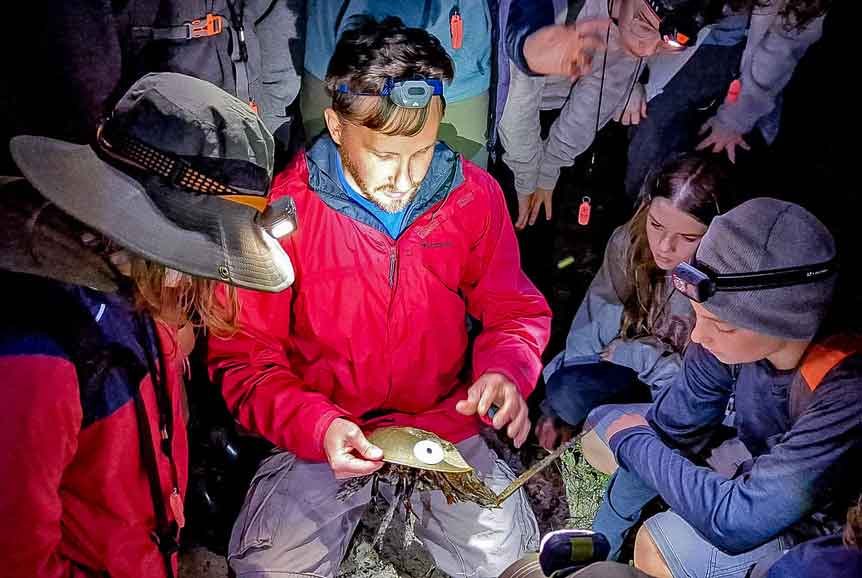
Join the American Littoral Society for an evening walk at Sandy Hook to learn about some of our oldest friends, 445 million years that is!!! Watch your step as we walk along the sand and wade within the water as they will be crawling at your feet. Experience the excitement of holding one of these ancient creatures as the sun sets over the bay.
Cost: $10 members/ $20 non-members
For more information contact Education Director Nicole.Haines@littoralsociety.org
| |
|
Delaware Bay Horseshoe Crab Tagging
DATE: Sunday May 7th
TIME: 10:15 pm - 1:15 am
LOCATION: Cooks Beach, Cape May County
The American Littoral Society is looking for volunteers to participate in their horseshoe crab tagging program. During May and June the largest spawning population of the crabs in the world takes place in Delaware Bay.
The program provides data on distribution, movement, longevity, and mortality of horseshoe crabs. Eggs of the crabs are important to migrating shorebirds, finfish and loggerhead turtles. Horseshoe crab blood is also the source of limulus amebocyte lysate (LAL) which is used in the biomedical industry to test the safety of vaccines, drugs, and medical devices.
Horseshoe crab tagging is a great way for volunteers of all ages to encounter these prehistoric looking creatures up close. Anyone who would like to participate can sign up on the ALS website for tagging on Delaware Bay beaches and sites along the Shark River Estuary in New Jersey.
No experience is required, beach captains will train all volunteers on site. Directions and details on what to wear and bring will be emailed a week before each event.
| |
|
Notes
Amazon.com is offering an opportunity to generate donations to the Shark Research Institute at no extra cost to you. Simply start your shopping at smile.amazon.com/ch/22-3110087, confirm "Shark Research Institute, Inc." as your charity of choice, and Amazon will make a donation to our organization.
Consider a tax-deductible year-end gift to the Shark Research Institute. Just mail a check to SRI at 70 Heather Lane, Princeton, NJ 08540, USA, or go to the link on our website.
You may join or renew your membership in the Shark Research Institute, or make a donation of any size at https://www.sharks.org/donate
Note: All donations are tax-deductible from U.S. federal income taxes as
charitable donations and help fund our field research, advocacy and education programs.
| |
Please share this free weekly newsletter with your friends and family to help grow our audience. All they need to do to receive the newsletter is simply sign up on our website’s home page (https:www.sharks.org)
We all have a lot of work ahead to protect sharks and the ocean,
and combat climate change while there is still time.
| | | | |