Weekly Wrap-Up
June 4, 2021
|
|
MHAC Celebrates LGBTQIAS+
This Month and Every Month
|
|
What are the Origins of Pride Month? And Who Should We Thank for the LGBTQ Celebration?
For decades, Pride Month has been celebrated in June across the United States. Festivities, parades and events have been thrown to honor LGBTQ voices and experiences, but also to draw attention to the issues members of the community still face.
But what are the origins of Pride Month? What event kicked off the celebrations in the U.S., and who should we thank? How do people celebrate?
|
|
Acronyms Explained
The language used to talk about LGBTIQ people is constantly evolving. New terms appear. Terms that were forgotten or unused, even terms that at some point were deemed derogatory, have been reclaimed and have entered into common parlance today. In a move towards inclusivity, the older, shorter, acronym - LGBT - has been expanded.
Definitions of terms, like language itself, are constantly evolving. Moreover, they mean different things to different people. After all, we are talking about identity, sexuality and relationships, so there are as many definitions as there are people.
|
|
LGBTQ+ Communities And Mental Health
Everyone has a sexual orientation and gender identity. Sexual orientation is who you are romantically or physically attracted to. Gender identity is the internal sense of being male, female, both or neither, which is separate from your biological sex. People who have a different sexual orientation or gender identity from most people fall under the umbrella term LGBTQ+. It is really important to know that identifying as LGBTQ+ is NOT a mental illness or disorder.
Although being LGBTQ+ is absolutely not a mental illness, many LGBTQ+ people experience mental health struggles. The bisexual and transgender communities have the highest rates of mental health concerns within the LGBTQ+ population. Younger members of the LGBTQ+ community struggle the most with mental health concerns of all the age groups.
|
|
LGBT Mental Health and Aging Support Guide
Finding ways to grow and be healthy as you age is important. The journey of aging brings with it new stressors and opportunities, including some that are unique to the LGBT community.
Being LGBT does not automatically mean you will experience mental health challenges. However, as an LGBT elder, there are certain stressors you may face from people who do not accept your sexual orientation or gender identity.
Be True and Be You
A Basic Mental Health Guide for LGBTQ+ Youth
If you are, or think you might be LGBTQ+ (Lesbian, Gay, Bisexual, Transgender, Queer, Questioning, and other identities), and going through a tough time, you’re not alone. Whether you’re trying to figure out your own identity or want to learn how to talk to others, it can be hard to know where to find support. The stigma and discrimination LGBTQ+ individuals may face from family, friends and society can increase risk for mental health challenges. However, it is important to remember that we are all unique and being LGBTQ+ doesn’t necessarily increase our risk for mental health issues. As an LGBTQ+ young person, there are certain stressors you may face from people who do not accept your orientation or gender identity. These pages don’t have all the answers; in fact, this is just the beginning—a basic guide for how to talk and think about sexual orientation, gender identity/expression, and mental health, some ways to cope with stress and emotions, and how to get support for yourself and others.
|
|
Get Help Now
TrevorChat and TrevorText wait times may be higher than normal right now,
thank you for your patience.
If you are thinking about suicide and in need of immediate support, please call the TrevorLifeline at 1-866-488-7386 or select TrevorChat below to connect with a counselor.
|
|
CalAIM and Health Data Sharing: A Road Map for Effective Implementation of Enhanced Care Management and In Lieu of Services
In 2022, the California Department of Health Care Services (DHCS) will launch an ambitious and innovative program designed to address the complex physical, behavioral, and social needs of Medi-Cal’s most vulnerable members. The California Advancing and Innovating Medi-Cal (CalAIM) program will build upon the plan-based Health Homes Program (HHP) and county-based Whole Person Care (WPC) pilots that use whole-person care approaches to address underlying social determinants of health (SDOH).
|
|
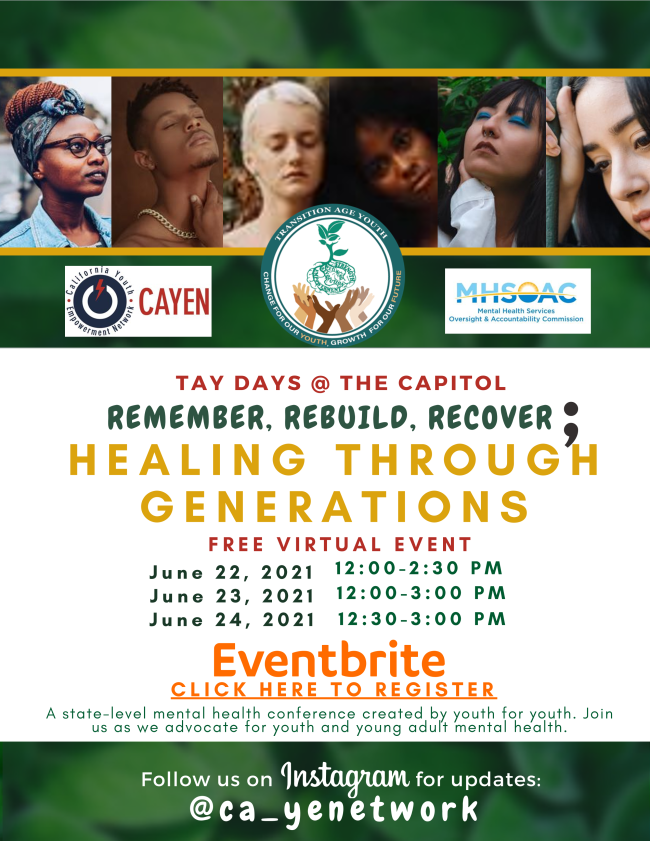
Join the CAYEN Action Network
Joining our email list is a great way to stay informed of CAYEN’s activities, priorities, special events, and important action alerts.
|
|
Help Make a Difference
Donate to Mental Health America of California Today!
|
|
Receive Regular Updates from MHAC |
|
Mental Health America of California | mhac.org
|
|
|
|
|
|
|
|