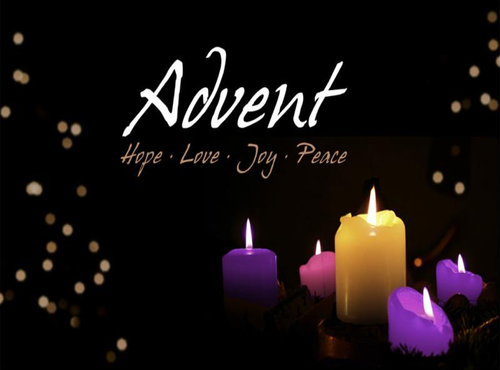
We light a second blue candle on the second Sunday of Advent to represent the hope of Christ coming to the world.
The word "hope" has two meanings in the Bible. The first,
tiqvah
, contains the sense of eager anticipation or waiting. The second,
elpis. depicts a sense of confident expectation based on certainty. Biblical hope is secured by God's faithfulness to His promises. For the Old Testament leaders, their hope was in the Messiah's arrival. For us, it is the hope of the Messiah's return.
God's plan for humanity unfolded in the town of Bethlehem, the birthplace of the Messiah, joyously fulfilling a long-awaited promise. Today we confidently wait for the Messiah's triumphant return.
"But you, Bethlehem, only a small village in Judah, yet a ruler of Israel will come from you, one whose origins are from a distant past ... And He will stand to lead His flock with the Lord's strength ... Then His people will live undisturbed, for He will be highly honored all around the world. And He will be the source of our peace." (Micah 5:2, 4-5)
This is one of the most powerful messianic passages because Bethlehem is pinpointed as the birthplace of the Messiah. Written 750 years before Christ, Micah tells of the honor which will belong to Bethlehem. Christ's deity and humanity are shown here -- He is a shepherd, leading with the strength of God, bringing peace to His people.
The precision of God's promises proclaimed and fulfilled inspire us continually to hope in God. The hope of Christians is not wishful thinking, but based on the historical facts of Christ's birth, death and resurrection, and in the confidence of His eagerly anticipated return.
For God alone my soul waits in silence, for my hope is in him.
-Psalm 62.5
Advent alliteration from Fr. Jay Sidebotham:
In Advent, we're called to watch. We hear that injunction in scripture, but what does that mean for us in the journey of faith? I suspect it's a matter of looking for the signs of God's life and love breaking into the world. I'm reminded of cold winter mornings when I was commuting by train, standing on the platform in the darkness, wind howling down the Hudson River valley, as I wondered and worried (alliteration alert) if the train would ever come. Murphy's law of public transportation: The lower the temperature, the more likely trains would be delayed. I could easily surrender to despair: "This is the morning the train will not come." I would watch intently, and would often grow more anxious as I looked down the dark track. But then, I would see the faintest glimmer of light on the rails. Just a sliver. The train was still far away, but I knew it was coming. That hint of light was transformative, watching transformed into hope. Translate that to your spiritual life. What are the signs of hope, a better future breaking into your dark present? Name them. They can be the smallest of signs, but they can change us.
In Advent, we're called to wait. We hear that injunction in scripture, as we're invited to wait on the Lord. But what does that mean for us in the journey of faith? This time of year, our culture gives tons of time (alliteration alert), ample opportunity to wait. Lines in traffic. Lines at the post office. Lines at stores. What will we do with that time? It can be a spiritual exercise to wait with grace and kindness. How about this for an Advent observance? Throw somebody off by letting that person in front of you in line. Thank the person behind the counter dealing with the Christmas rush. Those opportunities are small reflections of ways we are called to wait in our faith. Advent tells us all about them, whether it's John the Baptist telling us to get ready and prepare the way, or Mary and Elizabeth getting news that new life was on the way. It's a season of expectancy. It calls for trust, which in the darkness of the season, the darkness of our world, can be challenging.
In Advent, we're called to wake up. We hear that injunction in scripture and in great Advent hymns (e..g. Sleepers Wake). But what does that mean for us in the journey of faith? The injunction's implication (alliteration alert) is that we are somehow spiritually asleep. Maybe that sleepiness is simply that we are caught in routine, without any imagination that things could be different. Is it ever the case that you navigate Sunday liturgy on auto-pilot? This clergy person confesses that it happens to him. Maybe it's fatigue that contributes to spiritual grogginess. Or maybe we're overworked. In our research on spiritual vitality, we discover that one of the great impediments to spiritual growth for folks in our culture is simply that they are over-booked. Maybe it's a matter of indifference to the brokenness of the world around us. We tend to gravitate to communities of like-mindedness, to shield ourselves from the pain of the world, or find ways to anesthetize. We too rarely seek what God is up to in the neighborhood, especially with neighbors who differ from us, who have been pushed to the margins. Are we awake to a world in pain? Are we contributing, in our spiritual drowsiness, to that pain?
Blessings in this Advent season, a time to wait and watch and wake up. These are things we're meant to do all year long, but perhaps especially in this season as we prepare for the grace that will appear on Christmas, the grace we've been waiting for, the grace we've been on watching for, the grace that wakes us up to the love of God from which we can never be separated, and invites us to share that love.
Those who wait for the Lord shall renew their strength, they shall mount up with wings like eagles, they shall run and not be weary, they shall walk and not faint.
-Isaiah 40.31
-Jay Sidebotham
Heavenly Father, You are the source of all hope and we know our hope is in You -- You will not disappoint us. Teach us this week to anchor our hope in Jesus. Help us to persevere with You when we feel like giving up. We eagerly wait for Your return. Amen.