|
|
The Episcopal Church
of the Resurrection
1433 NW R.D. Mize Road, Blue Springs, MO
|
|
|
|
|
Weekly e-mail
Saturday, June 19, 2021
|
|
Fourth Sunday after Pentecost
Sunday, June 20, 2021
Holy Eucharist Rite I at 8:00 am
Holy Eucharist Rite II at 10:30 am
|
|
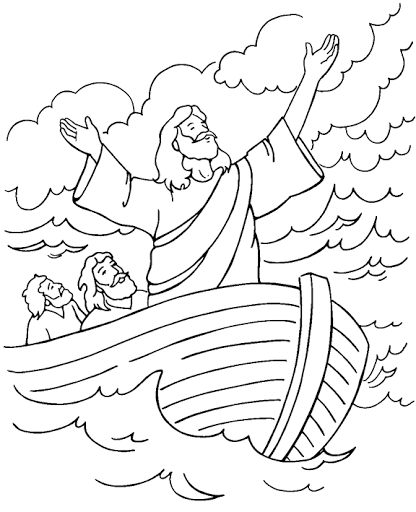
The Parable of the Mustard Seed |
FROM FATHER DAVID
So, What About that Mustard Seed….
As with all parables, the purpose of the Parable of the Mustard Seed is to teach a concept or “big idea” using various narrative elements or details that are common, easily recognized, and usually representational of something else. While the elements themselves do have importance, an overemphasis on the details or literal focus on an element usually leads to interpretive errors and missing the main point of the parable.
The Parable of the Mustard Seed is a short one: “The kingdom of heaven is like a mustard seed, which a man took and planted in his field. Though it is the smallest of all seeds, yet when it grows, it is the largest of garden plants and becomes a tree, so that the birds come and perch in its branches” (Matthew 13:31–32).
One of the possible practical reasons that Jesus used parables such as this is that, by depicting concepts in word pictures, the message is not readily lost to changes in word usage, technology, cultural context, or the passage of time. Literal, detailed narratives are more susceptible to becoming archaic or obsolescent. Two thousand years later, the imagery is still vivid. We can still understand the concept of a growing seed. Jesus’ parables are brilliant in their simplicity. This storytelling approach also promotes practicing principles rather than inflexible adherence to laws.
The Parable of the Mustard Seed is contained in all three of the Synoptic Gospels (Matthew 13:31–32; Mark 4:30–32; Luke 13:18–19). In this parable, Jesus predicts the amazing growth of the kingdom of heaven. The mustard seed is quite small, but it grows into a large shrub—up to ten feet in height—and Jesus says this is a picture of kingdom growth. The point of the Parable of the Mustard Seed is that something big and blessed—the kingdom of God—had humble beginnings. How significant could the short ministry of Christ be? He had but a handful of followers, He was a man of no rank and without means, and He lived in what everyone considered a backwater region of the world. The life and death of Christ did not catch the world’s attention any more than a mustard seed would lying on the ground by the road. But this was a work of God. What seemed inconsequential at first grew into a movement of worldwide influence, and no one could stop it (see Acts 5:38–39). The influence of the kingdom in this world would be such that everyone associated with it would find a benefit—pictured as the birds perched on the branches of the mature mustard plant.
Elsewhere in Scripture, the kingdom of God is also pictured as a tree. A passage in Ezekiel, for example, parallels the Parable of the Mustard Seed in many ways. In this prophecy, the Lord God promises to plant a shoot “on a high and lofty mountain” (Ezekiel 17:22). This small sprig “will produce branches and bear fruit and become a splendid cedar. Birds of every kind will nest in it; they will find shelter in the shade of its branches” (Ezekiel 17:23). This messianic prophecy foretells the growth of Christ’s kingdom from very small beginnings to a sizable, sheltering place.
Some have wondered why, in the Parable of the Mustard Seed, Jesus calls the mustard seed the “smallest” of seeds and the mature mustard plant the “largest” of plants in the garden, when there were smaller seeds and larger plants. The answer is that Jesus is using rhetorical hyperbole—an exaggeration to make a point. He is not speaking botanically but proverbially. Jesus’ emphasis is on the change of size—from small to large—and the surprising nature of the growth.
The history of the church has shown Jesus’ Parable of the Mustard Seed to be true. The church has experienced an explosive rate of growth through the centuries. It is found worldwide and is a source of sustenance and shelter for all who seek its blessing. In spite of persecution and repeated attempts to stamp it out, the church has flourished. And it’s only a small picture of the ultimate manifestation of the kingdom of God, when Jesus returns to earth to rule and reign from Zion.
O God our heavenly Father, you have blessed us and given us dominion over all the earth: Increase our reverence before the mystery of life; and give us new insight into your purposes for the human race, and new wisdom and determination in making provision for its future in accordance with your will; through Jesus Christ our Lord. Amen.
|
|
|
|
Bible Study Wednesdays at 1:00 pm |
STUDYING THE BOOK OF GENESIS
Please join us every Wednesday afternoon for Bible Study from 1:00 pm to 2:30 pm. Our focus now is the book of Genesis and includes a program guide called “Engaging God’s Word”. All are welcome to attend any and all sessions..
|
|
|
|
In search of a new Bishop |
PLANNING NOW UNDERWAY
Our current Bishop, The Right Reverend Martin Field, will retire this September.
Finding and selecting candidates to become the ninth bishop of West Missouri will take time, according to Standing Committee President the Rev. Jonathan Frazier, rector of St. Peter & All Saints Episcopal Church in Kansas City.
In the meantime, the diocese still needs a bishop to act as the ecclesiastical authority, provide pastoral support to clergy, ordain priests and deacons, and offer guidance through our bishop search. Therefore the diocese will employ a "temporary" bishop, more formally known as a ‘bishop provisional,’ to serve during this process. “The Standing Committee has been working with the Presiding Bishop’s office to find a slate of candidates suitable to be our bishop provisional. We will discern and put forward our recommendation to the diocese well before the Annual Diocesan Convention in November,” says Fr. Jonathan.
The Standing Committee hopes this summer to announce and introduce the selected candidate in New Spirit. A vote will be taken on the appointment of the bishop provisional at the Diocesan Convention, which will be asked to ratify the Standing Committee’s selection. Ratification would take place by a simple majority vote. If the candidate is not affirmed by the Convention’s vote, the Standing Committee will start the process over again.
In the absence of a bishop, the Standing Committee acts as the ecclesiastical authority of the diocese to ensure the day-to-day work of the diocese continues. Once the bishop provisional is in place, he or she will guide us in building trust, improving communication, and resolving “systems” issues, as well as some healing. We can then begin discerning the Holy Spirit’s direction for the diocese and the detailed work of finding our next bishop,.
The Standing Committee has developed an outline Transition Plan, “We want to ensure that all members of the diocese have the chance to make their voices heard and the opportunity to take part in the selection process,” Fr. Jonathan said.
Transitional Prayer
Good and gracious God, as we enter into this period of transition, this threshold time, we give you thanks for what has been and we rejoice in the hope that always accompanies new life. We pray in the name of our Savior, Jesus Christ. Amen.
|
|
|
|
Volunteers urgently needed |
CONTACT JOHN BIGGS TO BE AN USHER
We are finally approaching normal at church! We now need volunteers to be ushers at both the 8:00 and 10:30 am services.
Ushers will no longer be asked to provide security, which will be handled separately. Please contact John Biggs to volunteer.
|
SEE ANNIE SCOTT TO HELP WITH UPLIFT
We are seeking volunteers for a once a month commitment to help with preparing a meal for Uplift. Meal prep usually starts between 10:30 - 11:00 am and is finished around 1:30 pm.
|
|
|
|
WORKSHOPS TO BE SCHEDULED
We received our results from the survey conducted by RenewalWorks and there will be scheduled workshops to help our parish with “what’s next”.
These workshops will be on the ZOOM format so parishioners can watch from home or at church. Stay tuned for the dates coming later in June and July.
|
|
|
|
Monday Matters (from June 14, 2021)
|
|
|
|
BY FR. JAY SIDEBOTHAM +
Create in me a clean heart, O God, and renew a right spirit within me. -Psalm 51
Jesus entered Jericho and was passing through it. A man was there named Zacchaeus; he was a chief tax collector and was rich. He was trying to see who Jesus was, but on account of the crowd he could not, because he was short in stature. So he ran ahead and climbed a sycamore tree to see him, because he was going to pass that way. When Jesus came to the place, he looked up and said to him, “Zacchaeus, hurry and come down; for I must stay at your house today.” So he hurried down and was happy to welcome him. All who saw it began to grumble and said, “He has gone to be the guest of one who is a sinner.” Zacchaeus stood there and said to the Lord, “Look, half of my possessions, Lord, I will give to the poor; and if I have defrauded anyone of anything, I will pay back four times as much.” Then Jesus said to him, “Today salvation has come to this house, because he too is a son of Abraham. For the Son of Man came to seek out and to save the lost.”
-Luke 19:1-10
I think God is wanting to be known. And my experience of God wanting to be known is much more in the person who is annoying me at the moment rather than in the sunset. -The Rev. Nadia Bolz-Weber
You can safely assume you’ve created God in your own image when it turns out that God hates all the same people you do. – Anne Lamott
Judgment
I’ve been spending a bit of time in New York City of late, which is great. And it has reminded me of an experience I had when living there a few years ago. The observation came on occasions when I was driving a car in the city. I remember coming to an intersection with a green light. I intended to make a turn. Invariably, as I sought to make the turn, there would be a pedestrian taking his or her sweet time to cross the street. I guess it was their right, annoying as that felt. After all, they had a walk signal. There was nothing to do but wait, despite cars behind me beginning to honk. I remember thinking how inconsiderate pedestrians (as a group of human beings) were in New York. Didn’t they realize they were holding up traffic? Couldn’t they pick up the pace? Did they think their slow pace was more important that other people’s schedules, specifically mine?
Then I would park the car and instantly become a pedestrian. Role reversal. And when I came to an intersection, I would take my sweet time crossing the street, even if it frustrated drivers and elicited honking. It was my right. I remember thinking how inconsiderate drivers were (as a group of human beings). And why were they driving anyway? Too good for a bus or subway? Didn’t they care about their carbon footprint?
All of which is to say that I noticed how easy it is for me to make judgments about other people. Beyond that, it is easy for me to regard the other as opponent. In many ways, it’s my default position. I suspect I’m not alone in that. Weirdly, in my case, in a matter of minutes, I became the person I had previously viewed with disdain.
Travel of all kinds will do that, whether it’s in an airport or in traffic. Road rage shows that to be true. If I’m late for a plane, I’m angry if they don’t hold the door open for me. But if I’m on time for the plane, I’m angry if they hold the door for someone else who should have been on time. If I’m made to wait a little bit on line at a store, I can make all kinds of judgments about the capabilities and character of the person behind the cash register. Maybe Covid has exacerbated the crankiness. But it’s always been there.
A similar dynamic happens on social media. It’s easy to express anger, irritation, fueled by some prejudice, some broad stroke perspective on the other. There’s often a thoughtless, thuggish character to these communications, even among church folk. Our political system does that on steroids these days, fueled by news channels that paint in broad strokes. It happens in churches of all places. We make judgments about people of other denominations, theological slants, liturgical preferences, worship styles, dress codes. All of these tensions and divisions happen at least in part because there is no real meaningful human interaction, no relationship, no place for empathy, no effort to listen, no practice of compassion (which literally means suffering with). As St. Paul asked: who will deliver us?
My observations from the streets of New York remind me of what Jesus said in the king’s English: Judge not that ye be not judged. For with what judgment ye shall judge, ye shall be judged. (Matthew 7:1) If we live life in a judgmental frame of mind, we may well find judgment visited upon us.
But is there an alternative? The baptismal covenant helps. Seek and serve Christ in all persons. Respect the dignity of every human being. The teaching of Jesus, echoed throughout the New Testament, helps. That teaching issues a call to love not only our friends but our enemies.
Remember the story of Zacchaeus, a tax collector who apparently ripped off a lot of his neighbors. He met Jesus and his life turned around. But as Jesus grabbed lunch with Zacchaeus, the religious leaders of the day criticized, judging Zacchaeus and Jesus in the process. Jesus responds: He, too, is a son of Abraham.
What would it all look like if we could view each other, in traffic, in church, in households, in the body politic, if we could treat each other as Abraham’s children, each and all of us flawed, each and all of us blessed by God? Can you join me in working on that this week?
|
|
|
|
|
|
|