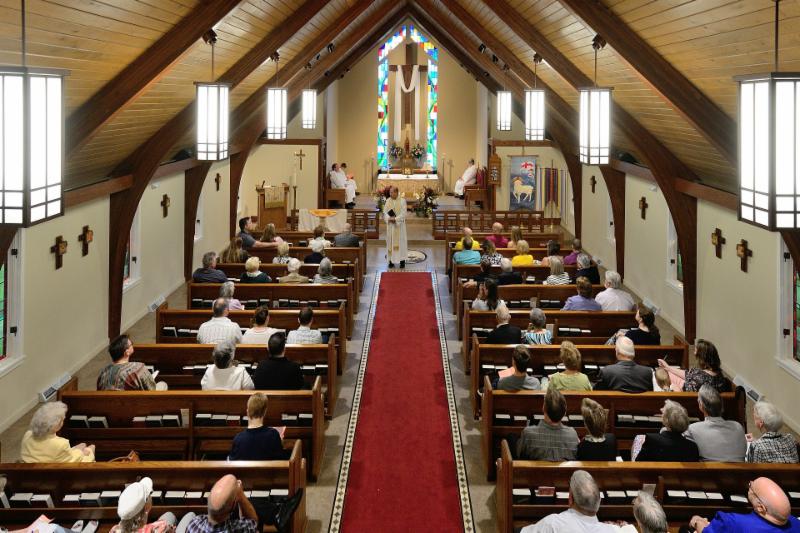
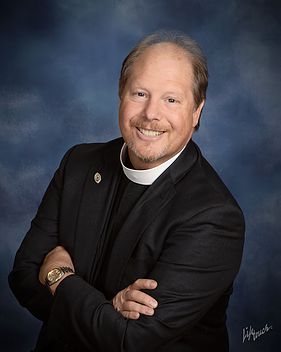
Dear Friends, based on the guidelines from the government sectors and the diocese, and most importantly from our own comfort levels, we are not in a hurry to open the doors. It will take some more time based on the health statistics of fewer reported cases and deaths in our area, and some greater confidence for treatment and vaccination. Our strategic planning group met to discuss the reality of a date and how we might open once we can assure safety in allowing us to meet together in the church. We are planning an outdoor venue that with good weather we can celebrate in our churchyard while demonstrating appropriate social distancing. So we are encouraged to identify more means to get us together safely. Depending upon the weather I am hopeful that we could do an outside service on Pentecost. More to come as further planning continues.
Continued thanks to our prayer teams, calling teams and card writing teams!
During this time of "stay at home", quarantine and social distancing our communications ministries have been busy keeping the lines of communication and fellowship alive. Many thanks to all who are reaching out to keep in touch, spread good news, take prayer requests and be a listening ear. We are learning and expressing more ways to be in fellowship that can really make a difference. So, I encourage all of us, when we are feeling isolated, depressed and just down in the dumps, to reach out to hear another voice, see another face with the technologies available to us, and help to feel and spread some cheer for the day. There is always something to share and talk about, and always opportunities for listening, praying and decreasing the loneliness. As your pastor, I miss you dearly and cannot wait until we see each other face to face, but most importantly I know God is with us, our faith is strong and Christ will not abandon us in these difficult times. I love you all and keep you close to my heart in prayer.
Renewal Works
We are taking our first steps to begin the Renewal Works project for our parish. In a few weeks we will all be asked to complete a spiritual inventory and questionnaire that will help your rector and our parish leadership and participants dive into all facets of our corporate spirituality, find areas where I can do a better job of reaching out to all of us for growing our spiritual focus and celebration. More to come, and for more information on what Renewal Works is about, please log into their webpage:
www.renewalworks.org
From Fr. David
I invite you to read this next article from our own Bishop concerning how to receive Christ in these virtual times. Please note that the articles I have been sharing come from spiritual leaders, theologians and professors of theology in our respective Anglican/Episcopal and relational church traditions. These articles are meant to broaden our understanding of where we are spiritually in this transitional time. We are a faith tradition built on the "common" way to celebrate Christ. The difficulties posed when we cannot receive bread and wine in person, from a common table and consecration, challenge the theology and practicality of how we understand the presence of Christ in these outward and visible products of God's inward and spiritual grace. So, please read and get a feeling of the dilemma this causes the purists and conformists a like as we will continue to struggle to be a sacramental church to all people in these times.
ON SPIRITUAL COMMUNION
by
The Rt. Rev. Martin S. Field
At the online meeting of the Diocese of West Missouri's Diocesan Clericus on Tuesday,
March 31, 2020, I received, and promised to honor, a request to present a "white paper" on Spiritual Communion, its history, and its applicability to the sacramental ministries of West Missouri's parishes. The paper that follows is my attempt briefly to outline the pertinent aspects of Spiritual Communion.
In Roman Catholicism:
St. Thomas Aquinas, the Council of Trent, and Pope John Paul II, among others,
attest that the idea of Spiritual Communion has been in the Church for centuries and is
one of the three ways the Roman Catholic Church distinguishes as ways persons can
receive the Body and Blood of Christ. Aquinas taught that the Eucharist could be received two ways: 1.) spiritually and 2.) sacramentally, and dedicated an article in his most important work, Summa theologica, to this instruction. He defined spiritual communion this way: [a communicant receives spiritually when he or she possesses] "an ardent desire to receive Jesus in the Holy Sacrament and a loving embrace, as though we had already received Him."
The Council of Trent (Session 13, Chapter 8), building on Aquinas, named three
ways to receive Holy Communion: 1.) spiritually alone, 2.) sacramentally alone, and 3.)
both spiritually and sacramentally. Now as to the use of this holy sacrament, our Fathers have rightly and wisely distinguished three ways of receiving it. For they have taught that some receive it 1) sacramentally only, to wit sinners: 2) others spiritually only, those to wit who eating in desire that heavenly bread which is set before them, are, by a lively faith which worketh by charity, made sensible of the fruit and usefulness thereof: whereas 3) the third (class) receive it both sacramentally and spiritually, and these are
they who so prove and prepare themselves beforehand, as to approach to this divine table clothed with the wedding garment.
An unbeliever or a person in mortal sin would receive the Body and Blood
sacramentally, that is without belief or not properly prepared. This person would be
"going through the motions" of receiving but without any spiritual benefit. Indeed, per
St. Paul (in I Corinthians 11:27-29) the one who receives without belief or in mortal sin
would receive no grace, but rather invite condemnation.
The other two kinds of reception mentioned by the council follow Aquinas'
teaching without significant variation except that they rename "sacramental" reception
as "sacramental and spiritual", the highest form of reception. In contrast, per the Council of Trent, a person in a state of grace who eagerly seeks union with Christ and makes an act of the will (i.e. an Act of Spiritual Communion) receives the grace and presence of Christ. Still, the best way is to combine both the sacramental reception with the earnest desire of a spiritual communion. This is what spiritual authors call "making a good communion," which requires preparation (sacramental confession or at least an act of contrition) and an openness to receiving the Divine Savior into a place in one's heart.
In his encyclical letter, Ecclesia de Eucharistia, John Paul II wrote: "In the
Eucharist, unlike any other Sacrament, the mystery [of Holy Communion] is so perfect
that it brings us to the heights of every good thing: Here is the ultimate goal of every
human desire, because here we attain God, and God joins Himself to us in the most
perfect union. Precisely for this reason it is good to cultivate in our hearts a constant
desire for the sacrament of the Eucharist. This was the origin of the practice of "spiritual
communion," which has happily been established in the Church for centuries and
recommended by saints who were masters of the spiritual life. St. Teresa of Jesus
wrote: 'When you do not receive communion and you do not attend Mass, you can
make a spiritual communion, which is a most beneficial practice; by it the love of God
will be greatly impressed on you!'"
In 1983, the Congregation for the Doctrine of the Faith of the Roman Catholic
Church declared that all the effects of Holy Communion can be received through
spiritual communion for persons in the following situations:
- Those at parishes not served by a priest;
- Those who are prevented from attending Eucharistic celebrations;
- The divorced and remarried;
- Those at the Protestant Lord's Supper.
In our day, with COVID-19 dominating the headlines and our lives, Pope Francis
has also recommended the practice of Spiritual Communion for those who cannot
attend a service of Holy Eucharist. His recommendation has spurred an increased
interest in this spiritual practice among more than just members of the Roman Catholic
Church.
In Anglicanism:
While most of the teaching on Spiritual Communion has been provided by
doctors and scholars of the Roman Catholic Church, Lutherans, Anglicans, Methodists,
and others, who practice a sacramental piety, recognize that Holy Communion can be
received spiritually without consuming the blessed Bread or the consecrated Wine.
The Church of England teaches that, "Believers who cannot physically receive
the sacrament are to be assured that they are partakers by faith of the body and blood
of Christ and of the benefits he conveys to us by them." (Ministry to the Sick, the Church
of England)
The Book of Common Prayer of The Episcopal Church includes a similar
statement as a rubric in Ministration to the Sick (p. 457): "If a person desires to receive
the sacrament, but, by reason of extreme sickness or physical disability, is unable to eat
and drink the Bread and Wine, the Celebrant is to assure that person that all the
benefits of Communion are received, even though the Sacrament is not received with
the mouth."
Though both of these examples are set in the context of ministry to persons who
are ill or physically unable, there are those who would argue that those who are
physically restrained-for example by stay-at-home or quarantine orders-might also be encouraged to receive the Sacrament of Christ's Body and Blood spiritually.
The validity of spiritual communion has also been recognized in times of
persecution, when churches are closed and services cannot be held. Anglican priest
Jonathan Warren Pagán ("Spiritual Communion During the COVID-19 Pandemic".
Anglican Compass, March 21, 2020) cites the joy Walter Ciszek experienced by making
spiritual communion during the Soviet Union's era of state atheism that resulted in
the persecution of Christians in the Eastern Bloc. There are many other articles, that reference this topic and offer a wide variety of points of view.
Conclusion:
There is ample, centuries-long precedent for spiritual reception of Holy
Communion. In our modern days, when our ability to convene congregations for
services of Holy Eucharist has been largely unimpeded, we have come to think of
spiritual communion solely in the context of ministry to the sick, the aged, and the infirm. It was not originally that limited. Indeed, this paradigmatic constriction seems to be a recent thing.
Therefore, I offer these thoughts to encourage the presbyters of West Missouri to
consider incorporating the topic of spiritual communion in your teaching and practices in this time when members of our faith communities are forced to be in isolation from one another, from our church structures, and from sacramental worship.
Here are examples of prayers to be used by those who desire or have the intent to
receive spiritually.
Roman Catholic Prayers:
My Jesus, I believe that Thou art present in the Blessed Sacrament. I love Thee above
all things, and I desire Thee in my soul. Since I cannot now receive Thee
sacramentally, come at least spiritually into my heart. As though Thou wert already
there, I embrace Thee and unite myself wholly to Thee; permit not that I should ever be
separated from Thee.
Amen.
At Thy feet, O my Jesus, I prostrate myself and I offer Thee repentance of my contrite
heart, which is humbled in its nothingness and in Thy holy presence. I adore Thee in
the Sacrament of Thy love, the ineffable Eucharist. I desire to receive Thee into the
poor dwelling that my heart offers Thee. While waiting for the happiness of sacramental
communion, I wish to possess Thee in spirit. Come to me, O my Jesus, since I, for my
part, am coming to Thee! May Thy love embrace my whole being in life and in death. I
believe in Thee. I hope in Thee. I love Thee.
Amen.
It is my most heartfelt desire, O Lord, to receive you with the purity, humility and
devotion with which your most holy Mother received you, with the spirit and fervor of the saints.
Amen.
Anglican Prayers:
In union, O Dear Lord, with the faithful at every Altar of Thy Church, where Thy blessed
Body and Blood are being offered to the Father, I desire to offer Thee praise and
thanksgiving. I present to Thee my soul and body, with the earnest wish that I may ever
be united to Thee. And since I cannot now receive Thee sacramentally, I beseech Thee
to come spiritually into my heart. I unite myself to Thee and embrace Thee with all the
affections of my soul. O let nothing ever separate me from Thee. Let me live and die in
Thy love. Amen.
Grant, O Lord Jesus Christ, that as the hem of Thy garment, touched in faith, healed the
woman who could not touch Thy Body, so the soul of Thy servant may be healed by like
faith in Thee, Whom I cannot now sacramentally receive; through Thy tender mercy,
Who livest and reignest with the Father in the unity of the Holy Ghost, ever one God.
Amen.
Methodist Prayer:
My Jesus, I love you above all things. How I long to receive you with my brothers and
sisters at the table you have prepared. Since I cannot at this moment receive you in
bread and wine according to your promise in the sacrament of Holy Communion, I ask
you to feed me with the manna of your Holy Spirit and nourish me with your Holy
presence. I unite myself wholly to you. Never permit me to be separated from your
love.
Amen.