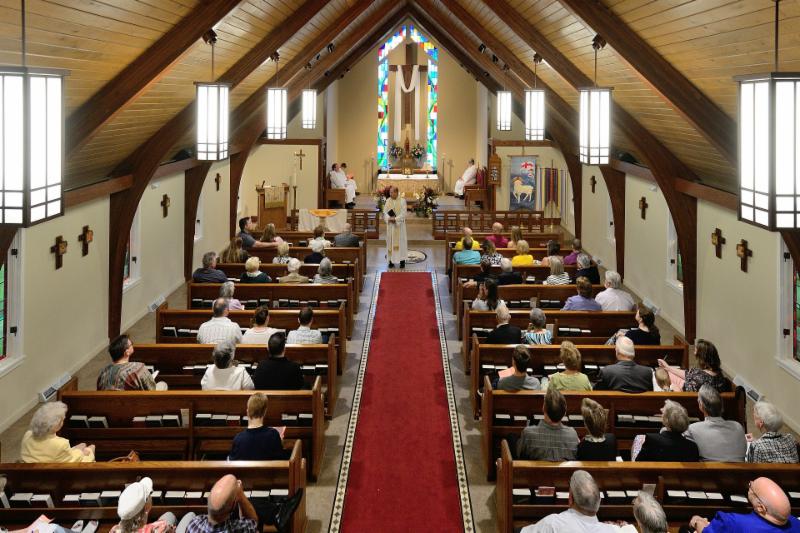
As we remember all our loved ones, friends and family who have died and gone on before us to be with other faithfully departed, it is important to remember the victory of Jesus Christ over death and His promise to us of that same victory. This Sunday we will remember such as these in our Festival of All Saints rather than on the true day of All Souls, November 2. I invite you to read the brief history and explanation for this important day in the Christian Church Traditions below.
_________________________________________
The Christian celebration of All Saints' Day and All Souls' Day stems from a belief that there is a powerful spiritual bond between those in heaven (the "
Church triumphant"), and the living (the "Church militant"). In Catholic theology, the day commemorates all those who have attained the beatific vision in Heaven. In Methodist theology, All Saints Day revolves around "giving God solemn thanks for the lives and deaths of his saints", including those who are "famous or obscure". As such, individuals throughout the Church Universal are honored, such as Paul the Apostle, Augustine of Hippo and John Wesley, in addition to individuals who have personally led one to faith in Jesus, such as one's grandmother or friend.
A November festival of all the saints was already widely celebrated on 1 November in the days of Charlemagne. It was made a day of obligation throughout the Frankish empire in 835, by a decree of Louis the Pious, issued "at the instance of Pope Gregory IV and with the assent of all the bishops", which confirmed its celebration on 1 November. The octave was added by Pope Sixtus IV (1471-1484).
The festival was retained after the Reformation in the calendar of the Anglican Church and in many Lutheran churches. In the Lutheran churches, such as the Church of Sweden, it assumes a role of general commemoration of the dead. In the Swedish calendar, the observance takes place on the Saturday between 31 October and 6 November. In many Lutheran Churches, it is moved to the first Sunday of November. In the Church of England, mother church of the Anglican Communion, it is a Principal Feast and may be celebrated either on 1 November or on the Sunday between 30 October and 5 November. It is also celebrated by other Protestants of the English tradition, such as the United Church of Canada, the Methodist churches and the Wesleyan Church.
Protestants generally commemorate all Christians, living and deceased, on All Saints' Day; if they observe All Saints Day at all, they use it to remember all Christians both past and present. In the United Methodist Church, All Saints' Day is celebrated on the first Sunday in November. It is held, not only to remember Saints, but also to remember all those who have died who were members of the local church congregation. In some congregations, a candle is lit by the Acolyte as each person's name is called out by the clergy. Prayers and responsive readings may accompany the event. Often, the names of those who have died in the past year are affixed to a memorial plaque.
In many Lutheran churches, All Saints' Day is celebrated the Sunday after Reformation is celebrated (the date for Reformation is 31 October, so Reformation Sunday is celebrated on or before 31 October). In most congregations, the festival is marked as an occasion to remember the dead. The names of those who have died from the congregation within the last year are read during worship and a bell is tolled, a chime is played or a candle is lit for each name read. While the dead are solemnly remembered during worship on All Saints' Sunday, the festival is ultimately a celebration of Christ's victory over death.
In English-speaking countries, services often include the singing of the traditional hymn "For All the Saints" by Walsham. The most familiar tune for this hymn is Sine Nomine by Ralph Vaughan Williams. Other hymns that are popularly sung during corporate worship on this day are "I Sing a Song of the Saints of God" and "Ye Watchers and Ye Holy Ones". (Wikipedia)
Almighty God, you have knit together your elect in one communion and fellowship in the mystical body of your Son Christ our Lord: Give us grace so to follow your blessed saints
in all virtuous and godly living, that we may come to those ineffable joys that you have prepared for those who truly love you; through Jesus Christ our Lord, who with you and the Holy Spirit lives and reigns, one God, in glory everlasting. Amen.