A Weigand at the Supreme Court

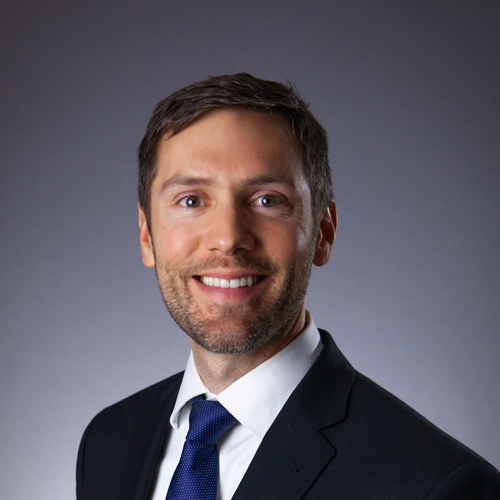
Mark Lipplemann

Written by Trey LaRue, Washburn 2L


In a case that captured national attention, the U.S. Supreme Court was recently asked to weigh in on whether Oklahoma could deny a contract to a nonprofit organization seeking to operate a Catholic virtual charter school—raising questions about the intersection of religious freedom and public education.


The dispute began when the nonprofit—St. Isidore of Seville Catholic Virtual School—applied to the Oklahoma Statewide Charter School Board for permission to run a virtual charter school. The proposed charter school, because of its virtual nature, would permit students from across Oklahoma to receive a private, religious education irrespective of where they lived. State law, however, required charter schools to be nonsectarian. Nevertheless, the board concluded that denying the nonprofit’s application on religious grounds would violate the Free Exercise Clause. The board thus approved the application.


Two lawsuits followed: one from a public-school advocacy group in state trial court, and another from the Oklahoma Attorney General, who petitioned the Oklahoma Supreme Court for a writ of mandamus to enforce the nonsectarian requirement and void the contract. A divided Oklahoma Supreme Court sided with the Attorney General, ruling that the proposed charter school would be a state actor, thus triggering the Establishment Clause, and denying the application on religious grounds didn’t actually violate the Free Exercise Clause. On the board’s petition, the U.S. Supreme Court granted a writ of certiorari and agreed to hear the case.


Amid this legal drama was one of Weigand Trust’s own, Mark Lippelmann (Washburn, ’09). Mark and his firm, Alliance Defending Freedom, represented the board beginning in the Oklahoma state district court and continued representation when the case moved to Washington. Mark’s responsibilities in the case were twofold: providing research support for briefs and coordinating amici curiae briefs from a diverse array of the board’s supporters.


Mark described the experience as both professionally demanding and personally meaningful. The volume of research and collaboration required for litigation in the High Court, he said, exceeds that of other appeals he had worked on. On a personal level, however, Mark—who grew up in rural Kansas with limited access to private education opportunities—saw the case as a potential turning point for students with similar backgrounds. A favorable ruling, he believed, could open doors to tailored educational opportunities for communities that otherwise wouldn’t have such options.


Mark also credited the Weigand Trust for enabling his career in high-impact constitutional litigation, noting that the Trust’s financial support provided during law school allowed him to pursue work with a religious nonprofit without the burden of student loans. For those Weigands aspiring to pursue appellate litigation, Mark’s advice was simple: network. His own job at Alliance Defending Freedom, a firm that has had multiple Supreme Court cases in recent years, came through connections in the legal community that enabled him to access this niche area of the law.


Mark expressed both disappointment and hope with the resolution of the case. After several years of litigation and intense preparation, the Court, in a one-sentence opinion issued on May 22, 2025, held: “The judgment is affirmed by an equally divided Court.” Justice Barrett’s recusal from the case left the justices deadlocked, and left the federal legal issues open for decision in a future case. Despite this anticlimactic outcome, Mark expressed gratitude for the opportunity to contribute to a case with far-reaching implications.


When Weigands Connect, Kansas wins.

Written by Ambrose Shaughnessy, Notre Dame 2L

When a surge of work hit Foreman Law last summer, Sam Foreman (Washburn, ’11) saw a clear solution: call in a fellow Weigand for support. As Liam Reilly (Notre Dame, ’17) put it, “The goal was simple: help clients and support each other’s practice. Sam had deal flow, I had capacity and relevant experience, and we found a way to meet a need.” Their collaboration shows the Weigand Trust's mission in action—Weigands working together to deliver legal services where Kansans need it the most.


From its early work with startups and venture capital to its current focus in mergers and acquisitions, Foreman Law has consistently sought to make a positive impact in its community through legal service. Sam explained that during a merger, “legal services can change a business’s trajectory and story for generations, impacting the lives of their employees, their families, and the community as a whole.” Sam emphasized that his work is part of a larger mission: “When a business closes, it can really impact a town. We want to help build thriving communities, and good M&A helps accomplish that.”


As Foreman Law’s M&A and ownership transitions practice—which now makes up roughly 80% of the firm’s business—continued to grow, Sam looked for trusted help. Partnering with Liam was an easy decision. Sam and Liam first met through the Weigand Trust and have stayed in touch through the Trust’s in-person events. “Sam is a reliable attendee for any event in Wichita,” Liam recalled, noting that “Sam and I have talked about deal work for over a decade—pretty much since I first joined the Weigand family.”


“I’ve spent my career in the tech and venture space, so I bring transactional and IP experience, especially for technology-driven deals. Sam brings years of experience in corporate and M&A work and a client-centric practice model advising entrepreneurs and growing organizations across Kansas,” Liam continued.


Since teaming up, Liam has helped with M&A deals, trademark issues, and general business matters, committing about 10–15 hours a week at the collaboration’s peak. “The biggest surprise has been how seamless it’s been to plug into Sam’s team and help when needed,” Liam said. He credits their shared professional values for that ease: “When values and work styles align, collaboration feels natural.” Sam felt similarly, saying that “Liam has great attention to detail and is great at understanding and connecting with people, working with clients, and helping wherever he can.”


Their collaboration has taken on even greater significance as Liam has transitioned into the next phase of his career at his new company, Reilly GC, a fractional general counsel practice which supports startups and growing organizations with practical legal guidance. He noted that as his company gets off the ground, “Sam has been generous in helping support the practice and house clients within Foreman Law, and we continue to work together on select M&A, IP, and corporate matters.”


For Liam, the collaboration has embodied what it means to be a Weigand scholar. When working with a fellow Weigand, he noted that “there's trust, humility, and a shared standard for service that makes collaboration easy.”


“Weigand scholars don't just practice law—they lead, build, and support each other. Working with Sam has reinforced that ethos.”


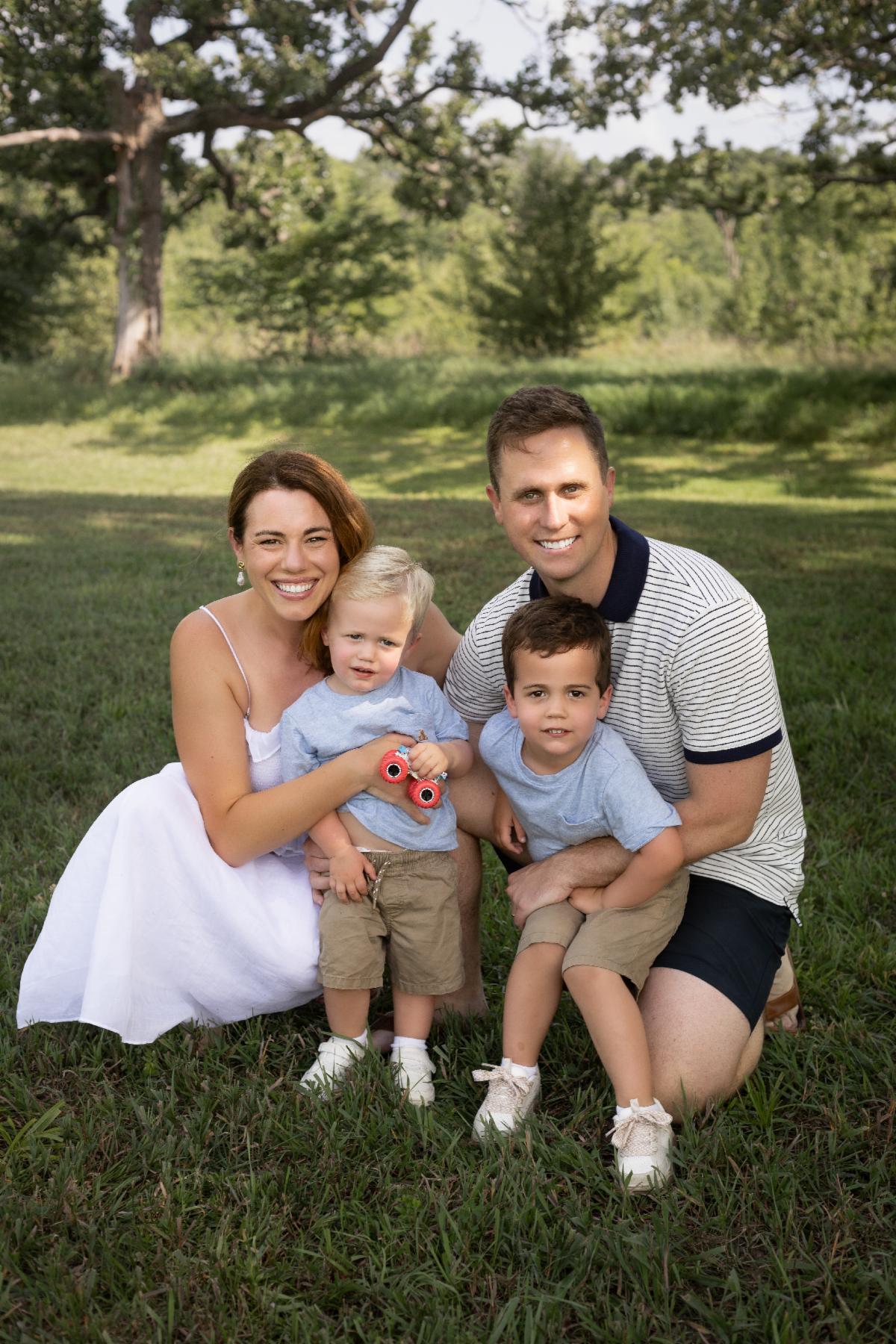
Liam Reilly, Morgan, Cormac (4), and Hayes (2.5)

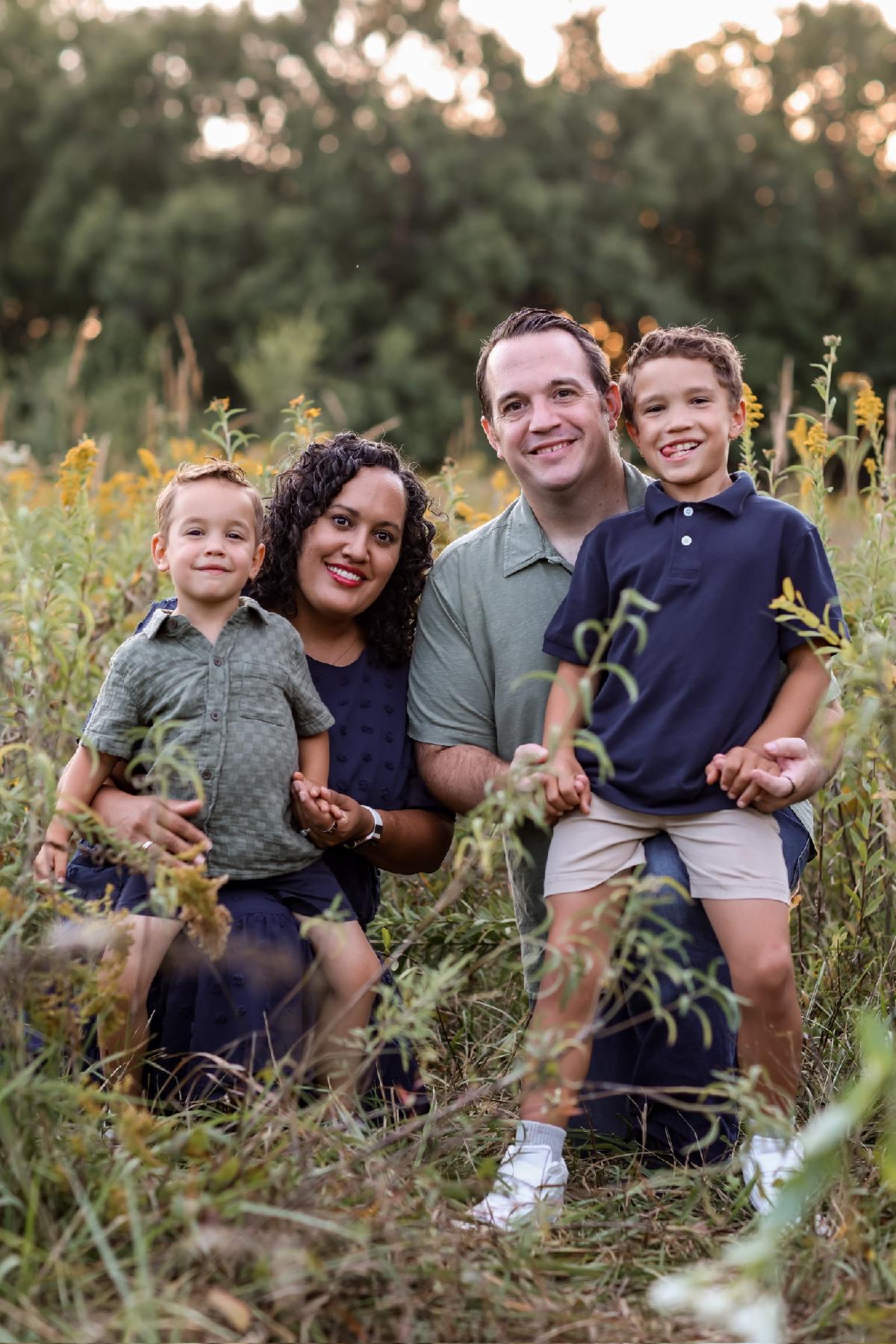
Sam Foreman, Meg, Jackson (8) and Hayes (4) 


Facebook      Instagram      Web
 

The Weigand Trust | P.O. Box 422 | Kechi, KS 67067 US