|
Healthy Communities Alive!
Welcome June!
| | |
The Midwest is glowing with the green of grass and leaves and the yellow and red of blossoming bulbs. As we enjoy the beauty of the outdoors, you may be planning vacations or visits to the lake country to enjoy fishing, hiking or relaxing in a lawn chair.
In this newsletter, we explore grilling at home and family vacations. In many homes, alcohol becomes part of celebrations. This month, my dietetic intern took a comprehensive look at alcohol use and its effects. We included links to all references for further exploration of this emerging topic.
-
If warmer weather makes you think of growing and later preserving your own vegetables, we can help. Check out www.ag.ndsu.edu/fieldtofork to view materials and webinars about gardening, food safety and food preparation.
-
Want to learn more about staying healthy year-round? Check out the Nourish program, which is offered online and in person in many locations in North Dakota.
-
Be sure to preserve food safely, starting with some early-season fruits and vegetables such as green beans. See the food preservation resources at North Dakota State University Extension.
Sincerely,
Julie Garden-Robinson, Food and Nutrition Specialist, NDSU Extension
Please contact me at julie.garden-robinson@ndsu.edu or 701-231-7187 for more information about any of these programs.
| | |
Think Safety First This Summer
By Julie Garden-Robinson, Food and Nutrition Specialist
Warm weather brings summer family gatherings. June is National Safety Month to promote occupational safety. We will expand the topic to include food safety. We all enjoy a barbecue with family and friends, but we must take steps to prevent the outbreak of a foodborne illness, as well as burns and fires.
Foodborne illnesses may be caused by bacteria, viruses, parasites or chemicals. According to the Centers for Disease Control and Prevention, 48 million cases of foodborne illnesses due to foodborne pathogens (disease-causing agents), 128,000 hospitalizations and 3,000 deaths occur each year in the U.S.
Anyone can get sick but, some populations are more susceptible to these illnesses. Infants, children, pregnant women, older adults and people with weak immune systems are more susceptible to foodborne illness.
You can help prevent foodborne illnesses with these reminders:
- Use good personal hygiene. Wash your hands for at least 20 seconds before, during and after food preparation.
- Wash and sanitize workspaces and equipment, including counters and cutting boards.
- Rinse all fruits and vegetables with running water before eating, cutting and/or cooking.
-
Avoid cross-contamination. Use separate cutting boards to cut raw meat for meat skewers before switching to cutting salad ingredients.
- Use a food thermometer. Cook foods to appropriate temperatures:
145 degrees Fahrenheit: Roasts, steaks, chops of beef, veal, pork, lamb. Observe a 3-minute rest for the meat after removing from the heat.
160 degrees Fahrenheit: Ground beef, veal, pork, lamb
165 degrees Fahrenheit: Poultry
- Keep hot foods hot (above 140 degrees) and cold foods cold (below 41 degrees).
- Use clean serving utensils and dishes. Avoid touching food when serving with bare hands. Use utensils such as tongs or spoons.
- Discard perishable food that has been out for more than two hours or one hour if it is 90 degrees or higher outside. Follow the “when in doubt, throw it out” rule if you are unsure.
See the “Food Safety” resources on the NDSU Extension website at www.ag.ndsu.edu/food for more information. See the NDSU Extension publications, “Keep Food Safe During Grilling Season” and “Keep Food Safe During Summer Picnics,” for details.
What can I do in my community?
Next time you are invited to a potluck or other gathering, set a good example by bringing cold food nested in a bowl of ice, or a slow cooker with an extension cord to plug in.
| |
5 Tips to Stay Healthy While Traveling | |
By Nicole Neumiller, Dietetic Intern (former), NDSU Extension
Reviewed by Julie Garden-Robinson, Food and Nutrition Specialist
| | |
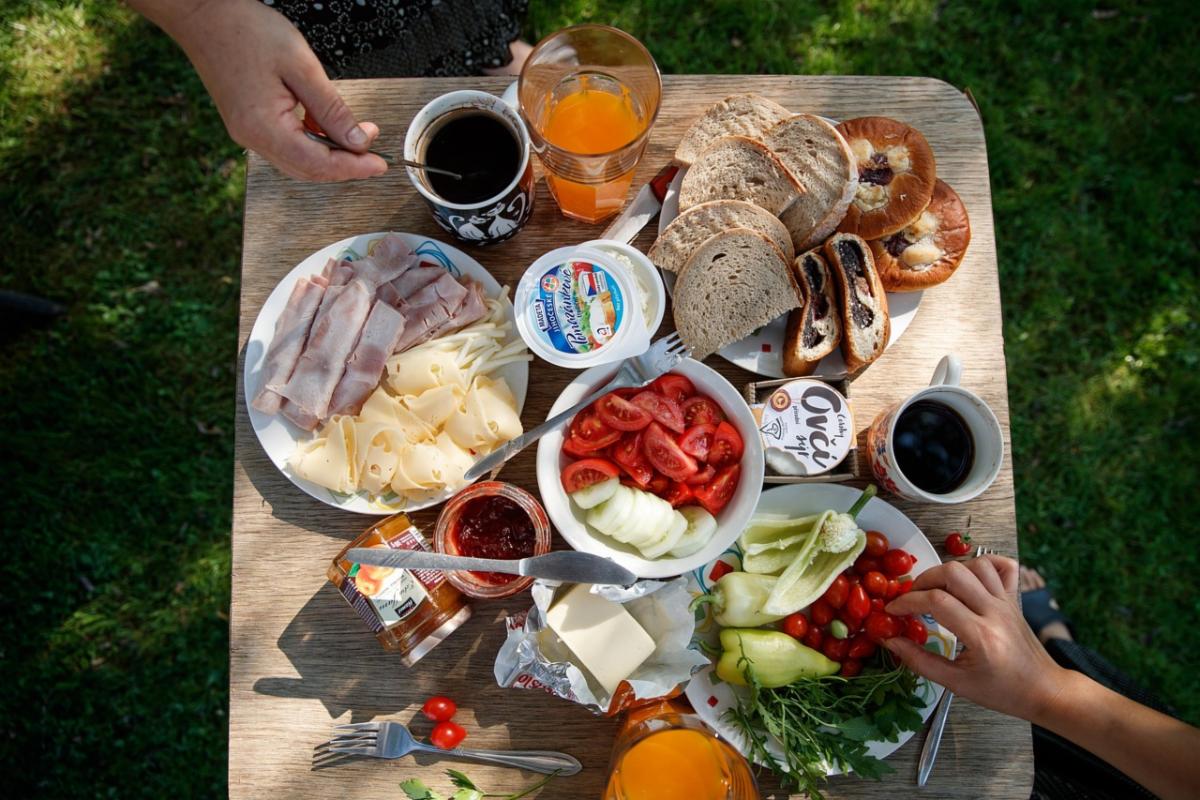
Are you planning a summer trip? Whether you are flying, driving or taking a train, here are five tips to keep you healthy while exploring new places this summer.
Stay Hydrated. No matter if you are lying on a beach, hiking on a trail or touring national parks, you need to drink plenty of water. Physical activity and the sun make us perspire. Sweating helps us maintain our body temperature, but it also causes us to lose electrolytes.
By drinking water and snacking when exerting lots of energy, we hydrate our bodies and refuel our electrolytes to keep us functioning. If traveling to other countries, be aware of water safety — bacteria is easily spread through water. Look for signs or ask if you are unsure if the water is safe to drink. If the water is not potable, use bottled water for drinking, preparing food and brushing your teeth.
Also, remember the signs of dehydration: extreme thirst, headache, dark-colored urine, dizziness and confusion. If you are experiencing any of these symptoms, rest and rehydrate immediately with sips of lukewarm water. Drinking too much too fast or drinking too-cold water can put your body into shock. In extreme cases, seek professional help.
Don’t Skip Meals. With the travel days and time changes, it can be easy to not feel hungry. Skipping meals increases stress on the body and often leads to overeating during the day. When you are hungry, everything sounds good; when you eat regular meals and snacks, you can be more mindful of what you eat. This can help you prioritize eating fruits and vegetables rich in vitamins C, E and A to help support your body's immune system.
Pack Healthy Snacks. Packing snacks does not have to be expensive, require special equipment or be time-consuming. If you can bring a small cooler, pack cheese, yogurt, carrot sticks, celery sticks or hard-boiled eggs.
If your travel day is longer than a couple of hours or you feel like you need an actual meal, you can make an easy chicken salad or bring tuna packets to add to salads, crackers or bread. You also can bring nonrefrigerated snacks such as a homemade snack mix, whole fruits, nuts, peanut butter and dried fruit.
Get Enough Sleep. Traveling can be an exhausting process, but when crossing time zones, it can be even more challenging. Set yourself up for success by getting enough sleep before you leave. If possible, slowly adjust your bedtime and wake-up time to fit your destination’s time zone to decrease the effects of time changes.
Our bodies function on a 24-hour clock system, the circadian rhythm, that affects our sleepiness and alertness. By getting sunlight in the morning, we can adjust our circadian rhythms, which may limit jet lag and help us adapt to new time zones. Caffeine can affect circadian rhythm and make it harder to adjust to different time zones, so reduce your caffeine intake on traveling days.
Stay Active. If you know you will be sitting for a long time, stretching or going for a walk will be important for blood flow and preventing blood clots. You can stretch or walk while stopping for gas or while waiting for your plane to board. Once you reach your destination, use walking as your transportation for sightseeing. Try walking to restaurants, hiking or utilizing the hotel gym.
References
CDC. (2024, May 15). Understanding Your Risk for Blood Clots with Travel. Venous Thromboembolism (Blood Clots). https://www.cdc.gov/blood-clots/risk-factors/travel.html
Kranz, R. (2024). Symptoms of dehydration: What they are and what to do if you experience them. Harvard Health. https://www.health.harvard.edu/staying-healthy/symptoms-of-dehydration-what-they-are-and-what-to-do-if-you-experience-them
Mayo Clinic . (2021, October 14). Dehydration - symptoms and causes. Mayo Clinic. https://www.mayoclinic.org/diseases-conditions/dehydration/symptoms-causes/syc-20354086
Summer, J. (2024, March 11). How to Fix Your Circadian Rythm: 6 Easy Steps (D. Cotilar, Ed.). Https://Www.sleepfoundation.org; Sleep Foundation.
Zeballos E, Todd JE. The effects of skipping a meal on daily energy intake and diet quality. Public Health Nutr. 2020 Dec;23(18):3346-3355. doi: 10.1017/S1368980020000683. Epub 2020 May 13. PMID: 32398192; PMCID: PMC10200470.
| | |
Why Gen Z Is Ditching Alcohol —
And What They're Drinking Instead
By Azalea Benjamin, Dietetic Intern (former)
Reviewed by Julie Garden-Robinson, Food and Nutrition Specialist
| | |
Generation Z encompasses those born in the late 90s to early 2010s, more specifically defined as 1997 to 2012. According to Berenberg Research, Gen Z is leading the charge in decreasing or even ceasing alcohol consumption, drinking 20% less alcohol per capita than their millennial counterparts.
Several prominent Gen Z figures are talking openly and proudly about their decision not to drink, which may be influencing other members of this generation who look up to them.
Tom Holland, though born in 1996, is a well-known actor for Gen Z audiences. Holland chose to stop drinking alcohol in January 2022 and has become an advocate for alcohol abstinence. In 2024, he even launched his own non-alcoholic beer company called Bero.
“I’ve got great mental clarity; I sleep better; I feel motivated every day that I wake up…I feel fantastic,” said Holland in an interview.
Brett Tombul (Cooper), a 23-year-old conservative commentator, has spoken openly about choosing not to drink alcohol since shortly after her 21st birthday.
“It’s not worth being out of control and risking my reputation. And then it couldn’t even be rationalized for my health,” she said in one of her YouTube videos where she addressed meta-analysis published in March 2023 on JAMA Network, “Association Between Daily Alcohol Intake and Risk of All-Cause Mortality.”
Advertisements for non-alcoholic (NA) beverages are also being geared towards this generation and younger millennials. This is evident in a 2023 Captain Morgan European advertisement featuring a popular creator from the now-defunct Vine app, Nick Fraser, singing “Why you always Whying?” This is a reference to his viral short video in which he sings, “why you always lyin’?” “Whying” alludes to feeling interrogated for refraining from alcohol. This age group would likely immediately recognize and appreciate the internet meme.
The JAMA Network Meta-Analysis Findings
The meta-analysis reviewed 107 studies that took place between 1980 and 2021. The authors make the argument that former studies had skewed results due to the following:
- Claims of health benefits from light to moderate drinking from studies where the light to moderate drinkers engaged in many other healthy behaviors.
- Control groups of non-drinkers that engaged in many other unhealthy behaviors.
- Control groups that included people who had drunk before rather than only those who had never drunk.
Therefore, their goal was to re-analyze the research, controlling for these variables:
- No significant decrease in all-cause mortality for people who drank fewer than two standard U.S. drinks per day compared to lifetime nondrinkers.
- There was a significant increase in all-cause mortality for drinkers who had three to four standard U.S. drinks or more than four standard U.S. drinks per day.
- Women see adverse effects at lower amounts of alcohol than men.
- There are no health benefits to drinking any amount of alcohol.
Quick Facts on Alcohol
Ethanol, the actual alcohol component present in alcoholic beverages, is 7 calories per gram. A standard U.S. drink contains 14 grams of ethanol and would contain 98 calories from ethanol alone. Calories from ethanol are “empty,” as there is no protein nor essential vitamins and minerals.
Not only is alcohol void of nutrition, but it can also negatively affect the following:
- The gut microbiome and cause gut distress.
- The absorption of essential vitamins and minerals from food.
- The absorption of thiamine, vitamin B12, folic acid and zinc, which are necessary for DNA synthesis, energy metabolism, cell turnover and immune function.
Alcoholic beverages often also have high amounts of added sugar, such as in mixed drinks, that contribute to “empty” calories. Beer and wine also have extra carbohydrates and sugars. But keep in mind that a mixed drink without alcohol, like a mocktail, can be very high in added sugar and calories, too.
The NA Market and Consumer Trends
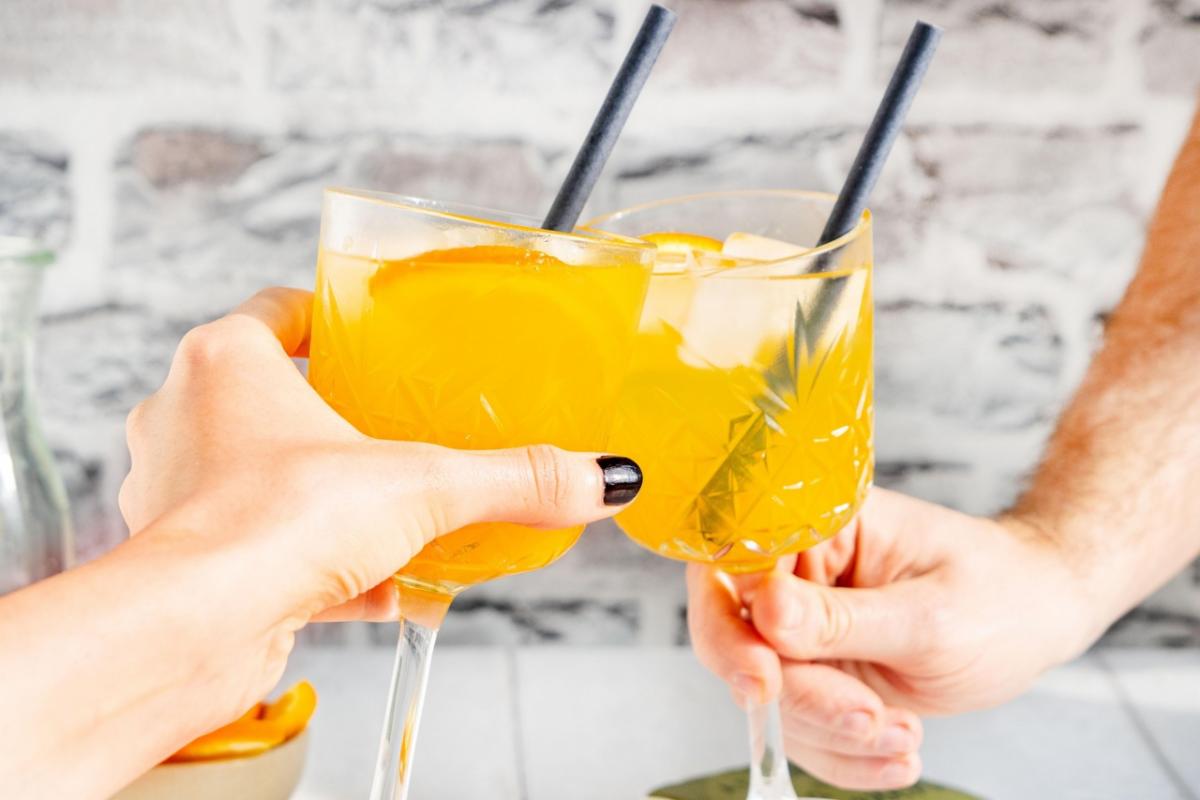
There is demand for non-alcoholic products as people become more aware of the negative effects of alcohol consumption. NA beers have been around for some time, but there is a growing number of options being offered, including NA spirits, wines and ready-to-drink mocktails.
The International Wine and Spirits Record reports that the NA beverage category is the only one seeing year-on-year growth in India, China, the UK and the U.S. In 2023:
- NA beer sales increased by 6%.
- NA wines increased by 7%.
- NA spirits were up 15%.
Functional drinks are also being offered as alternatives to alcoholic beverages. These drinks are crafted with botanicals, adaptogens, nootropics and neurotransmitter-targeting compounds and advertise promoting feelings of calmness, clarity or focus.
These plant-derived compounds were part of traditional medicines and are thought to enhance cognition, improve mood and reduce stress. There is some research that supports this because they increase blood flow to the brain.
These compounds fall under the classification of “dietary supplement,” so they are not well-regulated by the Food and Drug Administration. Before consuming, gather background information about the product:
- Exercise caution and research ingredients.
- Check if the product has been tested by a third-party organization to make sure it contains ingredients in the amounts advertised and is not contaminated.
- Discuss any new supplement with your primary care provider to avoid interactions with medications you may be taking.
Other Contributing Factors
While it would be ideal for the decline in the use of alcohol to be an isolated trend, this is unfortunately not the case. While Gen Z appears to be less inclined than previous generations to drink alcohol, some sources report that they are more reliant on other substances than other age groups.
The American Addiction Centers report the following behaviors between 2021 and 2022:
- Benzodiazepine misuse in the 21-to-25-year age group remains the highest among all age groups.
- Marijuana use in ages 21 to 25 increased by almost one million people.
- Cocaine use in 2022 in ages 21 to 25 continued to outpace that of all other age groups.
What can I do in my community?
As a community, we can choose social activities that do not revolve around drinking and refrain from chastising friends who choose mocktails. Don’t be afraid to give local non-alcoholic options a try and support local businesses in their offerings. While not all young people are forgoing or limiting their alcohol use and may even be dependent on other substances, this is an overall positive trend.
References:
-
Alcohol Facts and Statistics. (2024, June). National Institute on Alcohol Abuse and Alcoholism. https://www.niaaa.nih.gov/alcohols-effects-health/alcohol-topics/alcohol-facts-and-statistics
-
Brenan, M. (2024, August 13). Alcohol Consumption Increasingly Viewed as Unhealthy in U.S. Gallup Inc. https://news.gallup.com/poll/648413/alcohol-consumption-increasingly-viewed-unhealthy.aspx
-
Bryson, A. (2024, May 22). Top 36 Non-Alcoholic Bars & Bottle Shops In The USA. The Sober Curator. https://thesobercurator.com/top-36-non-alcoholic-bars-bottle-shops-in-the-usa/
-
Buschholz, K. (2023, September 8). Infographic: Gen Z: The More Sober Generation. Statista Daily Data. https://www.statista.com/chart/30783/alcohol-consumption-by-generation
-
Captain Morgan (Director). (n.d.). Captain Morgan Spiced Rum 0.0% alcohol-free alternative. [Video recording]. YouTube. Retrieved April 14, 2025, from https://www.youtube.com/
-
Eastlake, D. (2025, February 6). Functional non-alcoholic drinks are industry gamechanger. FoodNavigator. https://www.foodnavigator.com/Article/2025/02/06/are-functional-non-alcoholic-drinks-the-next-big-beverage-trend/
-
Global beverage alcohol market set for moderate recovery in 2025, while challenges persist in 2024. (2024, June 5). IWSR. https://www.theiwsr.com/insight/global-beverage-alcohol-market-set-for-moderate-recovery-in-2025-while-challenges-persist-in-2024/
-
Hodgman-Korth, M. (n.d.). Drug and Alcohol Addiction by Generation: Facts and Statistics. American Addiction Centers. Retrieved April 14, 2025, from https://americanaddictioncenters.org/rehab-guide/addiction-statistics-demographics/by-generation
-
Lorca, C., Mulet, M., Arévalo-Caro, C., Sanchez, M. Á., Perez, A., Perrino, M., Bach-Faig, A., Aguilar-Martínez, A., Vilella, E., Gallart-Palau, X., & Serra, A. (2023). Plant-derived nootropics and human cognition: A systematic review. Critical Reviews in Food Science and Nutrition, 63(22), 5521–5545. https://doi.org/10.1080/10408398.2021.2021137
-
O’Connell-Domenech, A. (2023, April 6). Why is Gen Z drinking less? [Text]. The Hill. https://thehill.com/changing-america/well-being/3936579-why-is-gen-z-drinking-less/
-
Raypole, C. (2020, October 15). Sober Curious: What It Means and How to Try It. Healthline. https://www.healthline.com/health/alcohol/sober-curious
-
Roe, A. L., & Venkataraman, A. (2021). The Safety and Efficacy of Botanicals with Nootropic Effects. Current Neuropharmacology, 19(9), 1442–1467. https://doi.org/10.2174/1570159X19666210726150432
-
The 2025 Non-Alcoholic Beverage Landscape: Key Trends & Talent Demands. (2025, January 20). Protis Global. https://protisglobal.com/articles/the-2025-non-alcoholic-beverage-landscape-key-trends-talent-demands
-
The Daily Wire (Director). (2023, July 14). Why I Stopped Drinking. [Video recording]. https://www.youtube.com/watch?v=sordHUtK6dQ
-
Todorova, V., Ivanov, K., Delattre, C., Nalbantova, V., Karcheva-Bahchevanska, D., & Ivanova, S. (2021). Plant Adaptogens—History and Future Perspectives. Nutrients, 13(8), 2861. https://doi.org/10.3390/nu13082861
-
Tom Holland. (2025). BERO | Premium Non-Alcoholic Beer. BERO. https://berobrewing.com/
-
Understanding Why Gen Z Drinks Less. (2023, November 1). Cleveland Clinic. https://health.clevelandclinic.org/why-gen-z-is-drinking-less
-
University Hospital Sounthampton. (2022, August). Nutritional advice for people drinking alcohol at high levels or dependently. NHS Foundation Trust. https://www.uhs.nhs.uk/Media/UHS-website-2019/Patientinformation/Digestionandurinaryhealth/Nutritional-advice-for-people-drinking-alcohol-at-high-levels-or-dependently-3109-PIL.pdf
-
What’s driving the growth of no-alcohol in the US? (2024, May 13). IWSR. https://www.theiwsr.com/insight/whats-driving-the-growth-of-no-alcohol-in-the-us/
-
Williams, H. (2023, April 3). Alcohol and nutrition: What’s the health impact? Dietitians on Demand. https://dietitiansondemand.com/alcohol-and-nutrition/
-
Zhao, J., Stockwell, T., Naimi, T., Churchill, S., Clay, J., & Sherk, A. (2023). Association Between Daily Alcohol Intake and Risk of All-Cause Mortality: A Systematic Review and Meta-analyses. JAMA Network Open, 6(3), e236185. https://doi.org/10.1001/jamanetworkopen.2023.6185
| | |
Recipe of the Month
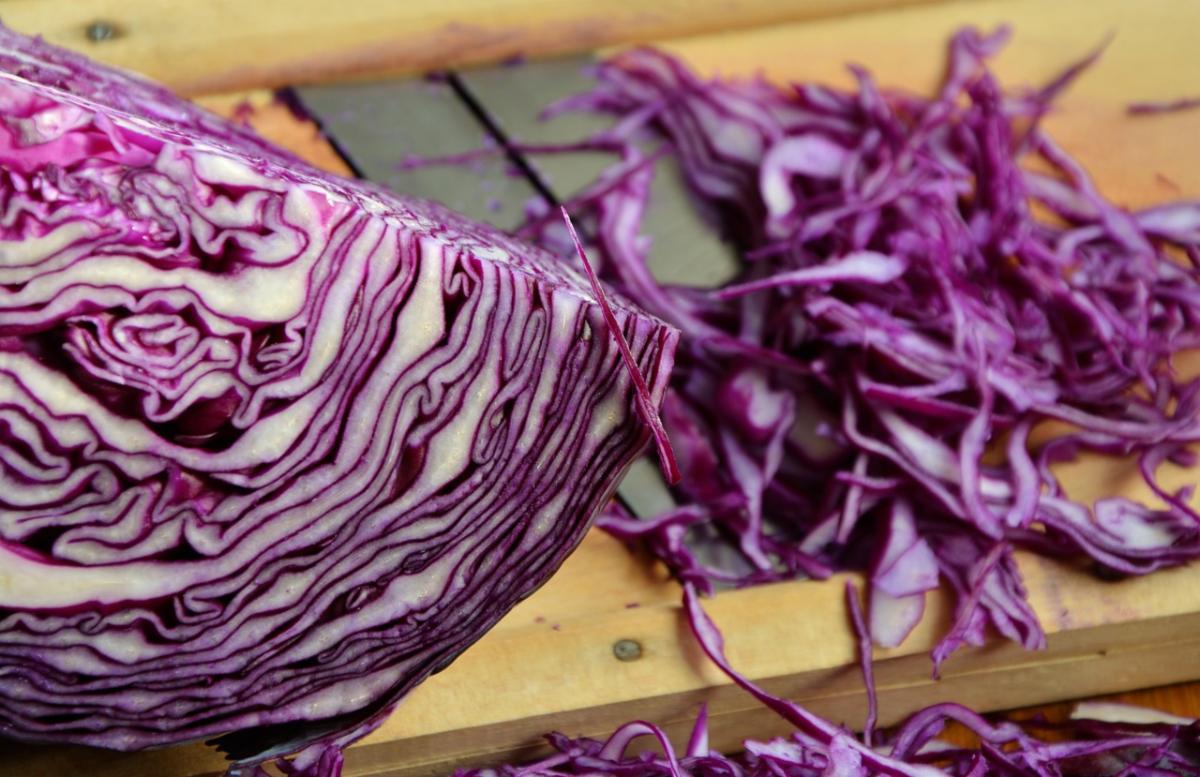
Here’s a colorful salad to use as a side dish when grilling or having a party this summer. Eating more cabbage can reduce risk for several types of cancer.
| | |
½ cup apple cider vinegar
3 tablespoons sugar (or 1½ tablespoons honey)
⅓ cup canola oil or olive oil
2 teaspoons celery seed
4 cups red cabbage, coarsely chopped
1 cup apple, unpeeled and chopped
½ cup carrots, grated
½ cup purple/red onion, chopped
1 cup dried cranberries
Black pepper to taste (freshly ground, if desired)
| |
Directions
Prepare the dressing by mixing vinegar and sugar until the sugar dissolves. Add oil and celery seed and mix well. Set aside. Rinse vegetables and fruit; prepare as described. Add raisins or dried cranberries. Add vinegar mixture and toss until well-coated. Add pepper if desired. Refrigerate until serving.
Makes 10 servings. Each serving has 210 calories, 10 g fat, 1 g protein, 32 g carbohydrate, 3 g fiber and 15 mg sodium.
| | | | |