The EIC staff, long-time and brand new, is joyfully welcoming the public back to the building for programs and overdue visits. We have kept busy with new projects throughout the 2+ years of closure, but we are thrilled that we can include members of the community in our activities once again. |
|
|
|
Since reopening on May 2, we've offered two Saturday morning bird walks, two afternoon wildflower walks, and one Stewardship Saturday volunteer activity. We have also welcomed 200 schoolchildren this month already. |
|
Our three new student interpreters are learning on the job quickly as our regular activities resume and we are in the process of onboarding a new sustainability intern.
We have been extremely fortunate to have the help of some recent UM-D graduates who assist EIC staff with various projects. UM-Dearborn Difference Maker Dale Browne is coordinating our Children’s Garden Program and the school programs. She is also helping to train new student staff members. Three former student staff members are "flying the coop" this summer: Difference Makers “heading west” to Wisconsin are naturalist Griffin Bray, who will be pursuing an M.S. in Natural Resources at UW-Stevens Point, and PolliNation Project Coordinator Kaitlyn Tatro, who will be working on habitat restoration in southwestern Wisconsin for Stantec Consulting. Parkhurst Natural Areas Fellow Courtney Wagner is gainfully employed by ECI. We cannot thank these committed staff members enough (but we try) for all the talents they shared during the 180 degree pivot the EIC made in 2020-2022.
|
|
|
|
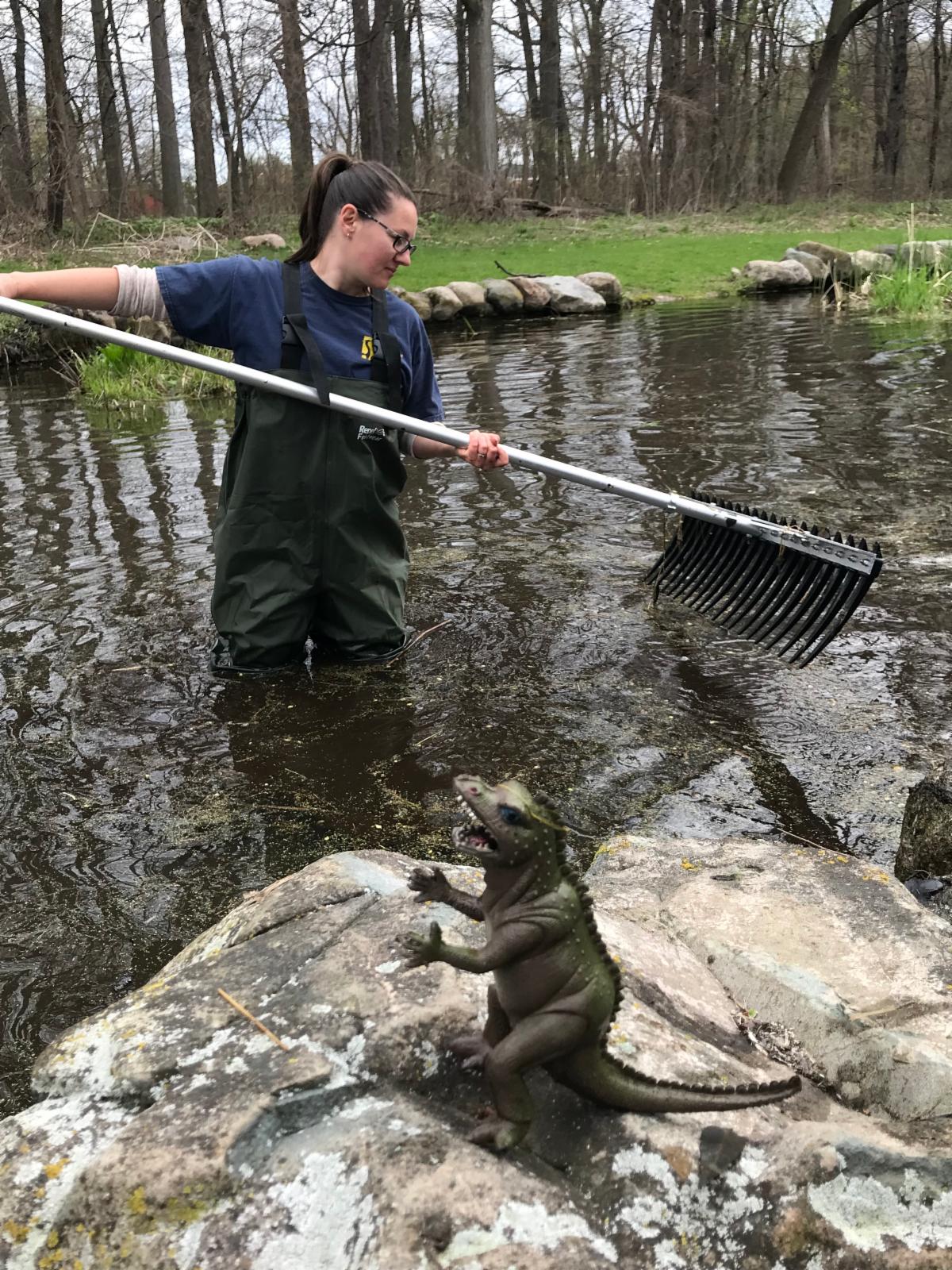
The health of the Rose Garden Pond is critical to the educational goals of our popular Pond Explorations program. Layers of decaying plant material accumulated over time and miscellaneous materials in the Pond made life for the aquatic creatures challenging. “Team EIC” spent a couple of Saturdays clearing out some of those layers with “RakeZilla,” and with a heavy-duty pump to remove suspended sediment. Decomposing plant material had been decreasing dissolved oxygen levels in the pond. This will also make it easier for school children to see the aquatic life. |
|
Dale Browne with recovered pond resident, Godzilla, wielding the "RakeZilla"
Director Claudia Walters (left) with "Team EIC" in 85 degree F. heat....
|
|
We are excited to be open again and we look forward to your involvement in our activities. Please visit soon to join us in what we're up to next!
|
|
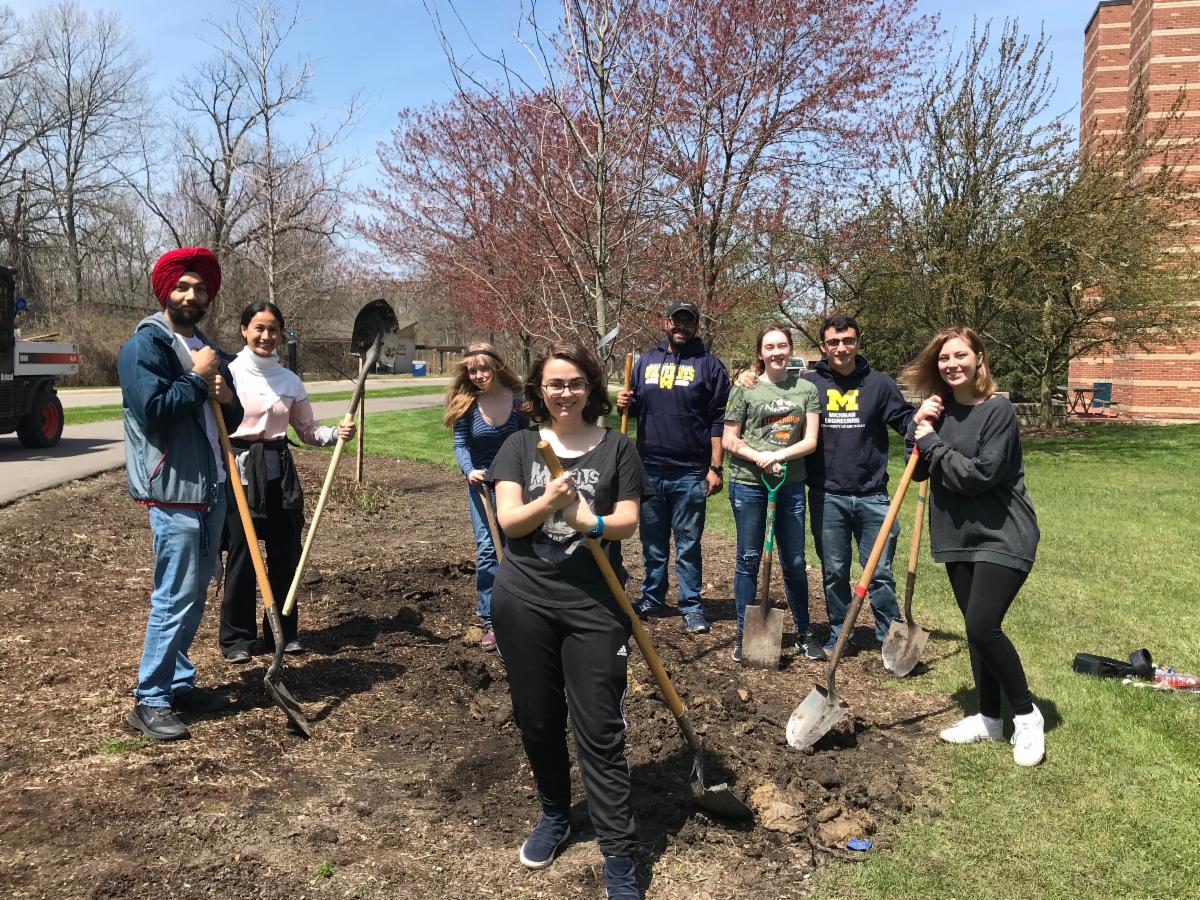
UM-Dearborn students, together with the campus Grounds Department and EIC, celebrated Arbor Day on April 29 by planting two native Black Gum (Nyssa sylvatica) trees along Fairlane Drive. This was part of an effort to work toward a Tree Campus USA designation for the UM-Dearborn campus. Black gum trees are getting more attention as urban trees because they have a deep root system and they can grow in a wide variety of soil types and soil moisture conditions.
|
|
|
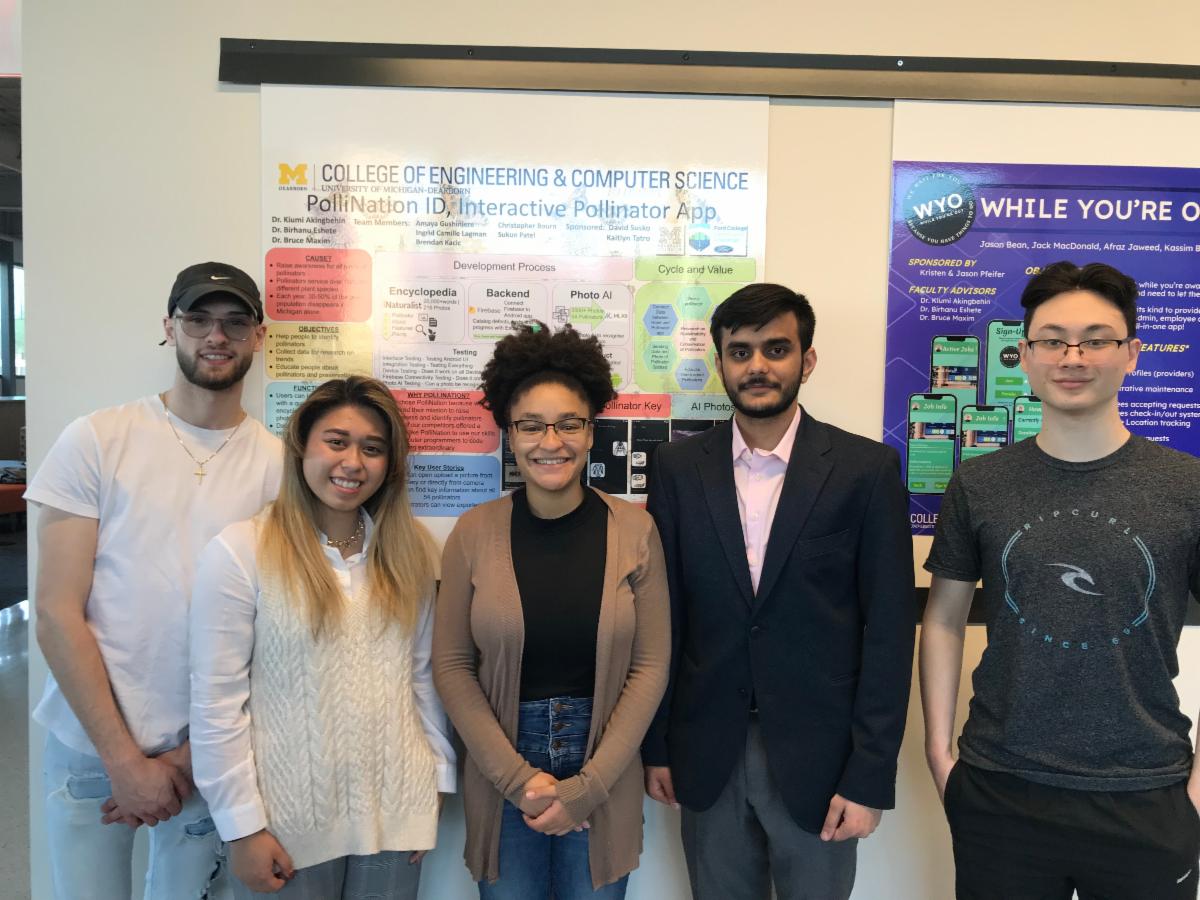
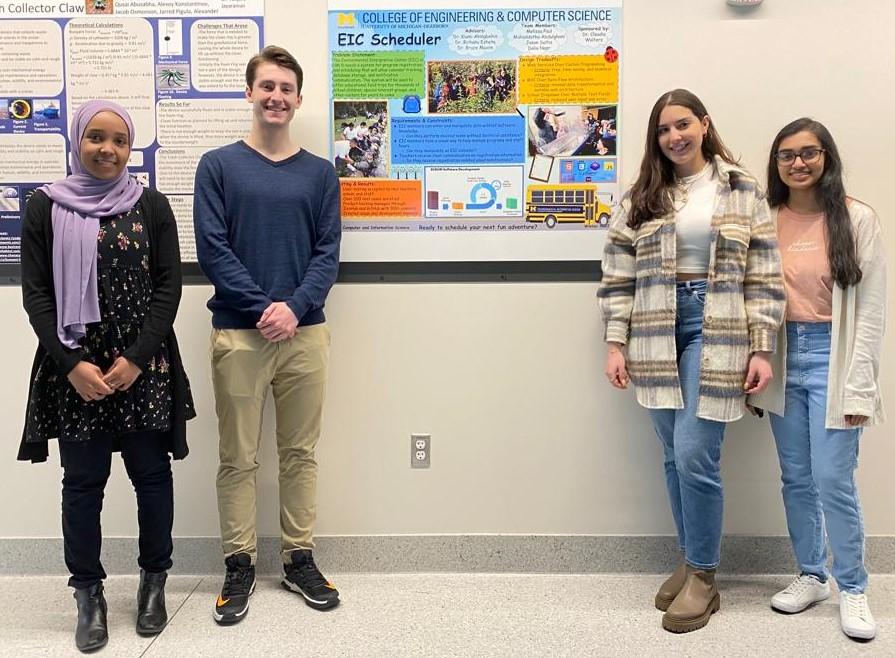
We thank two Computer and Information Science student teams who completed their senior design projects at the EIC. |
|
Amaya Gushiniere, Ingrid Camille Lagman, Brendan Kacic, Christopher Bourn, and Sukun Patel developed a pollinator identification app for Android OS. Their project won the Best in Department award in Computer and Information Science. Congratulations! |
|
We are very grateful to Muhaddatha Abdulghani, Dalia Nasr, Melissa Paul, Jason Soltis for developing an app that will assist the EIC staff with scheduling programs. Thank you so much for making our work more efficient! |
|
|
Children's Gardening Program |
|
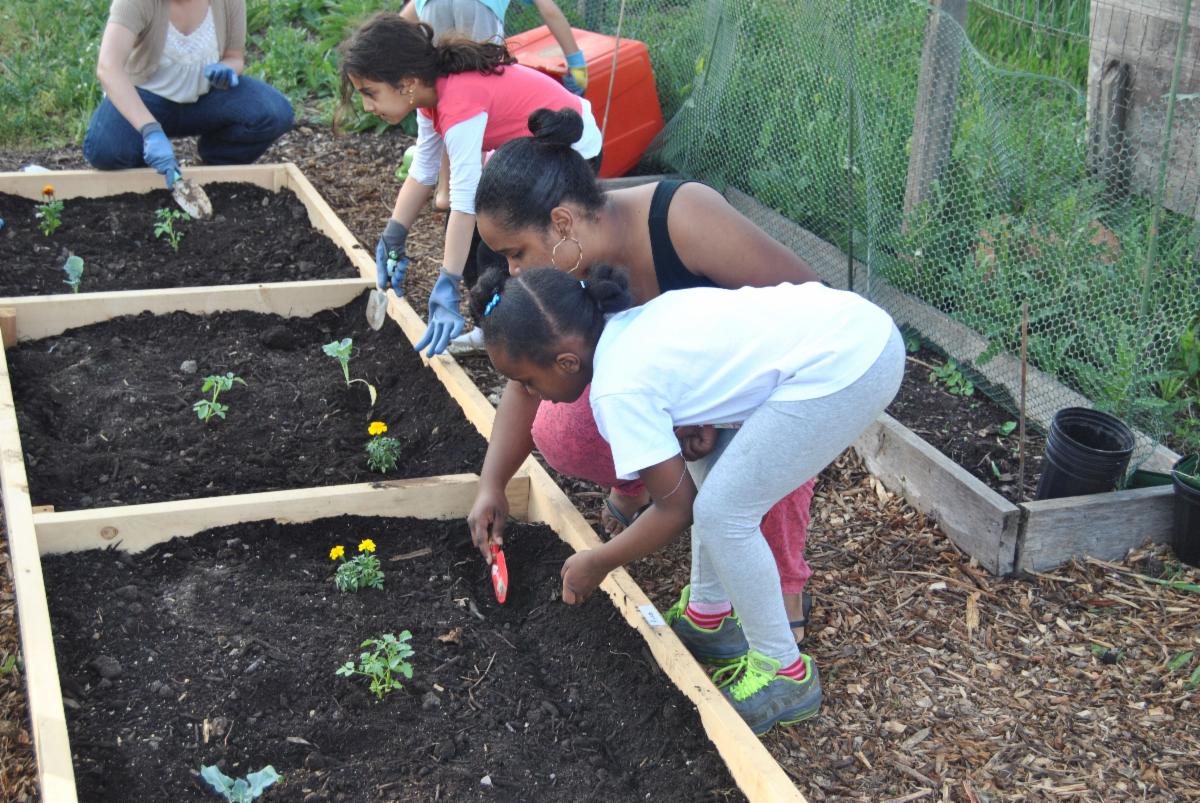
Children who like to dig in the dirt and plant things have a special place reserved for them to grow at the Children's Garden on our campus.
This program is for children 6-8 years of age and meets on Tuesday evenings from 6:00 pm to 7:30 pm on the following dates: June 7, 14, 21; July 5, 26; August 9, 23, 30. It is intended for each child and at least one adult guardian to attend together. We are happy to have Dale Browne return as our Children's Garden Coordinator.
|
|
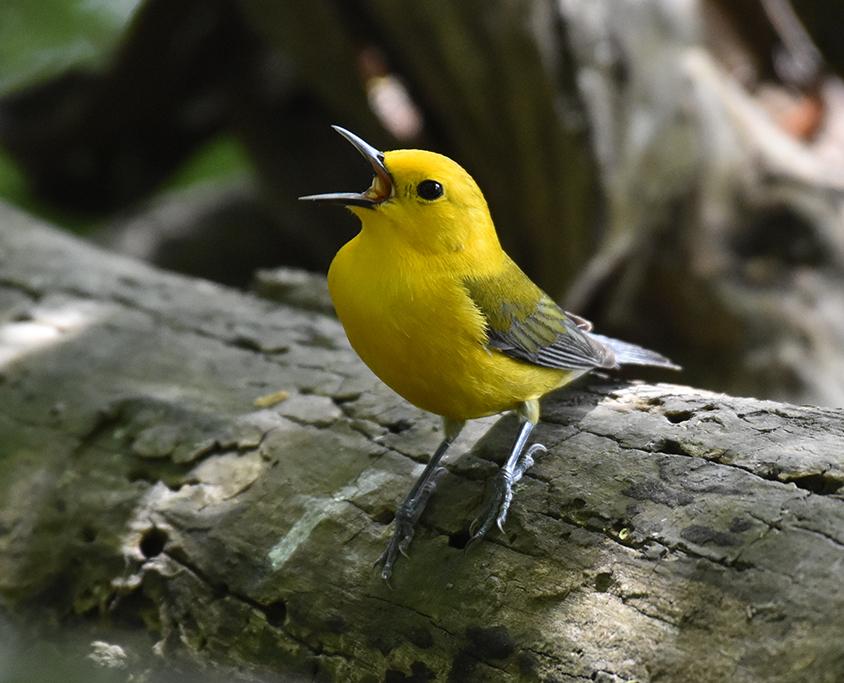
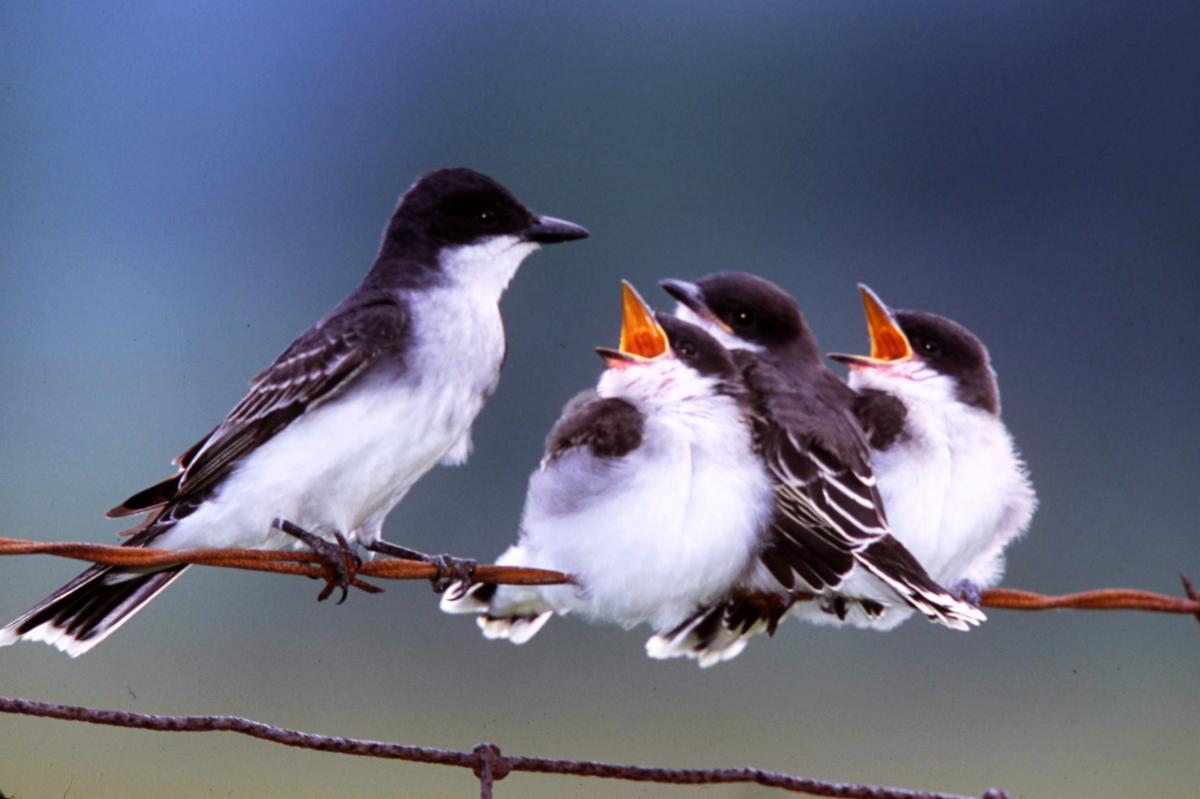
Prothonotary Warbler above by Geoffrey Clarke; Eastern Kingbird Family below by Jim Simek |
|
See the Birds!
Here Today, Gone Tomorrow!
Each Saturday in May
8:00-10:00 AM
|
Long known as a critical stopover site for migratory birds in spring and fall, as well for resident birds, this "island of green in a sea of suburbia" is rich with birds at this time.
Join Rick Simek for leisurely bird walks through the Environmental Study Area each Saturday in May from 8:00-10:00 AM to catch the waves of birds on the move.
Meet at the EIC and please dress for "rustic trails" and Michigan weather.
|
|
Stewardship Saturdays Are Back! |
|
Stewardship Saturdays will take place from 1:00 pm to 4:00 pm on the third Saturday of the month-that means this Saturday! Pick one or more days to come out and help.
This year-round, ongoing effort will help address the many threats posed by various invasive plants to the continuation of habitat health and quality. Each month will bring opportunities for optimal removal of various invasive plants according to current best management practices, etc.
Children must be at least 10 years of age to participate. For more information or to register for Stewardship Saturdays, please contact Rick Simek, the EIC Natural Areas Manager, at rsimek@umich.edu or call 313-583-6371.
|
|
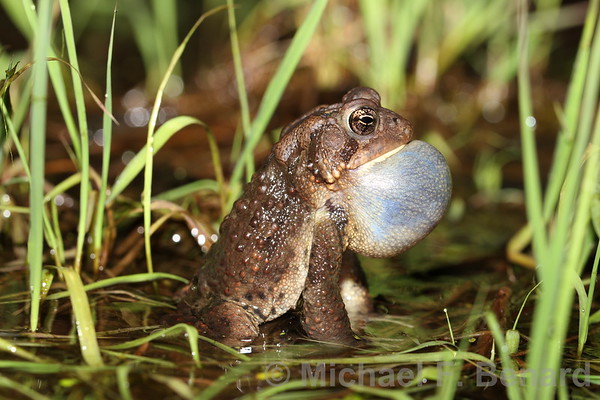
American Toads (Bufo americanus) have recently been calling and mating in their breeding pools in the Environmental Study Area (ESA). This year, the conditions which got them hopping into this annual rite of spring were first met on April 24, when the afternoon air temperature shot up to 77 degrees Fahrenheit.
|
|
|
Having spent the winter and early spring buried deep in the soil, the toads emerged in force. By the next day, dozens if not hundreds of male toads could be heard calling from several different ponds in the ESA. Within hours, mating pairs of toads could already be seen in state of amplexis, which enables the males to externally fertilize the eggs of the females as they are deposited in long gelatinous masses.
|
|
After that intense first day of toad breeding in the ESA, the toads mostly went quiet for a few weeks due to the return of chilly weather. The toad chorus intermission lasted until May 11, when another intense spike in air temperature, this time reaching the low 80s, moved in and lasted for several days. Another grand rush of toad reproduction followed. |
|
If you wish to watch the fascinating mating behavior of American toads, try the following: First, listen for the toads calling from a breeding pool. Walk slowly up to the edge of the pond. The toads will likely notice you and stop calling. Sit down to reduce your vertical presence and quietly wait. In five or ten minutes, the toads will likely begin calling again. |
|
|
As you remain seated, scan the vegetation at the pond surface, and try to pick out the ballooning throats of the males as they call. Here’s a good practice site for familiarizing yourself with the call of the American Toad.
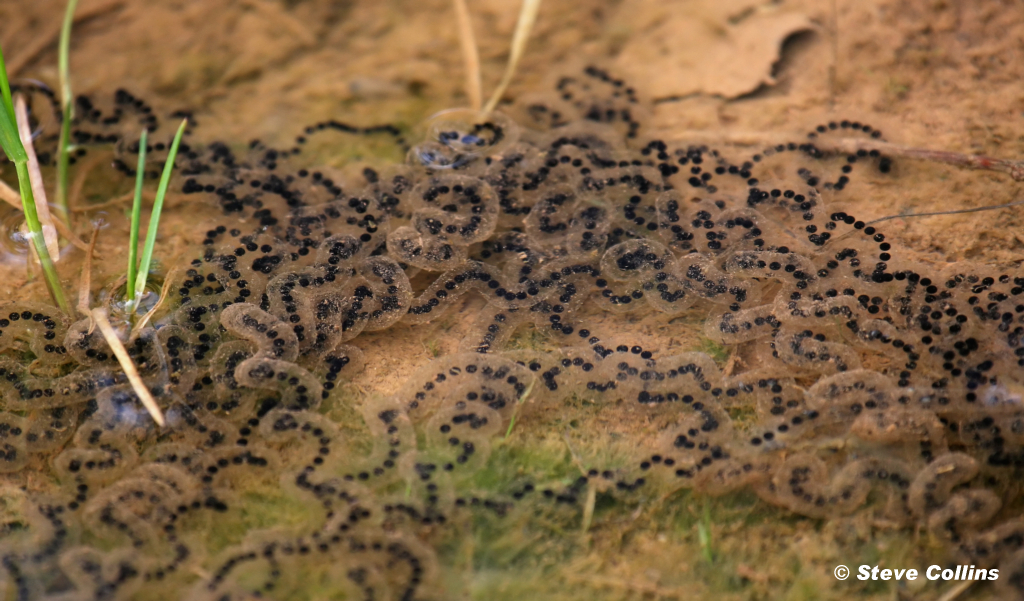
The toad breeding season is usually over by late May. Although the adult toads will have gone back into the forest, you can look for their egg masses—which look like extra-long pipe cleaners—in their breeding pools. Their eggs can be seen as little black dots inside the jelly-like covering. After just a few weeks, toad tadpoles will hatch out. They are tiny and black, and can often be seen as they gather in groups at the edge of a breeding pool.
In just a few months they will change into tiny adult toads. It will take 2-3 years for them to mature enough to be able to actively join in on the annual breeding cycle. It’s good to know that American toads have a healthy habitat in which to live, to thrive, and to sustain their populations within the natural oasis of the ESA.
--Rick Simek
|
|
Venturing outdoors and encountering nature is good for your health. Our trails are accessible daily from sunrise to sunset, so please visit our Environmental Study Area. Check out our Remote Learning Activities & Resources page for ideas to create a “Neighborhood Nature Journal” and “Family Nature Walk” activities!
|
|
|
Please stay safe, stay tuned, and stay engaged in learning activities while we eagerly wait for the opportunities to share experiences together. In the meantime, watch for our new online activities to satisfy your curiosity about the natural world. |
|
|
|
|
|
|