Don't ever miss out on the latest news or tips from your friends at Prickly Ed's! Stay connected through Facebook or Instagram using the buttons below. | |
Welcoming October and the Last Weeks of Plant Shopping here at Prickly Ed's Cactus Patch Native Plant Emporium
October 1, 2025
| | Be sure to download this newsletter in its entirety or open it in your browser so that you don't miss any parts. Reader tip - sometimes you may see three dots (...) in the newsletter. Clicking those will open additional content. It's long, you can bookmark it and come back to it to dig in on all of the news, information and resources. Enjoy! | |
We Will Be Here Through October Helping You Build Back Habitat at Home!
This week's cool temperatures remind us that we have cycled into Autumn. Soon, plant life will begin to slow down and eventually so will we - but not yet!
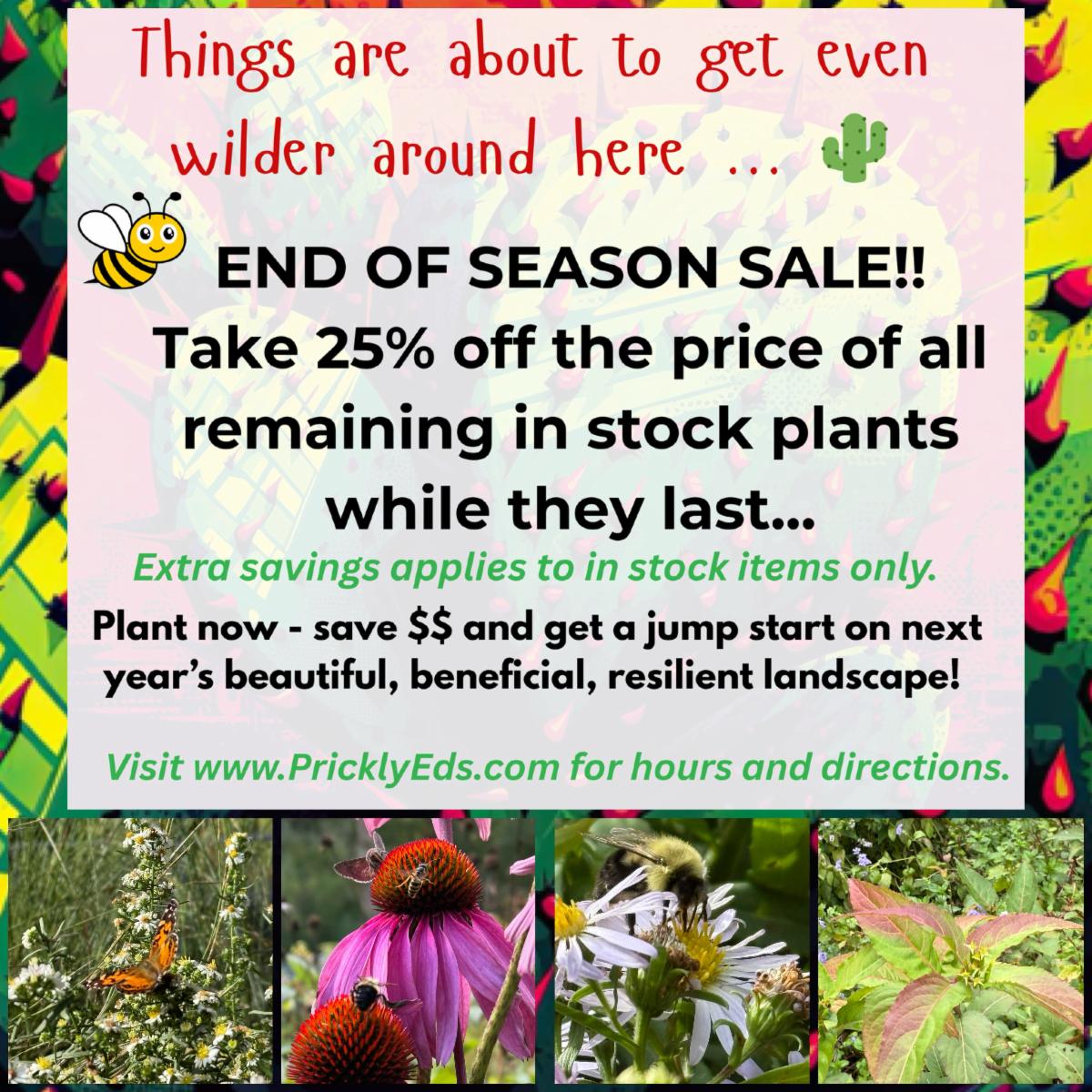
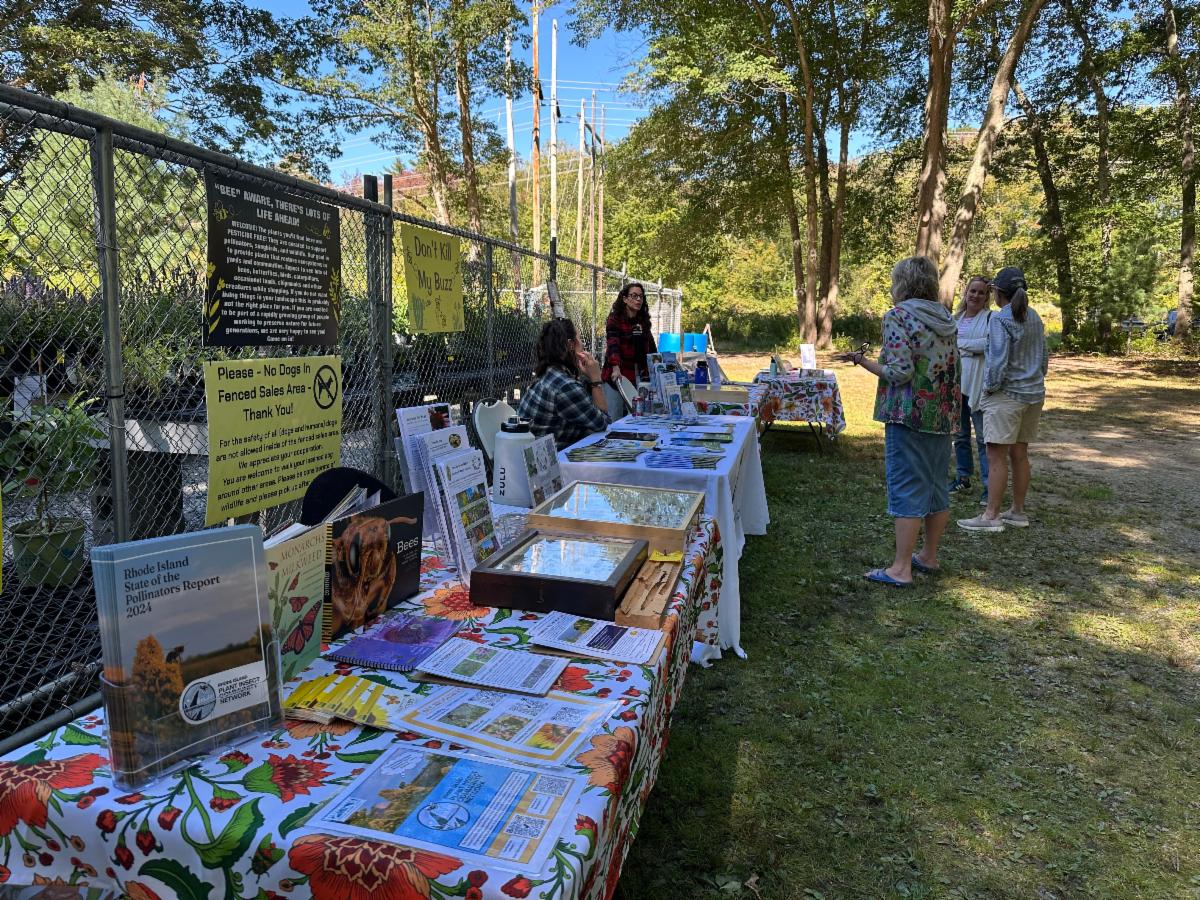
The Native Plant Emporium will continue to be open every Friday, Saturday and Sunday from 11-5 for the next few weeks of October (stay tuned to social media and our website for closing day announcements). At this point we have received the last of our plant deliveries and inventory will begin to shift and dwindle rapidly, so come soon for the very best selection! As we prepare to wind down over the next few weeks we are offering you an extra incentive to get planting - 25% off all in stock plants!
It has been an absolutely amazing season here and we are grateful to everyone who helped make this year extra special. In addition to seeing so many wonderfully beneficial plants go home with all of you, we had the opportunity to be involved with so many wonderful community projects. We hope those seeds spread far and wide - changing the face of our landscapes in all the right ways for decades to come.
| | | |
Improving Your Garden's Legibility
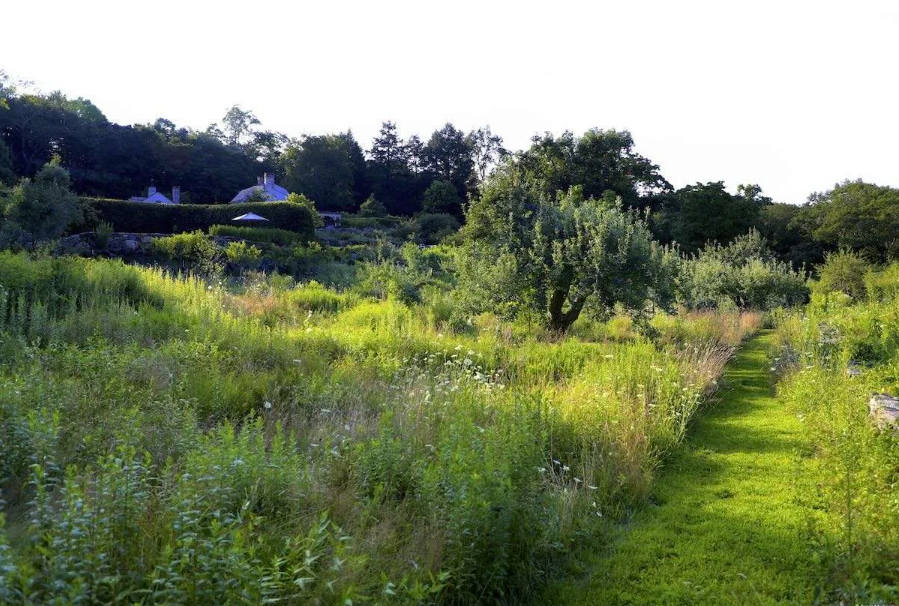
THE “WHAT PLANT GOES WHERE?” aspect of gardening is the hardest part for a lot of us. And as we increasingly shift our plant palette and gardening style to be more native and ecologically focused, decisions about design might seem even a little trickier. We want our landscape to be abundant and biodiverse, packed with life—but also to still hang together visually.
We want it to be legible, and landscape designer Leslie Needham has advice to help us achieve that legibility—to make our gardens really read, and draw the eye and the visitor through them effectively.
In a recent edition of A Way to Garden with Margaret Roach, Leslie shares knowledge and tactical advice for creating gardens that work both ecologically and aesthetically. Click below to listen to or read this educational and inspirational piece.
| |
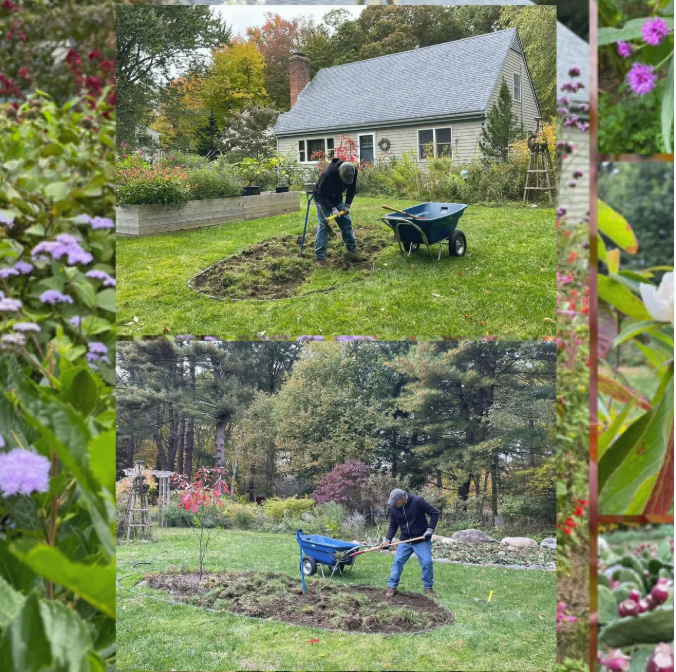
Less Lawn - More Life
Slogan to Reality...
“Less Lawn – More Life” has been one of our favorite slogans from the day we first swung open our gate for business exactly five years ago. In case you were wondering, our very favorite slogan has always been “Kiss my chemical free grass”… 😉!
But back to “Less Lawn – More Life” – we couldn’t be happier that a catchy slogan is now an actual movement that is really starting to take root! Simply put, this catchy phrase urges dialogue and action centered on encouraging individuals to transform the space outside their homes into vibrant, biodiverse spaces that benefit humans and the environment.
Key principles include:
· Significantly reducing the amount of space dedicated to lawn
· Planting native flowers, shrubs, and trees
· Incorporating edible gardens
· Creating wildlife-friendly habitats right at home
· Embracing sustainable, eco-friendly practices which includes forgoing the use of pesticides (including herbicides, fungicides, and lawn treatments)
The benefits of individually and collectively embracing these principles include:
· Conservation of water and energy
· Increased biodiversity
· Enhanced ecosystem services
· Improved mental-health and well-being
· Positive community engagement and education
· And the list goes on…
What was once considered a fad or fringe activity for long-time wildscapers like us, is now an actual true movement seeping out into the mainstream and gaining amazing traction in neighborhoods and communities across our region. And in fact, there is now a full-fledged national “Less Lawn – More Life’ campaign taking root in nearly every state across our nation. Imagine a concept that transcends state boundaries and brings people together with a common goal!
Over the summer the Less Lawn – More Life team ran a national campaign that many local residents participated in – us included. And, if you missed it – no worries – just last week they launched an on-demand version so you can now jump in at any time! This program also includes a fun, educational, and science backed feature known as the Wildr Score, a tool that will help you assess your property’s current status and create a pathway to unlock its full potential. In fact, iconic garden writer Margaret Roach recently featured this rollout in the New York Times, where she wrote: “What if the first step in transforming your lawn-dominated home landscape into a place of enhanced biodiversity could be fun, educational — and free?”
CLICK HERE TO CONTINUE READING!
| | | |
Coming Events You Won't Want to Miss!
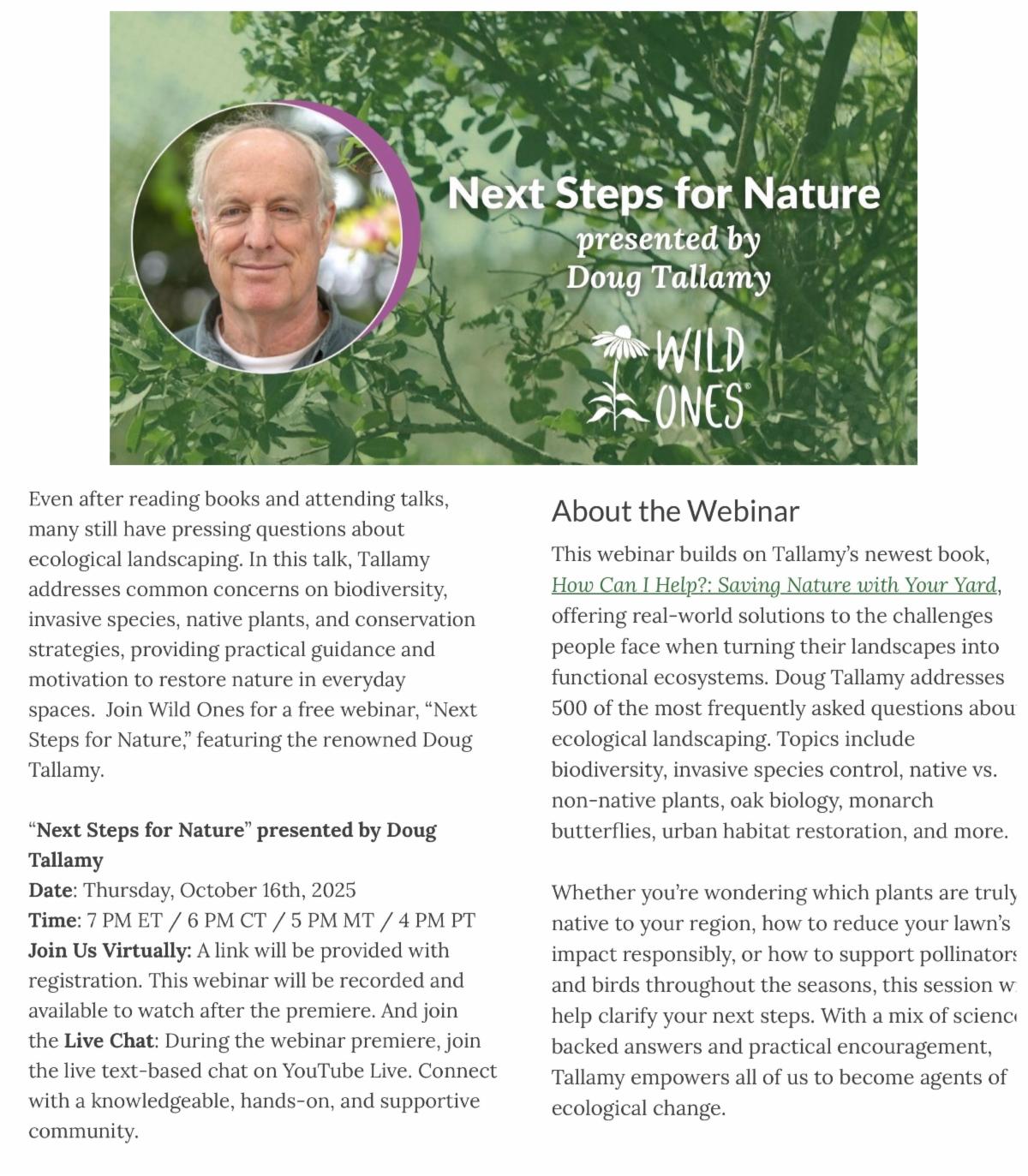
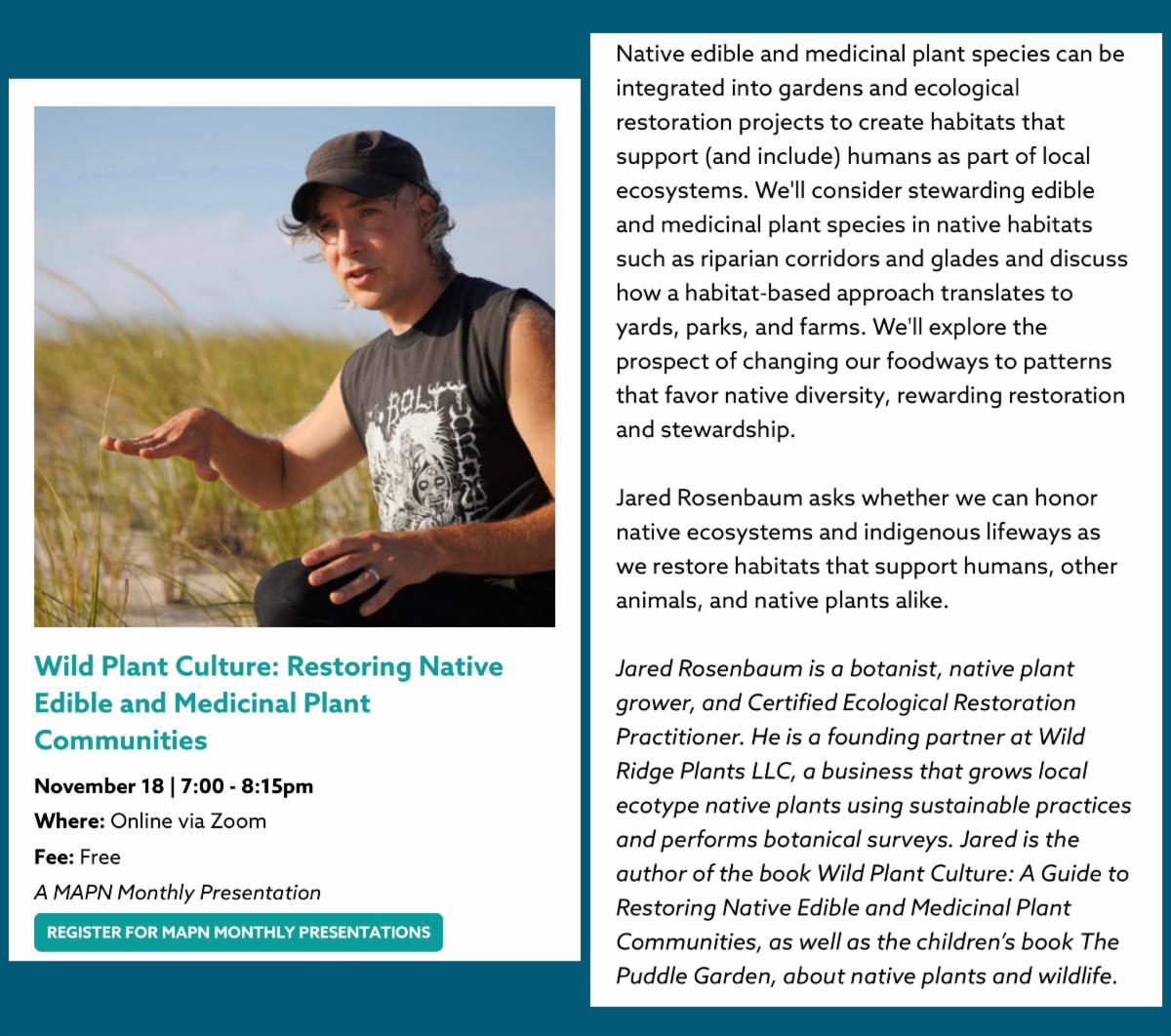
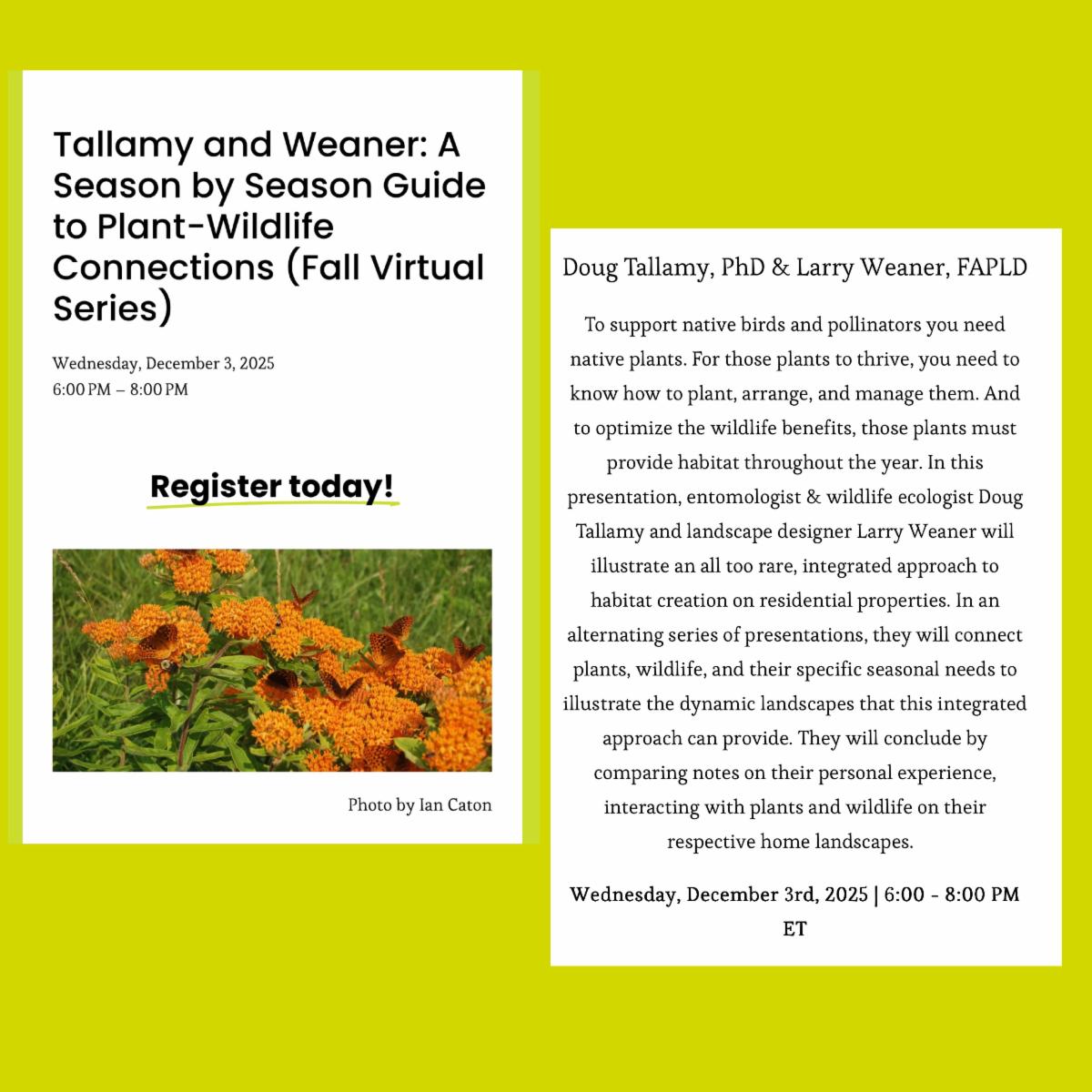
Although plant shopping will wrap up by late October, we won't be going anywhere. We are already making plans for some holiday festivities, some wintertime ecological gardening programming and activities, new resources and tools to share, and a few surprises too! In the meantime some trusted organizations are offering great learning opportunities this fall. Click on the images below to read all the details and register to attend.
| |
The Invasion of the Burning Bush!
Burning Bush is starting to blaze across the region right now, but that is definitely not cause for celebration. WOW was this a popular addition to area landscapes at one point but it’s 80s allure has gone the way of the disco ball!
This common landscaping plant was introduced from Asia in the mid 1800s and has become extremely invasive in New England, so much so that it has been prohibited from sale or propagation in Massachusetts and New Hampshire - soon to be joined by prohibitions in Connecticut. Rhode Island does not have a prohibited plant list (the only Northeast State without one - read more about that HERE) - that definitely doesn’t make it any less invasive in Rhode Island though.
The term invasive is a scientific classification that is not related to how a plant behaves in your yard. An invasive plant by definition is not native to a region and further has been shown to spread to wild areas where it quickly outcompetes native plants causing environmental and economic harm. The US spends billions of dollars annually battling invasive plants - many, like burning bush, intentionally introduced. In our area it is often volunteers who work to tirelessly remove invasives in our last patches of conservation space. Despite never, ever, ever having planted Burning Bush ourselves, we have to continuously remove it here in our own wooded edges where it creeps in from the neighborhood! You don't have to take our word for it though - read more about it from the experts HERE.
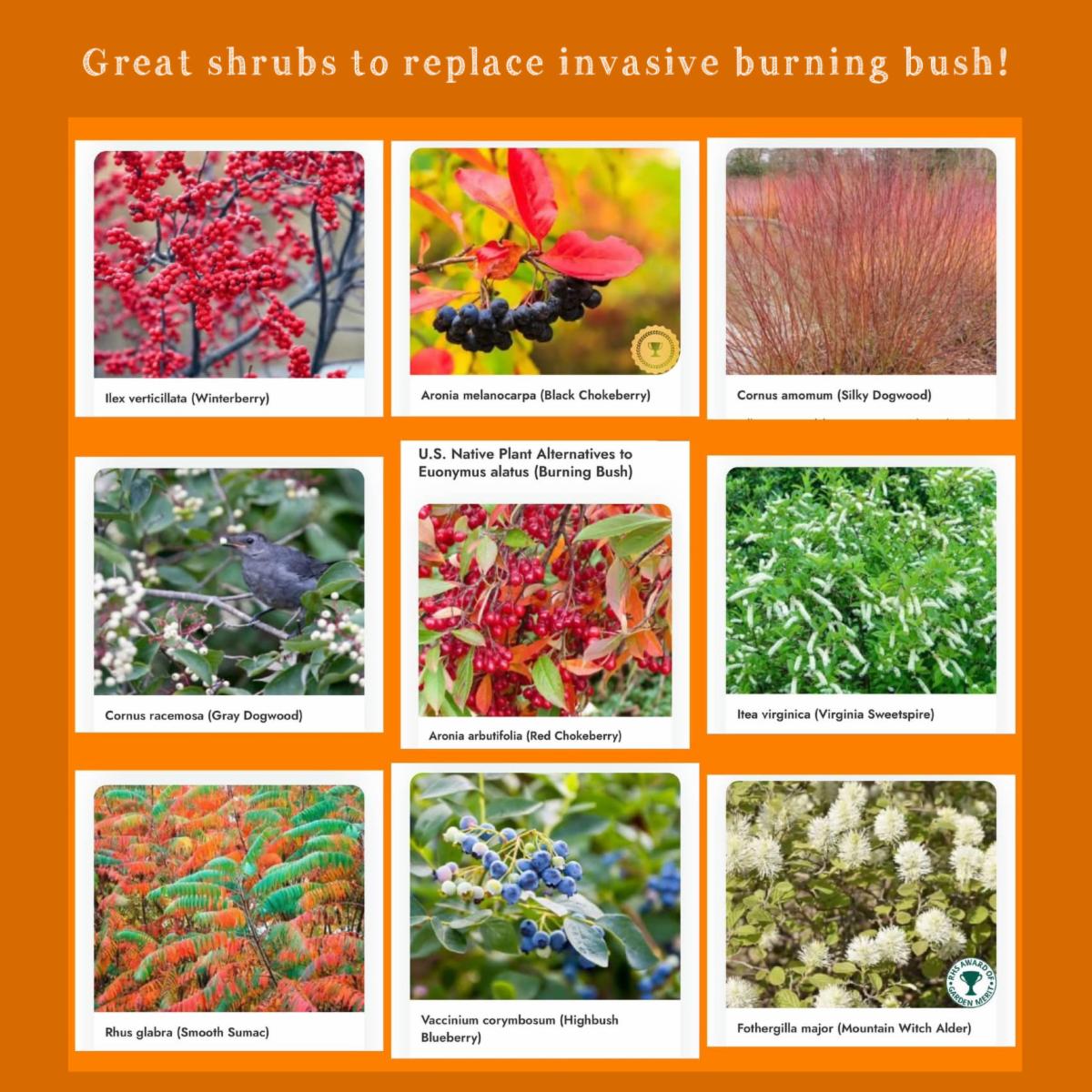
But it doesn’t have to be this way! There are so many fiery alternatives that will embolden your fall landscape while also benefitting instead of disrupting the local environment. And, lucky for all of you, many of these wonderful alternatives are on our shelves right now and while they last you can even save 25% off. Win - Win!
| | |
This Autumn, Don't Blow Away All the Life You Just Planted!
Did you know that the availability of nesting and overwintering habitat is one of the most important factors influencing populations of native bees and other beneficial insects. Yet, traditional landscaping practices rarely leave enough natural resources to support pollinators and other wildlife. Click HERE to download the Xerces Wintertime Habitat Guide to learn more. We also encourage you to pause and consider before throwing yourself into fall clean- up or signing up to have your yard blown clean of life this fall. Explore the articles below for interesting perspectives on this important subject.
| | |
BIRDSONG INTERRUPTED
Nancy Lawson, Humane Gardener
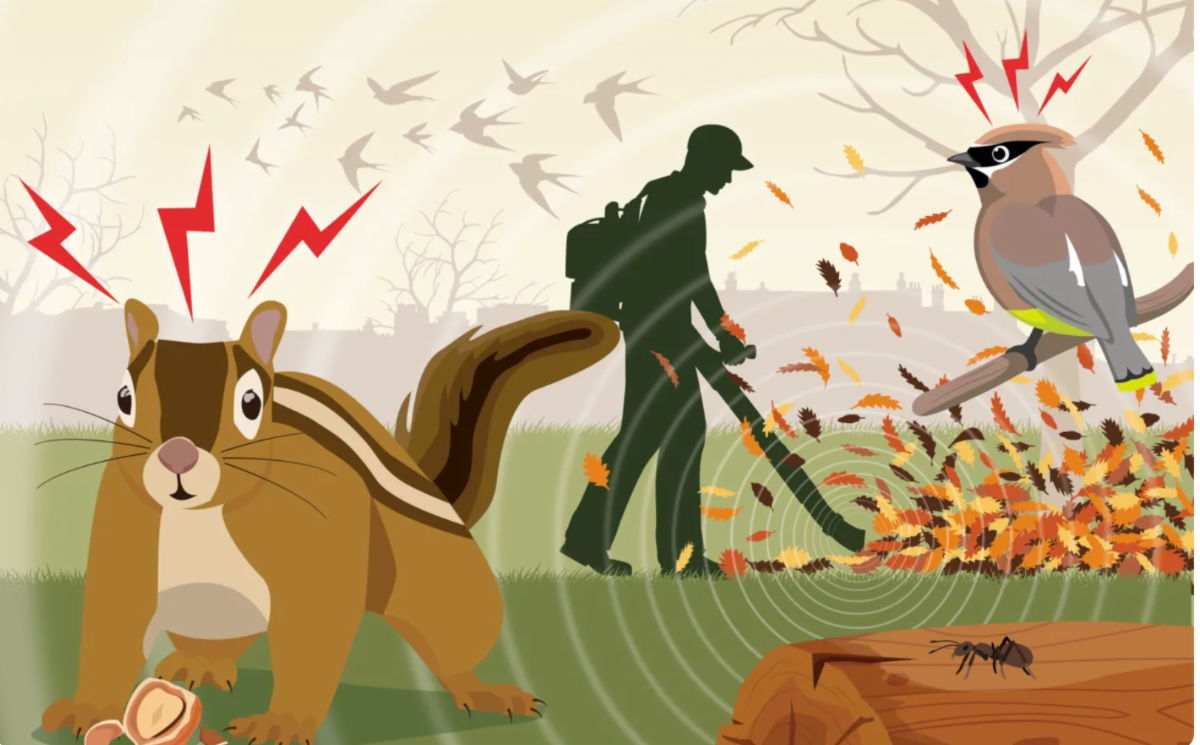
"...Much has been written about the effects of landscaping equipment on people and the environment. We know that gas-powered leaf blowers are not only deafeningly loud but inefficient, emitting far more pollutants than cars and trucks. We know they kick up clouds of mold, dust, pollen, feces and other contaminants in blasts of up to 200 miles per hour. And we know that this puts operators and others at risk of hearing loss, asthma, lung disease, cardiovascular disease and stress—all reasons that close to 200 municipalities across the U.S. and Canada have restricted or banned these antiquated machines. Adding insult to injury, leaf blowers drown out a proven natural benefit to our mental health: birdsong.
How do they affect the rest of the animal kingdom, those creatures who can’t put on noise-cancelling headphones or escape indoors? For wildlife, the consequences of leaf blowing are devastating: the obliteration of critical understory where birds, frogs, fireflies, bees, caterpillars and chipmunks forage, nest and overwinter. Less considered are impacts of the noise itself. What happens when landscaping conglomerates send crews into a neighborhood with two-stroke engines strapped to their backs, imposing a sound that can be as loud as a jet plane taking flight?
CLICK HERE TO READ THE FULL ARTICLE
| |  | |
FALLEN LEAVES ARE EVERYTHING
Nancy Lawson, Humane Gardener
"There’s not much sadder to me than walking into a home that’s festooned with garlands of plastic leaves inside but surrounded on the outside by over-mown, overblown lawn. Faux-nature decorations—including stacked straw bales, pumpkins that no one will ever eat, and polyester leaves stamped out in a factory—are on full display at the entrance to my mom’s apartment building this week, even while outdoor crews wield anti-nature weaponry to vacuum all the real leaves away.
In an age of nearly ubiquitous destruction, this particular sign of a culture of misplaced priorities punches me in the gut more than most other harmful landscaping practices. I don’t begrudge people for taking joy in the colors and shapes of leaves and the memories they invoke: childhood hay rides, steaming cups of hot chocolate, walks home from school in the chilled autumn air, and, if your parents were accommodating, a chance to jump into the newly raked piles.
But if the sight of those fake leaves invokes nostalgia in others for what once was (or a longing for what they wish had been), then the sight of a leafless outdoors makes my heart ache for the present—for the animals who can no longer find the fallen leaves they need for food, nesting, cover, camouflage, and winter hibernation.
CLICK HERE TO READ THE FULL ARTICLE
| | |
From Our Blog - Embrace the Autumn Decay!
As the nights grow cooler and daylight hours diminish, we transition into a quieter period for our gardens. However, life continues to thrive even if it’s not as visible. If you’ve joined many others across the Bay State in creating a garden habitat for pollinators, you might be curious about their whereabouts now and how they will cope with the approaching colder months. Some, like hummingbirds and monarch butterflies, are starting or even completing their long journeys south, while many others will remain right where they spent the summer—tucked away in your yard. This is why slogans like #LeavetheLeaves and #SavetheStems represent more than just hashtags; they are essential to gardening in harmony with nature.
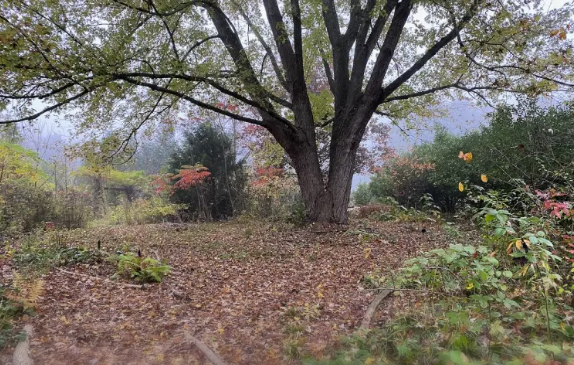
Essential wintertime habitat is easy and inexpensive to create. Fallen leaves, wildflower stems, branches and logs, bare dirt, and areas under rocks all offer vital habitat. Swallowtail butterflies, Luna moths, bumblebees, and fireflies alike hunker down in leaf litter for a long winter rest. They are joined by other creatures like spring peepers, wood frogs and a plethora of beetles and other insects that songbirds will delight in finding buried in leaves on a sunny late autumn day.
The urge to protect plummeting pollinator and songbird populations should be reason enough to rethink fall garden practices, but there are more. Research shows that leaves act as a significant carbon sink, in fact a recent study conducted at the University of Maryland showed sites where fallen leaves have been left hold 32% more carbon than spaces where leaves are removed. Fallen leaves are also nature’s magic fertilizer and the best mulch you’ll ever find. As leaves decompose, they enrich the soil and the extra layer of leaf mulch provides insulation throughout the winter and weed suppression come spring.
Leaving the leaves doesn’t mean you need to leave them everywhere, and they don’t need to be left exactly where they fall. For the sake of safety and aesthetics, rake or sweep leaves off driveways, walkways and other hard surfaces and put them right into garden areas. And always be sure that storm drains are kept free of fallen leaves. And do keep in mind that heavy piles of leaves on turf grass will indeed kill the lawn. This is not necessarily a bad thing! Lawn has limited ecological value and a heavy environmental toll. Many areas of lawn could be repurposed for better uses like a shade tree, rain garden, pollinator meadow, food forest, or native hedgerow. But for turf areas you need to keep, rake away all but a thin layer of leaves from the grass while concentrating leaves around tree rings and in gardens. If you find that you have too many leaves for your garden areas, it is a clear sign that you have too much grass and too few gardens! The upcoming quieter months are a perfect time to make a plan to change that next season! You can even grab some plants right now - save a few dollars - and get a head start on that Less Lawn - More Life challenge!
Click Here to Read the Post on Our Blog
| | | |
New to Our Mailing List?
Thanks for joining! If you'd like to take a look at some of our prior newsletters and the resources provided you can view them on our website.
READ PRIOR NEWSLETTERS HERE
We rely nearly entirely on word of mouth to grow our business and achieve our goals of getting more native plants into the ground in our region. Know someone who would enjoy reading our news? Share this message using the buttons below.
| |
Be Sure to Look for Our Eco-Friendly Garden Articles in East Bay Life
Last spring we began writing the garden column for East Bay Media's "East Bay Life" publication. We hope you have been enjoying the columns. If you missed any, you can read them at the link below.
CLICK HERE TO READ OUR COLUMNS IN EAST BAY LIFE
| | | | |
Prickly Ed's Cactus Patch
6 Barneyville Road,
Barrington, RI 02806-2715
(401) 248-4785
Please note, use the address above for mailing or for GPS but the Plant Farm Stand/Native Plant Emporium is located in Swansea, MA directly next door to the address listed above. Just look for the flurry of activity and the driveway to the big red barn.
| | We are on a mission to bring life back to the area one yard at a time. You can read all about us on our website, including the story of where the name Prickly Ed's Cactus Patch came from. | | | | |