|
We are pleased to bring you the latest edition of Sole Source!
It’s been a busy spring and summer. USFMA successfully advocated for key legislative provisions to help bolster industry growth, engaged with military leaders looking to plug gaps in critical domestic supply chains for textiles, and saw another major expansion of our membership ranks.
“Our growing coalition of manufacturers, suppliers, and research universities – and record of shaping a friendlier policy and trade environment – demonstrates that our industry is making huge strides,” said Executive Director Bill McCann. “Made in the USA’ is a new reality, not a pipe dream. But we have more work to do.”
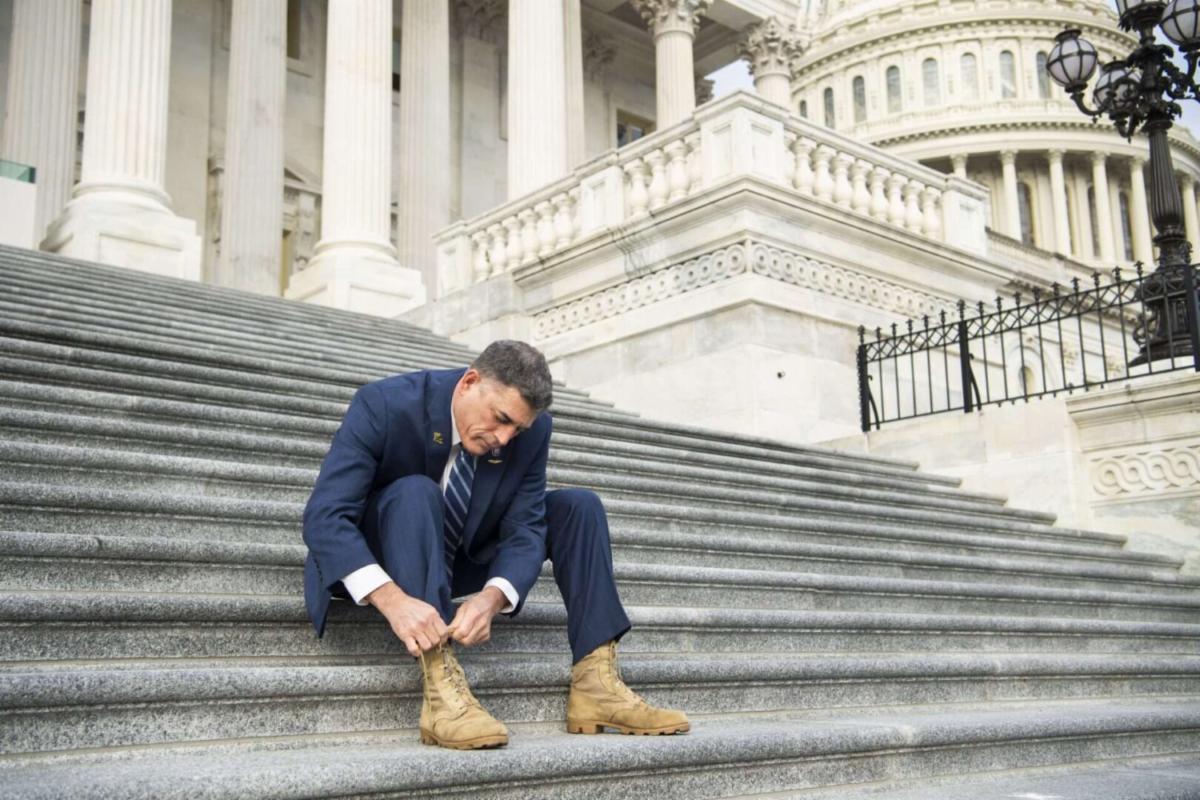
Fall meeting update: Just around the corner is our Fall Meeting, which will be hosted by Thorogood in central Wisconsin on October 29 and 30. You don't want to miss the facility tours and strategy sessions to plot the next phase of our Washington strategy, including our continued push for the bipartisan BOOTS Act to ensure the armed forces are wearing Berry Amendment-compliant combat boots.
Formore information about the Fall Meeting contact: Karlee Popken at karlee@strategicmi.com.
We will be joined by an increasingly vibrant coalition of footwear manufacturers and suppliers that have come aboard in recent months, including a raft of new members:
| | |
American & Efird, a leading manufacturer and distributor of industrial and consumer sewing thread that operates over two-dozen manufacturing facilities worldwide, including four in North Carolina, and has more than 10,000 employees.
“There continues to be challenges to companies manufacturing in the U.S.,” said Mark Hatton, the company’s Managing Director for the Americas. “We would like to see our domestic manufacturing base grow and are ready to meet this new demand head on. And we also want to help other domestic footwear producers and suppliers to survive and thrive.”
“Military footwear is an extremely important market for us,” he added. “For that reason, we are quite obviously very bullish on U.S. manufacturing.”
| | |
Emtexglobal, a leader in engineered fabrics, supplies domestic manufacturers with a broad range of footwear components and materials, from mesh, lace, and waterproof lining to synthetic and genuine leather for uppers, footbeds, foams, collars, and more.
The company is eager to play a larger role in outfitting the U.S. military with domestically produced combat boots with its series of laminated fabric packages that it supplies to U.S. manufacturers of military footwear – and help to close the loophole that allows our troops to rely on millions of pairs of foreign imports.
“This is a market that could be more open to U.S. manufacturers,” said Daniel White, Emtexglobal's vice president for global sales. “We have the capacity to do upwards of 10 to 20 times of what we’re doing. Passage of the BOOTS Act will open opportunities for more factories here at home and tap into a supply chain that is built to handle much more than the domestic industry is currently giving it.”
| |
McRae Footwear has been a go-to for durable, comfortable, mission-ready footwear for our men and women in uniform for more than half a century and remains a leading maker of high-quality Berry Amendment compliant military combat boots.
“Maintaining a strong domestic footwear manufacturing capacity is essential to national security and military readiness,” said Donnie Dyer, President of McRae Footwear. “Our membership in USFMA allows us to work closely with industry partners to ensure the United States military can rely on a secure, dependable, and American-based footwear supply chain.”
| | |
Rocky Brands, Inc. is a powerhouse footwear leader that now includes signature brands like Rocky, The Original Muck Boot Company, XTRATUF, Durango Boots, and Georgia Boot, and has distribution centers in Ohio and Nevada and a manufacturing center in Puerto Rico.
“Rocky Brands is eager to play an even greater role in rejuvenating the American footwear industry, including when it comes to outfitting the armed forces with Berry Amendment-compliant combat boots,” said Rocky Brands CEO Jason Brooks. “By joining USFMA we are making clear that we have the industry leading products, the capacity, and the determination to recharge American footwear production and the good-paying jobs that come with it.”
“We do a meaningful amount of business for the military, including direct sales of Berry compliant footwear and boots that are available for purchase in military exchanges,” added Tom Robertson, Rocky Brands COO. “We have meaningful capacity already, and we can ramp this up with the right demand signal. Being part of USFMA helps us drive the message to Congress that there is more domestic capacity to meet the footwear needs of our troops with high-quality footwear that is made in America, with American labor.”
| | |
Ward & Kennedy has been supplying major brands with adhesives, abrasives, plastics, pre-cut and skived box toes, counters, insole board, and foam since 1928 and is expanding its footwear focus, including by supporting fellow USFMA members such as Hope Global and Bixby.
“I had no idea that not all the boots our soldiers are wearing are made in the United States,” said Jason Billeb, President and Owner of Ward & Kennedy. “I wanted to be involved in USFMA because I think it's super important that our troops are wearing American-made footwear.”
Billeb also countered the myth that the domestic industry lacks sufficient capacity to compete with foreign boot makers if given a sufficient demand signal. “If the argument is that we don't have the capacity in this country to make this footwear, I say rely on us,” he said. “We can die-cut and skive parts and supply them to footwear manufacturers if they are reaching their capacity to furnish these components to produce their products. We have recently added high speed cutting equipment to increase our capacity. We are ready.”
| | |
YKK Americas is a global leader in fastening solutions that recently entered the boot market with the acquisition of Collt’s Manufacturing with a range of “boot hardware,” such as metal eyelets, zippers, speed loops, and buckles. Its customers already include Belleville Boot Co., McRae Footwear, Danner, and Rocky Boots.
“Boots are a new industry for us,” said Phillip Robider, YKK Americas’ head of sales for government and safety. “We have invested a lot to help make sure the warfighters have what they need.”
He added: “I’ve talked to every boot manufacturer out there that has military contracts. Every single one has expressed concern about the capacity of their current suppliers. We are at one-third capacity. By adding another shift or more equipment, we’ll be ready to meet their needs.”
| | |
WINNING STRIDE: Our coalition building efforts on Capitol Hill are paying more dividends. The Senate version of the FY27 National Defense Authorization Act (NDAA) includes several provisions that will help lift our industry and build more momentum for domestic manufacturers. They include:
- Requiring that optional boots sold at military exchanges meet a formal quality assurance program to ensure durability, quality, and compliance with uniform standards.
- Establishing a pilot program to subsidize the purchase of Berry Amendment-compliant boots for servicemembers, incentivizing demand for domestically produced footwear.
- Directing the Pentagon to conduct a comprehensive assessment of the textile and footwear industrial base, including supply chain capacity, surge capability, and barriers to domestic production.
- Mandating the department establish a new oversight body — with reps from each military branch, the Defense Logistics Agency, and the Office of Industrial Base Policy – to map the textile industrial base and identify resiliency needs. By January 2028, the team must launch a competitive pilot program to revitalize domestic textile supply chains, supporting surge capacity, modernization, qualification of alternate suppliers, and expanded competition.
- Authorizing $50 million for a Textile Manufacturing Program
BOOTS Act: The Senate version of the NDAA also includes key elements of the BOOTS Act.
It requires the Secretary of Defense to issue regulations within three years prohibiting service members who join after the regulations are issued from wearing optional combat boots with a required uniform unless the boots are entirely manufactured in the United States using U.S.-produced materials and components.
The provision allows a waiver for service members with an authorized medical justification and exempts deployed service members in combat arms military occupational specialties. The section defines “optional combat boots” as boots not furnished by DoD and “required uniform” as a uniform a service member is required to wear.
Once the Senate completes consideration of the bill, the House and Senate will need to reconcile differences between their respective versions before a final NDAA can be sent to the President.
Full court press: USFMA continues to work closely with our congressional partners to ensure that provisions supporting the domestic footwear industry and strengthening the U.S. footwear industrial base are included in the final legislation.
Thanks to all of the USFMA member companies that participated in our recent outreach to the Senate in support of advancing the FY27 NDAA. In total, USFMA members sent 43 letters from 22 companies to Senate offices, demonstrating the strong and unified voice of the domestic footwear industry.
We greatly appreciate our members taking the time to engage with their senators and reinforce the importance of supporting the U.S. footwear industrial base throughout the NDAA process.
DIGGING IN: We are also continuing to press for passage of the BOOTS Act to close the loophole in the Berry Amendment that allows troops to purchase foreign-made boots, including from potential adversaries that are undermining domestic supply chains. And that also means stepping up our public messaging.
“American factories and American workers can manufacture every combat boot currently available to U.S. servicemembers—and they are ready to do so. We need to do a better job making that case to Congress and to the military, and we will,” McCann recently told Sourcing Journal.
He explained that many domestic footwear companies can't compete for this critical piece of the military footwear market, “not because American manufacturers lack the capability or capacity, but because overseas production costs a fraction of what it costs to make the same boot in the United States.”
“That is a business decision driven by profit margins—and it is hollowing out the Berry Amendment,” he said. “A law designed to protect American manufacturing has little meaning when the majority of boots purchased by servicemembers are imported.”
Thought leadership: McCann also pressed the BOOTS Act message in an op-ed in Real Clear Defense, titled “No More Foreign Boots for Our Troops.”
Stay engaged in the BOOTS Act debate here and here.
| | |
‘A PRIMARY CONCERN’: USFMA and some of its members attended a virtual industry day in July hosted by the Department of War’s industrial base policy arm to inform its ongoing analysis of vulnerabilities in the clothing and textile supply chain and to identify investment and other mechanisms that are available to help plug them.
According to the industrial base office, “DoW aims to assess and improve the resilience of the domestic textile and footwear supply chains to meet surge and contingency needs.”
Last year, USFMA successfully advocated for a provision in the FY26 NDAA requiring the department to conduct a detailed assessment of the footwear industrial base.
The task was to “identify weaknesses, analyze the ability of the industrial base to meet current and surge requirements, highlight regulations or processes impeding supply chain resilience, and ascertain opportunities for additional investments to increase production capacity and reduce foreign reliance.”
“A primary concern is the identification of any strategic foreign material dependencies,” according to the July presentation, including “footwear midstream constraints (Soles, Components, etc.).”
Read the government’s presentation.
| | |
‘CAREFULLY CALIBRATED’: USFMA continues to marshal our deep industry experience to shape trade policy to ensure it strengthens the domestic footwear industrial base.
In April, under the leadership of USFMA Policy Director Karlee Popken, we submitted comments to the United States Trade Representative (USTR) on the Section 301 trade investigation that is underway on the "Acts, Policies, and Practices of Certain Economies Relating to Structural Excess Capacity and Production in Manufacturing Sectors."
USFMA's submission:
- Highlighted the economic and national security importance of the domestic footwear industry, including its role in supporting Berry Amendment-compliant military footwear and a broader U.S.-based manufacturing supply chain.
- Emphasized that excess capacity is impacting not only finished footwear, but also critical upstream inputs and materials, contributing to long-term erosion of domestic manufacturing capabilities.
- Supported targeted and strategic use of Section 301 enforcement tools, including maintaining pressure on finished goods while avoiding unintended cost increases on U.S. manufacturers.
- Urged USTR to exclude critical inputs and manufacturing equipment not available domestically from additional tariffs to ensure continued investment and modernization of U.S. production.
- Called for stronger enforcement mechanisms to address tariff circumvention, including transshipment and third-country processing using Chinese inputs.
- Recommended advancing a comprehensive trade strategy, including high-standard free trade agreements in the Western Hemisphere, to strengthen resilient, market-based supply chains.
- Encouraged policies that support domestic investment, including access to advanced manufacturing equipment, workforce development, and alignment between trade enforcement and industrial policy.
Said Popken: “Overall, USFMA underscored that while Section 301 enforcement is necessary to address unfair trade practices, it must be carefully calibrated to strengthen—not inadvertently hinder—domestic manufacturing.”
More agenda setting: USFMA also recently submitted comments to the USTR regarding the Administration’s consideration of a reciprocal managed trade framework with China.
USFMA emphasized that the domestic footwear industry remains one of the nation’s most import-sensitive manufacturing sectors and urged USTR to exclude finished footwear from any tariff reductions or expanded market-access commitments with China.
USFMA highlighted the significant investments domestic manufacturers have made over the past decade to expand facilities, add production lines, adopt advanced manufacturing technologies and automation, modernize equipment, and create American manufacturing jobs. The comments stress that these gains remain fragile and could be undermined by renewed competition from heavily subsidized Chinese producers.
The comments also underscore the national security importance of maintaining a strong domestic footwear industrial base. U.S. manufacturers produce Berry Amendment-compliant footwear for the military and maintain the skilled workforce, supplier network, and production capacity needed during military mobilizations and major supply chain disruptions.
USFMA urged the administration to:
- Recognize footwear as an import-sensitive sector that should remain subject to appropriate trade protections.
- Exclude finished footwear from tariff reductions or market-opening commitments with China.
- Continue targeted trade enforcement addressing China's subsidies, excess manufacturing capacity, state-directed industrial policies, and other market distortions.
- Support continued investment in U.S. manufacturing, workforce development, and supply chain resilience.
- Consider the effects of tariff changes on domestic manufacturing capacity, employment, national security, and long-term industrial competitiveness—not only consumer prices.
- Promote trade policies that encourage high labor and environmental standards.
USFMA will continue engaging with USTR and the Administration to advocate for trade policies that strengthen U.S. footwear manufacturing, protect critical domestic production capabilities, and support American workers and resilient supply chains.
| | |
‘VALUE CHAIN’: USFMA member DESMA is preparing to host the footwear industry's largest exhibition of molding machines, automated solutions, and other cutting-edge production and design technology at its House Fair, to be held September 22-23 in Achim, Germany.
The event is anticipated to showcase more than 50 exhibitors and draw more than 800 attendees, according to Marco Schaefer, DESMA U.S. regional sales manager.
What’s in store: A key focus, he said, will be "the growing trend toward lightweight solutions in footwear manufacturing," including live demos of the production of lightweight soles using the Direct Injection Process (DIP). Demos will also showcase innovative foamed sole materials such as polyurethane (PU), thermoplastics, and Super Critical Foam (SCF).
"These advanced technologies allow for the creation of soles with significantly reduced density while maintaining excellent performance characteristics," Schaefer said. "Visitors will have the opportunity to explore the entire value chain of lightweight shoe production—from design and mold development to efficient series manufacturing—gaining comprehensive insights into state-of-the-art processes and solutions."
Find out more here.
Or contact housefair@desma.de or m.schaefer@desma.de.
| | Have company news to share? Want to flag an upcoming event or milestone? We want to hear from you. Please email Bryan Bender at bender@strategicmi.com. | | | | |