|
Field notes are spaces to collect observations from the natural world. They often include artistic sketches or written descriptions of particular phenomena, along with reflective questions or ideas about the meaning of what's been observed, possible implications, and directions for further inquiry.
Garrett’s Center for Ecological Regeneration (CER) publishes quarterly notes from the field to support our mission to spread ecological theological understandings, earth-based religious practices, and cooperative solidarities for the healing of creation and the just flourishing of all.
In this summer issue, we're excited to share about the launch of the Midwest Bioregional Hub and our hire of Dr. geran lorraine as the center’s new Associate Director, along with additional updates from this past year and a word from our Director.
| | |
We are launching the Midwest
Bioregional Hub
| | |
More about the Hub
The Midwest Bioregional Hub is eager to partner with 12 congregations in our region to foster healing for the land and justice in our communities through a 3-year process of theological formation, spiritual discernment, and practical collaboration. We believe that the thriving of congregations and communities and the creation are interconnected. Through the Hub, we’re seeking to work with and equip churches interested in developing congregational and community ministries of ecological and social healing. The Hub is supported with funds from the Lily Endowment's Thriving Congregations Initiative Grant.
Click on the link below to learn more about this opportunity and to let us know if
you’d like your congregation to be considered!
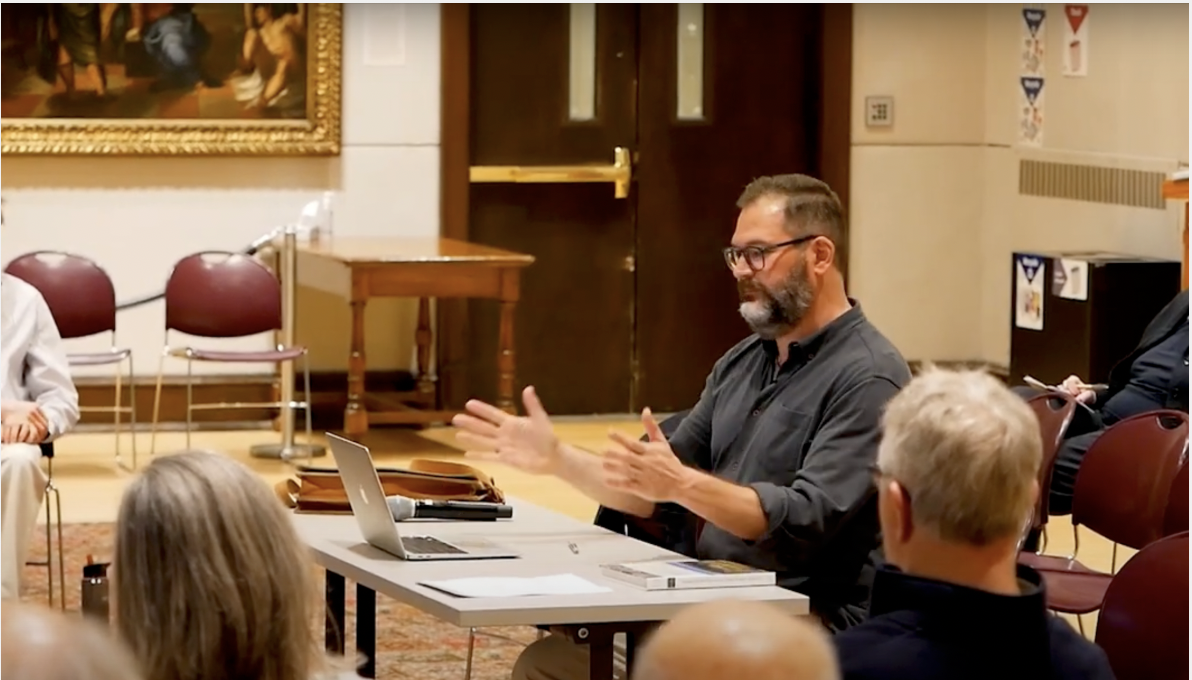
| | Hennepin Avenue UMC Partnership | | Over this past year, the CER partnered with Hennepin Avenue United Methodist Church in downtown Minneapolis, MN, to offer a 30-week class on Hope for Creation in a Climate-Changed World. The class, led by center director Timothy Eberhart, averaged between 25-35 members and engaged scientific, theological, spiritual, and practical resources as part of a yearlong discernment to craft a hopeful congregational vision for regenerative mission and ministry in the years ahead. We’ll look forward to sharing more about the fruits of the partnership, which are already blooming in many exciting directions, in the coming issues of Field Notes. | |
Meet the CER Team
We've hired an Associate Director!
|
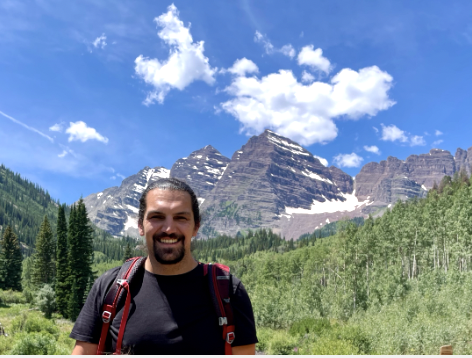
dr. geran j.
lorraine
(he/they)
Associate Director of the Center for Ecological Regeneration
I am a scholar-activist whose research draws on Indigenous, Ecological, Womanist, Black Feminist, Linguistic, and Queer thought while engaging in grassroots movements like Occupy, Freedom to Marry, Black Lives Matter, Standing Rock, Line 3, Climate Strikes, and the Poor People’s campaign. I am also a co-founder of a gender-affirming care voice clinic and a nonprofit affordable community school.
As the CER Associate Director, my goal is to help realize the center’s mission toward the just-healing of wounded socio-ecological relationships. I am excited to join the work of the Center for Ecological Regeneration as we seek to continue and build upon the intersectional efforts needed to repair social and ecological injustices. I look forward to engaging constellations of collaborators, allies, knowledge-seekers, and co-conspirators as we strive toward regenerative possibilities that enable us all to flourish.
Rev. Derrick Weston, the Theological Education and Training Coordinator for Creation Justice Ministries as well as the host of The Green Lectionary and Food and Faith podcast, recently joined Dr. Lorraine for a conversation about food, faith, the environment, and Hot Cheetos as a part of Garrett’s Shaking Up The Syllabus series.
| |
Garam Han
(she/her)
A PhD candidate in Christian Education and Congregational Studies at Garrett and CER Assistant
The focus of my research is on understanding eco-pedagogy and eco-spirituality among Korean Protestant women, drawing from the 19th-century Korean cultural-religious tradition of Donghak. I believe that engaging in eco-pedagogical and eco-spiritual practices can help individuals build communal solidarity and establish an eco-community that provides a nurturing space for healing and growth.
Working as an assistant in CER has been a valuable experience as I've expanded my ecological understanding through cross-cultural, local, and urban dialogues and practices with diverse environmental scholars. I hope that CER continues to be an open space for a wider range of ecological beings, and I would like to see and contribute to the practical side of ecological (physical and spiritual) dialogues integrated into our daily lives.
| |
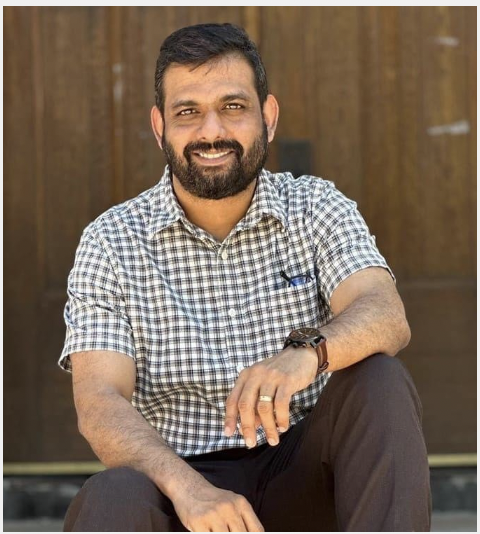
Praveen Raj
(he/him)
A PhD student and sustainGETS Student Leader
I am from Kerala, India. My roots are embedded in a land of colonial imprints. During the eighteenth and nineteenth centuries, my ancestors in South Travancore, Kerala, in India, traditionally called Shaanars, now known as Nadars, endured a cruel caste system. This was because Shaanars were positioned low in the caste hierarchy that existed in South Travancore. They were forced to work as enslaved people in the estates of high-caste feudal landowners. My forefathers and mothers did not even have the right to wear upper clothing. My ancestors' traditional occupations were palmyra climbing, jaggery making, and toddy tapping. The Shaanars' animist religious practices and their daily struggles for existence were related to planet Earth.
I realized that my ancestors' lifestyle and religious practices are the potential resources to combat current ecological challenges. So, my further research seeks to recover an earth-centered spirituality, an account that the dominant force of Eurocentric Christianity has obscured. I shall explore a pluralistic manner of liturgical elements from ethnocultural minority cultures to which my anacestral root belongs.
Further, the CER supports my mission to reclaim the Indigenous spirituality of my ancestors that was suppressed by Eurocentric Christianity by advancing regenerative eco-theological understandings and earth-based religious practices.
| |
Rev. Dr. Timothy
R. Eberhart
(he/him)
Robert and Marilyn Degler McClean Chair in Ecological Theology and Practice and Director of the Center for Ecological Regeneration.
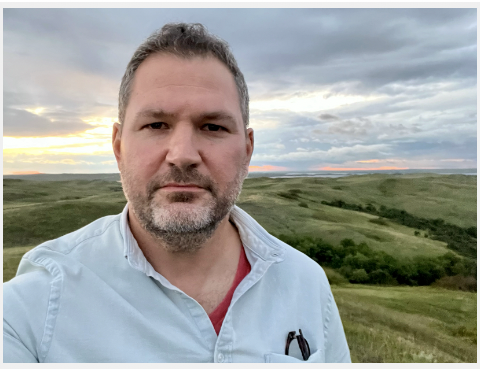
I grew up in South Dakota and am an ordained elder in the Dakotas Conference of The United Methodist Church. I earned a bachelor of arts in religion from St. Olaf College, a master of divinity degree from Vanderbilt Divinity School, and a doctor of philosophy from the Graduate School at Vanderbilt University. I have led numerous environmental initiatives at the seminary, including the Seminary Stewardship Alliance and the Green Seminary Initiative certification as a Green Seminary. In Chicagoland and beyond, I've participated on the ground in movements including Occupy Wall Street, Black Lives Matter, Standing Rock, and Fridays for Future Climate Strikes.
The Center for Ecological Regeneration’s goal is to move forward, not with answers, but with questions. What could we do together that none of us could do alone? What would it look like for us to dream and discern together around the future of our bioregion? How might we join together in deep, regenerative solidarity—solidarity with one another and solidarity with the land? So, let’s start imagining. Today, tomorrow, in the coming months and years.
Let’s dream together.
| |
sustainGETS and Field Education Community’s Worship
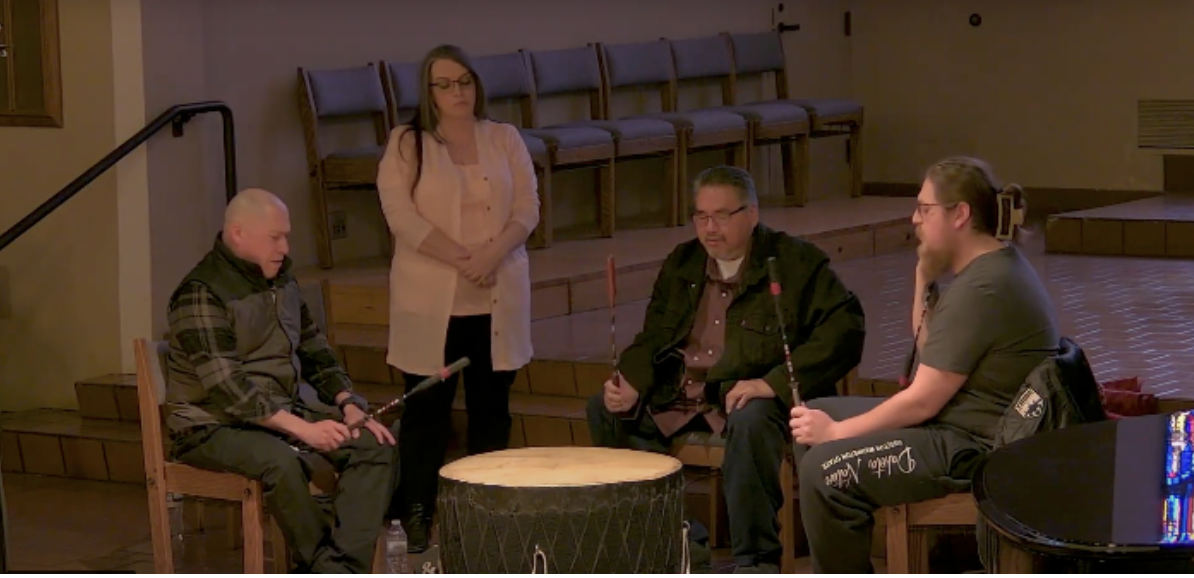
This April, sustainGETS and Field Education put together a community worship. Shaped by Native North American Indigenous Christian experience and planned by citizens of the Choctaw and Cherokee Nations. The prayers and liturgy came from UMC Native American resources and the community was welcomed to an Indigenized expression of Christian worship.
| |
Opening Prayer from the Service Written by Ray Buckley
(1999)
Creator God, here, in this place, You have chosen to be with us. We turn to the east, where the morning sun awaits us, and Your light is there. We turn to the south, from which warm winds blow, and Your spirit warms us. We turn to the west, the place of the unknown, and Your certainty awaits us. We turn to the north, the place of wisdom, and find Your wisdom is already here. Around, before, and behind us, Your presence is here. We open our arms and our hearts so that You may come inside. See that we
are a good place for You to live. See that we are Your children, and you are
our God. Live in us.
Amen
| | | | Recently graduated Choctaw student and previous sustainGETS student leader Jessica Hopkins was one of the organizers of the community worship. She was recently interviewed by Garrett where she said “In order for healing to be fully embodied, it must include the rest of creation. We must equally confront the extractive industry, corporate slaughterhouses, the fishing industry—all of it is deep injustice because the Creator’s Spirit appears in each animal that is slaughtered, every fish losing its home | |
|
Certificate in Ecological Regeneration | | |
This 15-credit-hour certificate will allow you to take graduate courses in ecological theology, environmental ethics, and practical eco-theology to equip you for environmental ministries in diverse contexts for the sake of ecological healing and justice.
The certificate complements the variety of ecological-focused programming options at Garrett, including the ecological regeneration concentration within the Master of Arts in Public Ministry and Master of Divinity degree programs, and the recently launched Center for Ecological Regeneration.
| | | | |
A Note from the Director
This is a generative time for the center. Just over two years after the CER’s launch in April 2022, having been awarded a $1.25 million dollar Thriving Congregations Initiative grant from the Lilly Endowment this past December, we’re preparing to launch a Midwest Bioregional Hub to partner with 12 congregations committed to fostering the wellbeing of the human and more-than-human communities of our shared region. This work will build upon the CER’s support of Garrett’s Indigenous Study Committee and our partnership with Hennepin Avenue United Methodist Church in Minneapolis, MN, while allowing us to deepen our relationship with a variety of missionally-aligned organizations and movements engaged in the just healing of the land. Through these partnerships and with the resources of the seminary, the Center will be offering a range of educational opportunities not just for our Hub congregations but for any individuals and communities seeking to join our mission to “spread regenerative eco-theological understandings, earth-based religious practices, and cooperative solidarities for the just healing of social and ecological relationships in the Midwest bioregion and beyond.”
I could not be more excited to have welcomed Dr. geran lorraine as our new Associate Director this spring. His academic expertise, moral vision, and “nitty-gritty” know-how are a perfect match for the CER, and our similar temperaments have enabled a seamless working relationship from the start. geran and I will be working closely this coming year with Garam Han, the CER Assistant, and Praveen Raj, the sustainGETS Student Leader, as part of a collaborative approach to fulfilling the center’s mission and vision. Praveen is following Jessica Hopkins, who graduated this spring with an MA in Public Ministry degree and concentration in Ecological Regeneration. She, Praveen, and Garam are part of a growing cohort of current students and alumni in our certificate, masters, and doctoral programs whose scholarship and leadership in ministry are creatively focused on the just flourishing of all people and creation.
Brilliant and passionate students. Ecotheological rigor and depth. Institutional and financial health. Collective impact through congregational, academic, and movemental collaborations. This is a generative and exciting time for the center. And we’re just getting started.
|
Upcoming Events
How do we engage with Independence Day
July 4th | 1 p.m. (EST) | Online
Can we possibly honor this holiday without deepening into the roots of the expressed values of independence, freedom, and happiness... which were very much inspired by the European settlers' indigenous neighbors?
Join us for this critical cross-cultural conversation about the origins of America and of democracy. We will get into some of what actually happened, some of the structures, governance and symbols, and collaboratively think about the implications and possibilities of re-narrating this important history to create better futures.
This gathering is divided into 3 rounds:
- The First Round: We start with initial storytelling from people in the Haudenosaunee Confederacy and a descendant of a signer of the Declaration of Independence.
- The Second Round: We hear from several respondents about the implications of these stories in their line of work.
- The Third Round: We open the conversation to you, participants willing to engage in dialogue with dignity.
| | | | |