|
|
|
CCCOE WISP Mental Wellness
Newsletter
| | |
|
Welcome Back to our Mental Health School-Based Collaborative Meetings
WISP presents School-Based Mental Health Collaborative meetings for the 2023-24 school year. This platform is open to school-based mental health providers, counselors, wellness staff, administrators, district leaders, and local community partners in the County to address the mental health
needs of our students.
Join us for our first meeting Thursday, September 13.
| | |
Suicide Prevention Awareness is Essential
The Why
Most youth experiencing mental health issues don't seek treatment. The leading barrier is the stigma associated with mental health. Misconceptions around mental health discourage individuals from seeking help, leading to a series of challenges, from feelings of guilt and shame to mistrust in professionals. Breaking this stigma is paramount, especially within schools. Encouraging professional help signifies courage and hope.
Further Reading Suggestions:
Mental Health America: The State of Mental Health in America - 2023 Report
CCCOE Wellness in Schools Program: What is Stigma?
| | |
|
Suicide Prevention Training:
Working Together to Save Lives
| |
A free training for administrators, educators, counselors, clinical staff and direct service providers from Districts, Sites and
County Office of Education.
Training will take place at Contra Costa Office of Education in Pleasant Hill on Wednesday, September 20, 2023
9am-12pm.
Additional dates will be added.
Register Here
| | |
Suicide Prevention
What We Can Do
Educating students about suicide prevention is pivotal. Such programs help to:
- Destigmatize mental health and encourage help seeking behaviors
- Equip students with emotional and coping skills.
- Enable staff to identify and assist at-risk students.
- Foster a supportive school environment.
Starting education early, even in elementary schools, can have long-lasting effects. Materials should be age-appropriate, culturally inclusive, and engaging.
Further Reading Suggestions
Family-Based Intervention Lowers Long-Term Suicide Risk in Youth
| |
Suicide Prevention Awareness:
Resources of the Month
| | |
|
The Wellness in Schools Program Mental Health Resources and Supports Hub
The Wellness in Schools Program has created a hub for Mental Health Resources and Supports. This hub is for students, staff, and families to find activities, curriculum, resources and toolkits related to mental health. Please be sure to explore the Resource Page.
Access the WISP Virtual Wellness Center Here
| | | |
|
Center for Disease Control and Prevention:
Suicide Prevention Resource for Action
CDC has developed the Suicide Prevention Resource for Action that provides best evidence for suicide prevention.
The prevention resource informs a comprehensive, multi-level, multi-sectoral approach within communities and states.
Access the Suicide Prevention Resource for Action Here
| |
|
988 Suicide & Crisis Lifeline
Dial 988 or 1-800-273-8255 for the 988 Suicide and Crisis Lifeline.
988 will route callers the 988 Suicide & Crisis Lifeline. When people call, text, or chat 988, they will be connected to trained counselors that are part of the existing Lifeline network. These trained counselors will listen, understand how their problems are affecting them, provide support, and connect them to resources if necessary.
988lifeline.org
| |  |
|
211.org
If you need assistance locating long-term mental health resources, talking through a problem, or exploring mental health treatment options, call 211 to speak to a live person who can help. 211 conversations are confidential, can be made anonymously, and are available in 180 languages upon request.
If you prefer to text, use web chat, or search for resources online, click her to find more ways to contact your local 211.
211.org
| | |
National Institute of Mental Health:
Suicide Prevention Resources
| | |
|
|
NIH Suicide Prevention Awareness
This resources provides information about suicide, including risk factors, symptoms, and warning signs, treatment options, therapies, and how to find help for yourself or others, and research about suicide and suicide prevention
Access the Guide Here
Esta página también está disponible
| |
|
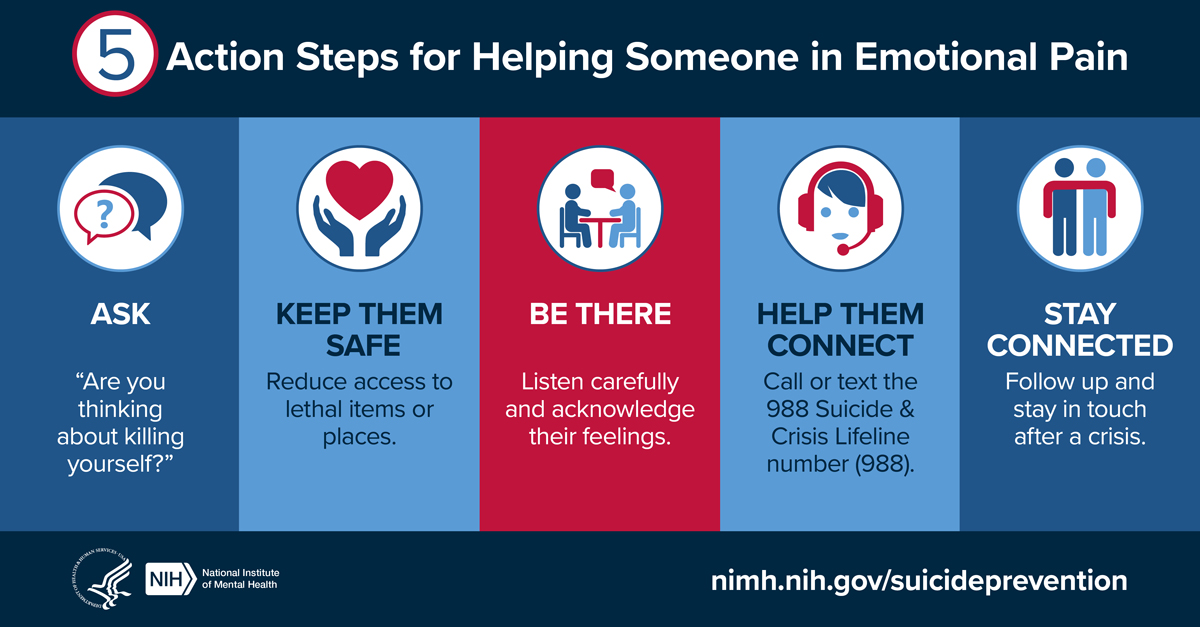
5 Action Steps for Helping Someone in Emotional Pain
How can you make a difference in suicide prevention? Learn about what to do if you think someone might be at risk for self-harm by reading these 5 Action Steps for Helping Someone in Emotional Pain
Review Action Steps Here
| | |
|
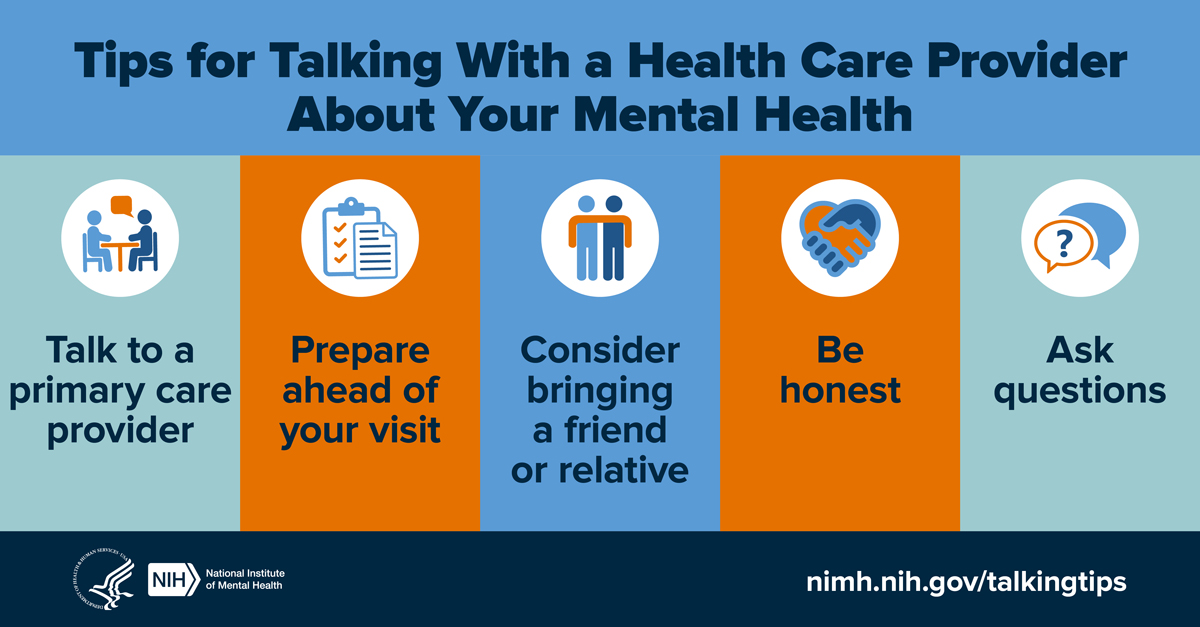
Tips for Talking with a Mental Care Provider about Your Mental Health
Don't wait for a health care provider to ask about your mental health. Start the conversation. Here are five tips to help prepare and guide you on talking to a health care provider about your mental health and getting the most out of your visit.
Access Tips here
| | |
Emotional Wellness Toolkit
Emotional Wellness is the ability to successfully handle life's stresses and adapt to change and difficult times. NIH Wellness Toolkits highlight evidence-based tips for living well and improving mental health.
Explore the NIH Emotional Wellness Toolkit Here
En español
| |
|
Mental Health Crisis Hotlines
You can always call 211 to speak to someone and find local assistance, but there are also dedicated helplines available to anyone in the U.S.
- Crisis Text Line: Text the word ‘Home’ to 741-741
- Teen Line: Call 1-800-852-8336; Text Teen to 839863
- The Trevor Lifeline for LGBTQ youth: Call 1-866-488-7386
- The Trans Lifeline: 1-877-565-8860
| |
Contra Costa Office of Education Toolkits | |
|
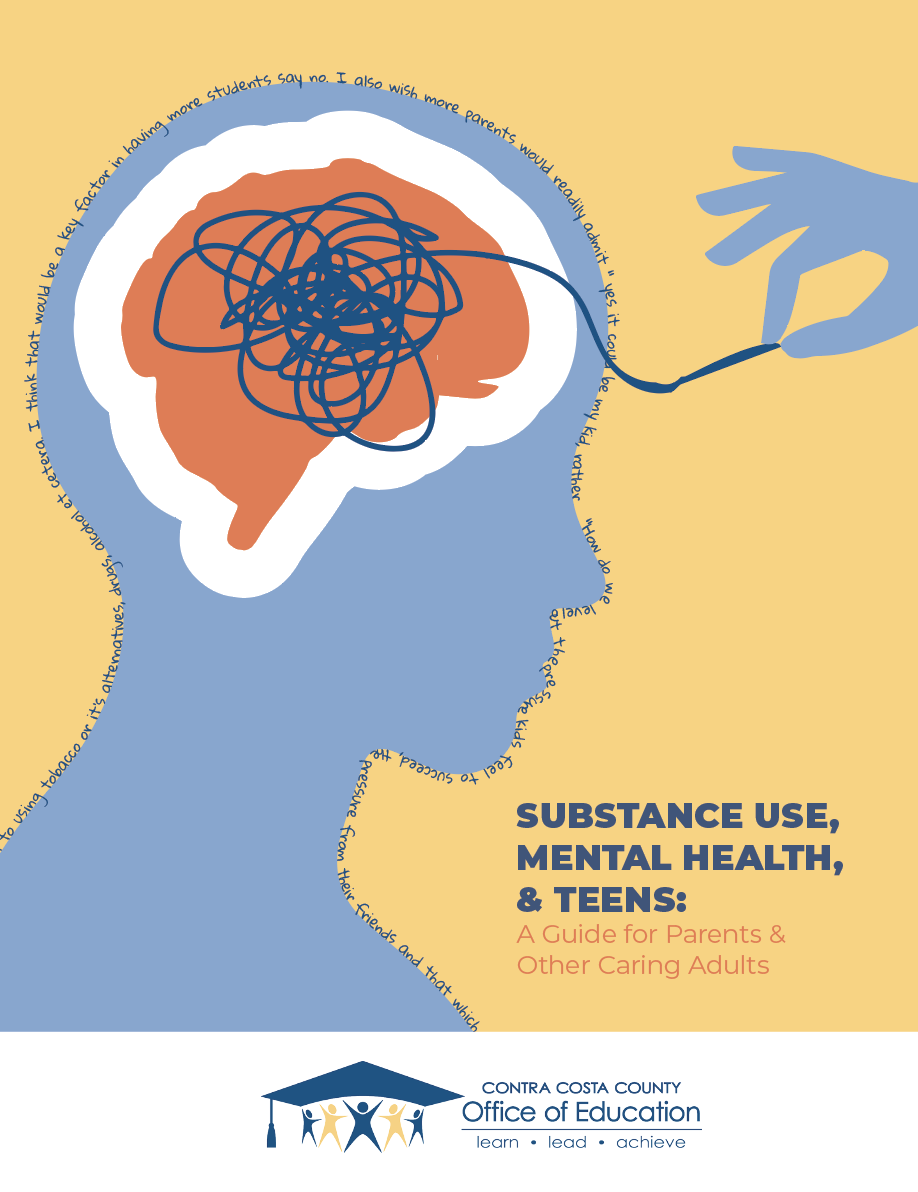
Substance Use, Mental Health & Teens
Our partners in the TUPE program have developed a new guide which includes local data on substance use among adolescents. The guide spotlights alcohol, tobacco, cannabis, and prescriptions drugs. It also provides information about adolescent brain development, mental health, and tips for supporting young people.
Access the Guide Here
| | |
|
Contra Costa Office of Education Suicide Policy and Protocol
The Contra Costa Office of Education Student Programs have developed a comprehensive Suicide Prevention and Intervention Policy and Protocol. These guidelines are designed for schools to help prevent suicide, assist students who are at risk of suicide, and intervene and respond appropriately in a suicide-related crisis. This guide can serve as a resource for other districts and agencies in their suicide prevention and intervention efforts.
Access the Suicide Policy and Protocol Here
| | |
Upcoming Wellness in Schools Program Events | | |
|
|
School Based Mental Health Collaborative: This collaborative is an opportunity to unite school based mental health providers, counselors, wellness staff, administrators, district leaders, and local community partners. This is a key venue for capacity building and establishing linkages between school districts and a variety of mental health supports in Contra Costa.
Registration
| | | |
|
|
Suicide Prevention Training: Working Together to Save Lives: The Wellness in Schools Program will be providing an opportunity to increase one's knowledge and understanding of suicide, to recognize warning signs, to identify risk and protective factors, and to increase willingness and ability to intervene with a person at risk for suicide.
Registration
| | | |
|
|
Parent Liaison Collaborative: The Wellness in Schools Program is launching a Parent Liaison Collaborative for the 2023-2024 school year. The goal is to establish a nurturing network for parent liaisons across all Contra Costa County school districts, focusing on improving mental health communication between parents and schools. This collaborative is for district parent liaisons only.
Registration
| | |
Upcoming Training Opportunities from WISP Partners | | |
|
|
Empowering Resilience: Box Building Community Forum: In anticipation of Suicide Prevention Awareness Week, Contra Costa Health Services will be hosting a Suicide Prevention Community Forum entitled, Empowering Resilience: Box Building Community Forum. This event is part of the MHSA Community Program Planning Process. It is hosted by the Mental Health Services Act (MHSA) with support from the CCC Suicide Prevention Coalition and Find Your Anchor.
Registration
| | | |
|
|
Contra Costa Crisis Center: 211 Database Training: 211 provides individuals and families in need with a shortcut through what can be a bewildering maze of health and human agency phone numbers. Participants will learn to navigate the new Contra Costa GIS map and how to help families navigate the 211 Database.
Registration
| | | |
|
|
Contra Costa Crisis Center: Suicide Prevention Training: A brief overview on suicide prevention in which participants will learn to compassionately discuss how to help someone who may be experiencing suicidal thoughts.
Registration
| | | |
|
|
Contra Costa Crisis Center: Suicide Risk Assessment & Intervention Training: A brief overview on suicide risk assessment where participants will explore the issue of suicide, learn current suicide related statistics, understand suicide risk factors, learn how to access for the level of suicide lethality, and a brief introduction to specific interviewing techniques for collecting accurate risk assessment information.
Registration
| | |
|
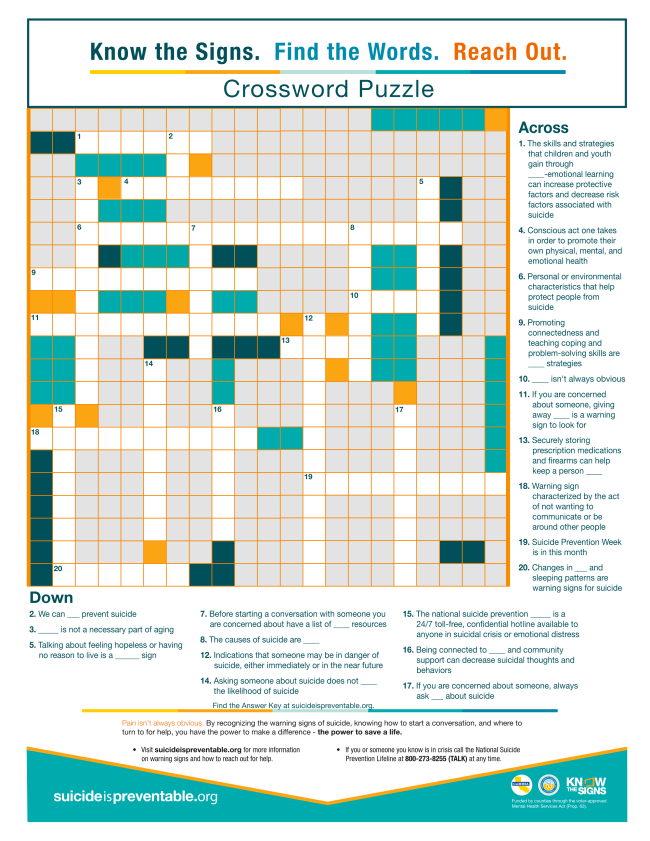
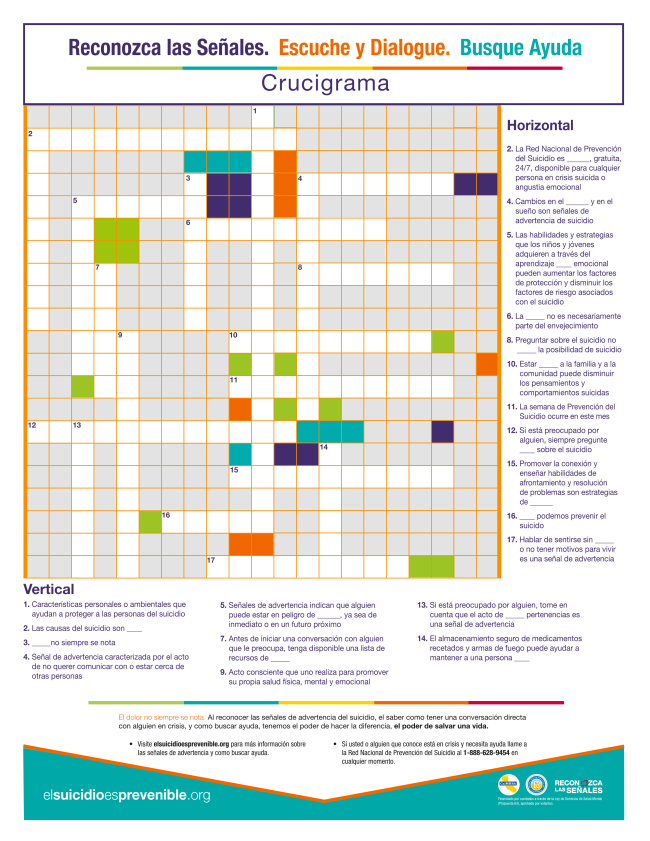
Know The Signs, Find the Words, Reach out
Crossword Puzzle
This crossword puzzle is focused on suicide prevention information. Utilize this crossword puzzle as part of events, with groups of friends and family virtually, or distribute in classroom or community settings.
| |
Additional Suicide Prevention Awareness Resources and Toolkits | |
|
SAMSHA Preventing Suicide: A Toolkit for High Schools: This toolkit assists high schools and school districts in designing and implementing strategies to prevent suicide and promote behavioral health. A toolkit includes tools to implement a multifaceted suicide prevention program that responds to the needs and cultures of students.
Access the Toolkit Here
|
| | | |