Spring 2026 | Volume 15 | Number 2 | | |
|  | |
“Healthcare is not just about health. It’s about dignity, empathy, and connection.” ~ Anonymous
Just when we think things can’t get wilder, more precarious, unpredictable, and lacking in compassion and human connection, we are proven wrong!
Yet, despite the chaos, turmoil, division, and uncertainty, one thing remains true in healthcare – it still comes down to people at the end of the day. The patient, the caregiver, the clinician, the staff, the administrator, the policymaker, the regulator, the entrepreneur, the drugmaker, the AI and social media platform executive, the company CEO, and everyone in between – it all still comes down to people.
The focus and all the attention are on technology, primarily AI right now. But even with the greatest advancements, it’s people who will decide whether it reaches its full positive potential or whether it goes off the rails and takes us to places no one wants to go, except perhaps the most evil among us.
So, regardless of where you sit in the healthcare ecosystem, what are you doing to make the lives of real people better?
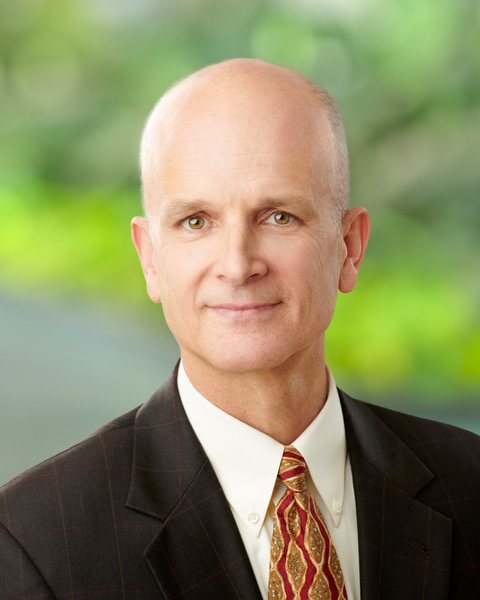
Z. Colette Edwards, WG’84, MD’85
Managing Editor
Contact Colette at: info@pausitivehealth.com
| |
Have an article to contribute or words of wisdom for the Philosopher's Corner?
| |
See what our alumni have been up to.
| |
Access previous newsletter editions. | | |
|
| |
Contributor: Bryan Bushick, MD’88, WG’89
Our early successes and continued headway have only been possible through the combination of dedicated service by Board members AND the incredible contributions by additional volunteers who have provided essential assistance. Yet, we need more assistance (meaning, YOUR assistance) to maintain the momentum and ensure success throughout the remainder of 2026 and beyond. There are many ways to contribute – whether it be one-time or in ongoing ways, or both. Read more.
| | | |
|
| This eclectic standing column features insightful musings, words of wisdom, life lessons, and stepping-stones to business success. This month's philosopher is Christina Liu, WG'13, Board Advisor for Global Public Health at BioLiterate and a former Executive Director at Novartis. Read more. | | | |
Affidavit: Healthcare and the Law - A Rare OIG Win Provides a Potential Pathway for Physician Investment Arrangements | | |
Contributors: Ryan Wesley Brown and Taylor Hertzler
A recent Advisory Opinion from the U.S. Department of Health & Human Services’ Office of the Inspector General (HHS-OIG) approving a physician investment structure has drawn attention across the healthcare industry. While the Opinion does not necessarily signal a wholesale change in enforcement posture, it does provide a useful concrete roadmap for how narrowly structured physician investment arrangements can survive regulatory scrutiny. Read more.
| | | |
Downloading Success: Medical Group Leadership - Success Factors and Strategies | | |
Contributors: Imran Ali, MD, Holly Nandan, FACHE, and Vinny Gossain
Organizations are seeking medical practice leaders who can use a bit of finesse and creativity to bridge clinical and operational priorities, align with broader system strategies, and lead across varied care settings. Meanwhile, traditional qualities such as integrity and humility remain essential. Read more.
| | | |
CyberVitals: Navigating the 2026 Shift from Federal Oversight to C-Suite Accountability |
| |
Contributor: Vidya Murthy, WEMBA’42
The first quarter of 2026 marks a pivotal "Transfer of Trust" in healthcare technology. On January 6, 2026, the FDA released two landmark final guidance documents that intentionally narrowed and reduced federal oversight of AI-enabled clinical tools and certain wearables. Simultaneously, the Health Sector Coordinating Council (HSCC) has introduced a new cybersecurity framework to fill the resulting governance vacuum. For leadership, this shift means the legal and ethical "burden of proof" for AI safety has moved from federal regulators to the C-suite and state-level jurisdictions. Read more.
| | | |
Less Intercoms, More Control Towers: Why Voice AI Isn't the Point | | |
Contributor: Kira Radinsky, PhD
Healthcare is rapidly perfecting the talk layer: empathetic voices, natural dialogue, smoother call flows, faster answers. The progress is real and useful, but it’s also converging. As conversational capability becomes widely available, the advantage shifts from how well the system talks to what the system gets done. Read more.
| | | |
The Human Touch: AI as Enabler of Human Connection in Medical and Graduate Education | | |
Contributors: Christopher Hugill, MBA, Sunit P. Jariwala, MD, and David Shechter
As artificial intelligence (AI) systems grow increasingly sophisticated, medical and graduate schools worldwide are experimenting with AI-powered teaching tools that promise to revolutionize how future physicians learn their craft. We believe these technological advancements will, counterintuitively, accelerate a shift toward deeper mentorship and human connection between faculty and trainees. Read more.
| | | |
From Compliance to Compassion: Designing Healthcare Experiences People Trust | | |
Contributor: Veronica Shelton
Despite years of regulation, system upgrades, and digital transformation efforts, trust in healthcare systems remains fragile. The issue is not a lack of effort or intention. It is the growing gap between compliance and compassion, between systems that technically function and experiences that feel trustworthy to the people using them every day. Read more.
| | | |
Men Leading as Bridge Builders | | |
Contributor: Sean Harvey, MSOD, MSEd
Bridge building is the ability to hold authority, conflict, and human complexity at the same time without becoming rigid, reactive, or withdrawn. When this capacity is absent, polarization accelerates. When it is present, trust becomes possible. When men learn to lead as bridge builders, they change what is possible on a team and in the boardroom. Read more.
| | | |
CAVU - Ceiling and Visibility Unlimited: A Positive Context for VUCA | | |
Contributor: Linda Roszak Burton, ACC, BBC
CAVU = Ceiling and Visibility Unlimited. Pilots know the ease of CAVU skies, where obstacles are visible, turbulence is minimal, and forward movement feels assured. It represents the conditions every leader wishes for - clarity, stability, freedom to act decisively, and confidence in the path ahead.
AND YET, today's healthcare leaders face constant disruptions - talent shortages, financial pressures, demand for innovation, and the emotional toll of leading through change. Read more.
| | | |
Wharton Around the Globe: Wharton Global Health Volunteers (WGHV) Supports Healthcare Organizations from Ghana to Indonesia
| | |
Contributors: Claire Malkin, WG'26 and Viviane Garth, WG'26 (Co-Presidents 2025-26)
Find out how WGHV addressed pressing global healthcare challenges - precision medicine, scaling a multisite healthcare business in lower-income neighborhoods, non-profit market expansion, fundraising and tech adoption - in Ghana, Brazil, the Dominican Republic, and Indonesia. Read more.
| | | |
Disclaimer: The opinions expressed within are those of the authors and editors of the articles and do not necessarily reflect the views, opinions, positions or strategies of the Wharton School and/or the University of Pennsylvania, and/or their respective organizations. Publication in this e-magazine should not be considered an endorsement. The Wharton Healthcare Quarterly and WHCMAA make no representations as to accuracy, completeness, currentness, suitability, or validity of any information in this e-magazine and will not be liable for any errors, omissions, or delays in this information or any losses, injuries, or damages arising from its display or use.
| | | | |