|
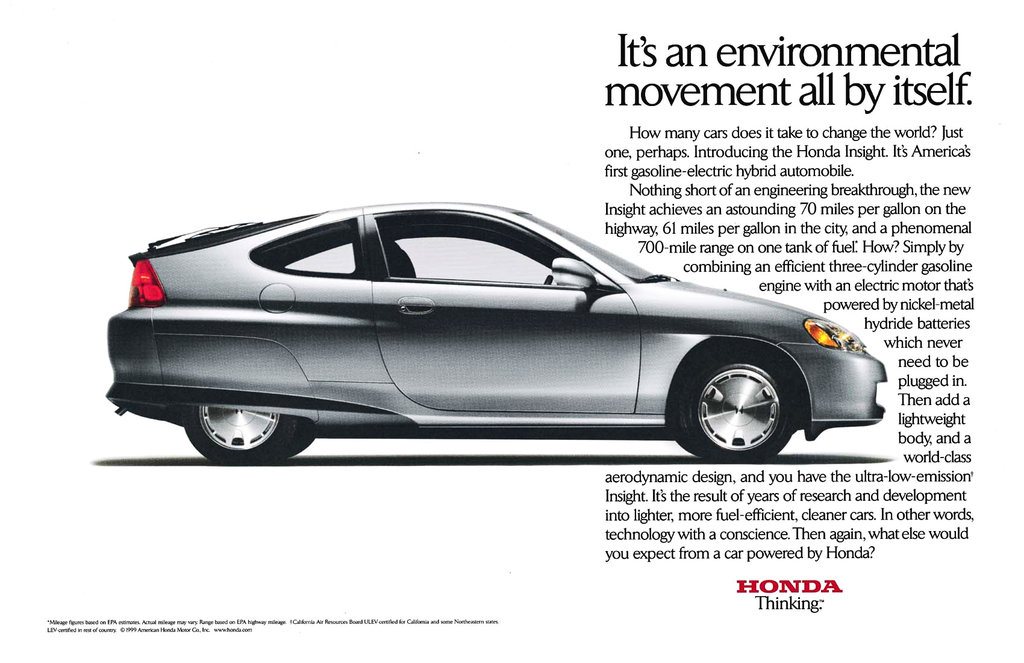
The term ‘Hybrid’ can mean just about anything. Before the Toyota Prius and Honda Insight came out in 1999, we used the term to describe an Italian car with an American engine - Bizzarrini, Pantera, Facel Vega and the like. Now, of course, we apply the term to a vehicle with a combustion engine and electric motor.
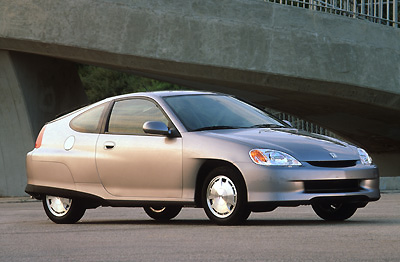
I had a Honda Insight, one of the first made. It was a spectacular piece of engineering that must have cost Honda double the purchase price. It had an Aluminium monocoque, with Magnesium castings for the engine, and displayed obsessive attention to detail from the Honda engineers - who in that era were encouraged to pursue ambitious engineering projects just for the challenge. I could get the car down to 3.2L/100km on a round trip, which even to this day, is probably the least amount of energy I’ve consumed to drive anywhere - including with EV’s.
The trouble with it was that it wasn’t that good at being a car, if you define that as being able to transport people and goods around. It had only 2 seats, not much storage, and the narrow, rock-hard tires followed every groove and rut in the road. The Insight was about $28,000 when new and my MY2000 was first registered in 2002 because it sat on the dealer’s lot for two years - the much more practical Civic was only $20,000 at the time.
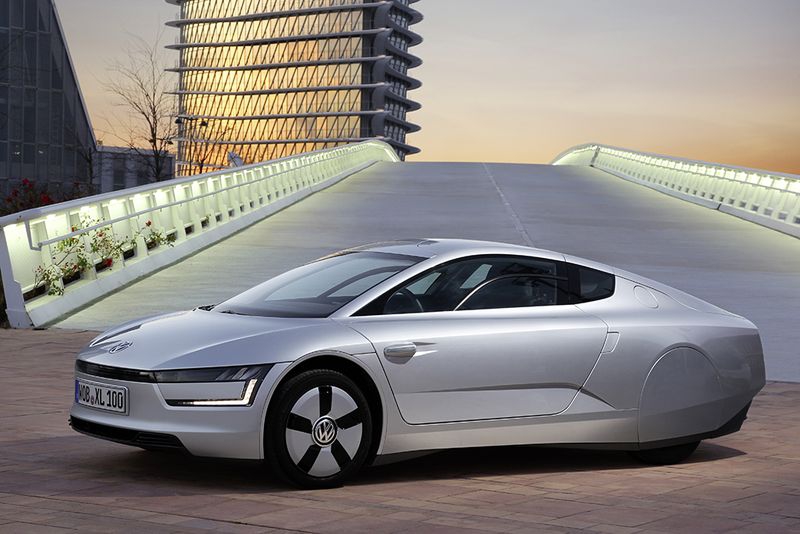
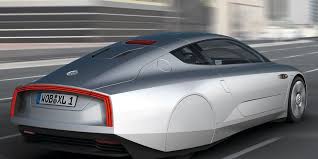
An even more extreme concept was built at the behest of the VW Group’s Ferdinand Piech, grandson of Ferdinand Porsche Sr., and who was no stranger to ambitious engineering projects (Porsche 917, Audi Quattro, Bugatti Veyron, VW Phaeton). The 2013 VW XL1 was his attempt to produce a 1 Litre vehicle i.e. a car that used 1L of fuel to go 100km. Built with a carbon fiber monocoque, tandem 2 seat configuration, and a two-cylinder Diesel/Electric Hybrid, he managed it. A production run of 250 vehicles were sold (not in North America) at a price of about $200,000, no doubt far below the vehicle’s cost.
These two cars achieved their spectacular mileage because they were feather weight (well under 2,000lbs or about half the weight of a Tesla Model 3), had advanced aerodynamics and extremely low rolling resistance.
I used to rent a very nice garage when I started restoring cars. It had a polished concrete floor which made pushing things around a lot easier - which I did a lot because I didn’t like to start the cars inside. I used to store the Insight there, along with my 1951 Land Rover and 328 Ferrari. If I wanted to move the Rover around I could put my shoulder behind it, and using everything I had, inch it around - it would move if the wheels were straight. With the Ferrari I had to be careful not to dent or break anything, but as long as I had decent shoes I could move it, but still with considerable effort. One day I parked the Insight and left it out of gear with the hand brake off. It just started rolling! I could have sworn the floor was perfectly flat...
Without a 1,500lb battery pack to lug around, a Hybrid starts out with a significant weight advantage over an electric vehicle. Most of mainstream PHEVs (Plug In Electric Hybrids), have Li-Ion battery packs between 10kWh and 20kWh, which will give electric-only range between 20km and 70km. Most owners should be able to fully charge the batteries overnight with a 120V, 15 Amp service, or a couple hours with a 240V plug. The 15Amp plugs are available everywhere, though you should still have an electrician look at one you are using every day with a high draw.
In Alberta we generally don’t have long commutes, especially with many of us working from home. Most school runs and errands are well within the electric-only range provided by Hybrids with a decent sized battery. We also use our vehicles to enjoy the mountains, and to travel to many destinations in BC. While the electric charging infrastructure is developing nicely along the Trans Canada Highway, there is not much outside of it. At the moment, and in the foreseeable future, there are a lot of places in Alberta and BC that you just can’t practically get to with a BEV.
For this driving use, provided you wanted one vehicle to do everything, a Hybrid is probably the answer. An EV ‘city car’ and a combustion-engined ‘highway car’ would be another option. Consider that about 25% of the complete life-cycle environmental footprint of a vehicle is used during its manufacture. It is probably a little more with an EV, taking into account the rare metals in the battery. If you buy an EV and don’t wind up driving it a lot, you will be creating more GHG than you are saving.
There is not one solution. Each region has its unique energy mix, and transportation needs. The pathway to a carbon neutral 2050 is not going to be the same in Vancouver or the GTA, as it is in Alberta. And that’s just in Canada, between countries the differences are even more pronounced.
The trouble is that with many Manufacturers phasing out all combustion-engined vehicles (ICE and Hybrid), there might be fewer choices. We now have most automobile companies saying that they will be exclusively BEV between 2030 and 2040.
My take on this is that common sense will prevail. Right now everybody is chasing Tesla and trying to copy them, as they are in awe of their market capitalization. If you are an auto executive it is politically correct to say that you are moving to 100% BEV production. That is what the shareholders want to hear because they want their stock to go up like Teslas.
The thing is the volume manufacturers have a customer base and distribution network that includes *everybody*, not just those who drive in concentrated transportation corridors. Telsa sells 500,000 cars into a market of 70M vehicles per year. They are still a niche player by volume.
Car manufactures are not going to let go of their market share easily, so I believe that there will be some adjustment of these forecasts based on sales results and market penetration of EV’s in the coming years.
Stellantis had their big ‘EV Day’, taking a page from Telsa’s ‘Battery Day’, and VW’s ‘Power Day’ - of course all copying Apple... They announced their electrification strategy which included $35B in EV spending, 4 new EV platforms, ‘Giga’ battery factories, canceling EV credit payments to Tesla, and introducing an EV Ram pick up. [they must have read last weeks column!]
CEO Carlos Tavares made the point that Stellantis will offer an EV and PHEV in every segment and while he expects the ratio of 80/20 to favour BEV’s, market forces and charging infrastructure will determine the exact mix. Reading between the lines; he will be happy to pick up sales from rivals who quit making combustion engines.
|