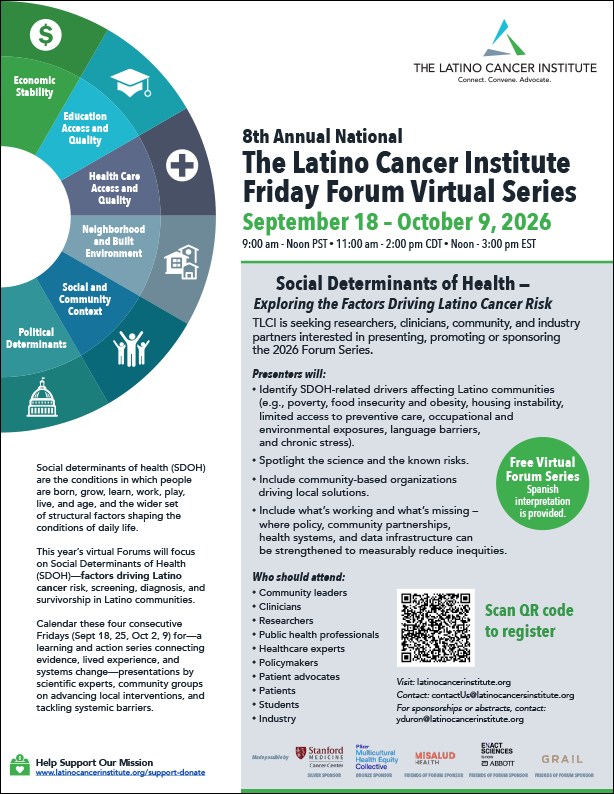
8th Annual National Virtual Friday Forum Series | | | | |
Cancer Doesn't Begin at the Clinic Door
Most conversations about cancer begin with screening, diagnosis, treatment, or survivorship.
But what if some of the most critical cancer risks are shaped by upstream factors that appear years earlier — in the neighborhoods where people live, the jobs they work, the air they breathe, the stress they carry, and the policies that shape their lives?
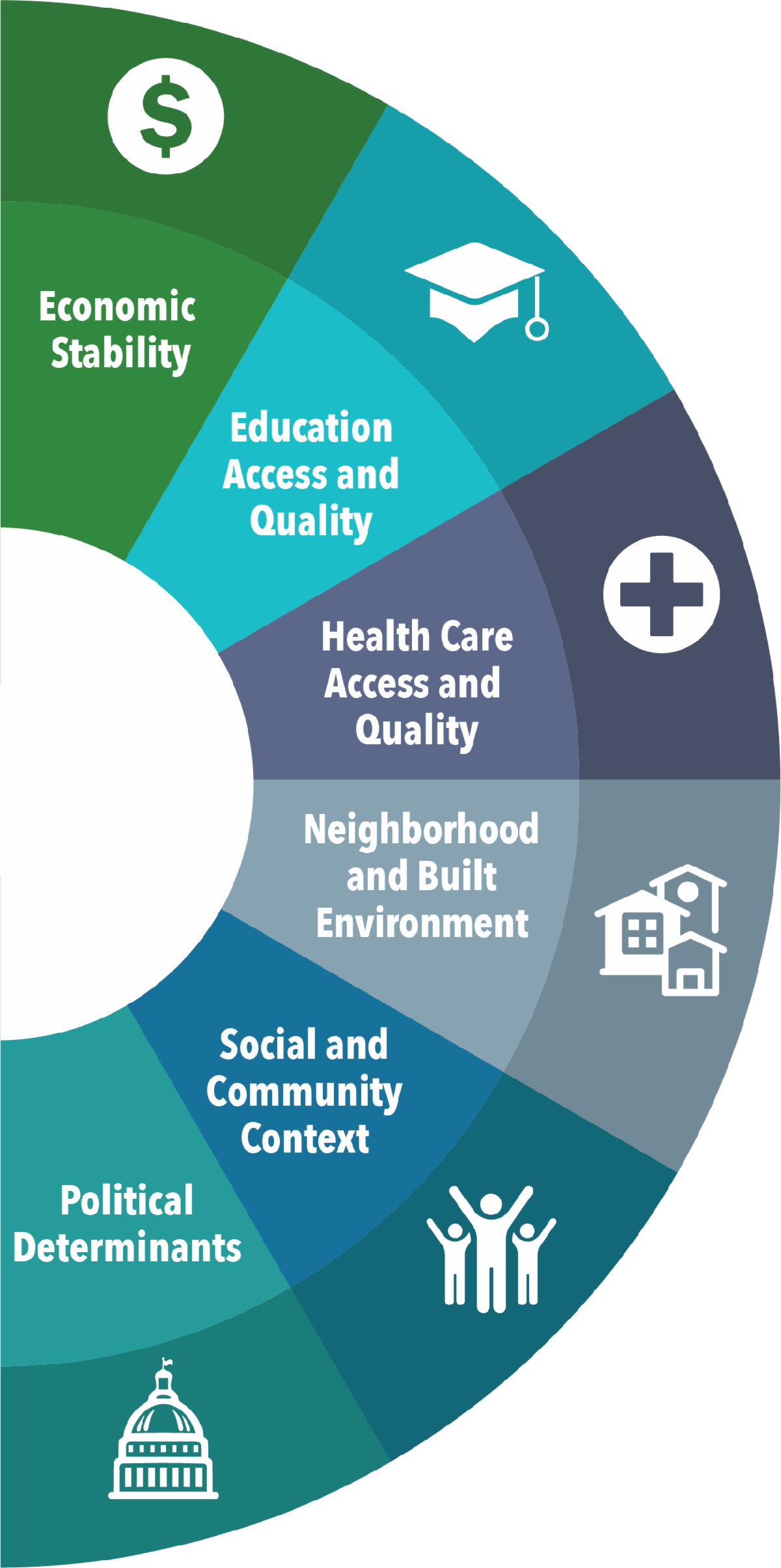
In May, The Latino Cancer Institute (TLCI) introduced the framework behind the Social and Political Determinants of Health, showing how these conditions shape exposure and influence outcomes across the cancer continuum.
Throughout the four-week Friday Forum Series, presenters will explore six domains that influence whether people are exposed to, protected from, or able to address traditional cancer risk factors.
| | |
FORUM 1
CONNECTING THE DOTS BETWEEN DAILY LIFE AND CANCER RISK
September 18, 2026
Cancer risk doesn't begin with a diagnosis.
It’s driven by conditions people encounter every day: environmental exposures, workplace hazards, chronic stress, access to care, and the policies that shape opportunities for health.
| | |
- In May 2026, roughly 50,000 Garden Grove‐area residents were evacuated for a week after a chemical storage tank threatened to explode. Evacuation orders have since been lifted, but the long-term environmental and health impact is still unfolding — raising the question of whether this becomes the next slow-building legacy of industrial exposure for these communities.
- Families in South Los Angeles face some of the highest air pollution levels in California.
- Firefighters carry elevated cancer risk from repeated exposure to combustion byproducts and contaminated equipment.
- How do these realities shape cancer outcomes? And what can be done about them?
| | |
Forum 1 brings together nationally recognized experts to explore the connections between policy, place, biology, technology, and lived experience.
Highlights include:
-
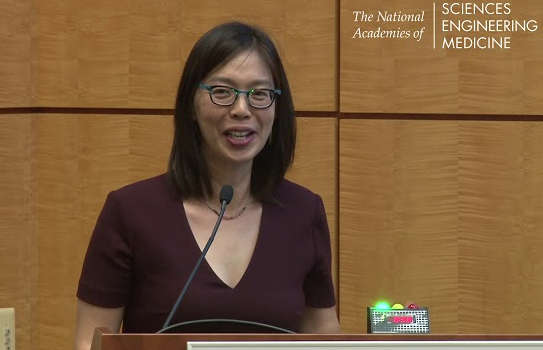
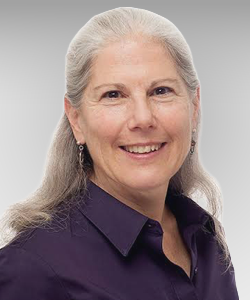
Do harmful policies create barriers to care, research, and treatment? Former NCI Program Director Sylvia Chou, PhD, MPH, MS, joins us to examine the consequences of NIH research cuts for underserved communities.
| | |
Sylvia Chou, PhD, MPH, MS
Former NCI Program Director
| |
- Can chronic stress and discrimination shape cancer risk at the biological level? Katherine Tossas, PhD (VCU) shares emerging research on how stress may alter the microbiome and affect cervical cancer risk in Latinas.
- What role can community health workers play in improving outcomes? Emily Wood, PhD (Stanford), presents clinical trial findings on how community health workers improve patient knowledge, care utilization, and screening rates.
-
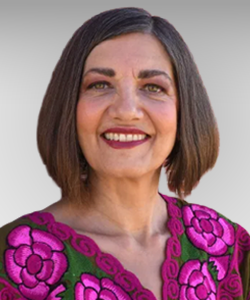
Patricia Rodriguez Espinosa, PhD, MPH (Stanford), shares evidence from “Strengthening Community Health Worker and Promotora Workforce Capacity” and discusses what the findings mean for Latino communities.
| | |
PERSPECTIVES ON AI AND HEALTH
Two Forum presenters explore how patients and health professionals view AI in health care and implications for Social Determinants of Health.
| |
-
What do patients think about AI in health care? Michelle Cordoba (Founder, Culture IQ) shares California Health Care Foundation findings from patients navigating an increasingly digital health system.
-
How might AI bias continue to harm patients? Kadija Ferryman, PhD (Johns Hopkins), discusses findings from interviews with health equity professionals and what must happen to ensure AI serves Latino and other vulnerable communities fairly.
Before you hear from them, we'd like to hear from you.
| | |
FORUM 2
CLIMATE, COMMUNITY, AND THE FIGHT FOR ENVIRONMENTAL JUSTICE
September 25, 2026
- What does climate change have to do with cancer risk?
- What happens when workers can no longer rely on environmental protections?
- How do promotores become trusted messengers in communities facing environmental hazards?
| | | |
Forum 2 moves beyond the clinic and into neighborhoods, workplaces, and communities experiencing the greatest environmental burdens and the people working to change those conditions.
Highlights include:
• Keynote speaker California Surgeon General Dr. Diana Ramos discusses maternal health, the impacts of adverse childhood experiences, and how these factors may connect to pediatric cancer risk.
• Rosario Majano, MA, of UCLA’s Latino Policy and Politics Institute, discusses a new report on how climate change is intensifying health disparities in Latino neighborhoods through heat exposure, poor air quality, and environmental inequities.
• Lisa Patel, MD (Stanford), explains why health professionals are building a climate, health, and equity movement — and what it means for Latino communities.
• Julie Friedman, MPH (UCLA), and Luz Chacón (Worksite Wellness LA) share lessons from training promotores to reduce exposure to toxins linked to breast cancer and reproductive health risks.
• Patti Goldman, JD (Earthjustice), explains the implications of an upcoming Supreme Court ruling affecting environmental protections and migrant workers
| | |
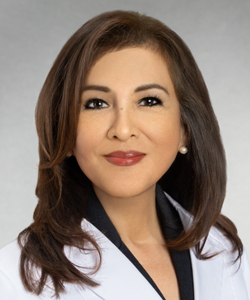
Dr. Diana Ramos
California Surgeon General
| | |
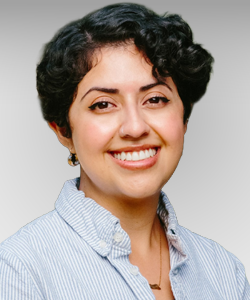
Rosario Majano, MA
UCLA Latino Policy and Politics Institute
| | |
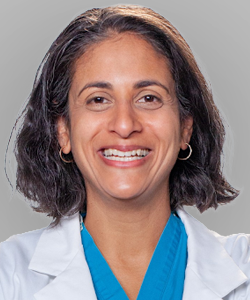
Lisa Patel, MD
Stanford University
| | | | |
Luz Chacón
Worksite Wellness LA
| | |
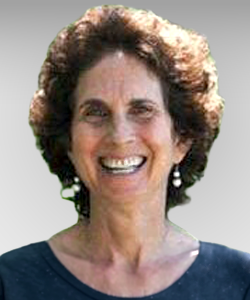
Patti Goldman, JD
Earthjustice
| | |
“For residents of Latino neighborhoods, extreme heat compounds existing environmental, occupational, and health burdens, increasing the likelihood of heat-related illness, worsening chronic conditions, and even premature death.”
— From the report Rising Heat, Unequal Risks: Policy Toolkit. . . For the full report, visit TLCI Recommends.
| | Who will care for future cancer patients? | | |
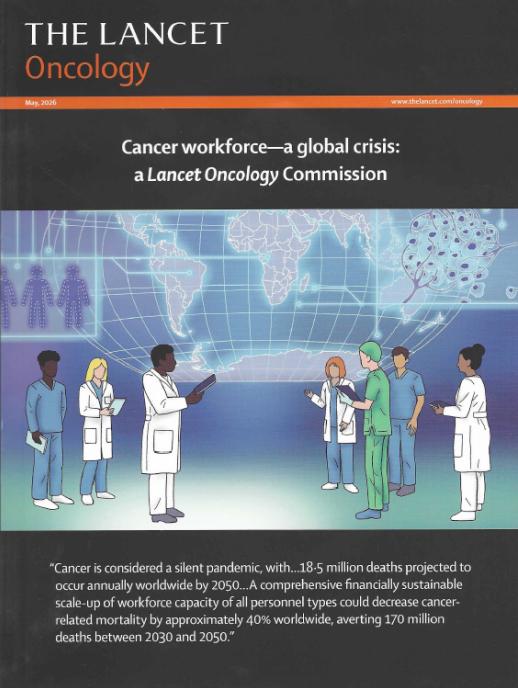
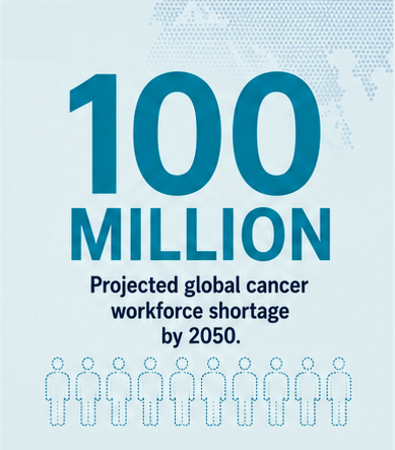
A major new Lancet Oncology Commission report warns that shortages of physicians, nurses, researchers, and community health workers could become one of the greatest challenges facing cancer care worldwide.
TLCI Founder Ysabel Duron contributed to the Commission's work on workforce development in Latin America and on the critical role community health workers can play in supporting patients and families when systems are understaffed and overwhelmed.
| | | The report highlights an important reality: improving cancer outcomes requires more than scientific breakthroughs. It requires people — educators, navigators, researchers, clinicians, advocates, and community health workers — who help patients move through every stage of the cancer journey. | | | | |
Many of the issues raised in the Commission, including workforce development, access to care, and community health workers, will be explored throughout TLCI's 2026 Friday Forum Series. Harvard’s Zachary J. Ward, who crunched all the numbers on the Lancet report, will join us Oct 9th.
READ: WHO WILL CARE FOR FUTURE CANCER PATIENTS?
| | |
THE CONVERSATION CONTINUES
Forums 1 and 2 are just the beginning.
Across four Fridays this fall, the series connects cancer prevention and screening to the environmental, economic, policy, and technology forces shaping Latino health.
| | |
Forums 3 (Oct. 2) and 4 (Oct. 9) continue the conversation with speakers who will explore gaps in access to critical genetic testing for breast and other cancers, as well as emerging workforce themes, including opportunities to build a Latino biotech pipeline and expand entrepreneurship in technology and AI. Learn more in our upcoming monthly e-newsletters and share them with your networks.
Register for one session or join us for the full series.
REGISTER AND STAY INFORMED
Free Virtual Series
Four Fridays This Fall
Spanish Interpretation Available
| |
|
|
FUNDING OPPORTUNITY
Community-Partnered Climate and Health Research
- The ECO-Health Center and UC Center for Climate Health and Equity are seeking proposals for community-academic research partnerships focused on climate and health in California.
- Three awards of up to $30,000 will support collaborative research and community engagement efforts. Applications are due July 17, 2026.
- Organizations interested in partnering with UC researchers may also request technical assistance.
Download the CARPP Call for Proposals (PDF)
| | |
You too can help support the Forum and further our mission to advance research, advocacy, and community-centered solutions for Latino communities.
Warm regards,
The Latino Cancer Institute
| | | |
Know someone who should be reading this?
Share this newsletter with colleagues, partners, and community members working in Latino health.
| Thanks to our new and returning Friday Forum Series Sponsors who make our work possible! | | | | |