What Do Vaccines, Ghosts and Coffee Have in Common?
What do COVID vaccines, the public health choir loft, radiation therapy, Irish ghosts, airplane toilets, and a strong cup of black coffee have in common?
They all wander into this newsletter, pulling science and story under the same roof.
Below, you will find Causes or Cures episodes with researchers and storytellers who live at the edge where data meets daily life. This newsletter also includes written interviews: Dr. Philipp Kohler on the relationship between COVID vaccines, influenza-like illness, and the hidden cost of lost workdays for healthcare workers; Dr. Andrew Karam on what it feels like to trade the role of expert for that of patient when the radiation machine turns toward you; and Dr. Warish Ahmed on his recent study using airplane wastewater to detect antibiotic resistance genes and high-risk pathogens moving across borders.
I have also shared my essay, Preaching to the Choir Leaves the Town Cold, a reflection on how public health sometimes speaks loudest to itself while the wider room stays quiet and why it may be time to bend closer to the people outside the circle.
And then there is The Weir, an Irish play that lingers like peat smoke, filled with stories told at the corner of a pub where ghosts slip in with the whiskey. I have written a review, but really it is a reflection on the spell of connection, the kind that sneaks up when tales and silences share the same table.
You will also find a scatter of strange health news, links to videos, and a few everyday anecdotes that prove reality still has the sharpest pen. And because much of this work is written with a cup of black coffee cooling nearby, I am sharing my favorite brew with you, along with a massive discount to try your first cup.
As always, if you have ideas for podcast topics, guest suggestions, want to co-host or sponsor an episode, or if you have something you would like featured here, email me at erin@bloomingwellness.com. I am always listening for great stories and fresh voices.
Thank you for being here and for carrying curiosity with you. I am grateful for every download, every share, and every ear that leans in. And a special shoutout to those who support Causes or Cures by joining the science story magic. You keep this work alive. :)
Warmly,
Dr. Eeks
ErinKate Stair MD, MPH
| | | | | On The Causes or Cures Podcast: | | |
Can This Supplement Actually Reverse Aging? Dr. Varun Dwaraka Explains
Click HERE to Listen.
| |  |
The Truth About Your Medications, with Harvard's Dr. Jerry Avorn
Click HERE to Listen.
| | |
Plant-Based Menu Traps & Other Nutritional Gems, with Dr. Kim Williams
Click HERE to Listen.
| | |
Can Mushroom Fiber Beat the Flu? Beta-Glucan 101 with Dr. Maziar Divangahi
Click HERE to Listen.
| | |
Has Medicine Lost Its Mind? Inside the Body‑Mind Split with Dr. Robert Smith
Click HERE to Listen
| | |
What He Did When Nothing Worked: A Personal Story of Crohn’s and Colitis with Dane Johnson
Click HERE to Listen
| | |
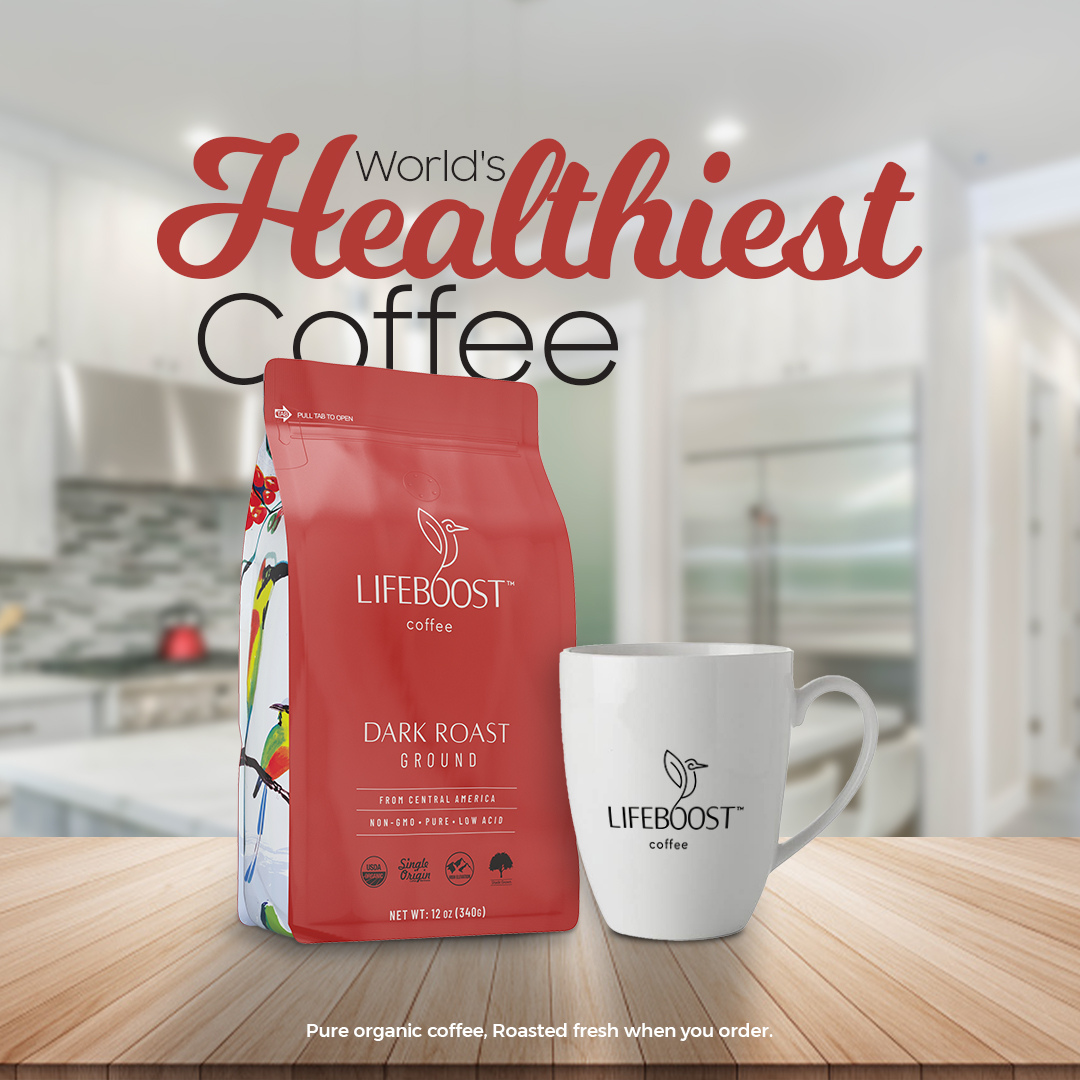
☕ The Coffee That Made the Cut
You all know I drink a lot of coffee. It’s my daily ritual, so I want it to be as healthy as possible. That’s why I’m proud to partner with Lifeboost Coffee, our latest podcast episode sponsor! And yes, I’m an affiliate (which means if you try it through me, you’ll also get access to special coupons and discounts).
I’m very fussy about partnerships and turn down most of the supplement and product pitches that come my way — in good faith, I can’t promote things I wouldn’t use myself. Lifeboost is different. It’s the coffee I actually drink every day because it checks all the boxes:
- Low acid → kind to your stomach and teeth
- Organic, non-GMO, third-party tested for 450+ toxins (no pesticides, no mycotoxins, no chemical junk)
- Ethically grown → shade-grown, bird-friendly, fairly traded, high in the Nicaraguan mountains
- Giving back → schools, wildlife, first responders
It’s coffee without the baggage, with real flavor, and a company you can trust — which in 2025 feels more important than ever.
Want to try it? Click here and you get 58% OFF your first order! You can also use code "DrEeks" for a 10% discount on subsequent orders.
| | |
Interview with Dr. Philpp Kohler on the Association of COVID Vaccine Status with Influenza-like Illness & Loss of Work Days in Healthcare Workers
| |
|
Questions around COVID boosters are far from settled, especially when it comes to how they affect day-to-day health and work. A new study led by Dr. Philipp Kohler turned up an unexpected finding: among healthcare workers, COVID vaccine status was linked with influenza-like illness (ILI) and lost workdays. You can read the full paper in Communications Medicine here.
I had the chance to do a Q&A with Dr. Kohler, a leading infectious disease researcher, to dig into the study, what the results might mean, and how they fit into the bigger conversation on vaccines, immunity, and workforce health.
Can you first briefly introduce yourself to our readers and tell us about the work you do?
I am an infectious disease physician from Switzerland and I am leading the SURPRISE+ cohort, which is a cohort of healthcare workers from different hospitals in Switzerland. My research focus is antibiotic resistance and viral respiratory diseases.
What inspired you and your team to investigate how COVID-19 vaccination impacts influenza-like illness (ILI) and lost workdays among healthcare workers?
We wanted to know in how far the COVID-19 vaccine status and other factors influenced the risk of having an ILI and on workdays lost. We believe that reducing ILI and loss of workdays is important to preserve personnel resources in hospitals.
What was your approach to studying this?
We asked participants about their COVID-19 vaccine and infection status in September 23 and then followed up on them until April 24. They answered weekly electronic questionnaires and told us about any symptoms, loss of workdays and additional vaccinations.
Your results showed that more COVID-19 vaccines were linked with higher rates of ILI and workdays lost—can you unpack that finding? Were you surprised by that?
Yes, we were surprised. The ILI risk slightly increased across groups with more vaccine doses, so did the loss of workdays (although less pronounced). The signal remained after we adjusted the analysis for other important variables. Please note that an important limitation of our study is the fact that even in those with recent booster, the last vaccination was several months before start of our study. This means that the potential protective effect of the booster might have waned until then.
For our readers, what role did timing of vaccination (recent vs earlier boosters) play in determining who got sick?
This is a difficult question. The effect was strongest for those with more recent vaccination. At the same time, as we did not have many participants with very recent booster, we might have missed a potential protective effect of the booster. I think this question can therefore not be answered properly based on our data.
What might explain why COVID-19 boosters didn’t seem to protect, and may even have increased, ILI cases during the study period?
It's important to note that because of the study design, this could simply be an artefact, because people with more vaccinations differed in some regards from those with less vaccinations. However, there are some potential explanations for this result. One explanation is that those with more vaccinations in the past were less likely to have had COVID in the past. However, natural infection together with vaccination (also known as hybrid immunity) has been shown to protect best against further infections. So those with more vaccinations had less hybrid immunity than those with less vaccinations.
What are your thoughts on how these results should be interpreted? (For example, should institutions reassess COVID-19 booster campaigns for healthcare workers?)
I do not think that institutional policies should be changed or adapted because of our results, because of the limitations of the study design. However, I think that our signal should be taken seriously and that there is an urgent need for a randomized controlled study, where the effect of COVID-19 booster is thoroughly assessed in the population of HCW.
Another important point I would like to raise is that influenza vaccination was indeed protective against ILI and workdays lost in our study. This is really an argument for institutions to continue to promote influenza vaccination among their HCW.
Are you planning to do more research in this area, or are you working on other things?
We are currently thinking about setting up such a study.
This interview is also posted on Blooming Wellness
| | | | | |
Who is Coming on The Causes or Cures Podcast Next?
-
Martin Polanco, MD, Founder of Mission Within Foundation will discuss using Iobgaine for PTSD, traumatic brain injuries, depression and addiction.
-
Dr. Neal Baer, physician, TV producer, and author of The Promise & Peril of CRISPR, will talk about how gene-editing technology could cure thousands of genetic diseases, but also carries the risk of reshaping human evolution and even creating biological weapons.
-
Dr. Yuxuan Wang, a medical oncologist and researcher, will discuss her research on a new test for cancer that can detect it YEARS before first symptoms.
-
Prof. Elyakim Kislev, associate professor at Hebrew University and author of Happy Singlehood and Relationships 5, joins me to talk about the rise of solo living and how AI, VR, and robotics are reshaping love, family, and connection.
-
Dr. Greg Fonzo, co-director of the Mcgill Center for Psychedelic Research at the University of Texas, at Austin will join the podcast to talk about the potential use of psychedelics for prolonged grief.
-
Prof. Jacobus (Jaap) de Roode, biologist at Emory University and author of Doctors by Nature, will join me to talk about how animals use medicine to heal themselves and what we can learn from them.
-
Dr. Andres Acosta, obesity expert at the Mayo Clinic, will discuss ways to predict who will have side effects to the new weight loss medications.
-
Dr. Zohar Rubinstein of Reichman University will join me to talk about the use of psychedelics in treating the trauma experienced by victims of October 7th.
-
Prof. Graham Brooks, Professor of Criminology at Brunel University London and an expert on anti-corruption, will join me to talk about healthcare fraud and its impact on patients, providers, and the system.
-
Prof. Jeff Sebo, clinical associate professor of Environmental Studies at NYU and author of Saving Animals, Saving Ourselves, will join me to talk about the moral circle and health ethics, from animal research to the links between animal welfare, public health, and the environment.
Subscribe to Your Podcast Listening Mode of Choice Here!
| | |
Health News Just for You:
Heat Waves Speed Up Aging
A new study in Nature Climate Change tracked nearly 25,000 adults over 14 years and found that repeated exposure to heatwaves doesn’t just drain energy—it accelerates biological aging. Even modest temperature spikes added measurable “extra days” to the body’s clock, with the strongest effects in outdoor workers, rural communities, and people without air conditioning. The data suggest that climate stressors may quietly shape healthspan, not just comfort levels.
Malaria Makes a Strange Comeback in New Jersey
In a twist nobody saw coming, New Jersey is investigating what could be its first locally acquired malaria case in over 30 years. The patient, from Morris County, hasn’t traveled internationally in recent years, suggesting the infection may have occurred locally via a mosquito bite. While risk to the public remains very low, state and federal officials are monitoring closely as they test mosquitoes and reinforce prevention measures. It’s a reminder that some tropical bugs never completely go away! Read more here.
Want to Keep Your Brain Sharp? Find Your Why.
A major long-term study published in the American Journal of Geriatric Psychiatry found that having a strong sense of purpose may cut the risk of dementia by about 28%. Over 13,000 adults (ages 45+) were tracked for up to 15 years, and purpose’s protective power held firm even when researchers accounted for education, depression, and genetic risk factors like APOE4. The findings suggest that finding meaning isn’t just good for your soul, it’s a brain boost that can slow cognitive decline.
Genetic Clues in Chronic Fatigue Syndrome
The largest-ever genetic study of myalgic encephalomyelitis/chronic fatigue syndrome (ME/CFS)—with DNA data from over 15,000 patients—has uncovered eight genetic signals linked to immune and neurological pathways. This is the first strong genetic evidence pointing to a biological origin, offering patients long-dismissed as “psychosomatic” newfound validation, and researchers new paths toward treatment.
| | | |
The Plural of Anecdote is Not Misinformation:
Watch Here
Why Safer Replacements for Forever Chemicals May Be Fooling You:
Watch Clip Here
Dr. Kim Williams on the Overlooked Important Test for Heart Health:
Watch Clip Here
Toxins in Plastics & What They're Doing to Us:
Watch Clip Here
Snakebite Kits Sold in Stores Don't Work:
Watch Clip Here
| | |
LIfe in Anecdotes
The Lighter Side of Things
Spotted a yellow-bellied sapsucker today. Wonder if he ever flies home and tells his bird friends he spotted me.
At the Farmers Market.
Guy sees me buying corn.
Him: “You know what a dollar per corn makes?”
Me: “What?”
Him (grinning): “A Buccaneer!”
He bursts out laughing. Him: “You know, like a pirate!”
Me: “…Right. Right. Okay!”
That officially counts as my social interaction for the day.
My sister: “Erin, you should buy this house. First family moved out because of domestic violence, then a woman killed herself in it, and now the person who lives there exposes himself, so the neighborhood’s uncomfortable and he’s moving.”
Me: “You should definitely go into real estate.”
The communal laundry room is its own Hunger Games: limited machines, high stakes, no mercy.
Today, as I pulled my clothes from the dryer, a guy hovered so close I could feel his breath. I wasn’t in the mood. So I said, “Mind leavin’ some room for the Holy Spirit?”
He slow-blinked.
And the ghost of every nun I knew cheered.
Just got the standard 'True Crime' text from my friend who's going on a first date. Always amused by how the excitement for a new romantic prospect is perfectly timed with the 'In case I go missing, here’s the suspect' text.
Mom: "I'm mad at your father. He left for work today and said I talk like a drill sergeant and should have been one."
Me: "Well... if the boot fits."
Originally posted on Bloomingwellness.com
| | |
Preaching to the Choir
Leaves the Town Cold
| | |
Public health saves lives. But it only works if people can hear it, trust it, and carry it as their own. Connection isn’t decoration. It’s the job.
—Eeks
So much public health online sounds like choir practice. The echo claps back, the room gives itself a standing ovation, and nothing moves. Preaching to the choir warms the choir. But it leaves the town cold.
Too many posts read like victory laps in lab coats. The tone floats above the room. The jokes punch down. That is not communication. That is a mirror with perfect lighting.
Condescension is not a strategy. It’s a stepstool you carry so you can talk down. It’s a velvet rope looped around your ego. It’s bleach sprayed across a conversation until no one wants to breathe. Credential-flexing is the sister act, flashy on the label but bitter on the tongue. Both turn your audience into an ‘other.’ An ‘other’ either lashes back or looks for the door.
If you want something different, begin with honesty. Do you talk at people? Do you reach for jabs when cornered? Do you wear your title like armor? These are alarms, not sins. And if you really want to reach strangers, turn down your volume and listen for the bell that tells you you’ve stopped talking with and started talking at.
Public health is a relationship with a population. Relationships run on timing, language, and trust. If you want a community to take a step with you, you need to know the price of that step in their currency — what they value, what they’ll trade, what they won’t, what feels sacred. Miss that, and you don’t have public health. You have theater: good costumes, wrong play.
America is not one audience. It’s a crowded room. All faiths and none. All parties. Family stories shaped by dust, flood, and war. For some, the favorite word is liberty. For others, it’s safety. Some beliefs will make you wince. Some people put pronouns in their bio. For others, that will always feel foreign. Your job isn’t to erase other choirs with a clever thread. It’s to connect long enough to swap two sentences that land. The moment you reach for scorn, you start laying bricks. The wall looks strong. The room empties.
Preaching to the choir is easy cardio. It feels good, looks good, but nothing that matters moves. The art lives elsewhere. The art is singing to a room that doesn’t know your songs, and maybe, just maybe, landing on the same key.
How to begin: step into discomfort and stay. Study your audience like a map. Learn the landmarks they love and the roads they refuse. If you’re not sure, ask in their kitchen, not yours. People teach more when you stand where they stand.
Write to resonate, not to punish. Hand your draft to someone who won’t clap out of habit—or better, to two people who actually live in the audience you want to reach. See what they underline. Notice what they skip. Adjust and try again. If a post backfires, that’s weather. Read the wind. Trim the sail.
Remember the rule: the goal is not to make people think like you. The goal is to help people who don’t think like you feel like teammates for one step. That’s how communities inch toward balance. One step. One trade. One day where the message fits the body that has to wear it.
Public health is culture first. It only works when it fits the people in front of you. What they care about. What they’ll sacrifice. What they won’t. A policy that earns applause in New York City can fall flat in rural Iowa—not because one is enlightened and the other backward, but because the math of meaning is different. The history is different. The local price of trust is different. Ignore that, and your message becomes a boomerang. You throw it hard. It comes back and clips your own ear.
A story I carry: my friend Gabe works on suicide awareness. Access to a firearm during a crisis is a real risk factor. Gabe is not a gun person. Many of the people he meets are. He drove a Volkswagen Beetle named Herbie with a suicide prevention message and parked it at car shows. He didn’t arrive to scold. He arrived to listen. He talked about temporary safe storage when life tilts and the room spins. He asked about family habits and what feels workable. He heard about identity, rights, and the pride of good training. Some folks waved him off. Others stayed. Trust grew like a low steady fire. That is respectful outreach around firearms. Not anti-gun. Pro-safety with gun owners. A lockbox as a pause button while the storm passes. Shoulder to shoulder, not nose to nose.
Back to the feeds. Big accounts roast antivaxxers and conspiracy folks for living in echo chambers. Then they post to their own echo and call it a win. The choir sings. The echo answers. The room feels full. The room is small.
If you want a bigger room, earn it. Trade applause for listening. Learn the culture in front of you until you can hear its rhythm without a cue card. Speak in a way that honors what people value and what they’ll never trade. Show up with offers, not demands. Clean up your tone. Try again.
Public health begins when you stop performing for people who already love you, and start talking to the room you avoid. That room is the work. The choir was never the point.
Originally posted on Blooming Wellness
| | | | |
My Radiation Therapy: Discovery and Watchful Waiting
Part 1 of a Guest Series by Dr. Andrew Karam
As I’m writing this I am in the middle of a series of daily radiation exposures that’s being
used to treat prostate cancer; by the time I finish this series my radiation therapy ought
to be finished (or nearly so). The reason for writing this as a series is that, in the six
years since I was first diagnosed with prostate cancer a lot has happened – diagnosis,
biopsies, MRIs, blood tests, two urologists, and more – to try to cover all this ground in
one shot would make for a long post or I’d have to leave out a lot. So...a series!
This my first time having cancer so all of this has been new to me and I’ve been
confused, irritated, curious, scared, and much more; and many of my family and friends
have had their own questions and concerns. One thing I’m hoping I can do here is to try
to help others to better understand how the process works, how the devices work, why I
decided to simply watch it for several years, then to go with radiation therapy instead of
surgery, and so forth.
Finally (for this introduction) I’ve got to say that I’ve had it easy compared to people I’ve
known who had some of the nasty, aggressive cancers, who had to undergo chemo
and/or radiation treatments that left them weak, exhausted, and puking their guts out,
and whose hopes of survival were slimmer than mine. Compared to so many, I’ve had it
easy – but I can only write about what I’ve experienced. And with that, let me get started
writing about how I found that I had prostate cancer, why I decided to go the “watchful
waiting” route, and the various testing that took place between the first test and the
decision to treat the cancer.
Continue Reading HERE.
| | |
Could Airplane Toilets Help Stop the Next Pandemic?
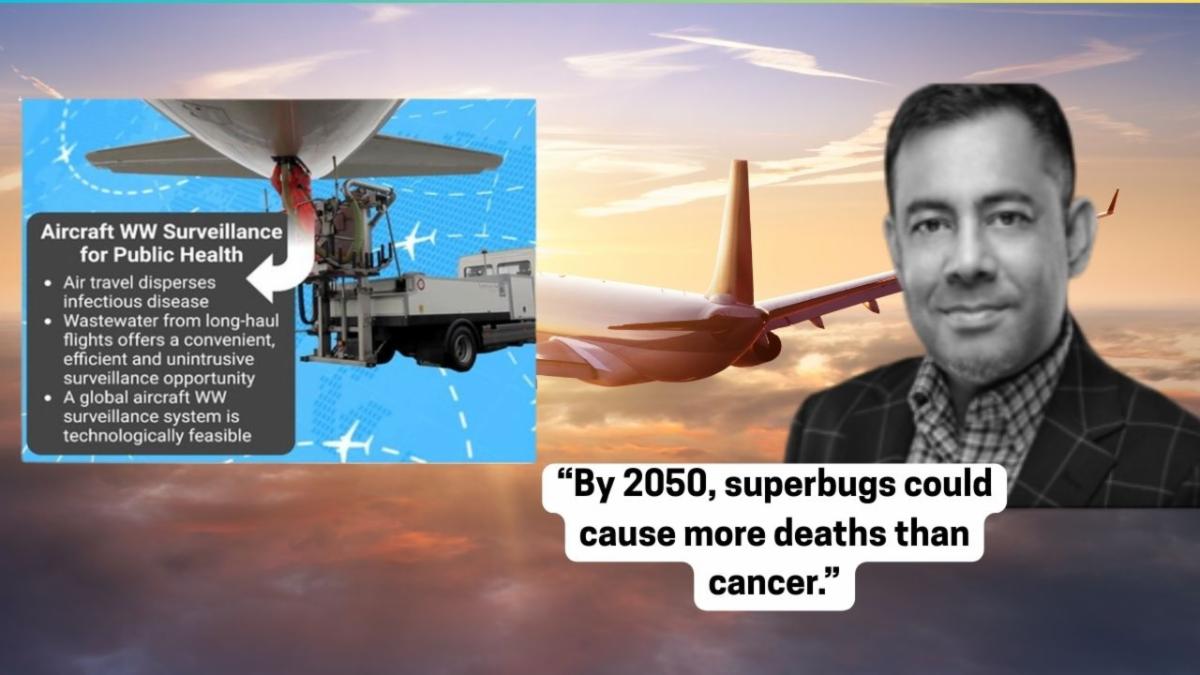
I spoke with Dr. Warish Ahmed, Principal Research Scientist at CSIRO, Australia’s national science agency, whose team is pioneering the use of airplane wastewater to track superbugs before they cross borders. Our conversation centers on his recent study in Microbiology Spectrum, where he and colleagues analyzed wastewater from international flights to detect antibiotic resistance genes and high-risk pathogen.
First, will you tell us about yourself and how you became interested in this topic?
I’m a Principal Research Scientist at CSIRO’s Environment Research Unit, where I focus on environmental microbiology, particularly tracking pathogens and antibiotic resistance in wastewater and natural water systems. My journey into this field began with a fascination for how microscopic organisms can have such a profound impact on public health and ecosystems. It’s like detective work; piecing together clues from the environment to protect communities.
In 2020, our team published the detection of SARS-CoV-2 in wastewater in Australia First confirmed detection of SARS-CoV-2. It was a proof-of-concept study showing how wastewater surveillance could monitor COVID-19 in communities. That work opened my eyes to the power of wastewater as a public health tool. Later, an idea came from our collaborator, Prof. Jochen Mueller at the University of Queensland: Why not test wastewater from aircraft? This led to another study where we detected SARS-CoV-2 RNA in wastewater from commercial planes and cruise ships. It showed us that aircraft wastewater could potentially act as an early warning system for assessing the presence of COVID-19 infected travellers.
From there, my interest broadened to using wastewater to monitor global health threats, especially antimicrobial resistance. By 2050, superbugs could cause more deaths than cancer. Testing plane wastewater provides valuable insight into resistant bacteria crossing borders before they become a local problem. It’s like tapping into a hidden goldmine of data: every flight carries invisible clues about emerging health risks. That’s what drives me - using science to stay one step ahead of these threats.
How big of an issue is antimicrobial resistance (AMR) globally, and why should the public care about it?
Antimicrobial resistance is a global concern. When bacteria evolve to resist antibiotics, infections become much harder to treat. People stay sicker for longer, treatments become more expensive and complicated. It’s like a silent pandemic creeping up on us. Right now, AMR is already linked to millions of deaths each year, and experts warn that by 2050, it could surpass cancer as a leading cause of death. That’s why this matters to all of us, if antibiotics lose their effectiveness, everyday health issues could become life-or-death battles.
You analyzed wastewater from 44 repatriation flights coming from nine countries. Why were these flights chosen, and how well do they reflect global travel patterns?
We selected those 44 repatriation flights because they were part of Australia’s COVID-19 repatriation program which brought Australians home from nine different countries during the pandemic.These samples were initially tested for the presence of SARS-CoV-2 and then archived for retrospective analysis. These flights offered a unique opportunity to sample wastewater from passengers arriving from diverse regions, each with distinct antibiotic usage patterns and healthcare systems. The samples used in this study were collected during the COVID-19 pandemic so they do not perfectly mirror regular global travel patterns. Still, they gave us a valuable snapshot of microbial pathogens and antibiotic resistance genes (ARGs) moving across borders.
You found ESKAPE pathogens and several resistance genes, some present in every sample. What do those findings tell us about the spread of antimicrobial resistance through travel?
ESKAPE refers to a group of hospital pathogens that often carry resistance genes, making them especially hard to treat.
We detected five types of antibiotic-resistant ESKAPE pathogens typically associated with hospital environments. We also identified several resistance genes, one that was present in wastewater from 17 international flights but had not yet been detected in Australia’s urban wastewater. These findings highlight that international travel is a pathway for superbugs which could potentially spread into local environments, hospitals, or communities, making infections more difficult to treat.
You describe aircraft wastewater as a “non-invasive, cost-effective early warning” system. How could airports or public health programs realistically use this approach?
Aircraft wastewater analysis is a complementary tool for public health surveillance because it’s non-invasive and cost-effective. Major international airports like Singapore, Dubai, or London, could establish routine wastewater surveillance networks for arriving flights or from airport waste streams. Public health experts could then regularly test these samples for high-priority pathogens, especially those not yet seen in local systems.
The data generated by analysing wastewater samples could feed into global databases helping scientists map the spread of AMR. Major hubs, where flights from all over the world converge, would be ideal spots for this surveillance, acting as sentinels for global health threats.
Why isn’t current surveillance (like airport screening or municipal wastewater testing) enough? What unique gap does aircraft wastewater fill?
Airport screenings typically focus on visible symptoms or specific diseases like fever checks for known threats, but they can’t detect silent threats like resistant bacteria that passengers may carry unknowingly. Municipal wastewater testing is a complementary tool for monitoring which pathogens are circulating within a community. But aircraft wastewater fills a critical gap by providing us a snapshot of what’s coming into a country before it blends into the local environment. It’s a proactive way to track the global movement of AMR.
How confident are you that resistance genes remain detectable even after hours of flight time, disinfectants, and storage conditions?
I’m confident that resistance genes remain detectable in aircraft wastewater even after long flights and exposure to harsh conditions. We specifically tested this in our study, and the results were clear: even after 24 hours and exposure to strong disinfectants used in aircraft toilets, the genetic material from resistant bacteria remained detectable. This stability is what makes aircraft wastewater a reliable tool for surveillance. It means we can trust the data we collect whether it’s from a short regional flight or a long-haul international flight.
This was a proof-of-concept study. What are the next steps for this research?
There’s still a significant work ahead to make aircraft wastewater surveillance a practical tool for tracking AMR and other pathogens of interest. We’re building on what we’ve already learned to enhance its usefulness in informing public health. The first step is to adopt advanced genomic sequencing. Unlike the targeted qPCR assays used in the study, sequencing allows us to detect a much broader range of microbes. This will give us a clearer, more detailed picture of the potential threats coming off those planes. Looking ahead, we also want to make the tool itself more practical - faster, cheaper, and automated. The goal is to weave aircraft wastewater surveillance into global health systems and use as a complementary tool to fight against AMR or other microbial threats.
Was there a result in your study that truly surprised you?
Absolutely, we identified a resistance gene for last-resort antibiotics in the wastewater from 17 of those repatriation flights, one that had not been detected in Australia’s urban wastewater at the time of sampling. It suggests that international travel was potentially bringing this gene into the country, highlighting how quickly AMR can cross borders before it even hits local systems.
What key take-home message would you want the public to remember from this research?
Aircraft wastewater surveillance provides a non-invasive, cost-effective, and scalable method for detecting AMR and emerging pathogens before they enter local systems. By analysing wastewater from flights, we can gain early insights into global health threats. This approach complements existing surveillance systems and has the potential to become a vital component of our public health toolkit in the fight against AMR and future pandemics.
| |
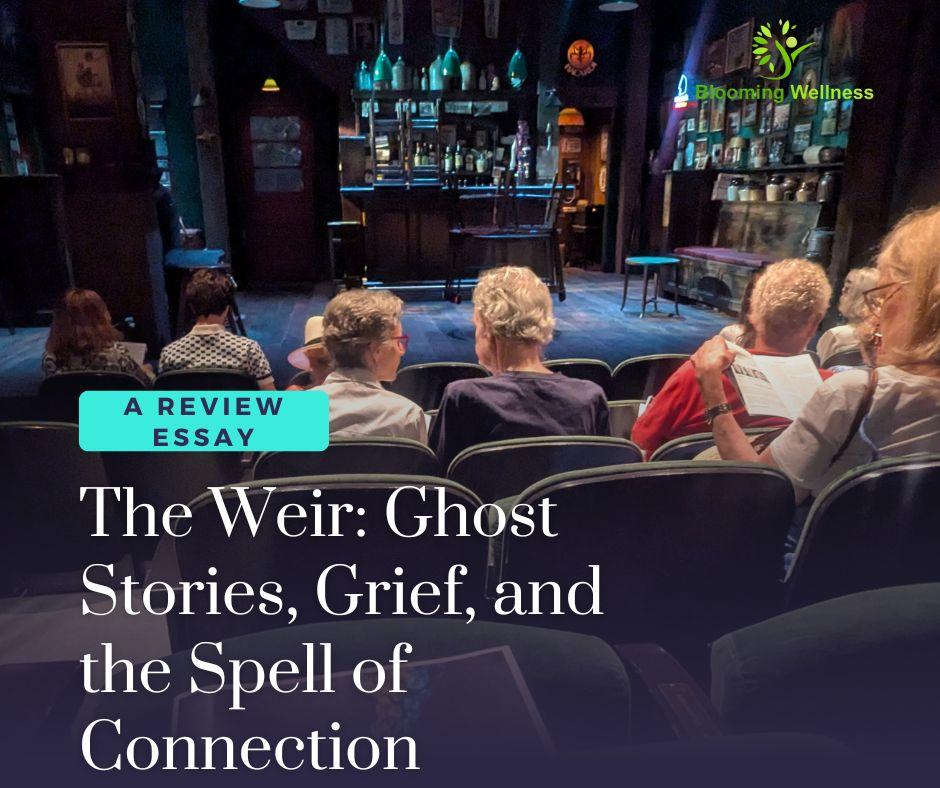
The Weir: Ghost Stories, Grief, and the Spell of Connection
It begins with ghost stories at the pub, but it’s really about what haunts us...
Read More
| | | |
Thank you for reading, sharing and everything in between!
If you can, please forward this newsletter to anyone who might be interested in the above topics, anyone who might be interested in listening to the Causes or Cures Podcast or anyone you think might have an idea for a podcast guest or topic. SUBSCRIBE to the NEWSLETTER here!
A big thank you to all newsletter subscribers, blog readers, podcast listeners and those who support the show!
I really appreciate it! :)
All Best Wishes,
Eeks
| | | | | |