|
Who is Shakti?
According to the Monier-Williams dictionary, Shakti (Śakti) is a sanskrit feminine word meaning "energy, ability, strength, effort, power, might, capability." The word Śakti is derived from the Sanskrit root “śak” which means: ”to be able," "to have a certain capacity or power to do anything." In general, Shakta (Sanskrit: शक्त, Śakta), is used for people and traditions associated with Shakti worship - the divine feminine.
But, in fact, “shakti” is a cosmic gender-less creative dynamic energy of transformation. Women are the fullest incarnate expression of cosmic shakti - the power to create and transform; but men also carry shakti power, even if in a dormant state…
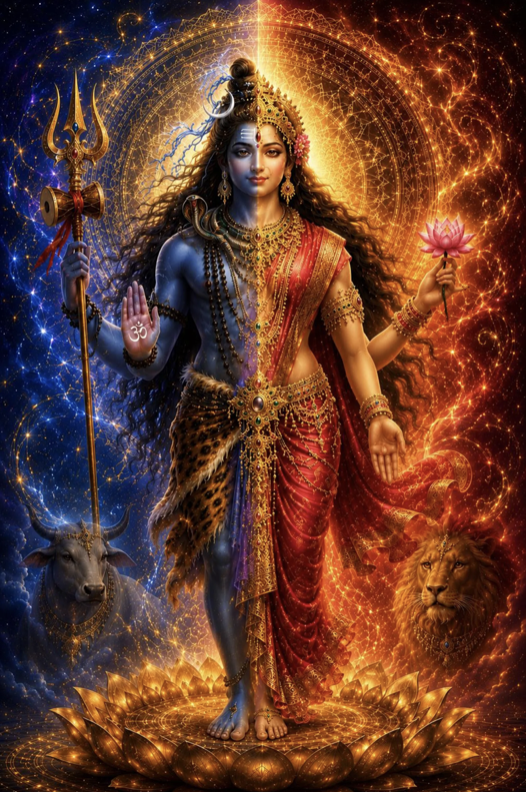
Ardhanarishwar (or Ardaneshwar) is a composite, androgynous representation of Lord Shiva and Goddess Parvati - Shakti - fused vertically down the center, completing each other. This form represents the perfect cosmic balance and unity of masculine and feminine energies in the universe - the silent eternal with the dynamic ever-changing. These energies are inseparable within each individual…
In the Vedic tradition, Shakti is personified as the wife of Shiva. She appears in different forms as Uma, Durga, Kali, and Parvati. With Vishnu, Shakti appears as Lakshmi. But even more, the wife of a man is his Shakti. In the Ramayana, Sita, the wife of Rama, was his Shakti; in the Mahabharata, Draupadi was the Shakti of the Pandavas.
Without shakti NOTHING and NO ONE can exist! In Shiva-Shakti symbology, they are a single inseparable unit, two parts to one being, symbolic of the codependence of spirit and energy.
How is this connected to navaratri?
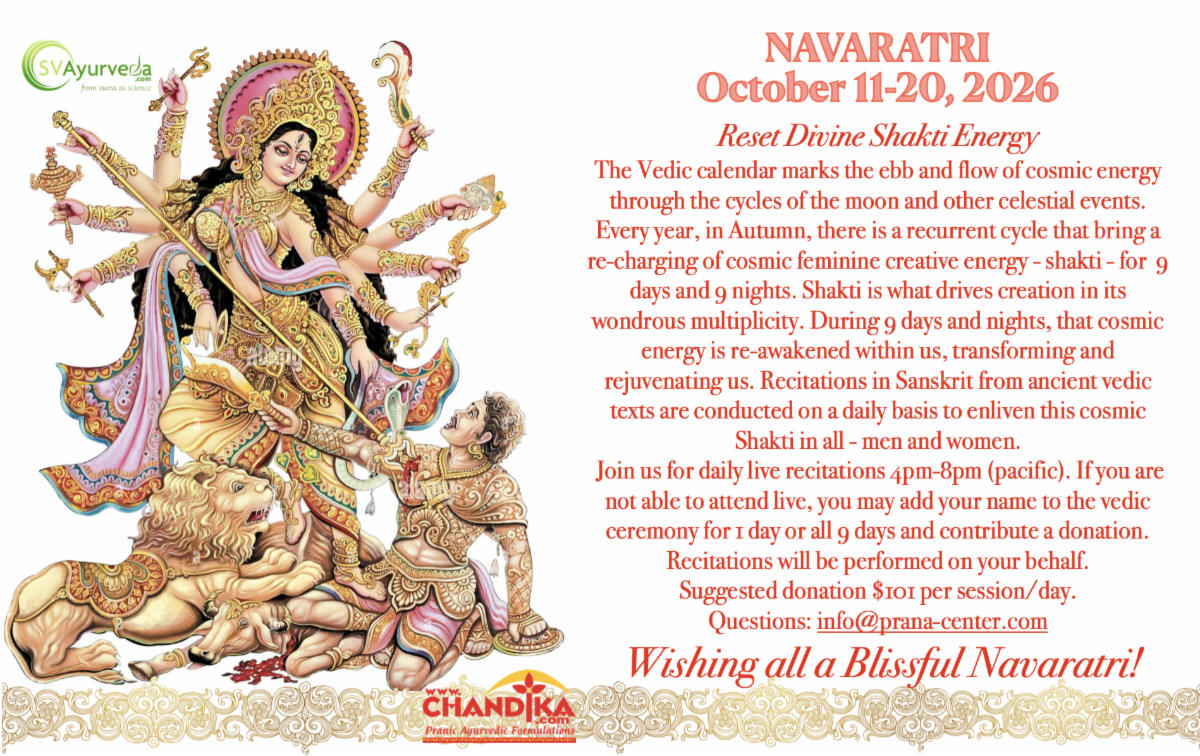
Navaratri means "nine nights" in Sanskrit, from nava (nine) and ratri (nights). It is a major annual festival that honors Shakti, the divine feminine power, through the worship of Goddess Durga and her various manifestations.
The nine nights symbolize a transition through different inner states going from tamas - inertia, through restlessness, to purity, leading to spiritual renewal.
The festival culminates on the tenth day—known as Dussehra or Vijayadashami—celebrating the victory of Goddess Durga over the buffalo demon Mahishasura, as well as Lord Rama's victory over Ravana. It is a time of rememberance and renewal of our inherent internal power of transformation towards a higher version of our-selves. Vanquishing the lower self-destructive instincts and patterns and welcoming an integration of self with blissful invincible being...
Wishing you all blissful navaratri culminating in a transformative vijayadashmi!
|