|
Powerful Changemaking for Public Health Champions | What Freedom Requires Today:
Commemorating Juneteenth | |
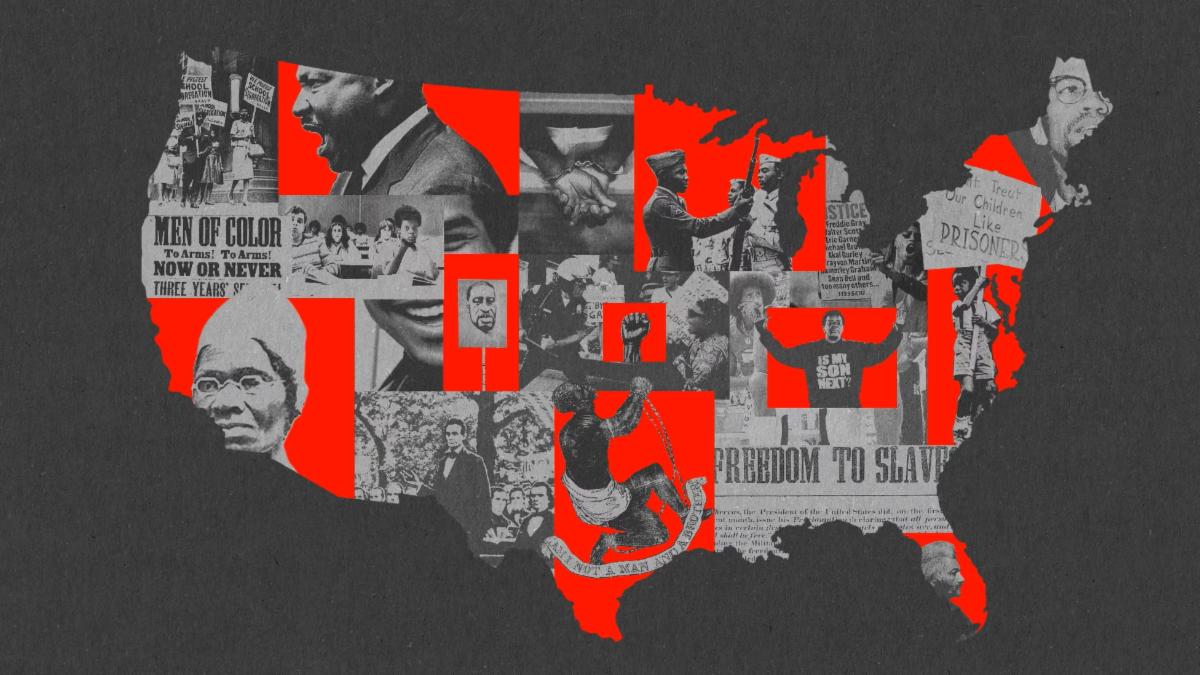
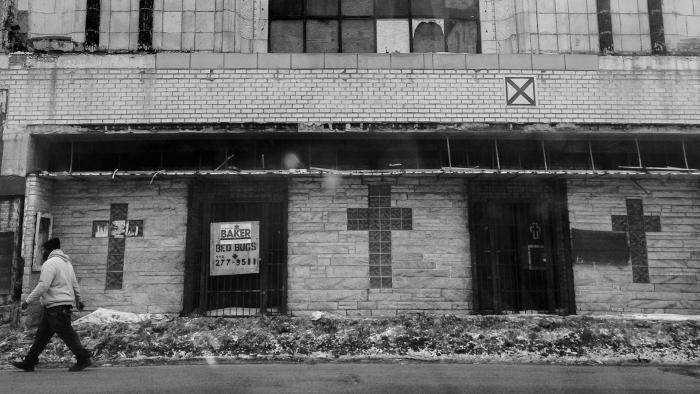
| Photo by Paul Spella / The Atlantic | |
|
“We’ve simply got to make people aware that none of us are free until we’re all free—and we aren’t free yet. There are still so many disparities. We need decent education, jobs that provide real wages, and access to health care. If people come together to address these gaps, we’d be well on our way to being the greatest country in the world.”
— Dr. Opal Lee, “Grandmother of Juneteenth”
| | |
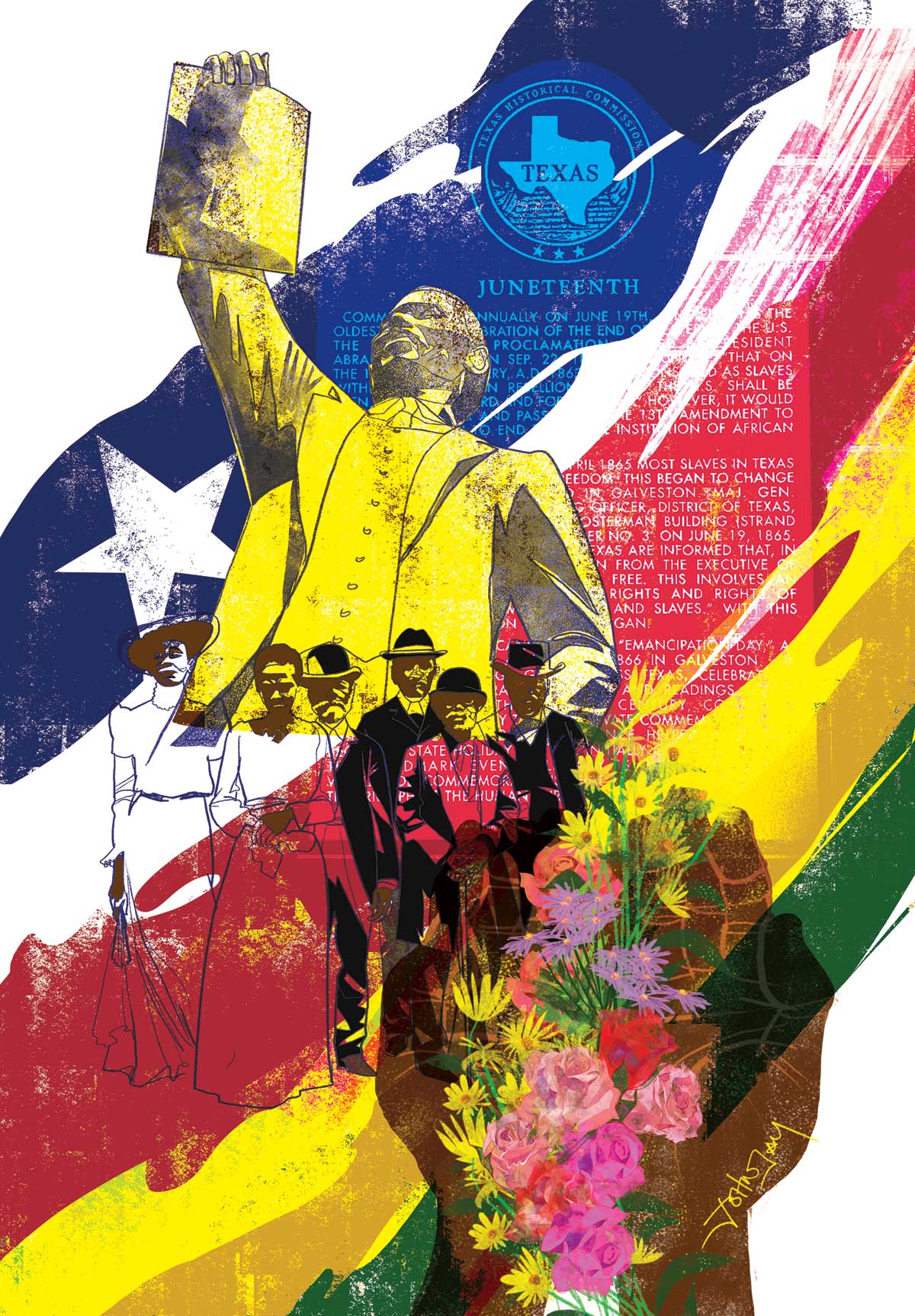
On June 19, 1865 — two and a half years after the Emancipation Proclamation was signed — enslaved people in Galveston, Texas finally heard the words that had already been declared: they were free. That delay, those two and a half years of bondage that continued after liberation had been legally established, tells us something essential about the nature of freedom that is as true today as it was then.
Freedom does not enforce itself. It does not travel on its own. It does not arrive simply because it has been announced, legislated, or won in court. Freedom requires people—real, specific, often ordinary people—willing to carry it forward. To name the gap between what has been declared and what is actually lived. To do the unglamorous, persistent, practical work of making liberation real in the systems, institutions, and communities they inhabit. That is what this issue is about.
This Juneteenth, we are centering a question that cannot wait: What does freedom require today? Not freedom in the abstract—but freedom as a concrete, achievable, present-tense project. What does it require of our institutions? Of our philanthropy? Of the people inside systems who hold power and are deciding, right now, whether to use it differently?
Some people have stopped waiting for someone else to fix the system and started using the power they already have to change it. They are not heroes. They are not outliers. They are what change looks like when it is done by people who understand that every institution is made of people, and that people can choose differently.
Together, the spirit of Juneteenth and the practice of powerful changmaking point towards the same truth: freedom is not a destination. It is a practice. It is built daily, in the choices made by people who are willing to be accountable not just to their organizations today, but to those who will inherit tomorrow the systems and practices they choose to reshape today.
| | | | |
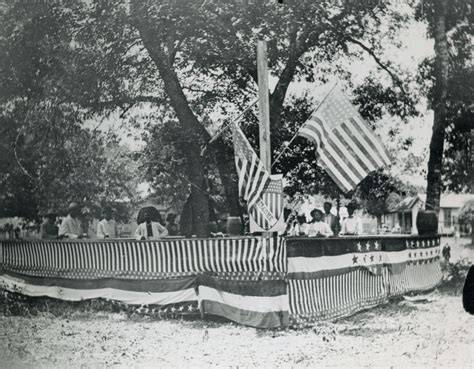
Image: Juneteenth Celebration, Eastwoods Park, Austin, Texas, 1900 | | | | |
|
|
|
‘On Juneteenth’
In this excerpt from On Juneteenth, Pulitzer Prize-winning historian Annette Gordon-Reed reflects on the history and significance of Juneteenth, tracing its origins in Texas and its evolution into a national holiday. Through personal reflection and historical insight, she explores themes of freedom, memory, identity, and the enduring impact of the struggle to end slavery in the United States.
| | | |
What Freedom Requires Today
A Juneteenth Reflection on Practical and Powerful Changemaking
The Gap Between Declaration and Delivery. Juneteenth is a celebration. It is also a lesson—one of the most important lessons American history offers on the relationship between legal change and lived reality.
On January 1, 1863, President Lincoln signed the Emancipation Proclamation. On June 19, 1865, Union soldiers arrived in Galveston to enforce it. The two-and-a-half-year gap between those dates represents more than a delay in communication. It represents a system of economic interest and institutional systems that actively resisted making freedom real, even after it had been declared.
That gap did not close with the announcement in Galveston. It has been narrowing and widening over the 160 years since, shaped by Reconstruction and its violent end, by the civil rights movement and the backlash against it, by legislation and its enforcement, and its erosion. The gap between declared freedom and delivered freedom is the defining project of American democracy.
And it is not finished.
| |  | |
What Practical Changemaking Looks Like
What Practical Changemaking Looks Like
It is radical in the truest sense of the word: going to the root.
What makes it practical is that it works within and through existing systems, using real power that real people already hold, to produce changes that are concrete, measurable, and durable. It does not wait for perfect conditions. It does not require a revolution before it begins. It asks: What can we change right now, with what we have, from where we stand?
Practical changemaking looks like a hospital administrator who decides that billing practices causing financial harm to patients are a health problem—and builds a system to identify vulnerable patients before a bill is ever generated.
It looks like a community organizer who translates the language of policy into the language of lived experience, making it possible for the people most affected by a system to actually shape it.
In every case, the changemaker is someone who understands that systems are not abstract. They are made of decisions—and decisions can be changed.
| |
|
Freedom as a Daily Practice
The most powerful insight Juneteenth offers is not historical. It is structural. It tells us that freedom does not maintain itself and, without active, ongoing, organized effort to protect and extend it, it contracts. The progress of each generation can be undone by the retreat of the next.
This is why practical and powerful changemaking is not a phase. It is not a project with a completion date. It is a practice—a set of habits, commitments, and accountabilities that must be renewed in every generation, in every institution, in every community that values the freedom it claims.
The better ancestors we aspire to be are not people who solved everything. They are people who kept the practice alive. Who held the gap open between what was declared and what was delivered, and worked every day, with every tool available to them. That is what freedom requires today.
This is what Juneteenth asks of philanthropy—not just to celebrate freedom, but to fund it. To be willing to put resources behind the communities and movements that are doing the daily and essential work of making freedom real.
| | | | | | |
|
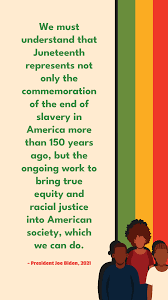
“Juneteenth commemorates the day the last enslaved African Americans in the country (located in Galveston, Texas) were informed of their emancipation. Tragically, it was two years after President Lincoln issued the Emancipation Proclamation that they were officially told of their freedom, and it was enforced. Juneteenth honors both our nation’s painful racial history and the progress that has been made towards the promises of justice and equality for all Americans."
| |
| | | |
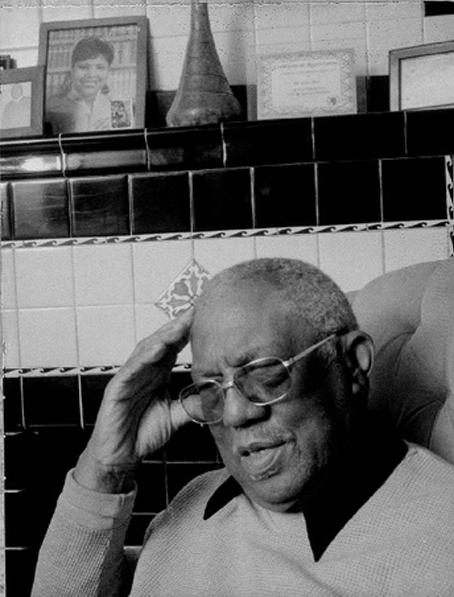
Clyde Ross, photographed in November 2013 in his home in the North Lawndale neighborhood of Chicago, where he has lived for more than 50 years. When he first tried to get a legitimate mortgage, he was denied; mortgages were effectively not available to black people. (Carlos Javier Ortiz) | | |
"The Case for Reparations" (The Atlantic, 2014)
by Ta-Nehisi Coates
More than a decade after its publication, this landmark piece of long-form journalism remains one of the most powerful things ever written about the specific, policy-driven mechanisms through which Black wealth was extracted and suppressed in America, from redlining to contract buying to systematic exclusion from New Deal wealth-building tools.
Coates does not ask for sympathy. He asks for reckoning. He lays out the evidence, names the institutions, and makes the case that acknowledging what was done is the only honest starting point for building something different.
| | | | |
| | |
"The Fight for a True Democracy"
by Nikole Hannah-Jones
This is the episode that started everything. In 42 minutes, Nikole Hannah-Jones reframes the founding of American democracy, not as a story that begins with the Declaration of Independence, but as a story that cannot be told without the people who were enslaved when that declaration was made. Essential listening for Juneteenth.
| | | | |
|
Shackle Free Community Outreach Agency, Inc.
As a community outreach and resource navigation hub rooted in rural Eastern North Carolina, Shackle Free Community Outreach Agency, Inc. is designed to address the "shackles"—economic, health-related, and social—that prevent individuals and families from reaching their full potential. It brings together Community Health Ambassadors, families, and partner organizations working toward a shared aim: holistic well-being, community engagement, and self-reliance. It is a space for connection, referral, and action—one that asks what it means to move from the communities we have to the communities we need.
That work has become increasingly visible in recent years. They reflect a deeper shift underway from community health as a set of services delivered to communities to community health as something built by them, with people who are already present, already trusted, and already doing the work. What Shackle Free offers is not only a network of programs, but a practice of showing up consistently, holistically, and in relationship.
Practical and powerful changemaking is not work that happens from the outside in. It grows from the inside out—from the barbershop chair, from the community farm, and from the classroom where a new digital learner logs on for the first time. Shackle Free is a living example of what that looks like. And this Juneteenth, their motto says everything: Turning Shackles into Armor.
| | | | |
When funders choose to become Better Ancestors
Picture a space, indoors or outdoors, real or virtual. In this space, five, ten, twelve people, maybe more, gather in a circle. They are philanthropic leaders, funders of health and well-being, justice, and equity. They want to be part of building a shared movement for thriving together. They have come with questions and intentions.
They ask themselves and each other, “What creates health and well-being?”, “What are the root causes that lead to unequal health and well-being outcomes?”
They pool their energy, knowledge, experience, and perspectives together, seeking responses.
They turn and look at the generations behind them. They examine structures and patterns and reflect on their history. They ask, “What systems created these challenges? What would fairness look like?”
They turn back to the present and look at themselves and each other, their relationships, and their practices. They ask, "Who holds power? Whose voices are missing? What needs to change? What practical, powerful strategies can we use?”
They look to the generations to come and arrive at a new question: “What does it mean to be a Better Ancestor?”
They find it is a journey with different strands.
| |
| | | |
|
Government Alliance on Race and Equity (GARE)
Source: Government Alliance on Race and Equity
"GARE transforms the everyday mechanics of local and regional governments—so that all families and communities live long, healthy, joyful lives, no matter their race, class, or zip code."
| | | |
Race Forward: Racial Equity Tools
Source: Race Forward
“We offer tools, research, tips, curricula, and ideas for people who want to increase their own understanding and to help those working for racial justice at every level – in systems, organizations, communities, and the culture at large."
| | | | |
| |
|
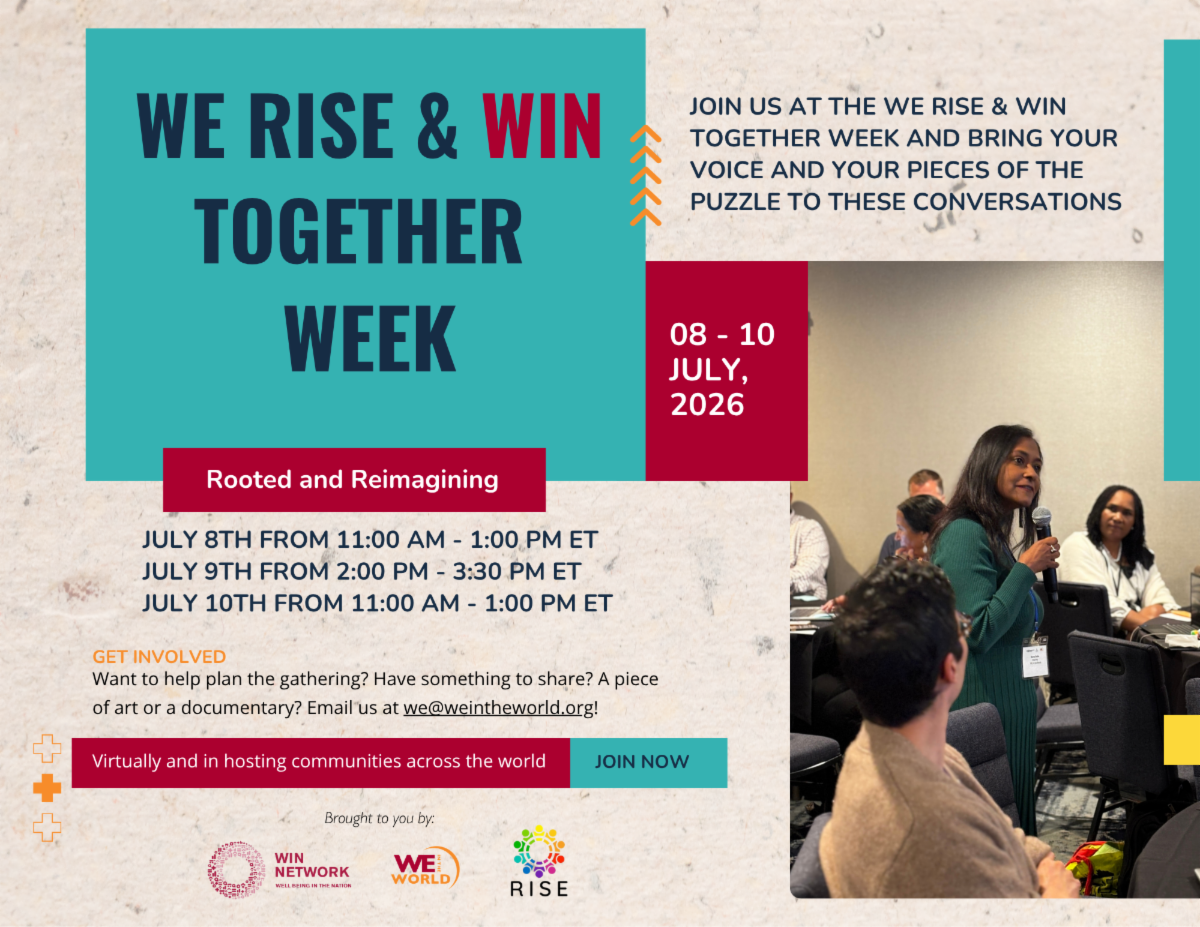
SAVE THE DATE: WE RISE & WIN Together Week
Rooted and Reimagining
July 8 - 10, 2026
July 8 from 11 am - 1pm ET
July 9 from 11am - 12pm ET
July 9 from 2 pm - 3:30 pm ET
July 10 from 11 am - 1 pm ET
| |
Virtually and in hosting communities across the world
| |
What does it mean for us to be rooted and reimagining as changemakers in this time?
How do we show up as better ancestors and founders of the next 250 years?
What paths can we take to rest, resilience and renewal?
Join us at the WE RISE & WIN Together Week and bring your voice and your pieces of the puzzle to these conversations.
We will connect, explore and visualize together how we can show that real change is possible, how we can grow the changemakers, and how we can power change with infrastructure, tools and resources for the future we want to build together.
Plus you'll get a first peek at new frameworks, strategies emerging among us to build the communities and the world we need, as better ancestors.
Over three days, we will look at:
-
Solidarity , sensemaking, and resilience — How we meet people in the realities they are facing now, and what efforts help communities to stabilize while making a different way visible.
-
Practical, powerful change — Strategies that can help people root change in practice, from learning communities and initiatives that show what is possible, to infrastructure that supports people to make the change a new norm.
-
Reimagining the future together — How a seven-generation orientation enables us to both respond to the present and leave future generations healthier than the ones we inherited.
Get involved
Want to help plan the gathering? Got something to share with each other? A piece of art or a documentary? Email us at we@weintheworld.org!
We will be sharing more details closer to the time. We can’t wait to see you and be in community with you.
| | | | |
| |
| |
|
The Frances R. Dewing Foundation is accepting applications from U.S.-based 501(c)(3) nonprofits and schools for projects that directly benefit children through early childhood and elementary education (up to sixth grade). Grants are awarded twice yearly (April 1 and October 1 deadlines) and prioritize innovative, project-based initiatives with clear, measurable impact. If you are launching or expanding a child-focused education program, this could be strong seed funding to support your work.
Deadline: October 1, 2026
| | | |
Funding: $50,000
Deadline: Rolling
Overview:
The Foundation for a Healthy High Point offers free grant writing support to eligible nonprofits serving Greater High Point (High Point, Jamestown, Archdale, and Trinity) that have identified an external funding opportunity of at least $50,000 aligned with social determinants of health and upstream solutions. Applications are rolling, decisions are made within two weeks, and if approved, the Foundation pays the grant writer directly, removing one of the biggest barriers to pursuing large state, federal, or national foundation grants.
Eligible organizations must:
• Be a 501(c)(3) for at least 3 years
• Serve High Point, Jamestown, Archdale, or Trinity
• Be pursuing a grant outside Guilford County of $50,000+
• Align with focus areas like healthcare access, economic stability, housing, education, and community conditions
Applications are accepted year-round, reviewed on a rolling basis, and organizations are typically notified within two weeks. This is an especially powerful opportunity for small and mid-sized nonprofits that don’t have full-time development staff but are ready to go after transformational funding.
| | | | | |
| Well-Being and Equity In The World Institute252 Daniel Webster Highway #1017 Nashua, NH 03060 US | | | | |