|
Here in Massachusetts, ballot initiatives aren’t just another safeguard against an increasingly conservative Supreme Court but an essential vessel for democratic change that can, at times, be more representative of community voices than elected officials. It’s a chance for voters to directly engage in policy changes that impact their everyday lives. I wish I could say ‘without using a middleman,’ but sadly, despite being one of 21 states that allow constituents to initiate ballot measures, Massachusetts doesn’t restrict lawmakers from repealing or amending them. And we hear that some of our lawmakers plan to dissent from community wishes.
We can’t let this be another tactic to exacerbate our communities’ mistrust and disbelief in government effectiveness. It’s not just about getting the job done. It’s also about transparency. Voting YES on question 1 would be sunshine on the private practices of our elected officials, allowing us to better understand what kinds of checks and balances systems need to be fostered to ensure our public servants have a responsive, inclusive, and functional environment.
Speaking of assessments, I’m excited to vote YES on question 2. As a former high school biology teacher, I believe that MCAS should be used to critique the school, provide more learning, and not drag our youth down.
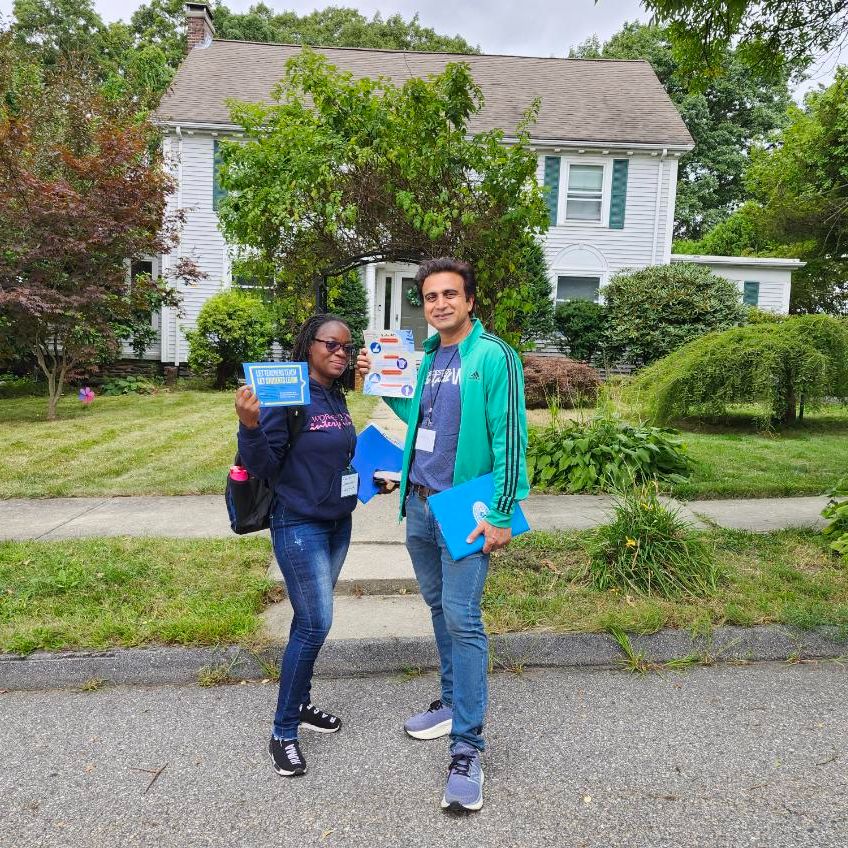
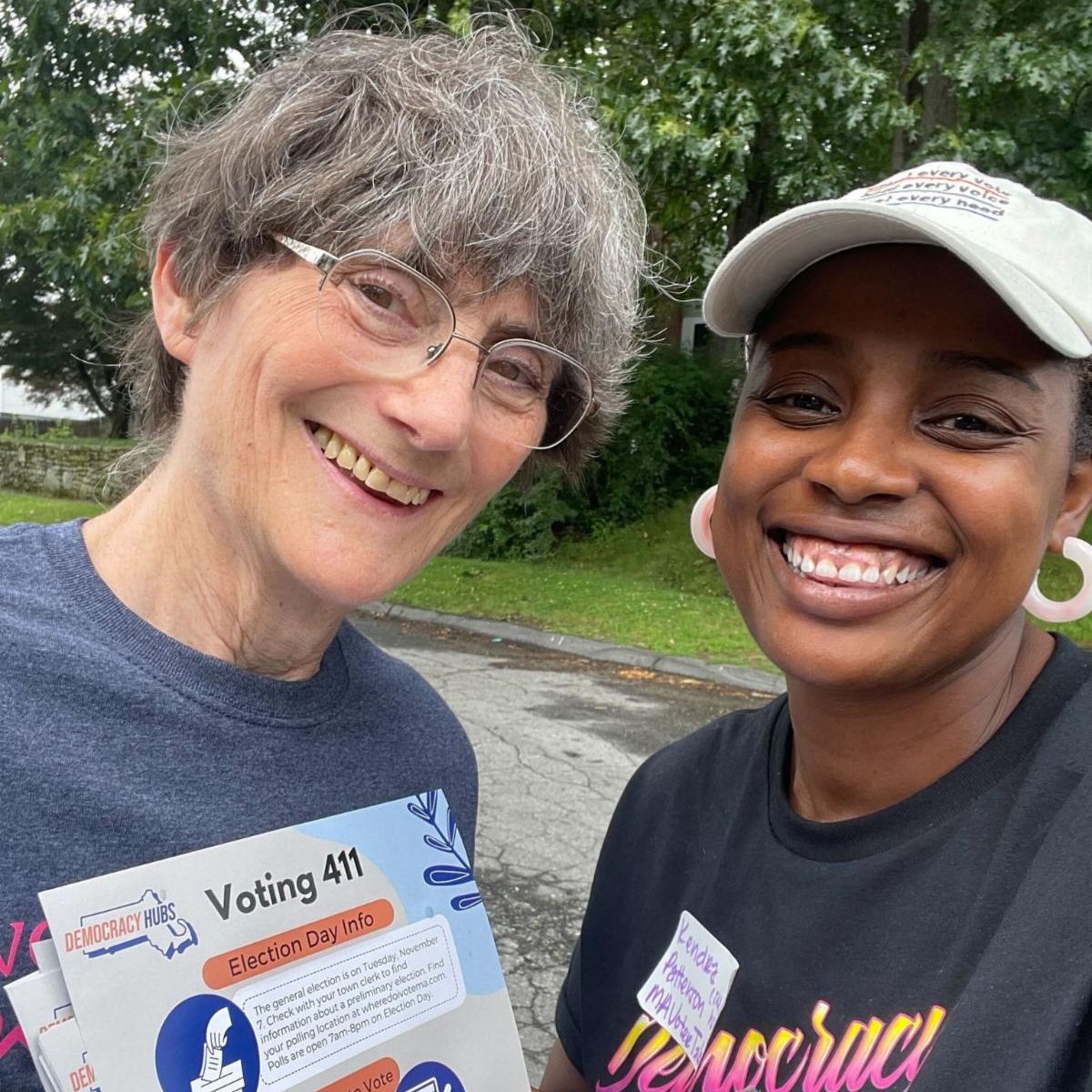
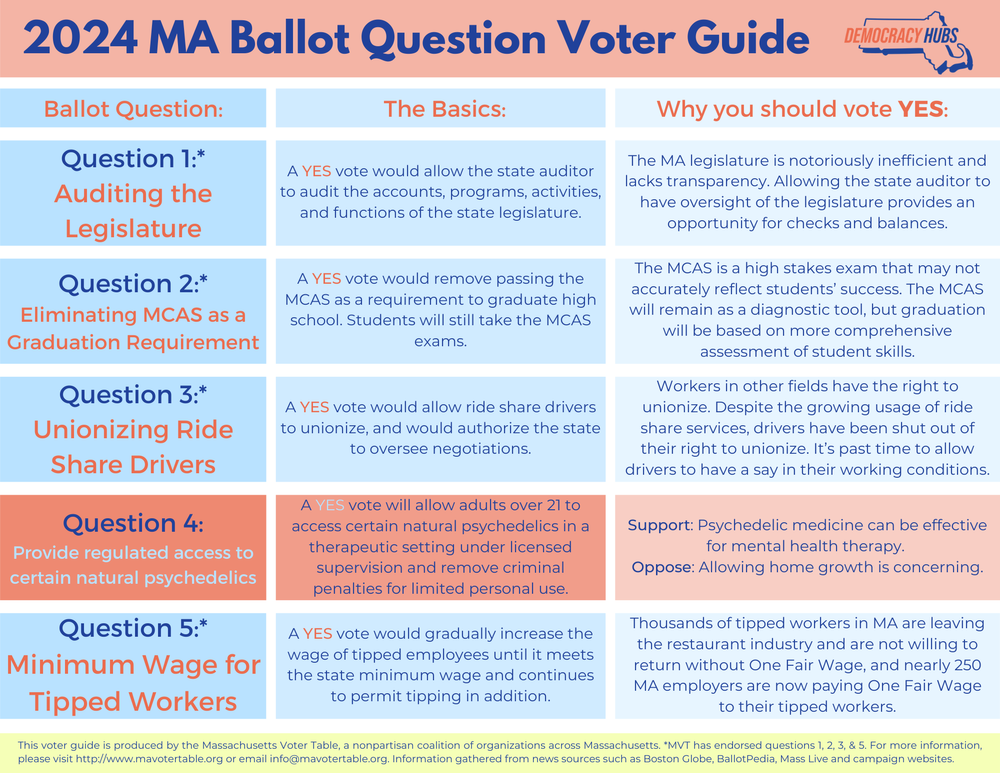
And I’m excited to share this 2024 MA Ballot Question Voter Guide by the Massachusetts Voter Table, informed by 34 Democracy HUBS community organizations with boots on the ground across Massachusetts. These groups ensure communities are prepared to cast a presidential vote but also understand the direct impact of ballot questions on their daily lives. Let’s face it: neither the federal minimum wage nor our state’s minimum wage comes close to resolving the everyday real-life struggle for basic survival that the 99 percent face. And that’s what questions 3 and 5 are about: human decency and human basic needs.
|