| |
NASA History News & Notes
AUGUST 2026 • Volume 43, Number 7
| | |
CONTENTS
- Reflecting on Hubble’s legacy
- New NASA history publication coming this fall
- The Gemini visual acuity experiments
- Save the date: Dr. Amy Kaminski speaks on “The People’s Spaceship”
- Trivia challenge: the first astronaut-designed mission patch
| | |
HUBBLE'S LEGACY
What 35 Years of Hubble Operations Can Teach NASA's Next Great Telescopes
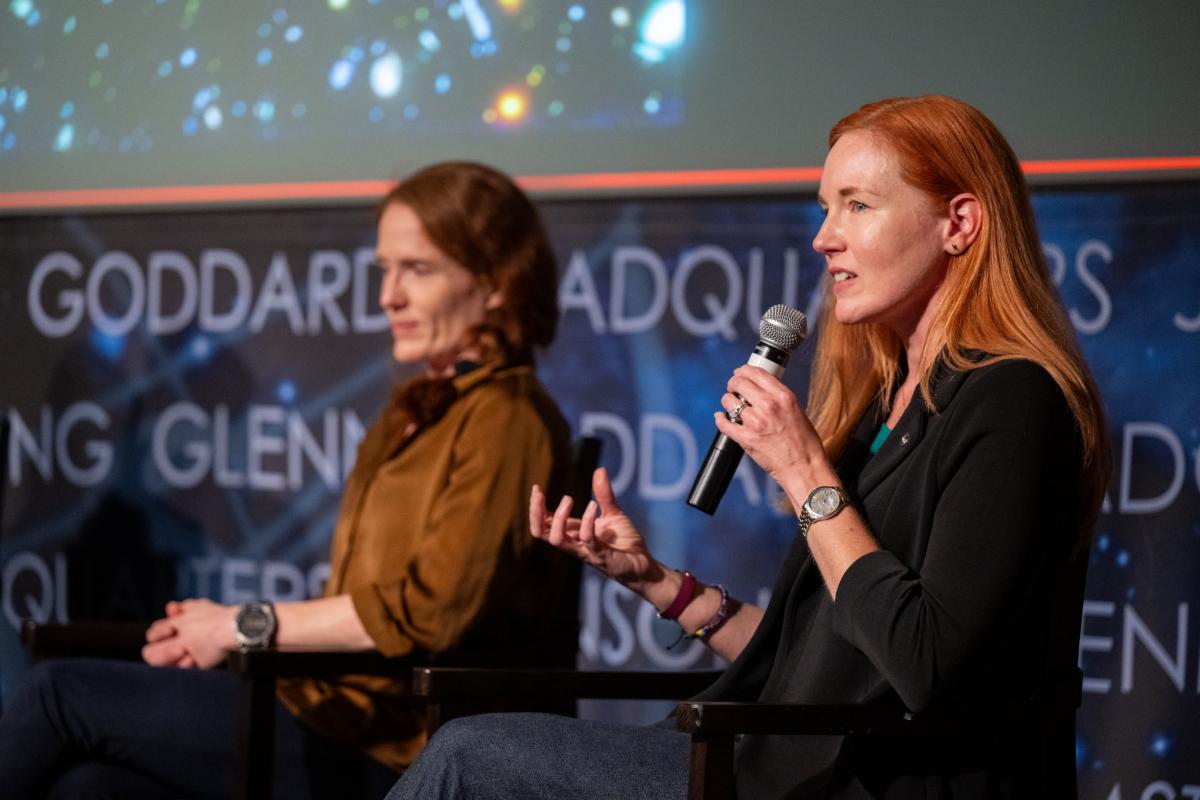
| | Amber Straughn, deputy project scientist for Webb science communications (right), discusses seeing Hubble's image of the Hourglass Nebula on a Pearl Jam album in 2000. In 2025, the band asked Straughn to explain the science behind the image. Credit: NASA/Keegan Barber | | |
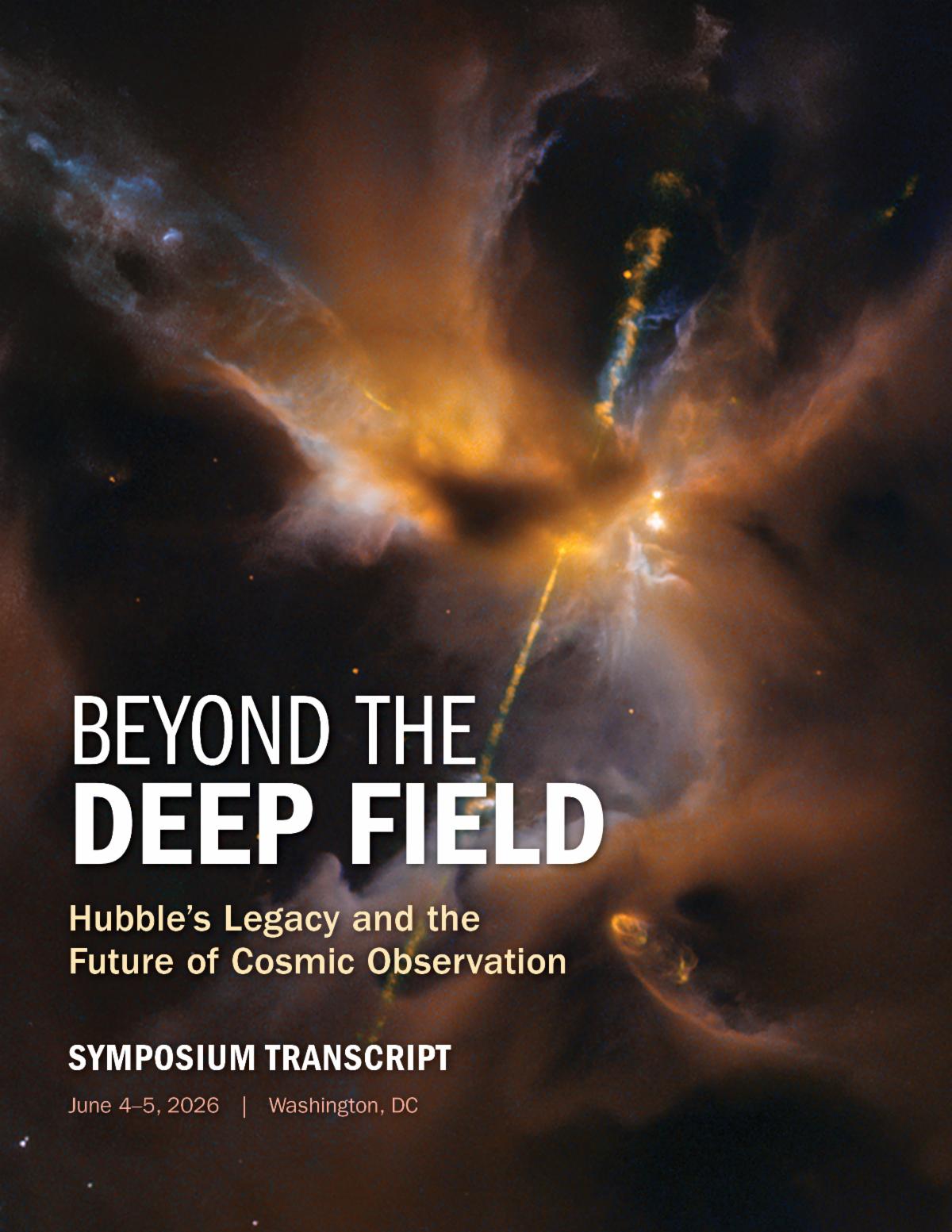
On June 4–5, 2026, NASA’s History Office gathered historians, scientists, engineers, and program leaders at NASA Headquarters for a symposium with a deceptively simple title: Beyond the Deep Field: Hubble’s Legacy and the Future of Cosmic Observation. The occasion was organized to contemplate the Hubble Space Telescope's three and a half decades in orbit, but the spirit of the gathering was forward-facing. As Brian Odom, NASA’s chief historian, explained in his opening remarks, historians care about inflection points—“the moments when the future could have gone a vastly different direction”—and Hubble’s history is full of them. The purpose of the event was to reflect on the telescope’s decades of triumphs and near-disasters for lessons that could shape how NASA builds, funds, and operates its next generation of flagship observatories. Over a day and a half, five roundtable discussions covered Hubble’s origins and political coalition-building, its scientific breakthroughs, the servicing missions that reinvented it, and the institutional partnerships that have kept it running for more than twice its planned lifetime.
Some of the most memorable moments came in the form of anecdotes from those with firsthand experience with Hubble. Former astronaut John Grunsfeld, who participated remotely, described how the impetus to service Hubble prompted NASA to solve engineering problems it hadn’t yet faced. The Pistol Grip Tool, first used for Hubble’s Servicing Mission 2 in 1997, ended up being indispensable for the construction of the International Space Station, and was used on nearly every subsequent spacewalk.
Dave Leckrone, former senior project scientist, brought photographs of a college astronomy textbook from 1964 to illustrate Hubble’s impact on standard university instruction. Leckrone focused on the index, pointing out that “black holes” weren’t listed, and neither were “quasars,” “dark energy,” “dark matter,” “galaxy mergers,” nor “exoplanets.” His point was that Hubble didn’t just confirm ideas that were already circulating in the field—as with the detection of supermassive black holes at the centers of galaxies, or the first characterization of an exoplanet’s atmosphere—it helped establish phenomena that are now considered basic curriculum.
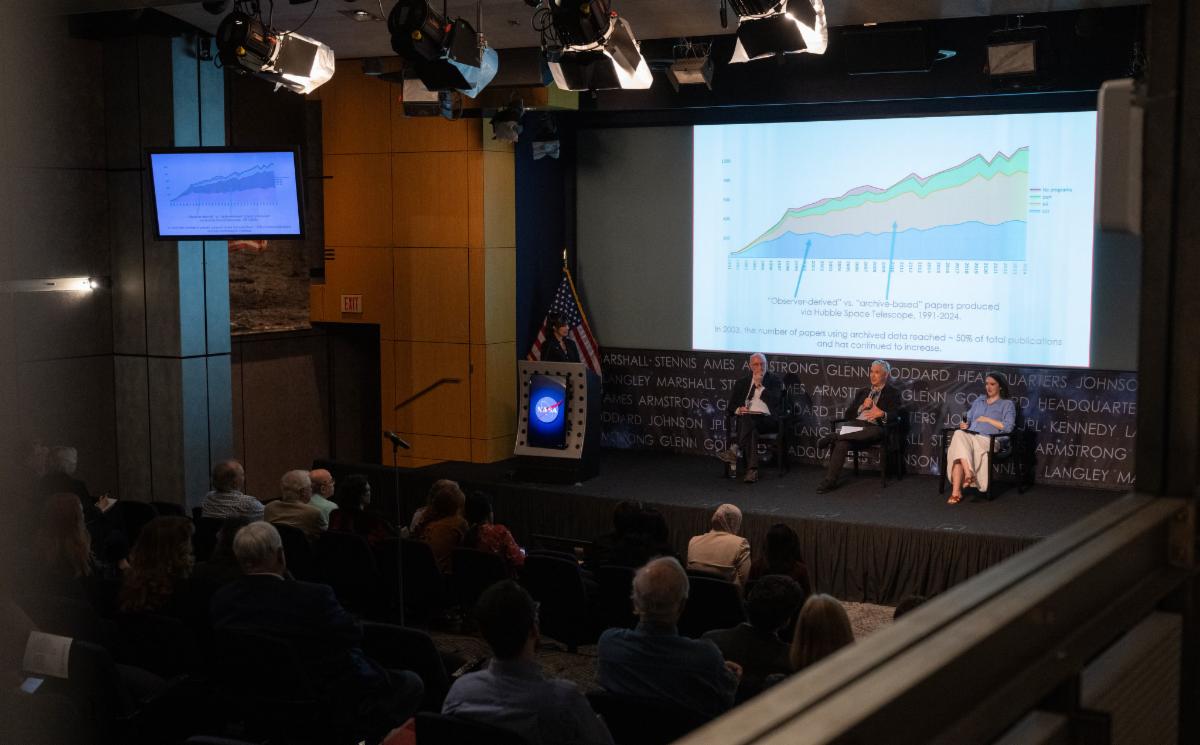
| | There was also much discussion of how Hubble changed what it means to “do” astronomy. Historian Patrick McCray explained how Hubble spurred a shift in the culture of the field: the lone observer with a telescope and a logbook gave way to astronomers using data from public archives. By 2003, McCray explained, more than half of peer-reviewed papers using Hubble data were drawn from archival information rather than new observations, and roughly 40% relied on archived data exclusively. This proved to be a crucial and lasting transformation, as science-ready public archives are now a core deliverable of flagship mission design. | | Patrick McCray (center on stage) discusses the use of Hubble’s archival data alongside Robert Smith and Rebecca Charbonneau, during a panel discussion on the history of the Hubble Space Telescope. Credit: NASA/Joel Kowsky | | One recurrent theme was Hubble’s vast cultural impact and the ubiquity of its images. Ken Carpenter, Hubble’s operations project scientist, recalled seeing the telescope’s images printed on the side of moving trucks on Maryland freeways. Historian Robert Smith wore socks printed with Hubble’s Pillars of Creation and discussed the dizzying array of consumer goods printed with Hubble iconography that would occasionally turn up in his classroom. The impact of this reach was echoed by NASA scientists who said this content helped draw them into astronomy in the first place. Amber Straughn, deputy project scientist for James Webb Space Telescope science communications, recounted seeing a Hubble image of a nebula on the cover of a Pearl Jam album as a college student. | | Lois Rosson
NASA Historian | | |
NEW NASA HISTORY PUBLICATION
The Heroic Saga of NASA’s Discovery Program Resumes this Fall
As Christopher Nolan’s adaptation of The Odyssey breaks box office records this summer, a much younger by comparison epic continues to unfold. NASA’s Discovery Program—with an origin dating back to the ancient time of 1989—has evolved and adapted over the decades. Greater historical attention to this program can help us understand the processes by which extraordinary journeys through the solar system can emerge, struggle, and eventually return groundbreaking science home to Earth.
When the NASA History Office published the first volume of this epic in 2023, Michael Neufeld wrote in his foreword that, “[t]he Discovery Program is the most important NASA robotic planetary spacecraft program you have never heard of—unless you are a space agency insider.” While the program itself is mostly unsung, the point is that the bold adventures of the missions make their mark on history, from landing on an asteroid, to returning cometary particles to Earth, or confirming the existence of more exoplanets than stars in our galaxy.
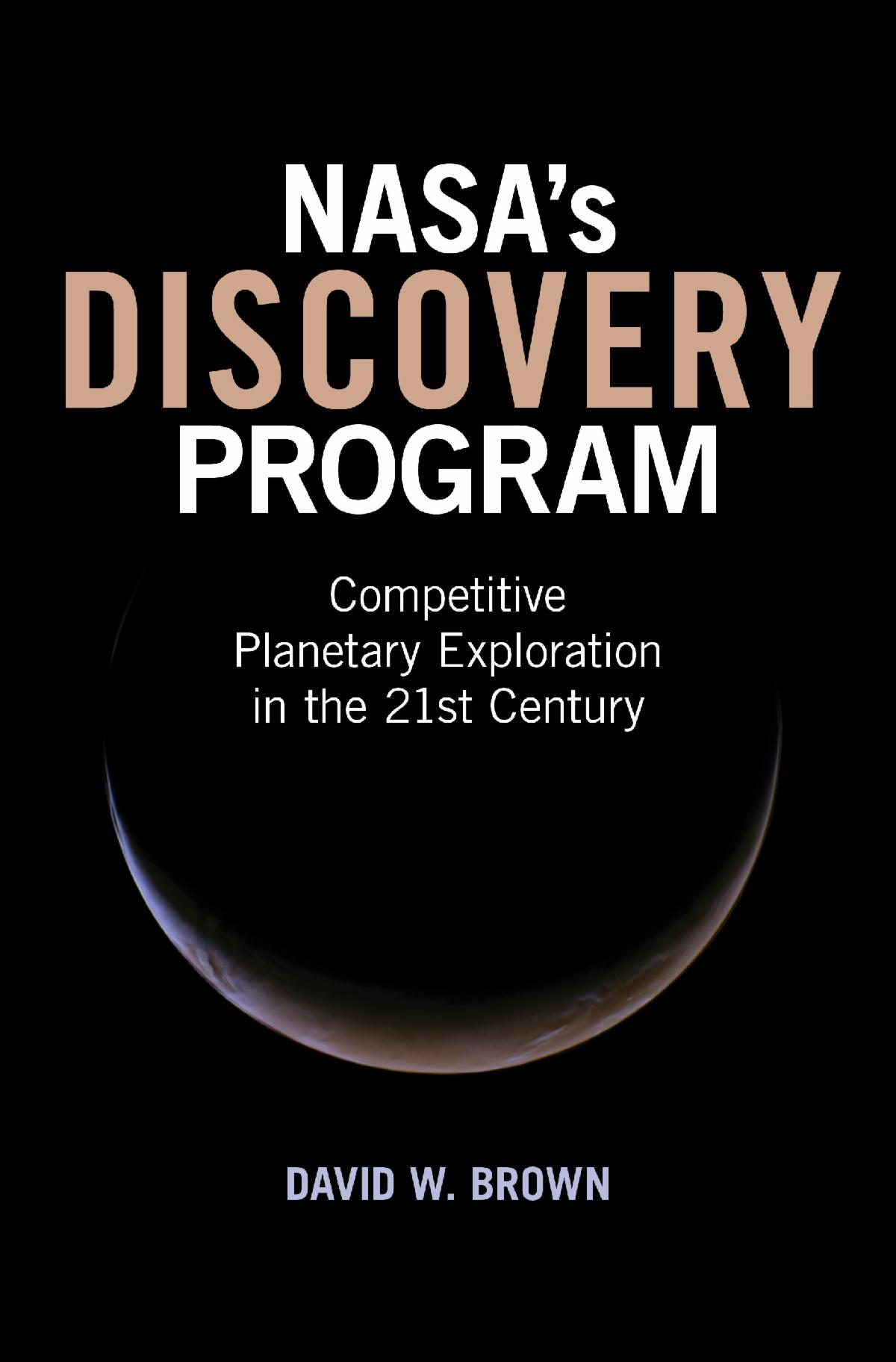
| | NASA's Discovery Program: Competitive Planetary Exploration in the 21st Century will be published this fall. Credit: NASA | | |
Now the second volume in this history of NASA’s Discovery Program—more of a saga than a Homeric hymn—comes to us in the compelling prose of author David W. Brown.
Brown’s account, titled NASA's Discovery Program: Competitive Planetary Exploration in the 21st Century, brings the story of the Discovery Program up to 2025. Despite the program’s success, Discovery faced institutional resistance due to its competitive, cost-capped model. Over time, growing ambitions for missions and risk aversion led to more reviews, longer development cycles, and increased costs, making it harder for lean proposals to compete with flagship-like missions. Adopting innovative technologies enabled efficiency and substantial savings in some cases but also introduced risks that hindered some missions.
Anyone interested in the recent history of NASA’s Discovery missions like MESSENGER, Dawn, Kepler, InSight, and Psyche should consider this book required reading. Tie yourself to a mast, forgo wax in your ears, and listen: Brown weaves the spoken insights of program participants into a readable narrative spanning several decades and millions of miles.
James Anderson
NASA Historian
| | |
ON THE WEB
What Could Mercury Astronauts See from Orbit?
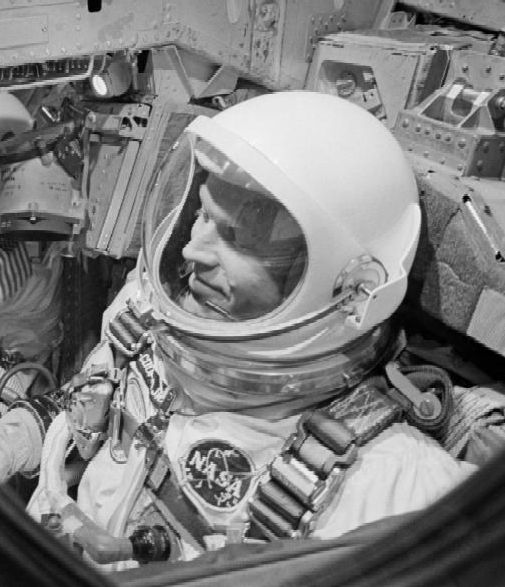
| | When L. Gordon Cooper Jr. returned from his two-day Mercury-Atlas 9 mission, the details he claimed to have seen from his spacecraft seemed farfetched to some. How could he have seen a white vehicle kicking up dust near the US-Mexico border or smoke-belching trains from 100 miles up? NASA decided to put the question to the test with the Gemini Visual Acuity Experiments. | | L. Gordon Cooper Jr. prepares for the launch of the Gemini V mission on August 21, 1965. Credit: NASA | | |
SPEAKER SERIES
Dr. Amy Kaminski on "The People's Spaceship"
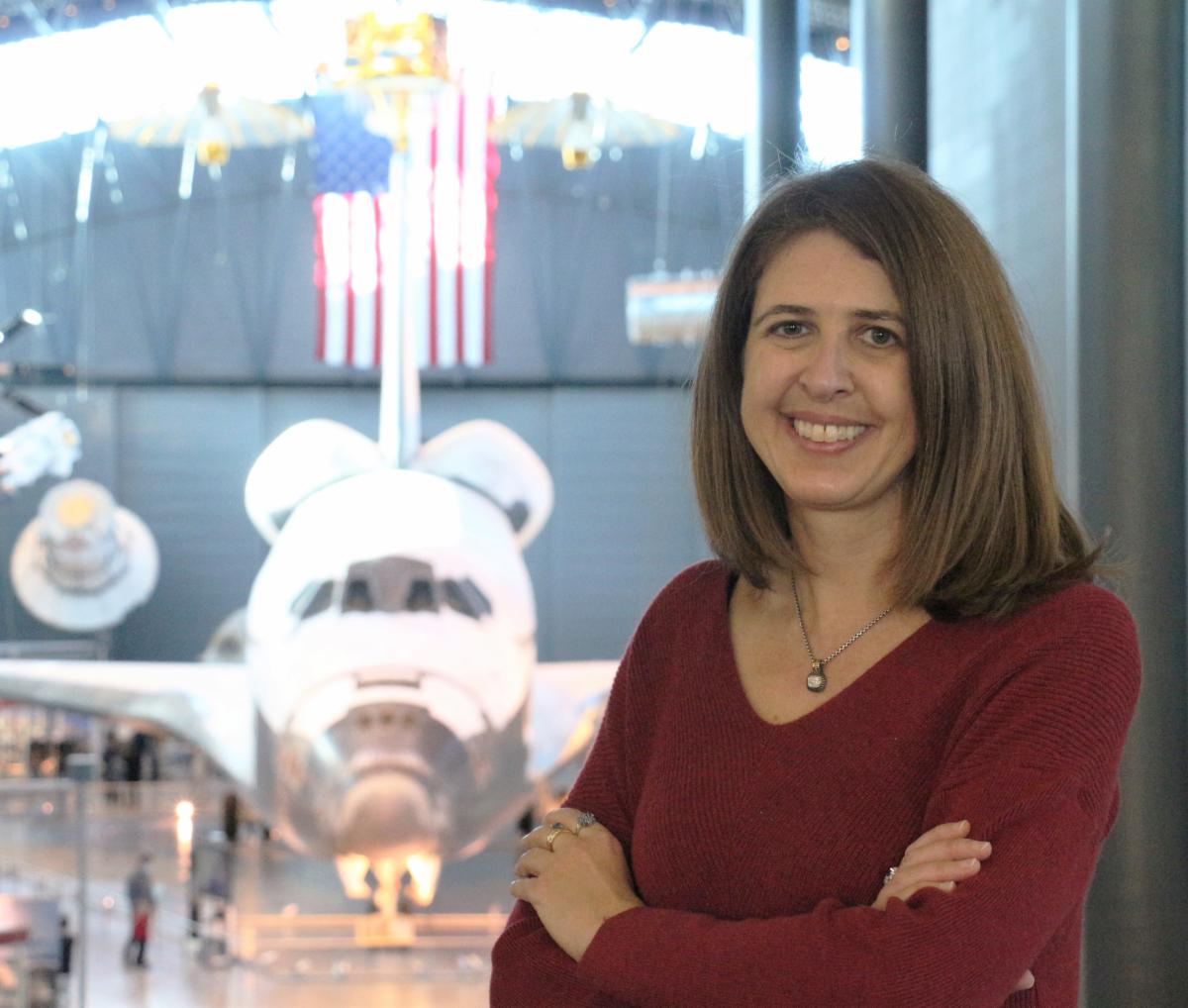
| | Photo courtesy of Dr. Amy Kaminski. | | |
Join us on Wednesday, September 16 at 12:00 pm EDT, for a presentation by Dr. Amy Kaminski titled “The People’s Spaceship: NASA, the Shuttle Era, and Public Engagement after Apollo.”
In this talk, Kaminksi will trace how and why NASA painstakingly connected the space shuttle to so many segments of society. Underscoring the successes and challenges endured in the process, she will share the story of how the shuttle became an American technological icon and offer insights into how the shuttle experience could guide NASA in maintaining a strong relationship with the public as it pursues the Artemis program and eventual human journeys to Mars.
| | |
|
TRIVIA CHALLENGE
The First Astronaut-Designed Mission Patch
| | |
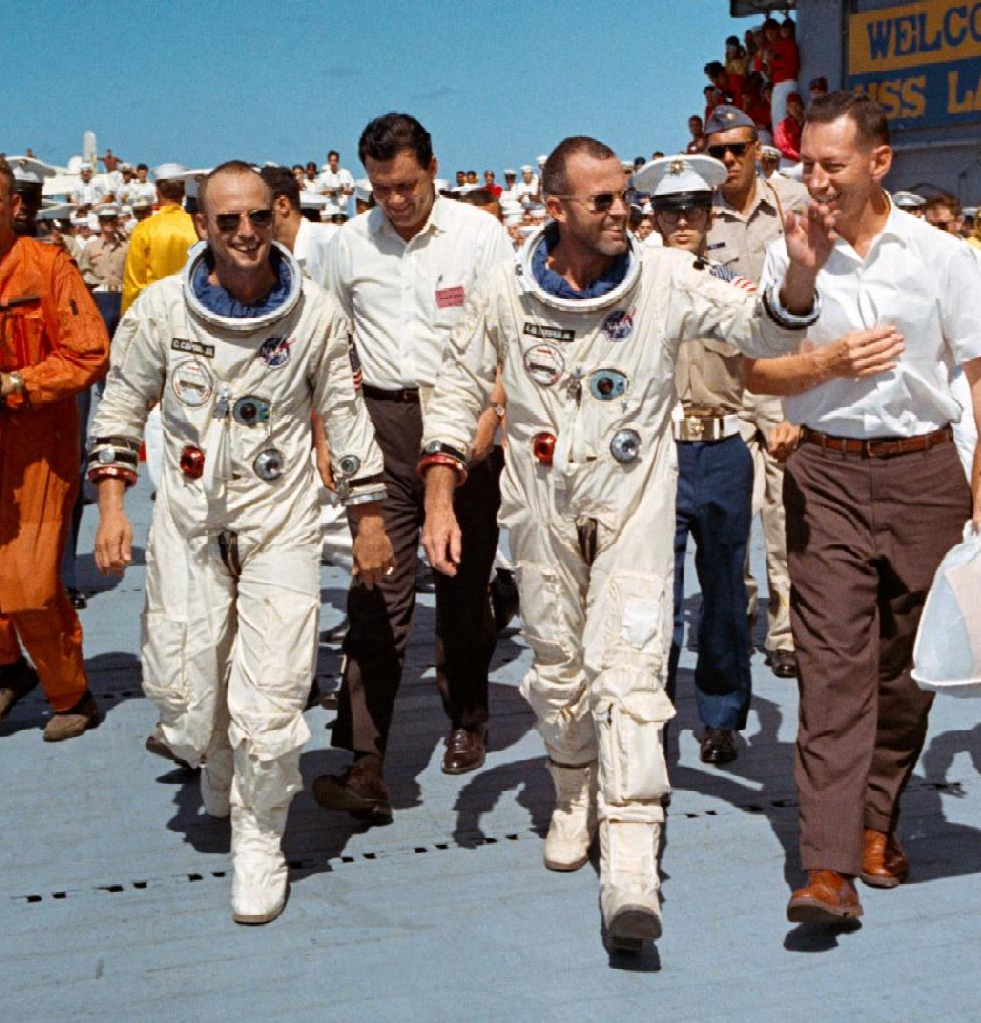
The first astronaut-designed mission patch took flight on Gemini V on August 21, 1965. Astronauts L. Gordon Cooper Jr. and Charles “Pete” Conrad Jr. created the mission patch to emphasize the pioneering nature of their mission, featuring a covered wagon with a short phrase embroidered on it.
With some reluctance, James Webb, NASA’s administrator at the time, approved the patch on the condition that the text on the wagon be removed or covered up.
| | What phrase was embroidered on the covered wagon? | | | | The Gemini V mission patch is visible on the spacesuits of the crew after their historic week-long mission. Credit: NASA | | |
NASA History
The NASA History Office documents and preserves NASA’s remarkable history and strives to engage with the public about NASA's past and how it relates to our world today.
| |
| |
National Aeronautics and Space Administration
NASA explores the unknown in air and space, innovates for the benefit of humanity, and inspires the world through discovery.
Visit nasa.gov
| | | | | |