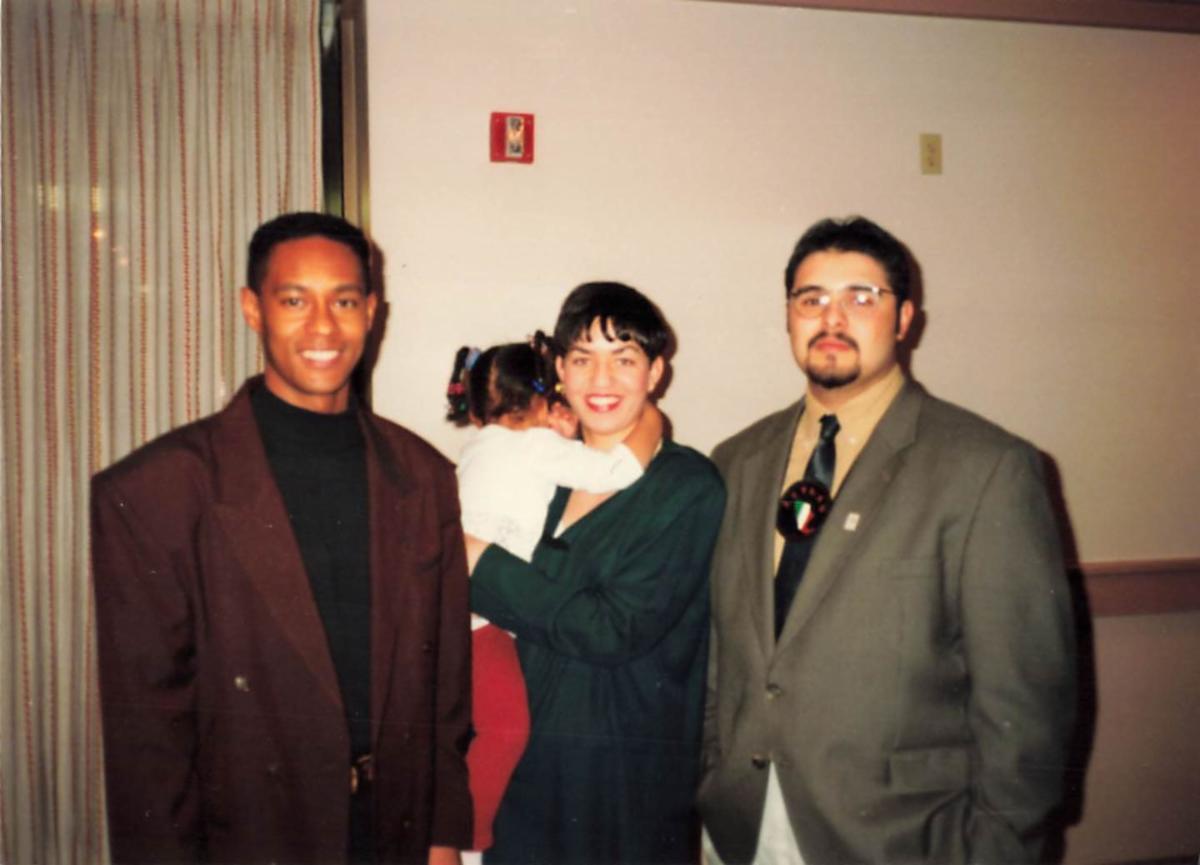
Black History Month is meaningful to me for a number of reasons, but professionally, it is important because of my experience as an undergraduate student at the University of Wyoming.
When I was a student, I held several officer’s positions in my university’s Association of Black Student Leaders (ABSL) including president. The group, open to any student interested in the life and experience of Black people, met routinely throughout the year for social gatherings, mentoring, study groups, etc. For Black History Month, we organized events and invited speakers who would share their insights into Black history, including the history within Wyoming. We felt this was incredibly important, because many people did not realize how rich Wyoming’s Black history is. The early history included Black homesteaders, educators, and entrepreneurs. The Black people and events that shaped Wyoming were not all so distant either, such as the Black 14, which I only became aware of through my involvement in ABSL.
These were 14 Black University of Wyoming football players who were kicked off the team in 1969 by their coach, Lloyd Eaton, after attempting to ask if they could wear black armbands while playing a game against Brigham Young University (BYU). At the time, students were calling for a protest of the game due to BYU’s ban on Black parishioners from becoming clergy. Rather than quit the team or skip the game, the Black 14 wanted to show their solidarity and support their team with armbands.
Coach Eaton’s decision left a deep hole in the lives of the Black 14. A 2019 Washington Post article states that many of them did not play football again, with only two having careers in the pros. (For the record, the Cowboys started losing after this incident.)
As social and racial perceptions shifted, many started to understand that the treatment of the Black 14 was a major stain on the university’s history, and 50 years later, the athletes were invited back for recognition and a formal apology. Prior to that, ABSL believed that the Black 14 story was important and worth telling to as many people as possible. Their experiences were compelling, and they were meaningful in comparison to our own experiences.
I was part of the team in ABSL who coordinated and organized these types of events, and in doing so, I found a calling of sorts. I discovered that I loved developing an objective for an event and marshalling the people and other resources needed to make it a success. The event planning gave me exposure to talent contracts, experience communicating both with peers and administration officials, the work of writing promotional materials, and how to anticipate and adjust to issues that develop on the day of an event.
I am also proud to recall that my work in ABSL was a springboard to participation in student government. I worked with the university’s first Black student body president. I was part of his cabinet, and I developed a lot of skills from this position as well.
All these experiences led me to the work I did in higher education in student services and college admission, and I still use those skills today. During Black History Month, I’m reminded of those moments and the path that led me to where I am.
I’m grateful for all I learned as a member of the Association of Black Student Leaders. This Black History Month, I hope you will take time to learn more about and share with others the history of Black members of your community or organizations. Speaking from experience, you never know what this kind of education and engagement will give you.
—Geneva Perry