Beyond Today: Leave a Legacy That Lives On | | |
What if one of the most meaningful ways to care for the people and causes you love was to plan for the future? August is Make-A-Will Month, a reminder that creating a will can help you protect what matters most while giving you an opportunity to make a lasting impact. And even as August comes to a close, there’s still time to take the next step toward creating your legacy.
A will does more than outline what happens to your belongings. It gives you an opportunity to make your values known and support the causes that matter most to you now and for generations to come.
For those who have been touched by preeclampsia, HELLP syndrome, or other hypertensive disorders of pregnancy, leaving a legacy can take on an even deeper meaning.
Imagine a future where no mother or baby is lost to preeclampsia.
By including the Preeclampsia Foundation in your estate plans, you can help support the work needed to make that future possible. A planned gift can help sustain the Foundation’s mission for years to come, supporting education, research, advocacy, patient programs, and efforts to improve outcomes for mothers and babies.
You don’t have to be wealthy to leave a legacy. One of the simplest ways to make a lasting impact is by naming the Preeclampsia Foundation as a beneficiary in your will or living trust. Other planned giving opportunities may include retirement assets, life insurance, charitable distributions, and more.
Your story matters. Your experience matters. And your legacy can help change what happens for the families who come after you.
As Make-A-Will Month comes to an end, consider taking a few moments to think about the legacy you want to leave behind and the lives you want to impact for years to come.
What will your legacy be?
| |
Breastfeeding After Preeclampsia:
What Should You Know?
| | |
The postpartum period can look very different after experiencing preeclampsia, eclampsia, or HELLP syndrome. For some families, breastfeeding may bring additional challenges, especially when recovery includes a premature birth, NICU stay, separation from baby, medications, or concerns about milk supply. Understanding these potential challenges can help families feel more prepared and empowered to advocate for the support they need.
Our latest article takes a closer look at breastfeeding after preeclampsia and the factors that may affect the breastfeeding journey. From how preeclampsia and other pregnancy complications can influence milk production to navigating breastfeeding while taking medications, recovering from a difficult delivery, or caring for a baby in the NICU, there are many considerations families may encounter.
The article also highlights an important reminder: there is no single “right” way to feed your baby. Whether you breastfeed, pump, use donor milk, formula, or a combination, your feeding journey is personal and asking questions and seeking support can make a meaningful difference.
If you experienced preeclampsia and are planning to breastfeed or are currently navigating your feeding journey, learn what to expect, what questions to ask, and where to find support.
| | Overcoming Compassion Fatigue | | |
Compassion Fatigue is a term used to describe a set of symptoms experienced by helpers, caregivers or other individuals working as advocates. The caregiver becomes overwhelmed by the feelings and experiences of their clients and begins to experience similar feelings of pain, fear, sadness, and suffering. The condition may include intrusive or obsessive thoughts, nightmares, loss of energy, avoidance of certain situations or stimuli, and generalized or specific anxieties.
The onset of Compassion Fatigue can be triggered by a single challenging or traumatic experience or be the result of repeated experiences helping others through trauma. This extreme state of anxiety and preoccupation with the suffering of those being helped becomes traumatizing for the helper. For this reason, it is sometimes called "vicarious traumatization" or "secondary traumatization" (Figley, 1995).
Compassion fatigue is not exclusive to doctors, nurses, or social workers. Research shows it affects anyone in a helping role, including peer advocates who draw on their own lived experience to support others. In fact, peer support workers face a particular risk because their personal history overlaps directly with the experiences of the people they serve. This creates a kind of double exposure: the original trauma, and the repeated retelling of it.
This does not mean maternal health advocacy work harms you. It means the work asks a lot of you, more than most people around you will ever fully understand. That deserves acknowledgment, not just a pep talk.
Read more about the cost of caring in our MoMMAs Voices blog post!
| | |
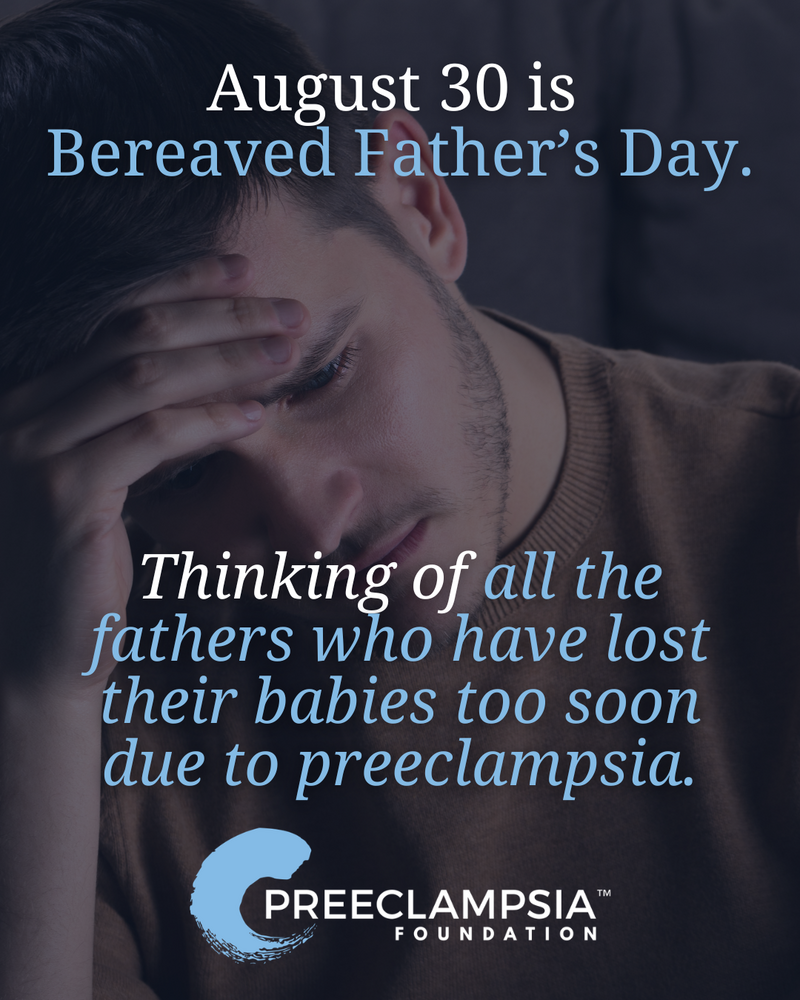
We are thinking of all the fathers who have lost their babies too soon due to preeclampsia, eclampsia, or HELLP syndrome.
Your story is important. To share yours, visit preeclampsia.org/our-stories.
| | |
August 30th is Grief Awareness Day
All kinds of grief can occur in pregnancy or postpartum. Some are experiencing the loss of their baby. Some are grieving the loss of the expected pregnancy experience. Others may be struggling with extended time away from their newborn in the NICU. Some may be grieving future children they cannot have. Grief is not linear. Grieving families need different kinds of support depending on their circumstances. Start by asking them (or yourself) what support is helpful. No matter your grief, there is support for you.
| | Your Experience Can Help Save Lives: Join the Preeclampsia Registry | | |
Your story can help shape what comes next.
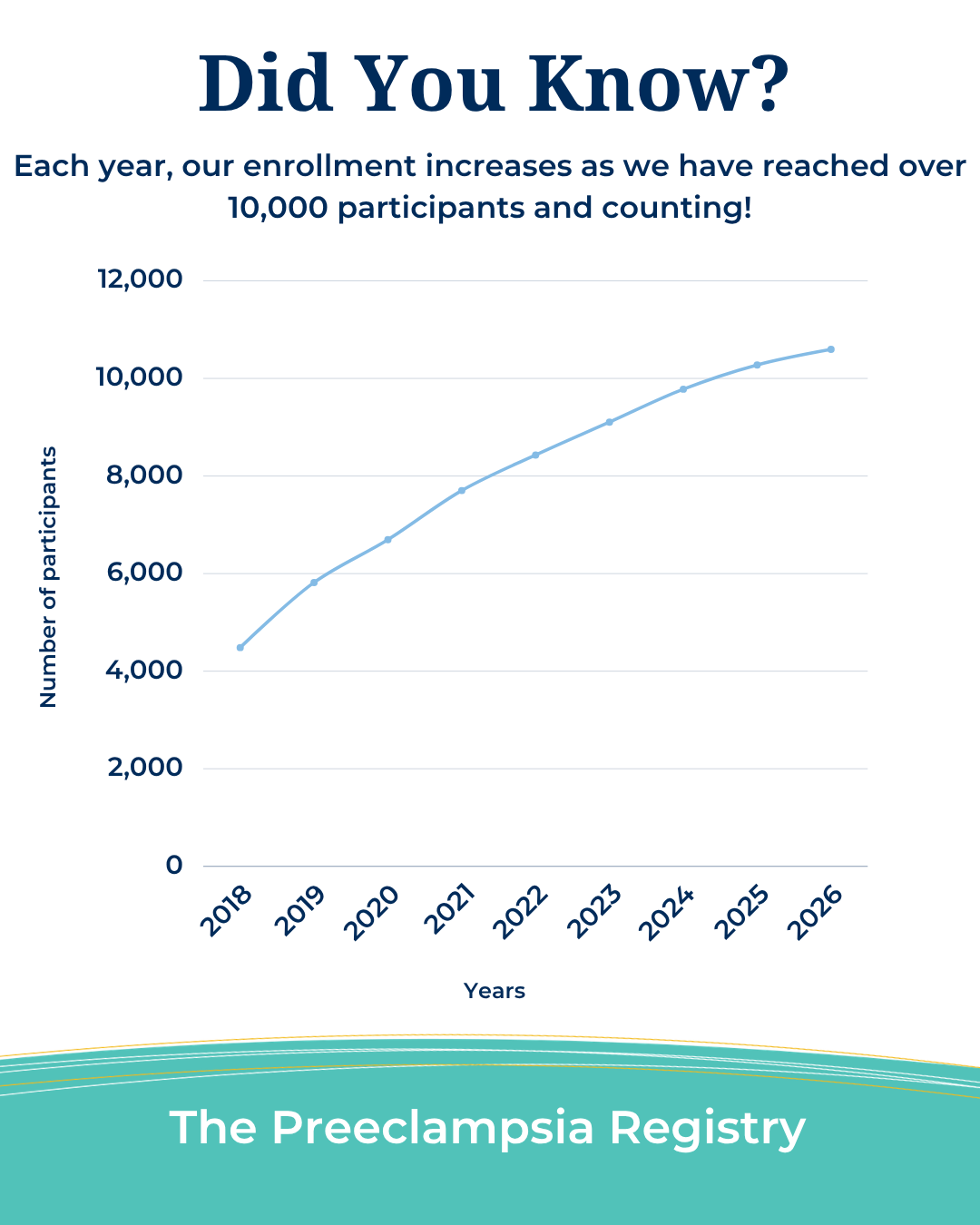
The Preeclampsia Registry brings together people with different experiences to help researchers better understand preeclampsia and improve prevention, treatment, and care. Whether you’ve experienced preeclampsia yourself, supported someone who has, or had a pregnancy without it, your perspective can help fill important gaps in research.
Already part of the Registry? Keep your story current. Take a few minutes to review and update your information each year. Your experiences can change over time, and keeping your information up to date helps researchers build a stronger picture of the long-term impact of preeclampsia.
Not enrolled yet? There’s still time to add your voice. The Registry welcomes:
- Preeclampsia survivors
- Family members and friends, including partners
- Women who have had pregnancies without preeclampsia
Your participation helps create a more complete and inclusive research database, one that reflects the many different ways preeclampsia can affect individuals and families.
Enroll today, update your information, and invite three people in your circle to join you. Every new participant and every updated story brings researchers closer to better answers and a safer future for mothers and families.
| | Take Action: Support the PREEMPT Act | | |
New bipartisan legislation could help expand access to innovative testing for patients at risk of developing preeclampsia. The Preeclampsia Risk Evaluation and Evidence-based Management through Personalized Testing Act, or PREEMPT Act, would provide state Medicaid programs with important guidance on using blood-based biomarker tests throughout pregnancy.
These tests can help healthcare providers identify patients at elevated risk earlier and make more informed decisions about monitoring, treatment, and care. With hypertensive disorders of pregnancy remaining a leading cause of maternal illness and death, improving access to timely and effective testing is an important step toward protecting pregnant patients and their babies.
We need your support to help advance this legislation and ensure more families can benefit from innovative tools that may improve preeclampsia detection and management.
Click here to contact your U.S. Representative and urge them to cosponsor the PREEMPT Act to accelerate access to tools and technologies that improve the care of pregnant women and reduce maternal morbidity and mortality.
| | September Promise Walks Are Here! | | |
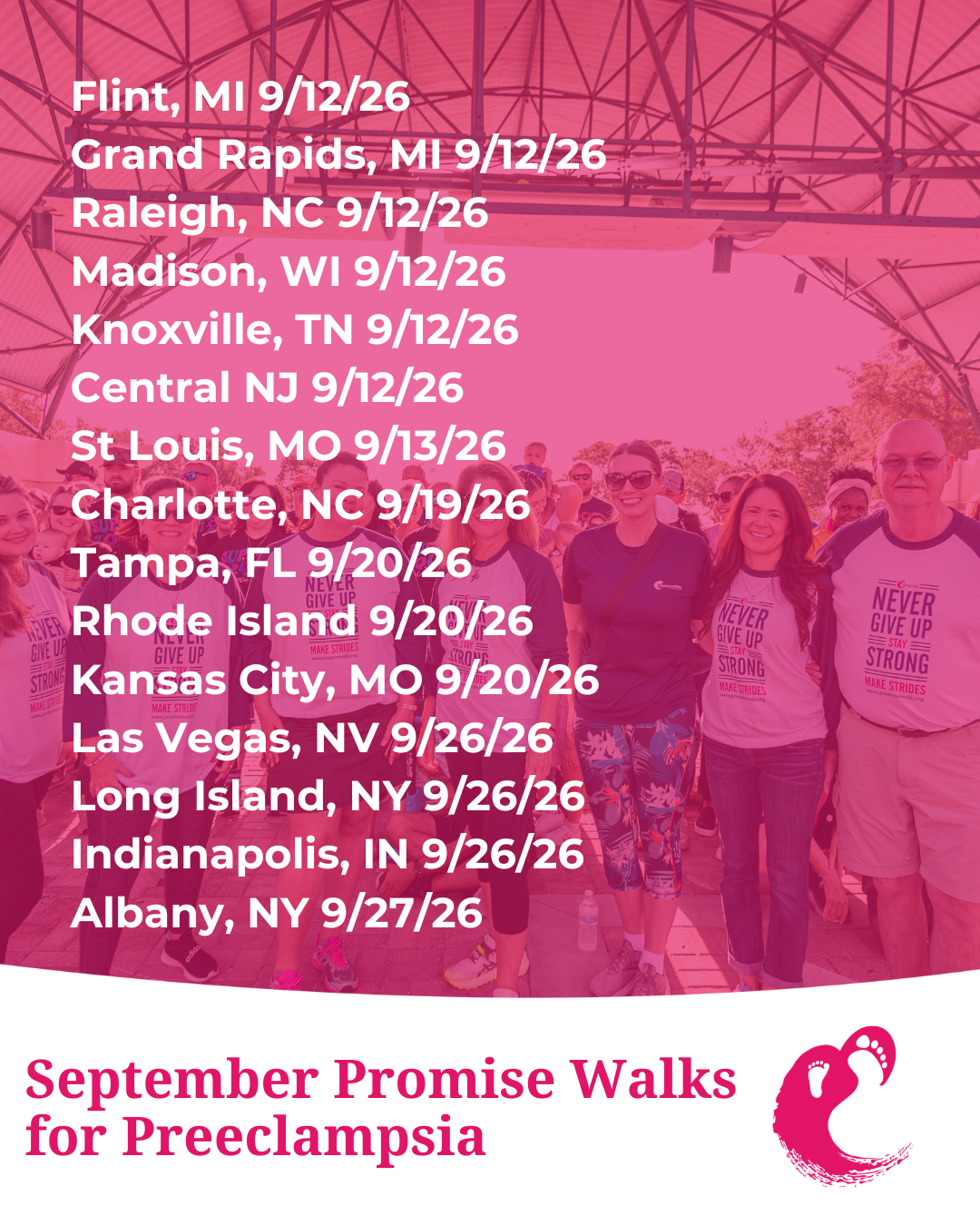
September is bringing a powerful wave of Promise Walks across the country, and we’re excited to continue bringing communities together in support of families affected by preeclampsia. With many of our 2026 walks taking place this month, there are more opportunities than ever to come together, honor loved ones, celebrate survivors, share our stories, and raise awareness.
Every Promise Walk is made possible by the dedication of our incredible chairs, volunteers, participants, donors, and supporters. Together, you’re helping create spaces where families can connect, feel supported, and know they are not alone, all while advancing the Preeclampsia Foundation’s mission.
Whether you’re joining us at a September Promise Walk, supporting a team, making a donation, or participating through Promise Walk Wherever, every step matters.
Find a Promise Walk near you and join us this September. Together, we’re walking toward a future where fewer families are impacted by preeclampsia.
In Gratitude,
Emily Chaddock
National Events Manager
| | She is STILL Here: Register for the 2026 MoMMAs Voices Summit | | |
A Gathering for the Women Who Never Stopped Showing Up!
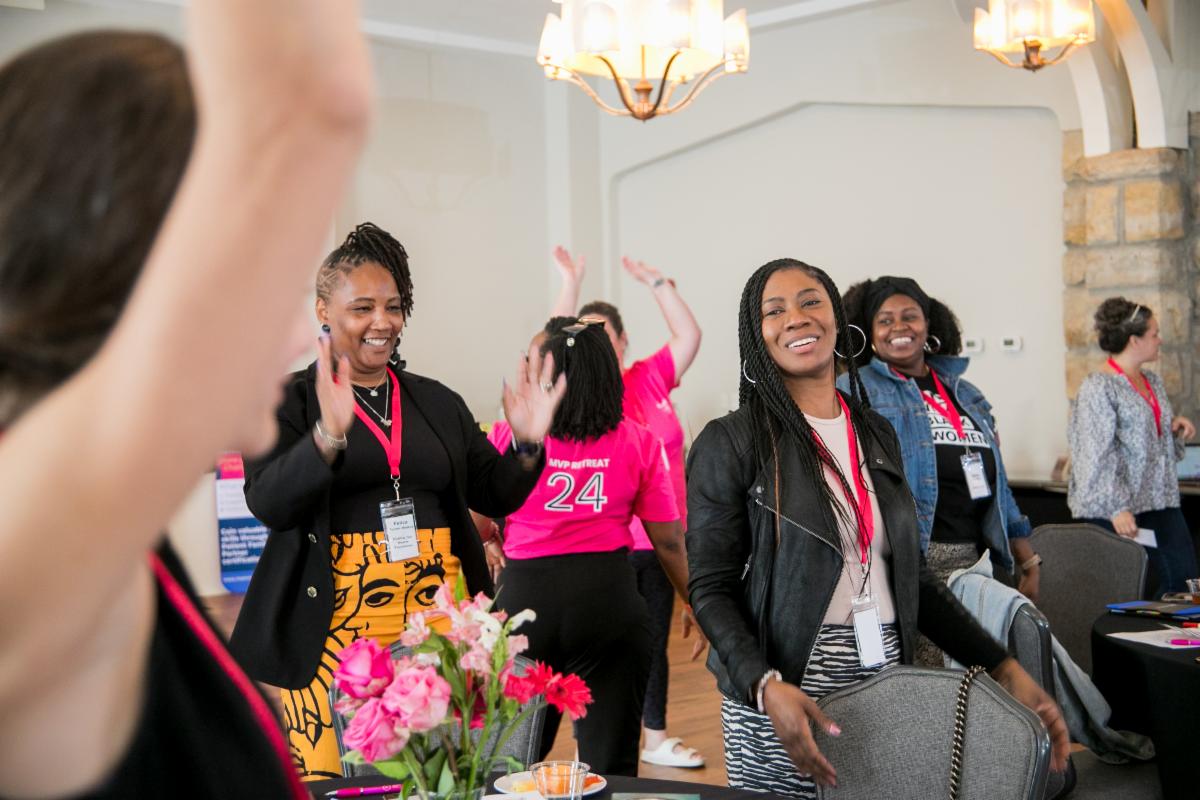
For three days, you'll be surrounded by women who understand the weight of this work and the importance of it. Women who have turned lived experience into leadership. Women who continue showing up for families they may never meet.
A space to learn.
A space to connect.
A space to remember that your voice still matters.
Come for the connection. Stay for the community. Leave inspired to keep showing up.
When: October 25–27, 2026
Where: Denton, Texas · Dallas–Fort Worth
Sign up by THIS Friday, August 28, and use promo code 75OFF to save $75 on registration!
Learn more and secure your spot today!
https://www.mommasvoices.org/summit
| |
Centering Lived Experience in
Maternal Health Improvement
| | |
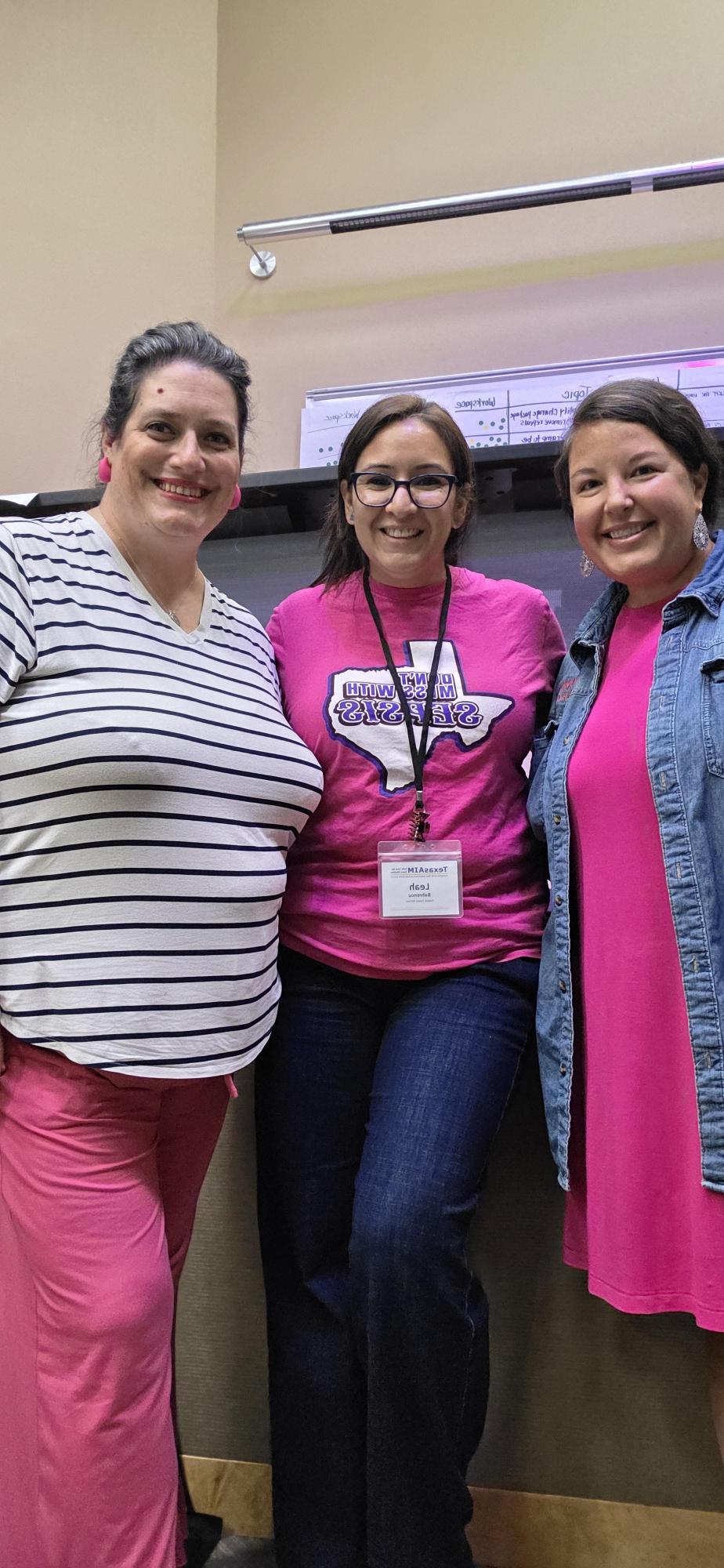
We’re proud to see lived experience and patient engagement at the forefront of efforts to improve sepsis care in obstetrics. At the TexasAIM Sepsis in Obstetric Care Discovery and Design Session at the University of Texas at Austin, Nicole Purnell, Leah Bahrencu, and April Chavez joined healthcare leaders and partners for meaningful conversations focused on patient engagement, quality improvement, and advancing safer maternal care.
The session provided an important opportunity to learn from hospitals making progress in sepsis care, share insights and strategies, and explore how we can continue supporting hospitals that are still on their improvement journey.
Improving maternal health outcomes takes all of us. By listening to patients, sharing what works, strengthening healthcare systems, and incorporating lived experience into quality improvement, we can help turn meaningful conversations into safer care.
Together, we’re working toward Safe Care for Every Mother.
| | |
Patient Family Partner (PFP) Spotlight: Crystal Jackson
Crystal Jackson is a pediatric registered nurse and a maternal health advocate based in South Florida. She is a mother of four living children and a survivor of severe preeclampsia, postpartum preeclampsia, hemorrhage, and sepsis, each pregnancy more complicated than the last. These lived experiences forever changed the way that she thought about pregnancy, birth, and women’s health. Her passions include raising awareness on hypertensive disorders of pregnancy and maternal mental health. She aims to use her voice to help other women navigate the healthcare system and prevent postpartum complications and deaths. Crystal is currently a member of the Preeclampsia Foundation Patient Advisory Council.
| | Partnerships Help Us Go Further | | |
DiaMedica Therapeutics Inc. is a clinical stage biopharmaceutical company committed to improving the lives of people suffering from serious ischemic diseases with a focus on preeclampsia, fetal growth restriction and acute ischemic stroke. DiaMedica’s lead candidate, DM199, is the first pharmaceutically active recombinant (synthetic) form of the KLK1 protein, an established therapeutic modality in Asia for the treatment of acute ischemic stroke, preeclampsia and other vascular diseases. DiaMedica’s mission is grounded in advancing patient care through a novel approach that centers around reversing the effects of the ischemic injury to improve patient outcomes. The company is committed to advancing DM199 through rigorous clinical development to bring a much-needed therapy to the millions of women affected by preeclampsia each year.
"Preeclampsia remains one of the most under-treated conditions in maternal health, with no approved therapies," stated Dr. Julie Krop, Chief Medical Officer for Diamedica. "The Preeclampsia Foundation has spent decades building the community, education, and clinical infrastructure that make research like ours possible. Partnering with an organization deeply rooted in patient advocacy keeps our team grounded in our commitment to improve outcomes for mothers and babies."
Data from a Phase 2 investigator-sponsored clinical trial in South Africa suggests that DM199 has the potential to significantly lower blood pressure and dilate intrauterine arteries without crossing the placental barrier, which historically has been a safety hurdle faced in developing treatments for PE. DiaMedica has received clearance from Health Canada to evaluate DM199 in a Phase 2 trial in early-onset preeclampsia and plans to expand the study into the United Kingdom. In parallel, DiaMedica is working with the FDA to open an IND to evaluate DM199 in patients experiencing preeclampsia in the United States.
| | Want to receive the next Expectations newsletter via text? | |
Text PFNEWS to 26989 and opt-in to receive the latest Preeclampsia Foundation news, events, and research delivered right to your phone!
| | Thank you to our Corporate Partners | | | | |