What Is Love Bombing?


October is Domestic Violence Awareness Month. In this month's guide, you will learn:


  • The definition of love bombing
  • The signs of love bombing
  • How to talk about healthy vs. unhealthy relationships with youth
  • Questions to ask if you or someone you know may be experiencing love bombing


WHAT IS LOVE BOMBING?


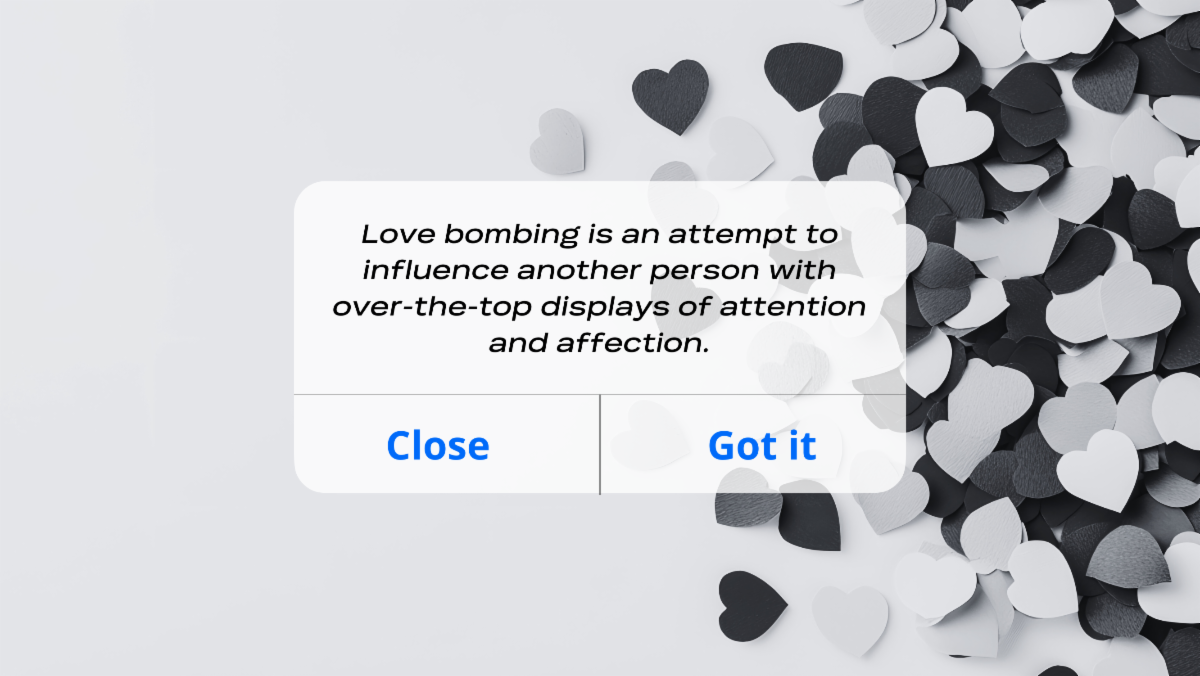
According to Psychology Today, "love bombing is an attempt to influence another person with over-the-top displays of attention and affection."


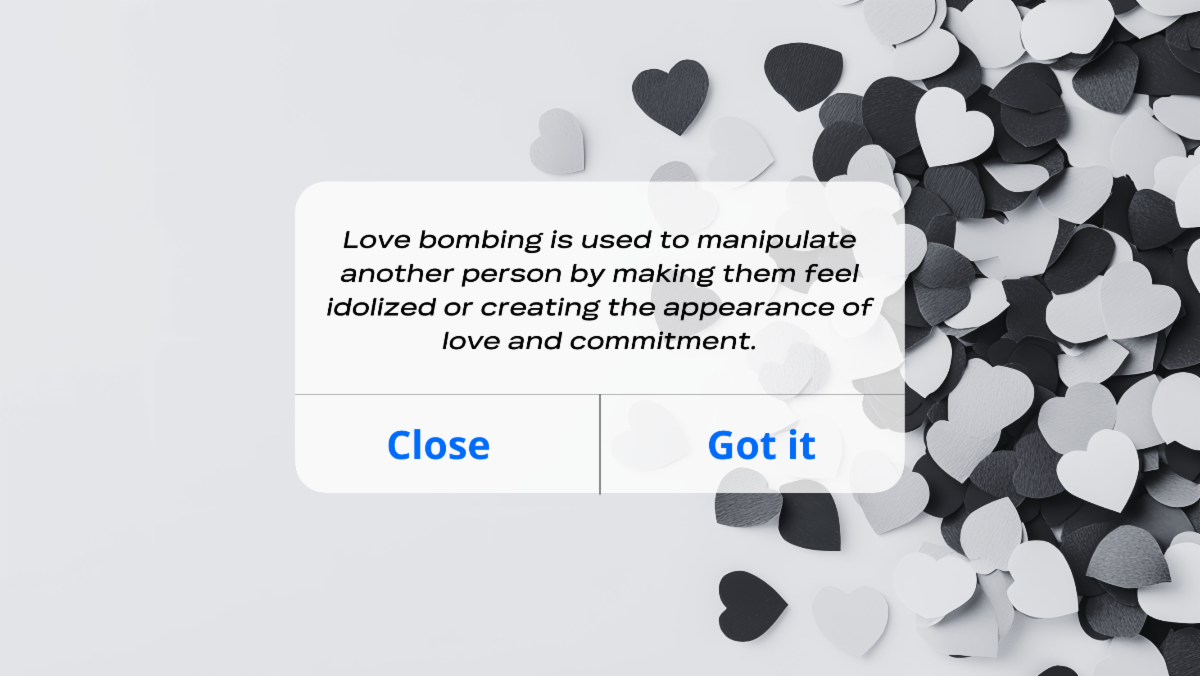
Love bombing is used to manipulate another person by making them feel idolized or creating the appearance of love and commitment, only to later put unhealthy conditions or expectations to keep that love (Futures Without Violence).


A study conducted by the International Journal of Interpersonal Abuse and Psychology (IJIAP) found strong correlations between love bombing, narcissism, and emotional abuse (Beri, 2024).


Source: Psychology Today

Source: Futures Without Violence

Source: Psychopedia Journals


WHAT ARE THE SIGNS OF LOVE BOMBING?


Sign #1: "Soulmate" Status

The use of labels like "soulmate," "their person," or "their other half" too early in the relationship (especially if you are just getting to know someone) could be a sign of love bombing.


Sign #2: Exaggerated Compliments

There is nothing wrong with compliments and authentic affirmations. However, it could be a sign of love bombing if those compliments feel over-the-top (especially if they make you uncomfortable).


Sign #3: Gifts

Giving gifts can be a thoughtful way to show someone you are thinking of them. However, giving an excessive amount of presents could be a tactic later used to manipulate the relationship (ie. if gifts are tied to stipulations like "I bought you drinks, so you owe me _____").


Sign #4: Communication Overload

A healthy relationship needs good communication. But if you are feeling overwhelmed by multiple messages or phone calls you may want to proceed with caution or state your boundaries.


Source: National Domestic Violence Hotline


HOW DOES LOVE BOMBING RELATE TO EXPLOITATION?


Predators often seek out material or emotional vulnerabilities.


For individuals who seek love and connection, a predator can come in to meet an emotional need by "sweeping them off their feet" with love-bombing, only to put unhealthy, unsafe, or unwanted expectations in order to keep meeting that emotional need.


HOW TO TALK ABOUT HEALTHY VS. UNHEALTHY RELATIONSHIPS WITH YOUTH


It's important to talk with youth about what a healthy relationship looks like (either romantic or platonic). Here's where you can start:


  • Bring Awareness: To signs of manipulation such as excessive flattery, over gifting, or moving too quickly. Also if someone creates unhealthy conditions ("I gave you ____, so you owe me" or "if you love me, you will always respond within 2 minutes to any message I send."
  • Talk About Boundaries: Mutual respect and consent are important components of a healthy relationship.
  • Teach How to Set Boundaries: Take note if something makes you feel uncomfortable or scared, trust your gut, decide what you want vs. don't want, and understand that you can always say "no."
  • Share Reminders: Use words of truth to encourage kids and build up their self-esteem — "You matter." "You are worth protecting."


Studies show that teaching youth about the early warning indicators of manipulation, such as fast intensity in new relationships, can help them develop emotional awareness and set reasonable limits (Grieve & Panebianco, 2013).


Source: Love 146

Source: Grieve, R., & Panebianco, L. (2013). Assessing the role of aggression, empathy, and self‐serving cognitive distortions in trait emotional manipulation. Australian Journal of Psychology, 65(2), 79–88. https://doi.org/10.1111/j.1742-9536.2012.00059.x


QUESTIONS TO ASK IF YOU OR SOMEONE YOU KNOW MAY BE EXPERIENCING LOVE BOMBING


Does this person repeatedly cross boundaries?


Do I feel pressure to do something in return?


Does this make me feel genuinely cared for?


Are their intentions clear?


Does this feel repetitive and unnecessary?


If you or someone you know needs support or help now, please visit the National Domestic Violence Hotline HERE, call 1.800.799.SAFE (7233), or text "START" to 88788


Source: Futures Without Violence


LOVE IS BUILT SLOWLY AND DEMONSTRATED THROUGH AUTHENTICITY AND CONNECTION.


A healthy relationship looks like:


  • Honoring and encouraging one another's autonomy and independence
  • Taking the time to learn what types of affection are most meaningful to each of you
  • Respecting and discussing boundaries openly and honestly


According to relational experts:


  1. To move from acquaintance to casual friendship takes between 40-60 hours
  2. To move from casual friendship to close friends takes between 80-100 hours
  3. To move from close friends to inner circle takes more than 200 hours


Why does it take so much time?


Because it is easy to be fake for 3 hours. It is much harder to be fake for 60-100 hours. Spending in-person quality time with someone helps you protect your heart from people who might try to cause you stress or harm.


Source: Futures Without Violence

Source: Jeffrey Hall, Journal of Social and Personal Relationships


YOUR RELATIONSHIPS MATTER: POP SERIES NIGHT ON THURSDAY, NOVEMBER 6TH FROM 6:30-8:30PM


Want to experience the Power Over Predators (POP) curriculum that C.A.S.T. presents to middle and high school students?


On Thursday, November 6th, C.A.S.T. will be presenting "Your Relationships Matter" — the POP lesson about healthy vs. unhealthy relationships.


Join us at East Ridge High School (4200 Pioneer Dr, Woodbury, MN 55129) on the evening of November 6th!


A SPECIAL THANK YOU


We want to acknowledge the important work that Desiree Wiesen-Martin and her students at the University of Wisconsin - River Falls have done for C.A.S.T.!


The research for this month's Preventative Power: Hope in Motion newsletter was done by the following students of CRIM 241 Victimology Class:


  • Lake Buzicky
  • Becca Christenson
  • Hanna Hendrickson
  • Olivia Olson


We are incredibly grateful to Desiree and her student's for their dedicated work and enthusiasm for making positive change.! View the students full research and project by clicking on the button below.


Looking For More Prevention Resources?


Want additional talking points, situational drills, and a person to have direct Q&A? Request a FREE virtual or in-person speaker from C.A.S.T. for topics like:


  • Human Trafficking 101
  • Parent Workshops
  • Youth Presentations
  • Round Tables (small groups sessions for brainstorming and Q&A)


Want to Share With Us How You Are Taking Steps Toward Prevention?


P.O. Box 251001,

Woodbury, MN, 55125

www.castmn.org

Facebook  Instagram