Bright Spot
 

BRIGHT SPOTS


The Nationwide Children’s Hospital Columbus Marathon events took place on October 18 and 19. At each mile, patients at Children’s acted as “Mile Champions” and shared their stories with runners and spectators.


QUOTABLE & NOTABLE

“Reducing the challenges associated with becoming a Type A child care provider is crucial in helping more women, particularly Black women, enter the in-home child care space. This is a shame because having more caregivers would expand child care options for children and families. ... 


“Achieving a Type A child care provider status is challenging. The lack of transparent information in one centralized modality limits many from achieving Type A status. An extensive amount of research is needed for someone to understand all the small nuances involved in licensing.” 

Who:

Veronica Morgan

Where:

“Ohio must make ‘Type A’ child care licenses more accessible” — opinion piece published in The Canton Repository


FACT OF THE WEEK

 
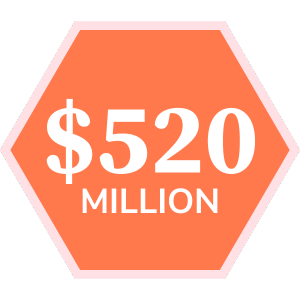
520 million dollars

A recent estimate from Scioto Analysis measures the net economic benefit of providing universal free school meals in Ohio — an idea proposed by lawmakers but not gathering the needed support to pass into law. Using cost-benefit analysis, researchers compared the costs of the program (e.g., food costs, cafeteria staff, etc.) and the benefits to students and families — which include benefits derived from reducing health care costs, reductions in obesity, time saved by families preparing food, and even longer-term economic benefits that assume improvements to students’ food security can improve learning outcomes. The estimated net benefit would be $520 million.


POLICY RADAR

Ohio  

Ohio lawmakers have proposed the Baby Bonus Act, which would provide state income tax credits to employers who incentivize childbirth or adoption by offering employee bonuses to do so. Specifically, HB 340 would allow businesses to claim up to $50,000 annually in nonrefundable tax credits if they implement a baby bonus for employees of at least $1,000 for adoption or child birth.

Efforts are underway among a group of bipartisan lawmakers to strengthen Ohio’s gun storage requirements in the hopes of preventing accidental firearm injuries and deaths among children and youth. Ohio Capital Journal reports on these efforts in the context of ongoing gun safety concerns and policies that have loosened restrictions.


EVENTS & HAPPENINGS

Ohio State’s Dr. Vladimir Kogan is discussing his recent book No Adult Left Behind: How Politics Hijacks Education Policy and Hurts Kids at an online forum hosted by the Cato Institute on Wednesday, October 29, at noon ET.

The Bipartisan Policy Center is hosting an online event titled “America’s Workforce: State Innovations in Child Care Financing” on Thursday, October 30, at 1 p.m. ET.


CRANE IN THE NEWS

Crane Faculty Associate Dr. Arya Ansari contributed to a brief that analyzed Rhode Island students’ self-reported reasons for school absences.


BEYOND THE BUCKEYE STATE

New Jersey has long been considered a national leader in providing high-quality pre-K, especially for children whose families have low incomes. A new slate of laws passed this summer will move the Garden State closer toward universal pre-K (regardless of family income), as well as universal full-day kindergarten. New America details these changes, which include legislation that codifies pre-K funding into state law, and moves to strengthen the state’s mixed delivery system by enabling private pre-K providers and Head Start programs to have three-year instead of one-year contracts with school districts.

Vermont set an example of how a time-bound initiative can lead to real change in early childhood policy. Zero2eight details how one leading philanthropist set out in 2015 to create the Let’s Grow Kids initiative to improve access to high-quality child care in Vermont, with the goal to sunset the program in ten years. Over the decade, the organization raised over $70 million in philanthropic funds and influenced major state legislation like the 2023 passage of Act 26, a bill that created a near-universal child care program in the state. Since the law passed, over 100 child care centers have opened allowing for 1,000+ slots for children, 230 new early educator jobs, and 4,000 more children who qualify for tuition assistance. Let’s Grow Kids held their final sunset meeting this month, with some staff transitioning to a new 501(c)4 group that will engage in political advocacy to protect child care funding.


WHAT WE’RE READING

Cleveland.com describes a meeting in Cleveland with representatives from Cuyahoga County as well as counties across the U.S. that are participating in the National Association of Counties’ first “child care supply network.” The goal of the network is to provide learning opportunities among network members, support them in addressing child care challenges, and “create sustainable solutions to strengthen local child care systems in response to workforce needs.”


RESEARCH ROUNDUP

A recent evaluation from Ohio State researchers found that the prevalence of Adverse Childhood Experiences (ACEs) and Positive Childhood Experiences (PCEs) has not changed much on a national level across time. Researchers analyzed data from the 2016-2023 National Survey of Children’s Health which includes parent-reported data on adolescent (ages 12-17) ACEs and PCEs. While the study did not show much change in the proportion of adolescents experiencing individual ACEs and PCEs over time, there were some interesting trends discovered through the analysis. For example, reported economic hardship dropped the most among adverse childhood experiences, dropping by almost 25% between 2016 and 2023. The prevalence of adolescents having divorced parents declined slightly, as did reports of witnessing violence or experiencing parental incarceration. Racial discrimination had the greatest increase, at 6% between timepoints; there were also slight increases in reports of mental illness and drug and alcohol use. Positively, this national sample indicated more positive childhood experiences than adverse experiences reported by parents. The authors note that their hope is that this study can act as a baseline for other researchers studying national trends in ACEs and PCEs.


This edition was written by Jamie O’Leary and Janelle Williamson.

If you like this newsletter, forward to a friend! Subscribe here.


crane.osu.edu

X  LinkedIn