|
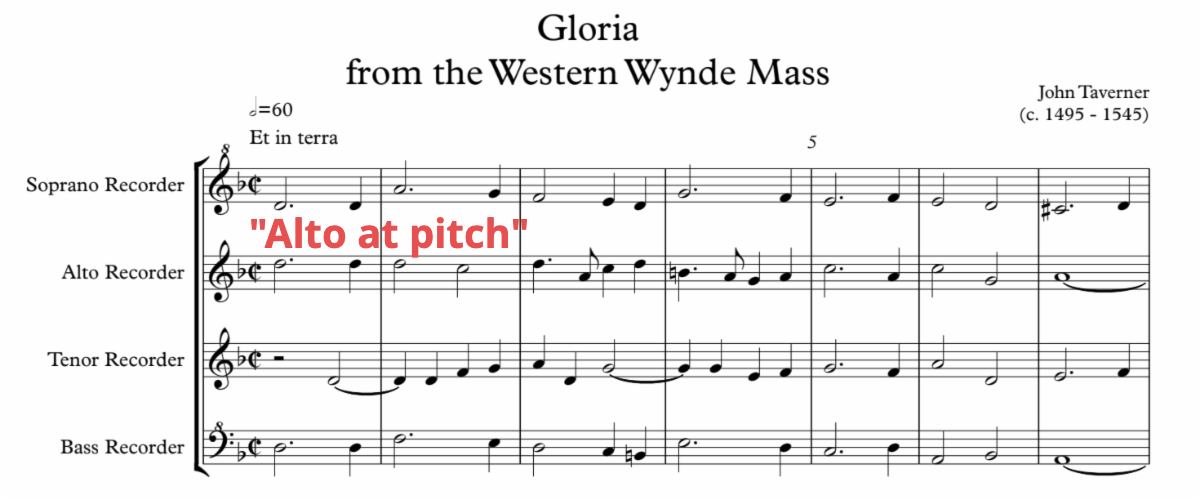
Example 2 is typical of a score specifically arranged for recorder players. It puts the alto line in the range the alto recorder players are used to reading. But, most editions of Renaissance music are not made specifically for recorder players, so there's no guarantee that the alto part will be "at pitch" (in the octave you are used to).
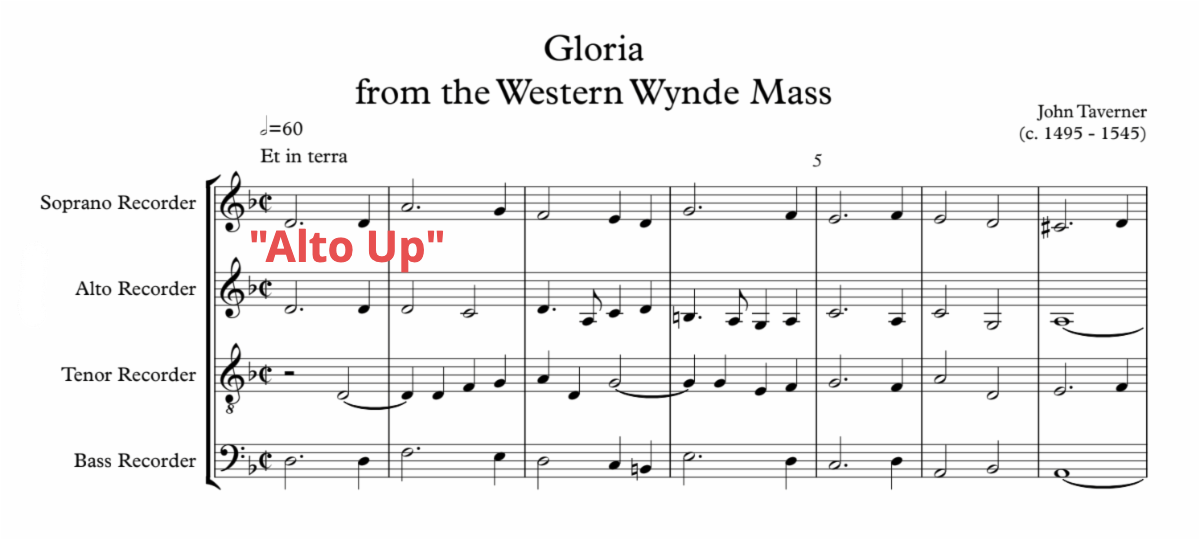
Some editors will make editions of Renaissance pieces that will have 2 alto parts - one that leaves the alto line in the lower octave where it would have been traditionally sung or played on other instruments, or as "alto up" on an alto recorder; and another that takes the part up an octave and labels that part "alto recorder at pitch". If that happens, consider yourself lucky!
Why do alto recorder players deal with this complication?
When music is notated specifically for recorders, where each line of a score spells out which size recorder is intended, then most often, the alto line is "at pitch" and you can read the the alto line with ease. This is most often the case for music in the Baroque era and later where the alto recorder is notated "at pitch".
But, we rely on many sources of music to expand our repertoire; and playing Renaissance music (and earlier), much of which is vocal music, vocal music in general, and music written for other instruments, puts us playing in the voice ranges or the ranges of other instruments. Therefore, we must learn to read the notes an octave lower than the alto recorder sounds or players are used to seeing on the page - and this is the source of the term "alto up an octave" or "alto up".
Renaissance and Vocal Music
Alto recorder players playing an alto voice part, for example, sound an octave higher than the alto singers performing the same music. And the same goes for the rest of the recorders.
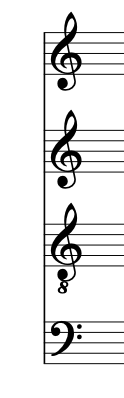
Four-part vocal music is frequently notated with the three top lines in treble clef and the bass line in bass clef, as in the musical examples above. The tenor line is normally notated with a tiny '8' at the bottom of the clef sign to distinguish it from the soprano line, and the tenor voice sings an octave lower than what is written on the page; but the music is easier to read on the staff, so they notate it on the staff line in treble clef.
Example 3: A general vocal score (SATB, AATB) will use the following clefs:
|