First Folio Theatre Facts:
What is Puppet Theater?
|
|
- Puppet shows have existed in almost every civilization across the globe through history. Written records of them go back to the 5th century BC in ancient Greece, but there is evidence that the origins of puppet theater begin even before that in Africa, Asia, and in the Americas. Puppets were used as ritualistic and ceremonial tools, as well as played a role in societal and psychological development.
-
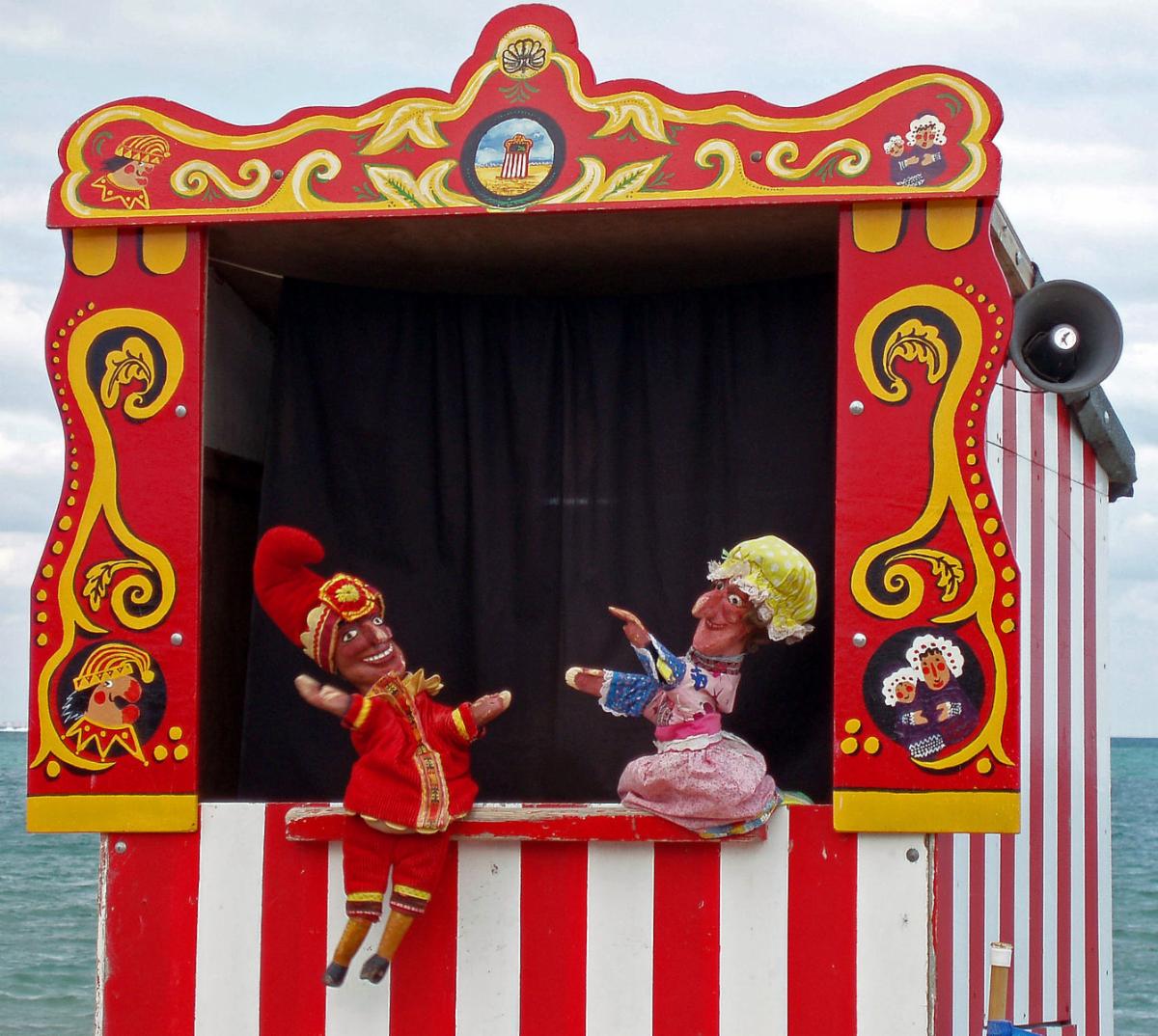
Hand puppets are perhaps what comes to mind the most often when we hear the word "puppet," as they are utilized in popular TV shows like Sesame Street and The Muppet Show. Most of the traditional puppet folk heroes of Europe are hand puppets, but hand puppet characters can also be found in China, India, and other Southeast Asian countries. Great Britain is the home to two of the most famous puppets in history, Punch and Judy, which were popularized in the 1700s. *
|
|
- Marionettes, or string puppets, are full-figured puppets controlled from above by a set of strings attached to each of the puppet's appendages and head. It is believed to be one of the earliest forms of puppetry found in India, where it remains popular today in Karnataka, Orissa, Rajasthan, and Tamil Nadu, each state having its own puppet traditions. In Germany, Austria, and other countries throughout Eastern Europe, there remains a strong tradition of marionette shows being set to opera.**
|
|
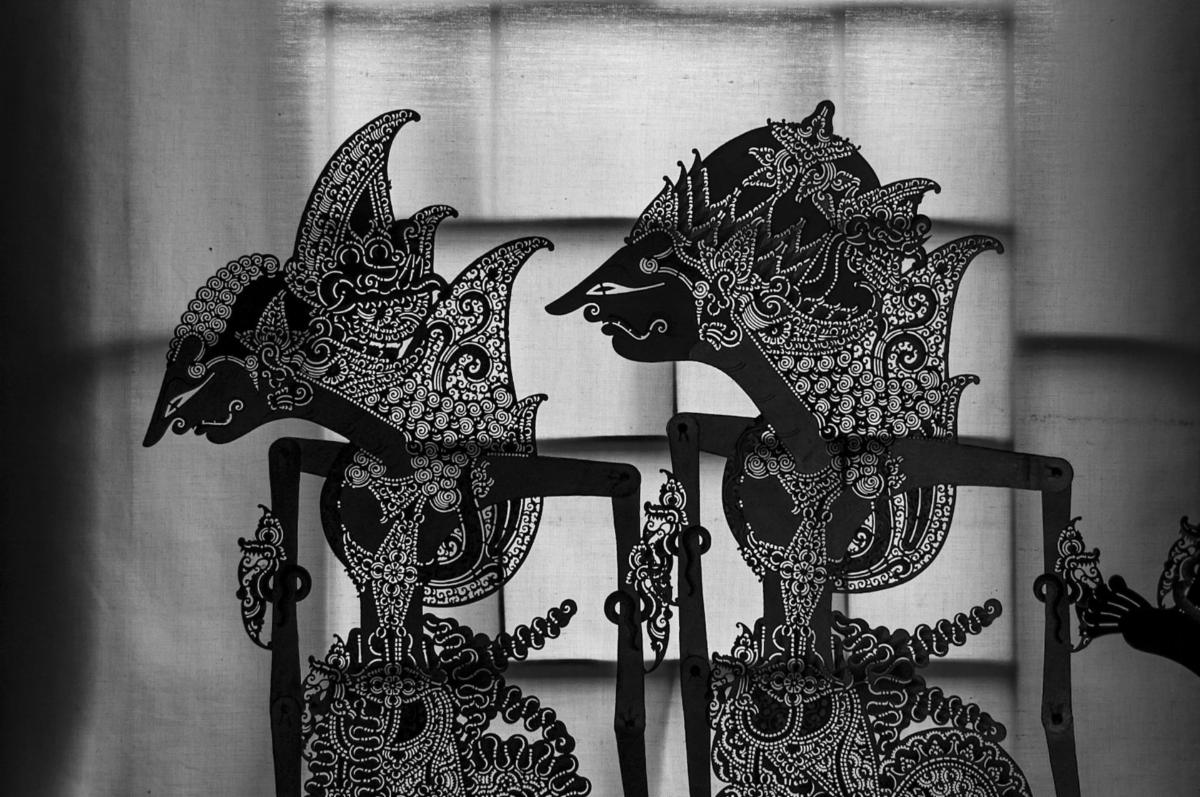
- Shadow puppetry involves flat figures placed against a translucent screen and being lit from behind, causing the shadow of the figure to be seen through the screen. Shadow puppetry has been seen in the traditional theaters of Java, Bali, and Thailand; in China, India, Turkey, and Greece; and in many European theaters.* It is believed the traditions of Chinese shadow theater stretch back at least 3,000 years, where early puppetry was often exclusively performed for royalty. **
-
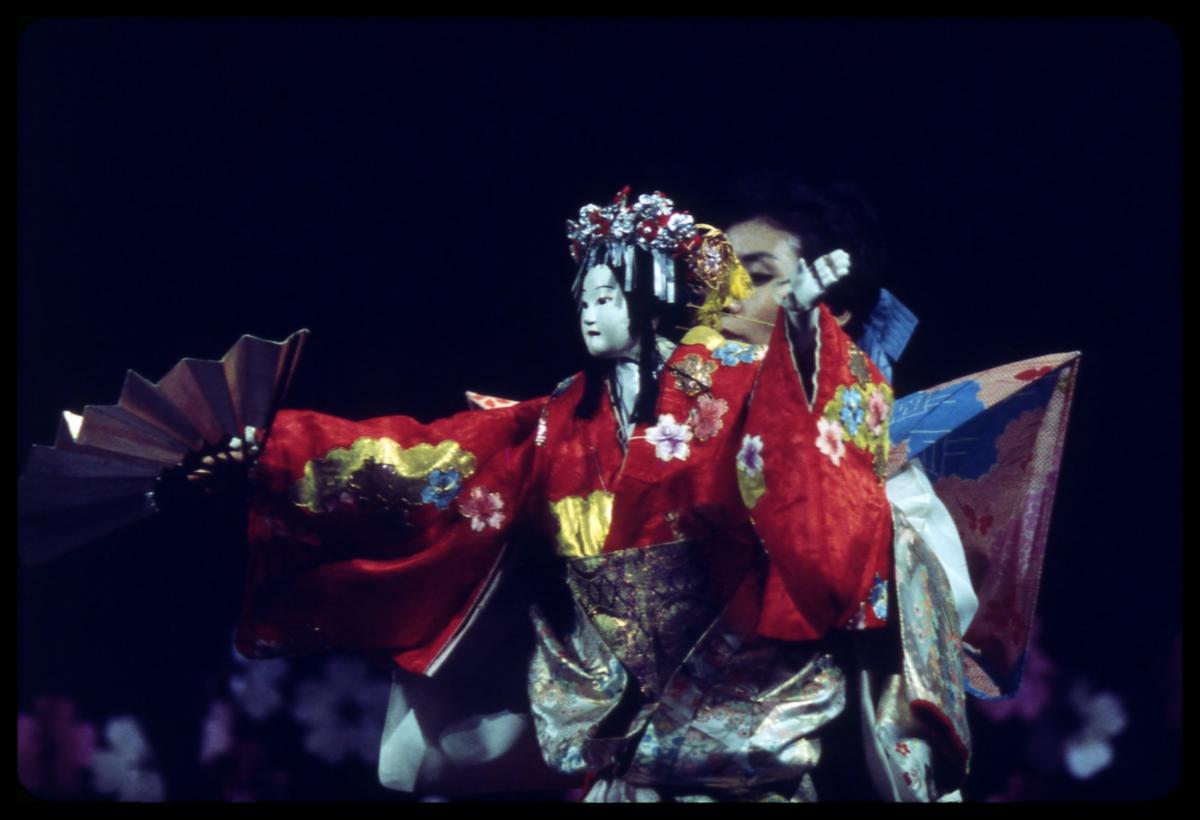
In Japan and Taiwan, bunraku is one of the most popular forms of puppet theater, with bunraku performers and theater companies being considered "living national treasures" because of their importance to society. Named for a Japanese puppet master, Uemura Bunrakuken, in the 18th century, bunraku utilizes nearly life-sized wooden dolls, with the performers dressed in dark colors to "hide" behind the brightly dressed puppets. Such was the popularity of bunraku in the early 1700s that Chikamatsu Monzaemon, the Japanese equivalent of Shakespeare, decided to write bunraku puppetry plays exclusively.**
|
|
*Information from "Puppetry" by George Speaight in Encyclopaedia Britannica, 2022.
|
|
SUBSCRIBE TO OUR 26th SEASON NOW
and beat the ticket price increase!
-
Subscribers save up to 25% off regular priced tickets (that's like getting the fourth show for FREE!)
- Subscribers get priority seating
- Free ticket exchanges (72 hours prior to show date/time)
- 3- or 4-show subscription packages available
-
Subscriptions start as low as $70 (before June 15)
- FREE Dove chocolate for you when you arrive at the theater
AND ALWAYS FREE PARKING!
|
|
Or call the Box Office at 630-986-8067
Monday - Friday, 10:00 AM to 4:00 PM
|
|
VACCINATION AND MASKING POLICY
First Folio is a fully vaccinated workplace, and all employees will be masked, except for the actors while they are performing. To ensure our patrons’ heath and security, as well as the safety of our performers and staff, First Folio has implemented the following policy:
First Folio will require proof of full vaccination status (2 shots of Moderna/Pfizer or 1 shot of J&J) for all audience members, as well as performers and staff, for all performances.
No exceptions will be allowed to this policy.
Mask policies will be determined closer to the start of the season and will depend upon the current state of the pandemic.
|
|
Our 2022-2023 season is sponsored by Alan & Susan Becker
and Daniel Nowaczynski & Nancy Ziegler
First Folio's programs are sponsored in part by
grants from the Illinois Arts Council (a State agency)
and the Gaylord & Dorothy Donnelley Foundation.
First Folio Theatre is supported by a grant from the National Endowment for the Arts.
All performances take place on the grounds of the Mayslake Peabody Estate, which is owned and operated by the Forest Preserve District of DuPage County. Indoor shows are presented in Mayslake Hall, a 30-room Tudor Revival style mansion originally built by coal baron Francis S. Peabody. Completed in 1922, the mansion is on the National Registry of Historic Places.
First Folio Theatre is fully accessible with reserved ADA seating available and assisted listening devices available for all indoor performances. To request ADA seating, please contact the Box Office at 630-986-8067.
|
|
|
|
© 2022, First Folio Theatre.
|
|
|
|
|
|
|
|