What is Strength in

the Face of Grief?

Dear griefHaven Friends,


Those who are grieving are often told how strong they are. In grief groups this is one of the most common phrases people find frustrating because they see it as an inaccurate description of what they are actually going through—that the word "strong" to them is not what others may imagine it to be. Instead, they are simply doing the best they can to get through each day—waking up, breathing, putting one foot in front of the other while trying to make sense of a life that no longer feels familiar.


Being called strong can sometimes feel like a misunderstanding of the profound vulnerability and disorientation grievers are living with.


In the article that follows, Maria Kubitz offers words that both comfort those who recognize this feeling and lovingly educate those who simply did not know. Her reflections invite us to see grief not as strength or weakness, but as a deeply human experience deserving of compassion and understanding.


With love, Susan Whitmore, Founder and CEO

What is Strength in the

Face of Grief?

By Maria Kubitz


“You’re so strong.”


" ... consider replacing it with, 'I’m

here for you' if you want to

be truly supportive."


If you’ve suffered the devastating loss of a loved one, you’ve probably heard the phrase. I certainly have after the death of my 4-year-old daughter, Margareta in 2009. But what does it really mean, anyway?


What exactly is the definition of strength in the wake of a loved one’s death?


Chances are if you ask a griever and a non-griever that question, you’ll get very different perspectives and very different underlying meanings.


When people have told me how strong I am after the death of my daughter—and many people have—they sincerely mean it and mean it in a supportive way. In the early weeks and months after Margareta’s death, it was usually told to me in the context that I’d seemingly reintegrated back into the “normal world”: going to work, taking my other children to activities and events, getting errands done outside the house, etc.


"So when they see us as 'strong,'

chances are we feel anything but."


But in their minds, this was opposed to … what? To being so devastated they would surely find me in the fetal position in a corner of my house while hysterically sobbing 24-hours a day? Or maybe it was the relief that I hadn’t succumbed to the continual urges to take my own life—because many parents can’t imagine how they will continue living after the death of a child. I certainly didn’t. Many times I thought the only reason I was still alive was for the sake of my other children—and I’ve heard many bereaved parents say this as well.


Strength, from this perspective, equals stoicism. On the internet, stoicism is defined as, “the endurance of pain or hardship without a display of feelings and without complaint.”


So when did stoicism become the standard definition of strength? I suppose it is because we see soldiers as stoic. Warriors are stoic. Real men don’t cry—or so we’re told. Women who show their emotions too freely are seen as weak or crazy and subject to ridicule. Real strength is apparently the ability to keep our emotions buried and controlled … or so we’re trained to believe.


"We are in survival mode."


When grievers don’t show this type of “strength” and are outwardly emotional and distraught too long after the funeral is over, frustrated former supporters often begin to distance themselves and tell them to, “get over it” and “move on." It’s only death, after all. They’ve gone to a better place, right? Can’t we just remember that and be happy for them now that they’re at peace with God?


The problem is that most of us can’t. The pain and emotions are just too overwhelming. We are in survival mode. If I had to illustrate what this level of grief was like, it would look like we are standing on a steep hill having to use all our strength just to keep a boulder larger than ourselves from crushing us. That is why grief is just as physically exhausting as it is emotionally.


So when they see us as “strong”, chances are we feel anything but. We feel weak and vulnerable. For many of us, we are barely getting by each day for years after the funeral. We continually don’t know how we manage to get out of bed each morning, but somehow we do. We don’t know how we’re going to get through each day, but somehow we put one foot in front of the other and keep moving. We don’t know how this is done or where we get this supposed strength from. And many of us are sure that at any second, we will lose our tenuous grip on this boulder of grief and it will surely crush us. For a long, long time, that show of strength to those around us feels like a sham.


" ... asking for help in the face of

overwhelming pain is one of the

strongest things we can do."


For many of us, not a day goes by that we aren’t acutely aware that our loved one is missing from our lives. And the constant reminder is painful. But we know that if we continue to show this pain, the negative feedback we hear from those around us will just make it worse. And so we hide it to become “strong” in their eyes. But it creates a distance between us that is not easily undone.


How do we continue to hold that boulder at bay for years on end, or in some cases, for the rest of our lives? For me, and for many people I have come to know who are devastated by grief, we seek out others like us. We do this to find others who have survived this unbearable pain in an effort to learn how for ourselves. We do it to be able to find safe environments where we can express our pain in an effort to process it, and to find the support we need to continue to keep this boulder from crushing us.


I would argue that asking for help in the face of overwhelming pain is one of the strongest things we can do. The act of admitting we are in over our heads and cannot do this alone is sometimes as difficult as losing our loved one. Letting other people in to see our deepest vulnerabilities and fears is not weakness; it is one of the ultimate displays of strength—grieving or not.


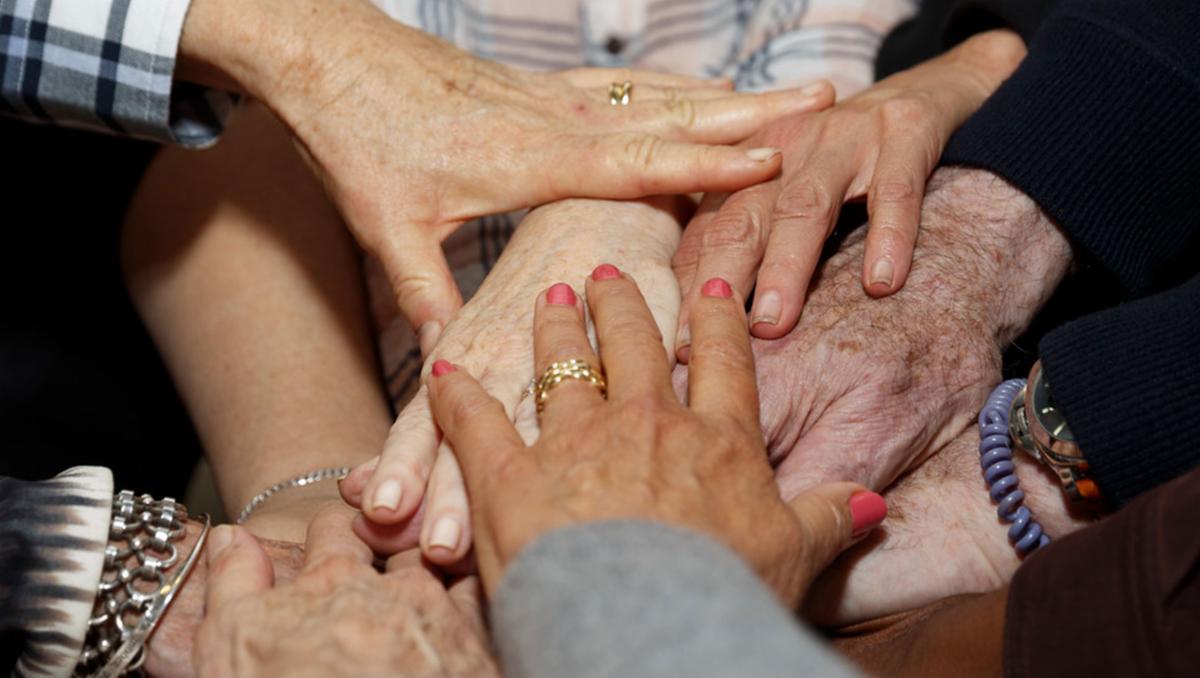
Every time we reach out and ask for help or support, that boulder becomes just a little lighter. The supportive hands of others brace us as we push against that boulder. Eventually, these hands of support may even be able to help break down the boulder until it is a more manageable size and weight. It doesn’t matter who you ask for help and support, it only matters that you do.


To those of you who offer, “You’re so strong” as words of comfort, I ask you to consider replacing it with, “I’m here for you” if you want to be truly supportive. For those of you holding that boulder of grief at bay, I hope you continue to reach out for support to help lighten your load. For if I know anything in the wake of my daughter’s death, I know that there are many people who want to help you. You just have to make the effort to find them.

About Maria

Maria Kubitz lost her four-year-old daughter, Margareta, in a 2009 drowning accident. As part of her journey of healing, Maria created a grief support website, www.aliveinmemory.org, in 2012. Her articles provide a heartfelt window into her personal experience and insight about grief, the healing process, and re-embracing life with a new understanding of what matters most. Most recently, Maria has been volunteering with nonprofit grief organizations in Los Angeles. 

Quoted from

Healing After Loss

Page - October 27

By: Martha Whitmore Hickman


My grief and pain are mine. I have earned them. They are part of me. Only in feeling them do I open myself to the lessons they can teach. - Anne Wilson Schaef


When our whole sense of ourselves seems wounded and vulnerable, one of the ways we can claim our rightful presence in the world is to claim the legitimacy of our grief. That is who we are right now, and it is a valid way to be.

We cannot escape the reality of ourselves as grieving persons any morethan we can escape the reality of the death of the loved one.


In time we will see ourselves again in broader terms. But if, for a while, grieving is the main aspect of our being, then so be it. We may well move away from it sooner if we embrace that reality now. We don't owe anyone else an apology. We don't owe ourselves one either.


Only by living my grief fully will I be able to walk through it and learn what it has to tell me.

The griefHaven Method™


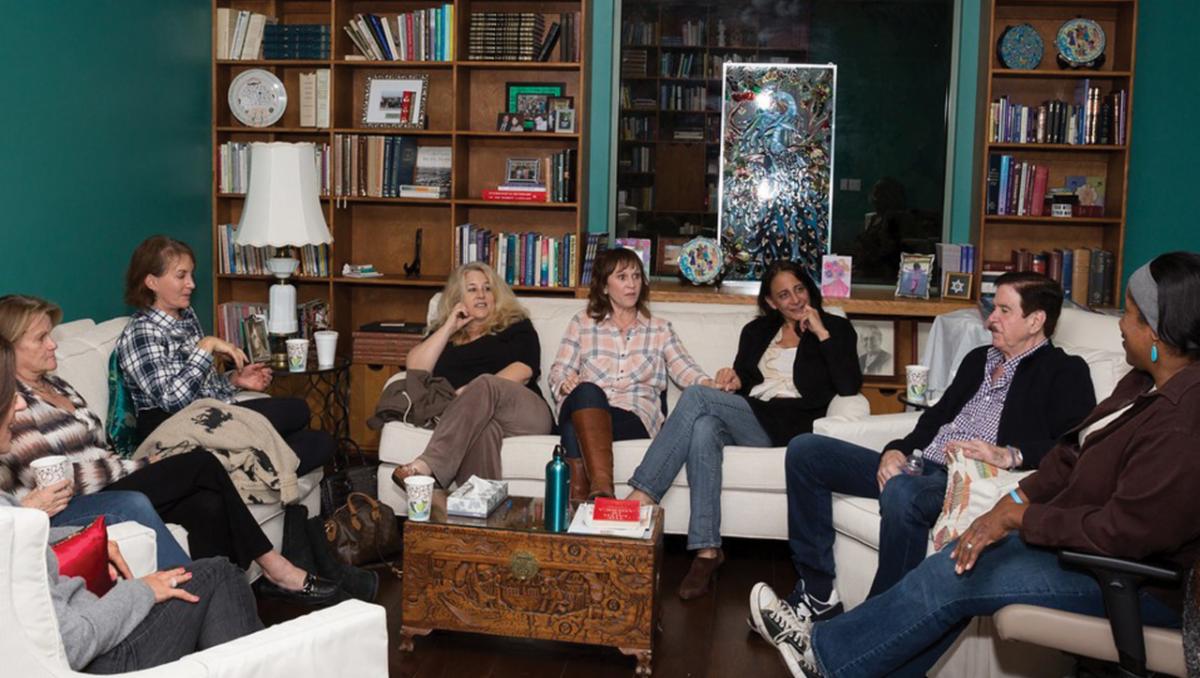
Our support groups are more than talk groups—they are loving, educational, and safe communities. Each meeting is part of a carefully designed, integrative grief program that supports every part of you that has been impacted by your loss. As you walk alongside others who truly understand—because they have experienced the same loss—you will learn how to live life now. All groups are facilitated by licensed and/or trained professionals who personally understand what it takes to rebuild life without your beloved.


Donate to griefHaven

Without donations, griefHaven simply would not exist. Everything we do—every support group, every person, grieving parent, spouse, and sibling we walk beside, every life we help steady in the darkest moment—exists only because of the generosity of those who give. We rely completely on that kindness to continue offering love, education, and hope to those who would otherwise face their grief alone.

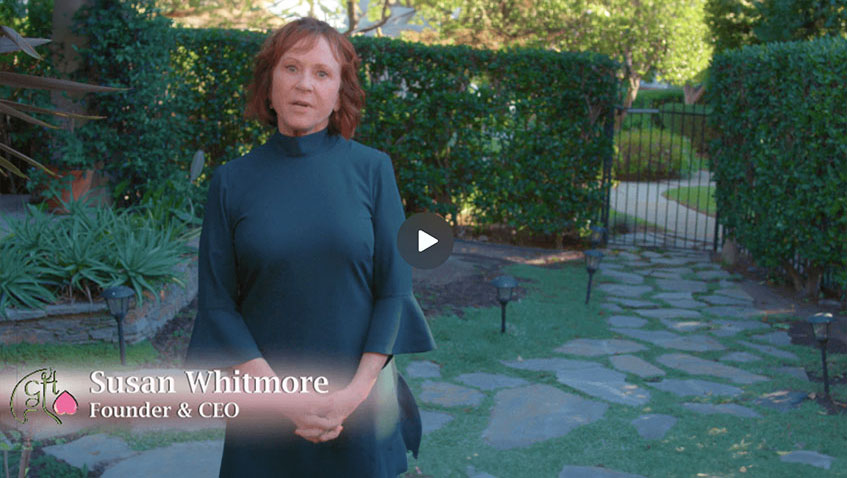
This is griefHaven Video

In this short, heartfelt video, you’ll see the people, the purpose, and the compassion behind our work — how griefHaven was born from loss over 20 years ago and how it has become a place of hope, understanding, and healing for those who need us.


Support Groups - The griefHaven Method™

Our support groups are safe, healing, and informative places to be. It doesn’t matter where you live. We provide in-person groups (Los Angeles only) and Zoom groups around the world. Private/closed groups by losses include: CHILD LOSS, SPOUSAL LOSS, SIBLING LOSS, and PARENT LOSS.


Bulletin Board


For those interested in joining either an in-person or Zoom group, please contact us to learn more.


Newest Groups


New In-Person Child Loss Group:

4 spaces available in this new group.


New In-Person Spousal Loss Group:

2 spaces available in this new group.


Zoom Child Loss Group: Group closed.


Zoom Parent Loss Group (for adults): Group closed.


Waitlist for New Groups


To inquire about any of the above groups, new groups, to be on our group waitlist, or other information, please contact us at (310) 459-1789 or hope@griefHaven.org.


Packet of Hope

Order a free Packet of Hope for yourself or someone you care about. Packet includes information for the griever and the supporter.

Portraits of Hope Documentary Film

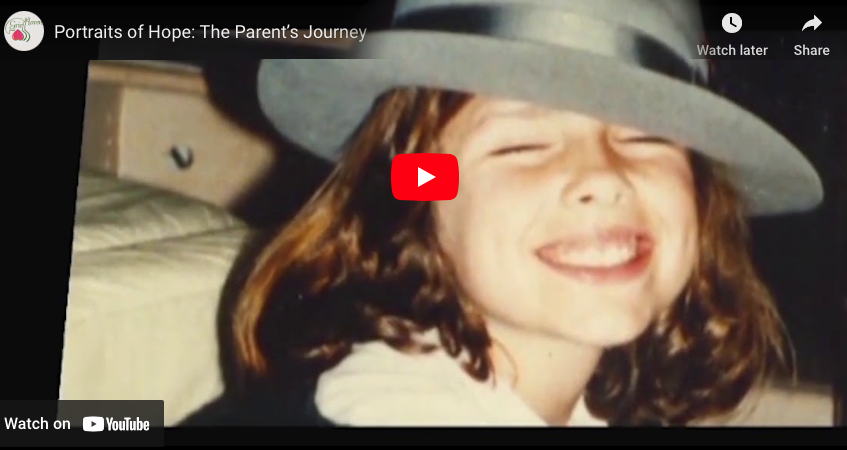
Losing a child changes everything—and yet, somehow, some parents find a way to keep living, loving, and even laughing again. Portraits of Hope: The Parent’s Journey is a deeply moving documentary film that brings together courageous parents, including well-known public figures, who share their honest stories of heartbreak, survival, and the slow, brave return to joy. This film is not about forgetting—it’s about learning how to live again. If you or someone you love needs hope, this is for you.

Grief Pins

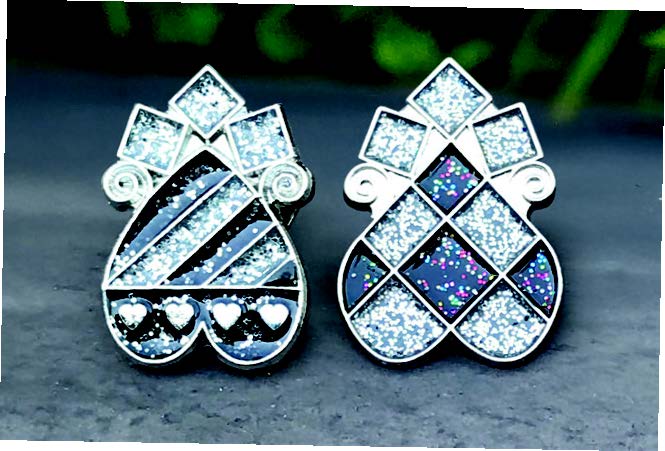
For the person who is grieving, a grief pin makes a loving gift. Or just get one for yourself. For volume discounts, email hope@griefHaven.org or call (310) 459-1789

What to Say; What Not to Say Video

What to Say; What Not to Say to Someone Who is Grieving.


Not sure what to say to someone who is grieving? That's okay. We've got you covered. Watch this for some guidelines.

Now You Know™ Videos

Here we provide brief, thought-provoking and useful educational information videos regarding loss, life, and ideas we feel will help you live a better life. New shows added regularly.

In Loving Memory Room 

Visit our “In Loving Memory” room dedicated to sharing your loved one with others and keeping their memory alive. Contact us if you would like griefHaven to create a special area for your loved one.

Love Wall

Visit the "Love Wall” that honors all those who have generously supported us either in loving memory of someone or in honor of that special person; you pick and create it exactly as you want it.


All griefHaven donors receive a tile. THANK YOU TO ALL OUR DONORS!

Newsletter Archive

Visit our archive of all past newsletters. We know you will discover new ways of understanding life’s ups and downs, as well as coping strategies to help you as you journey along.

Please Donate Here

Web
 
Facebook  YouTube  Email