LinkedIn Share This Email


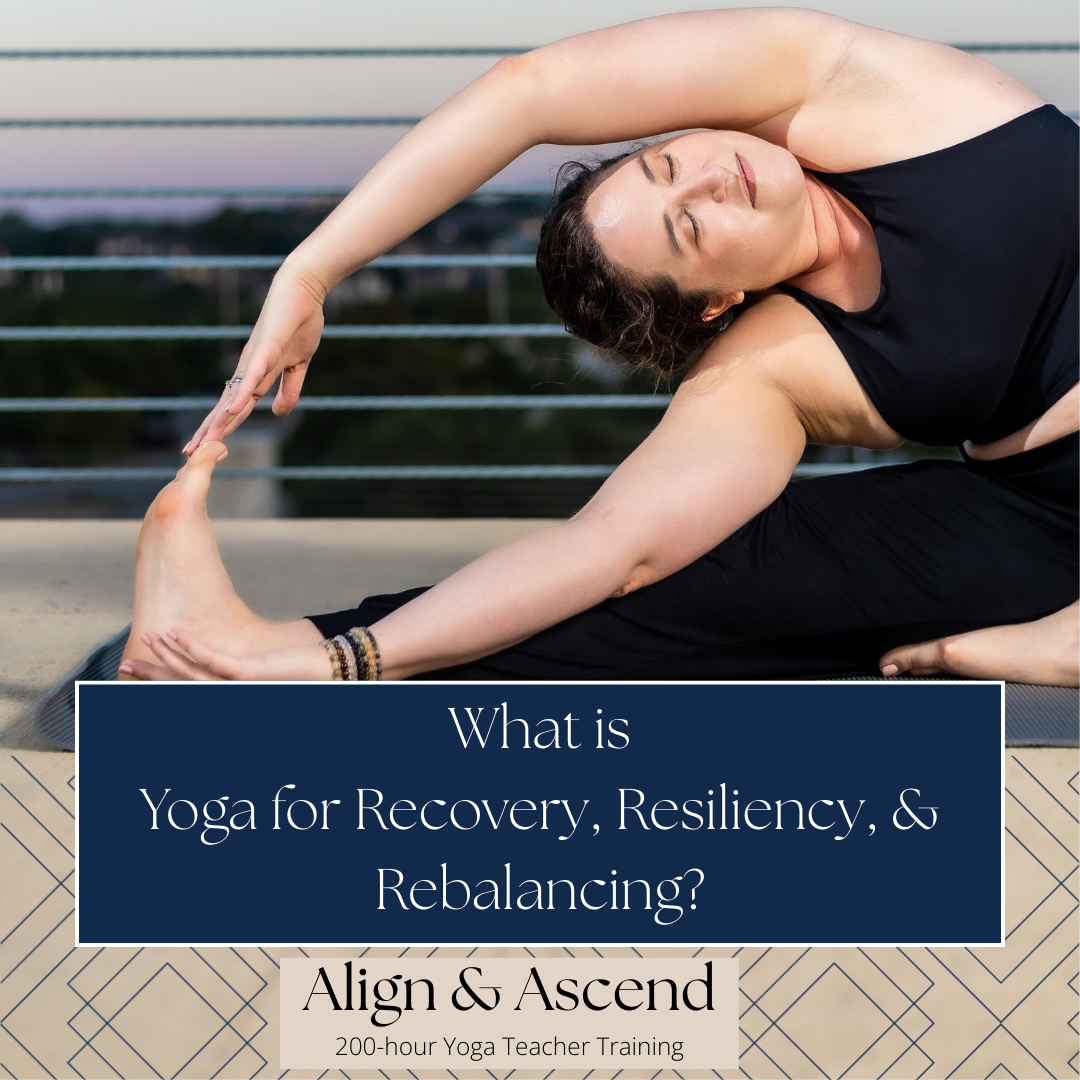
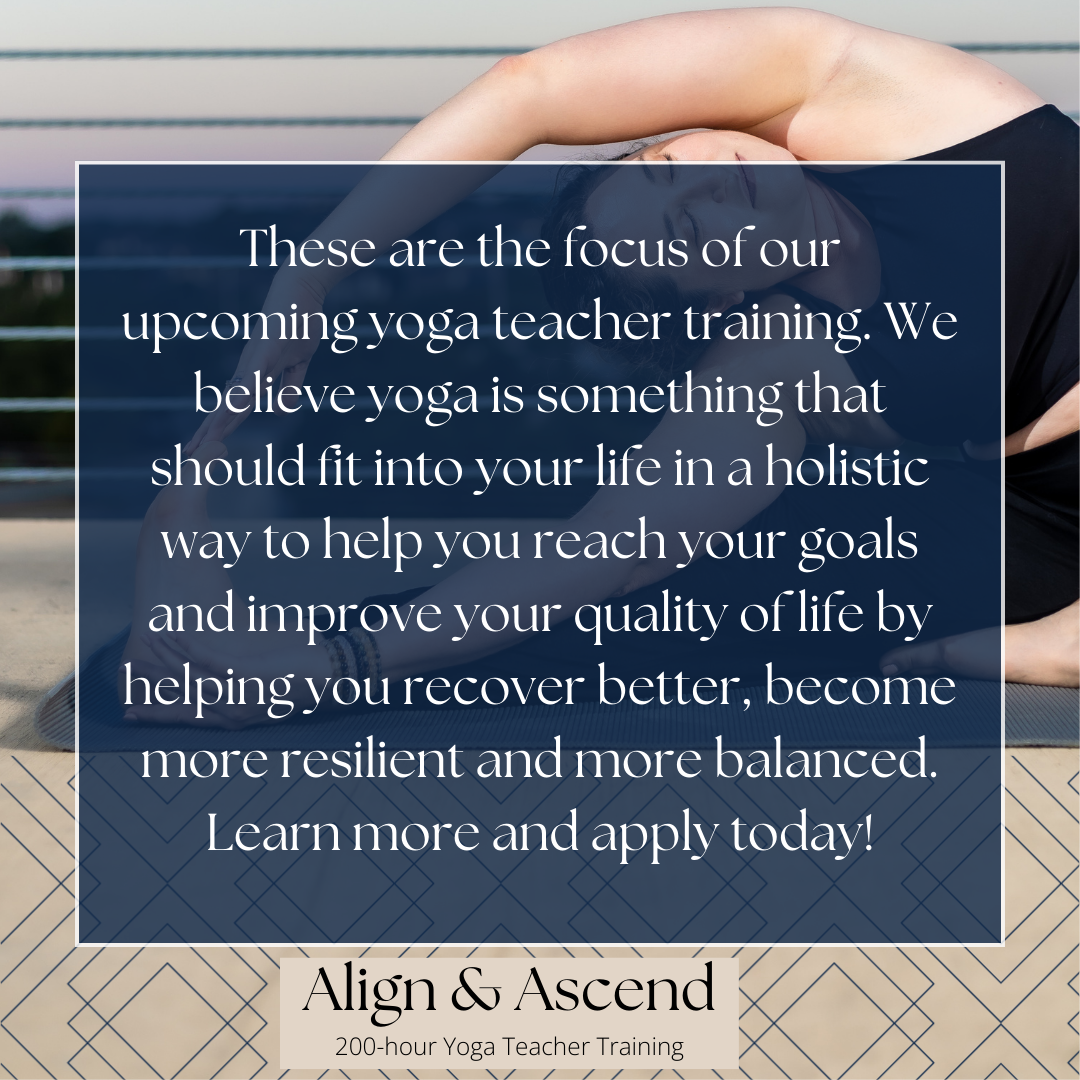
Recovery, Resiliency, and Rebalancing


These might mean something different to each person, depending on your areas of experience and expertise. So, I wanted to share how this unique yoga training will teach tools and practices to support physical and mental health in multiple ways. Whether you are more focused on physical fitness, mental health, spiritual wellness, healthcare, or some combination of all of these, there is something in this training that will help you become an excellent yoga teacher, able to help guide others on their path to holistic well-being.


Read on to learn more about each of these major areas of focus that we will cover in the training, and at the bottom of this email, follow the link to a free yoga practice to get an idea of how we can apply these ideas in a studio yoga class.


Learn More:

Align and Ascend 200-hour Training


We want this training to be as accessible as possible to working professionals in fitness, wellness, and healthcare, so we offer flexible payment plans and accessible training options, including online makeup sessions should you need to miss in-person hours.


Feel free to reply to this message with any questions you might have.

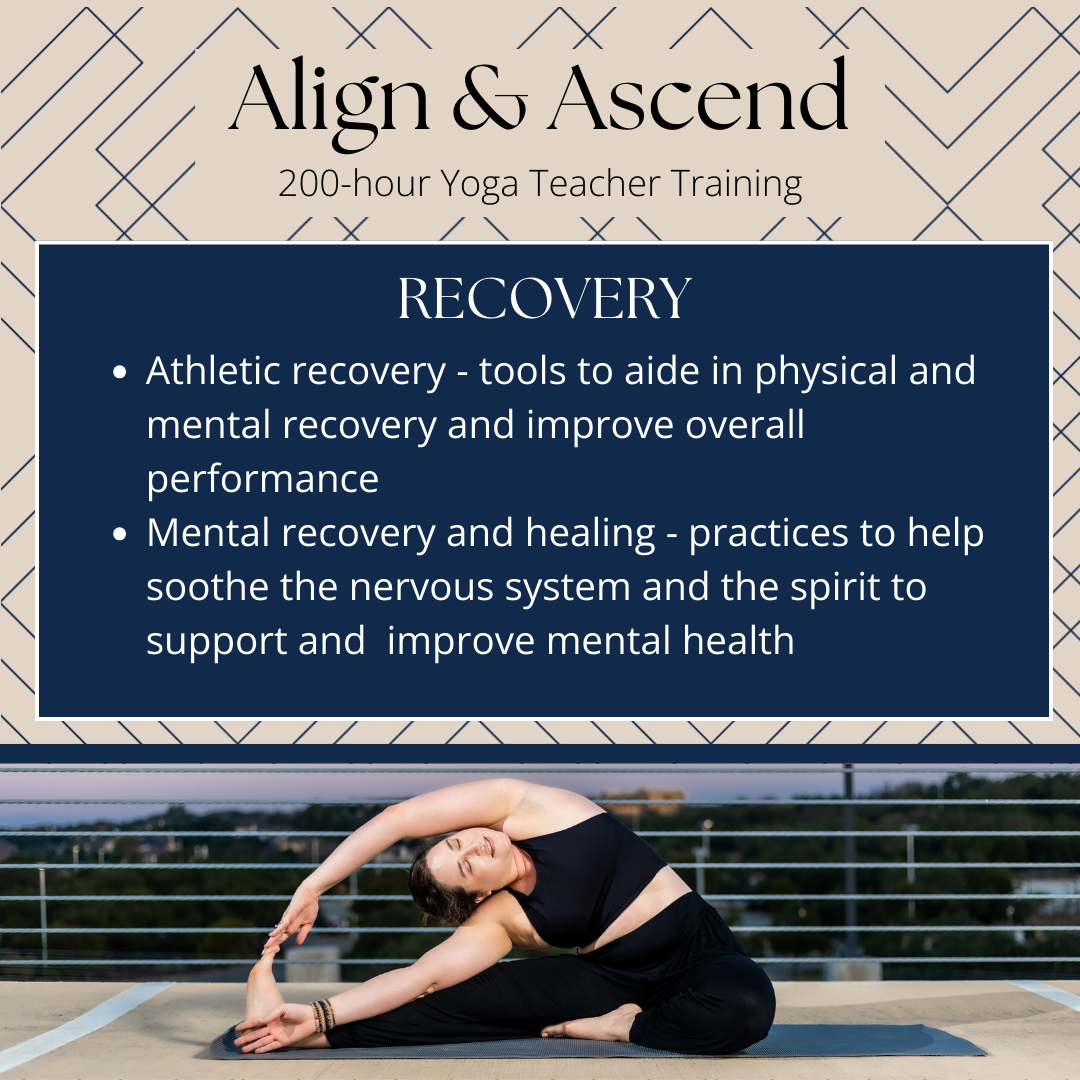
Recovery


Physically, recovery is an essential part of any workout regimen where we intentionally build rest and nutrition into the fitness plan to ensure that the body has the time and the building blocks it needs to heal and rebuild after the stress of physical exertion. Plenty of athletes know about the value of recovery, but a lot of everyday exercisers are not recovering fully, especially when you take into account the added stress of daily life that everyone is under in addition to the physical stress they are adding by trying to stay fit. Many people feel like they are getting enough rest while they are actually not completely calming the nervous system, processing stress hormones, or getting adequate mental and emotional rest.


The practices of yoga can be immensely helpful in that they help people to actively slow down. By setting aside time to attend a yoga class or practice a meditation, we feel like we are "doing something," when in reality we are giving ourselves the chance to do less, something that our bodies and minds desperately need in the modern world.


We can also consider recovery in the context of long-term healing and improvement after any major life change or event. It is often necessary to establish new healthy habits after choosing to remove unhealthy habits or to add in gentler movement or wellness habits after a physical trauma or health trauma. Yoga is very often something that people turn to in these situations, and it becomes a safe haven of recovery for them, a place of ongoing healing and wellness.


In either context, yoga practices that focus on regulating the nervous system like flowing movement paired with breath, breathing practices, meditation, and relaxation are all very helpful in supporting the body's natural healing processes. These are all things that we will learn in this training so that you can help students with both short-term and long-term recovery.


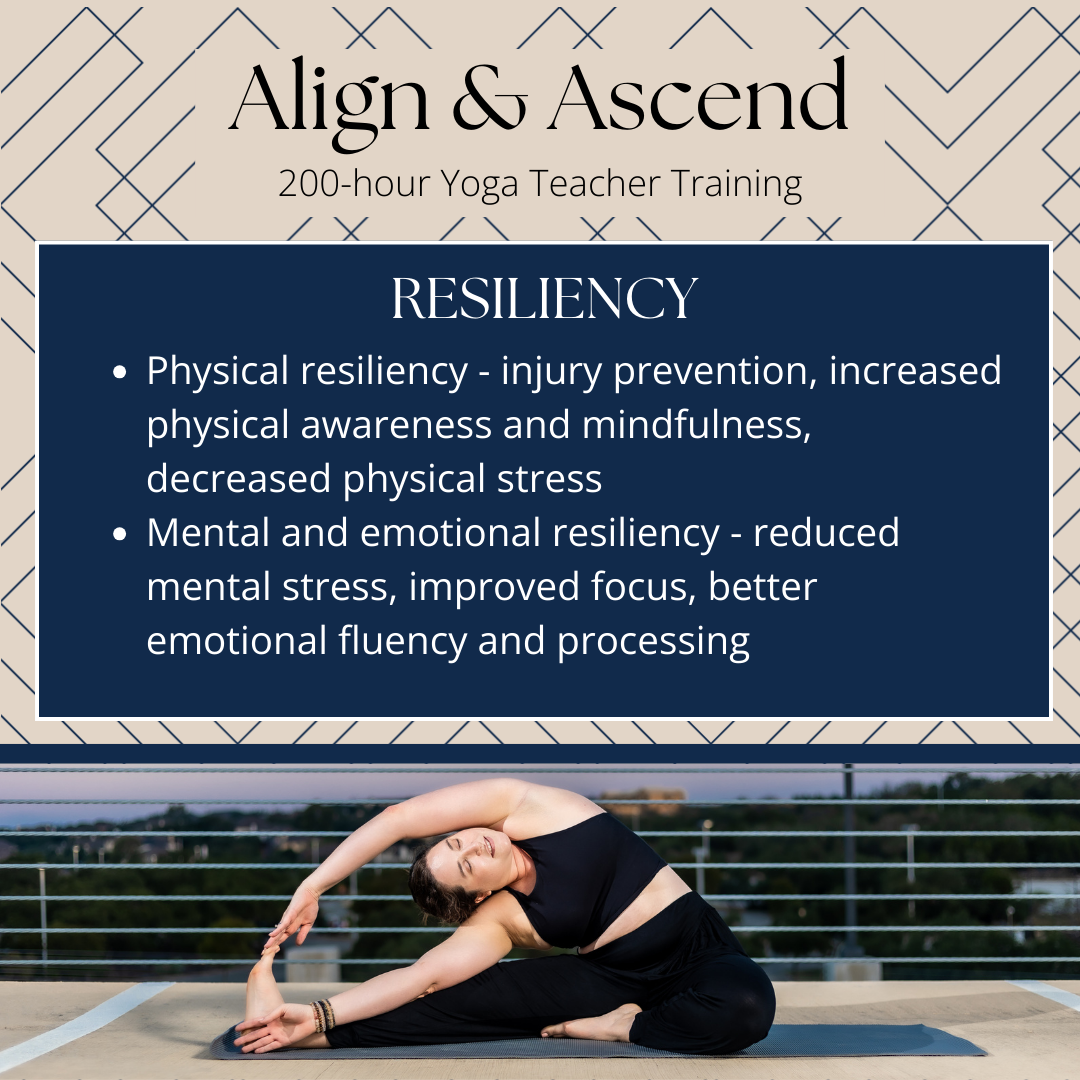
Resiliency


Resiliency is our ability to adapt to changes and to deal with stresses that we face. Yoga can be very helpful in improving resiliency on a mental, emotional, and physical level.


Physically, yoga practice provides low-impact positive stress on the tissues of the body, increasing mindfulness and proprioception (physical awareness). This in turn leads to a decrease in injury. When we are more mindful of our body's abilities and limitations, we are more likely to work mindfully within them and show greater respect to our body. Hand in hand with recovery, we also have an increased awareness of how to best nourish and care for the body and tend to recover from any setbacks better as a result. A more mindful person is more likely to rest and care for a small injury or illness sooner, for example, rather than pushing through it until it becomes a big problem.


Mentally and emotionally, someone who is established in yoga practice has good mental focus and emotional fluency. They are more mindful and able to process their emotions in a healthy way. This is a result of self study and self awareness, but also a result of practicing emotional and mental regulation during yoga practice.


In yoga practice and yoga training, we don't just wait for these wonderful effects to take place. We talk about them openly and discuss the things that might get in our way. This is built into the philosophy of yoga practice that students and teachers have been following for hundreds of years. Resiliency is one of the central ideas that is studied and discussed in The Yoga Sutras, one of the key texts we study in the course. It takes practice and effort, and that is why it is so good to learn in a supportive environment. There are challenges that are very common that we all face, and the tools of yoga can help us to be more resilient when those challenges arise. The practice of yoga helps us to remain calm in our minds and bodies so we can face problems with clarity and process the stresses in our lives more easily.


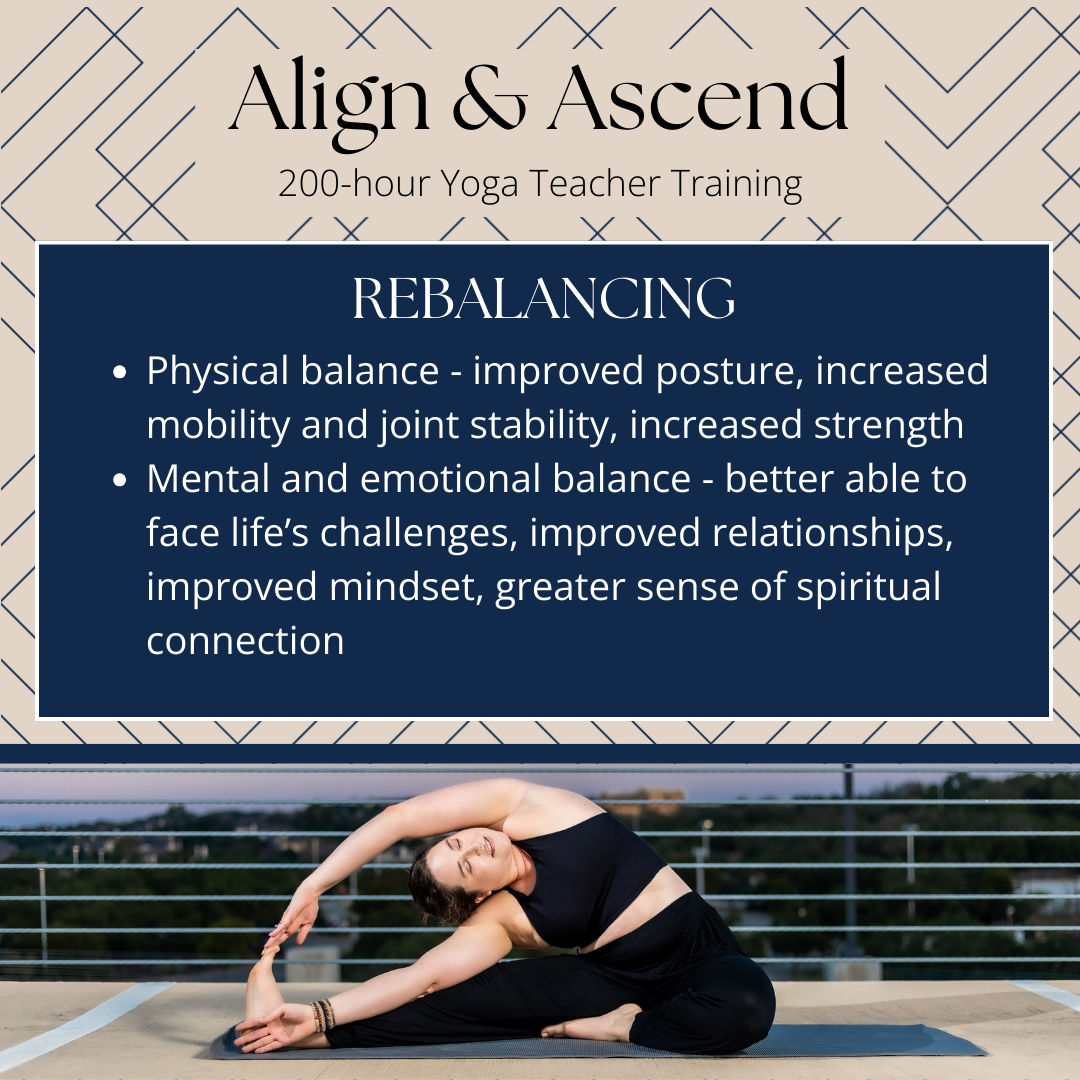
Rebalancing


Yoga is perhaps most commonly associated in the public mind with balance, either because of all the standing on one foot or balancing upside-down that can look so good in pictures, or because of the inner balance that many people express feeling after practicing yoga. Yoga can also bring another kind of balance into the body, and that is the rebalancing of misalignments that are found in practically every body.


In physical yoga practice, we incorporate mindful awareness of differences in the body and work on bringing balance into different areas, evening out range of motion, strength, and stability. In this way, even in a regular group practice, people will find that they are more balanced and have improvements in areas where they might have felt dysfunction or pain. The physical practices of yoga can also act as a great "cross-training" day for many different kinds of exercise. For those who focus mainly on strength training, yoga is excellent for mobility. For those who mainly focus on performance, yoga is a wonderful opportunity to focus on self care and repair. In this way, simply practicing yoga provides balance in someone's life when they incorporate it mindfully into their fitness routine.


In the same way, yoga can help someone who is hesitant about any kind of physical exercise find a gentle way to ease into movement. They might enjoy the practice because of the mental and emotional benefits it brings, but also find that movement is a secondary benefit for them. This was actually the case for me when I first started practicing. The mental and emotional balance I found with yoga was the primary reason that I stayed dedicated to the practice for so long. The practice of yoga allows space for self study, self care, and self acceptance. It also allows space for clearing the mind and caring for the mind, processing emotions, and learning tools that someone may not have ever had the chance to learn anywhere else. In this way, yoga practice provides a safe place to explore practices that might, in another context, seem inaccessible to someone.


Balance can come in many ways, and we can approach in from many paths in yoga practice. In this training, we will explore all of them, including how to help clients find their way to that sense of balance without feeling forced. Invitation is the best way to guide people to their best transformation, and that is the whole approach of this training.


Yoga Training Intro Practice with Lauren

Align & Ascend Training Intro Practice with Lauren
LinkedIn Share This Email