|
The best approach is to treat Section 232 as a confirmed cost-and-compliance change, it’s not merely an upcoming possibility, it requires restructuring module purchasing before December 4, 2026. At Unicorn Solar we want you to be prepared for the upcoming module duty decision made by the present administration.
Unicorn Solar has modules that you can purchase from us, so please ask one of our representatives, and we will assist you in getting imported modules at excellent pricing. Also, if you want US content, including cells, we have access to these modules at excellent pricing as well.
On August 6, 2026, the President issued Proclamation 11052. Beginning December 4, 2026, covered imports will face:
- A minimum import price of $0.38/watt for solar modules
- A minimum import price of $0.22/watt for solar cells
- An additional 15% Section 232 tariff on covered polysilicon derivatives
- A 10% tariff for UK products
- Special aggregate treatment for the EU, Japan, Korea, Taiwan, Switzerland, and Liechtenstein
- These charges generally apply in addition to other applicable duties, including AD/CVD exposure. Federal Register—Proclamation 11052
Recommended strategy for Unicorn Solar’s customers
1. Move away from lowest-price-per-watt purchasing
Evaluate modules using a fully burdened landed-cost model:
Module price + MIP adjustment + Section 232 tariff + AD/CVD deposits + freight + warehousing + financing + compliance risk
A module entered at $0.30/W could potentially incur:
- MIP adjustment: approximately $0.08/W
- Section 232 tariff: approximately $0.045/W
- Effective cost: approximately $0.425/W before freight and other duties
A module purchased at the $0.38/W floor with the 15% tariff could effectively cost about $0.437/W before logistics and other tariffs.
2. Prioritize domestic modules while auditing the supply chain
Domestic module assembly does not automatically eliminate all exposure. Determine
where the:
- Polysilicon was produced
- Ingot and wafer were produced
- Cells were manufactured
- Module was assembled
Request bills of materials, cell-country documentation, polysilicon declarations, production records, and contractual indemnification. A U.S.-assembled module using imported cells may carry Section 232 costs upstream.
3. Lock compliant supply, not excessive speculative inventory
There is a limited opportunity to enter modules before December 4, but the proclamation expressly authorizes Commerce and CBP to act against companies found to be stockpiling. Do not over-import merely to beat the deadline.
Use documented project demand, construction schedules, customer contracts, warehouse capacity, and ordinary purchasing history to support any accelerated deliveries.
4. Review every existing contract immediately
The proclamation permits documentation concerning fixed-term contracts entered into before August 6, 2026, for purposes of the MIP program. That provision should be reviewed carefully with customs counsel; it should not automatically be assumed to eliminate the separate 15% tariff.
For new contracts, specify:
- Importer of record
- Entry date responsibility
- Who absorbs the MIP adjustment
- Who pays Section 232 and AD/CVD duties
- Country-of-origin and cell-origin warranties
- Change-in-law allocation
- Customs audit cooperation
- Indemnification for inaccurate certifications
- Cancellation or repricing rights if tariff treatment changes
Avoid vague language such as “tariffs included.”
5. Do not make unsupported MIP certifications
If required documentation is not submitted, the merchandise can be charged a specific tariff equal to the applicable MIP. Materially inaccurate certification can result in the importer—and its affiliates—being permanently prohibited from importing covered products, in addition to potential penalties.
That makes supplier auditing and document retention as important as price negotiation.
6. Use a three-source procurement structure
For each major project, I would maintain:
- A primary U.S.-manufactured supply option. Unicorn Solar has several options available.
- Purchase an import before the December 4 th date through Unicorn Solar
- A compliant imported option priced above the MIP. Unicorn Solar can assist you with this pricing and purchase.
- A backup supplier from a trade-partner country. Unicorn Solar has partners such as the EU, Japan, Korea, Taiwan, Switzerland, and Liechtenstein. They all have special pricing opportunities.
Two weeks ago, the two founders, Robert and Karlita, were in Europe meeting with factories. We are going to Turkey this Wednesday, and then in October we are going to
Europe to meet with factories for modules and power equipment. We are doing these audits of factories so our customers can feel comfortable about the modules and power equipment they are purchasing. Also, we have strong relationships with the factory owner and GMs.
Compare all three using the same landed-cost and bankability standards. Do not assume changing the module’s assembly country removes exposure, because the origin of cells and upstream materials can still matter.
7. Quote customers using allowances rather than absorbing the risk
Until CBP publishes complete entry instructions, bids should include:
- A stated Section 232 allowance
- Separate AD/CVD contingency
- Defined validity period
- Repricing the purchase-order and import-entry dates
- A transparent customs-cost reconciliation mechanism
For Unicorn Solar, this is also a commercial opportunity: sell a verified landed-cost and supply-chain-risk package, not simply a module price.
My bottom-line recommendation is to secure audited domestic capacity for firm 2027 projects, maintain carefully documented imported alternatives, and refuse fixed-price commitments that place open-ended tariff liability on Unicorn Solar.
Because implementation guidance and minimum prices can change, ongoing monitoring would be valuable.
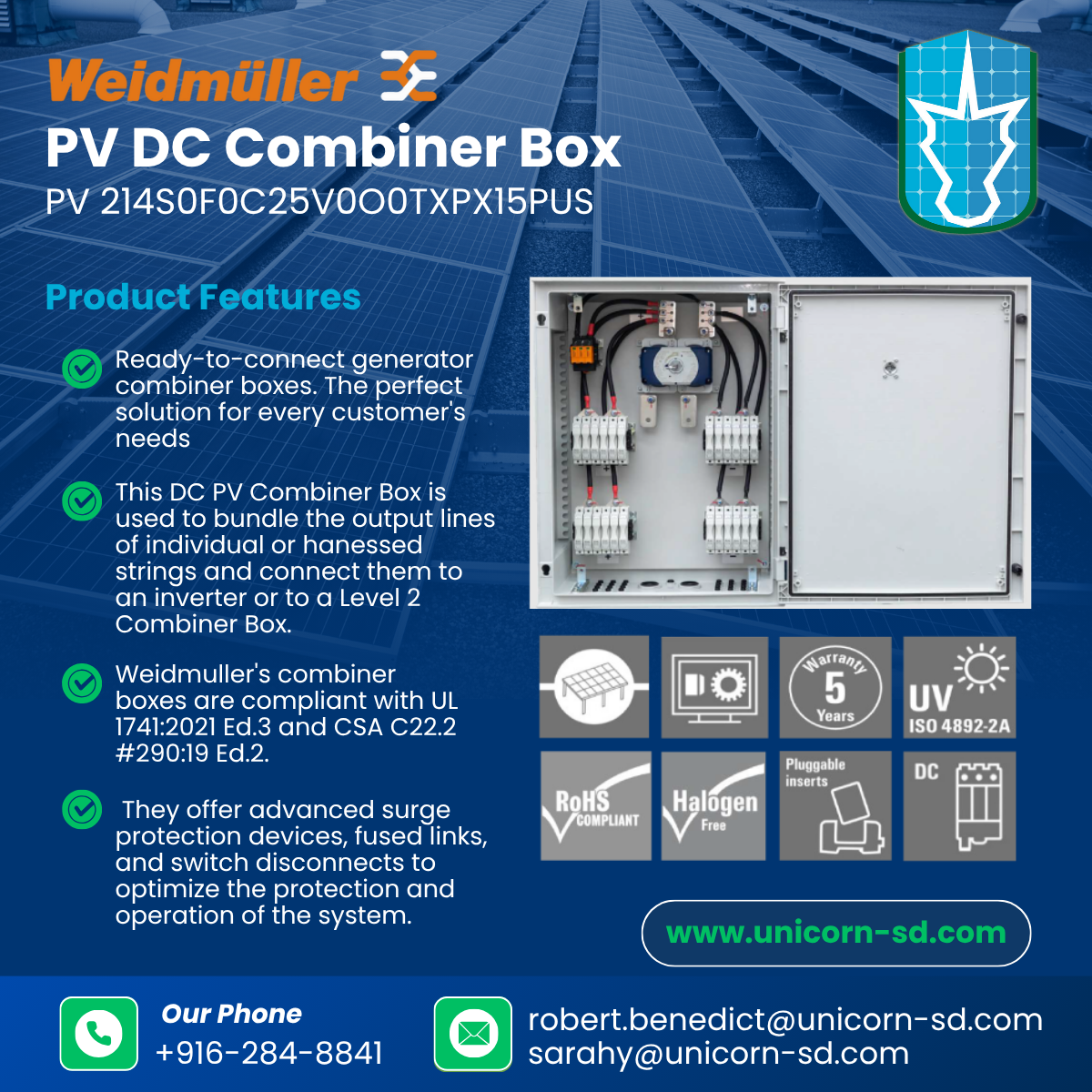
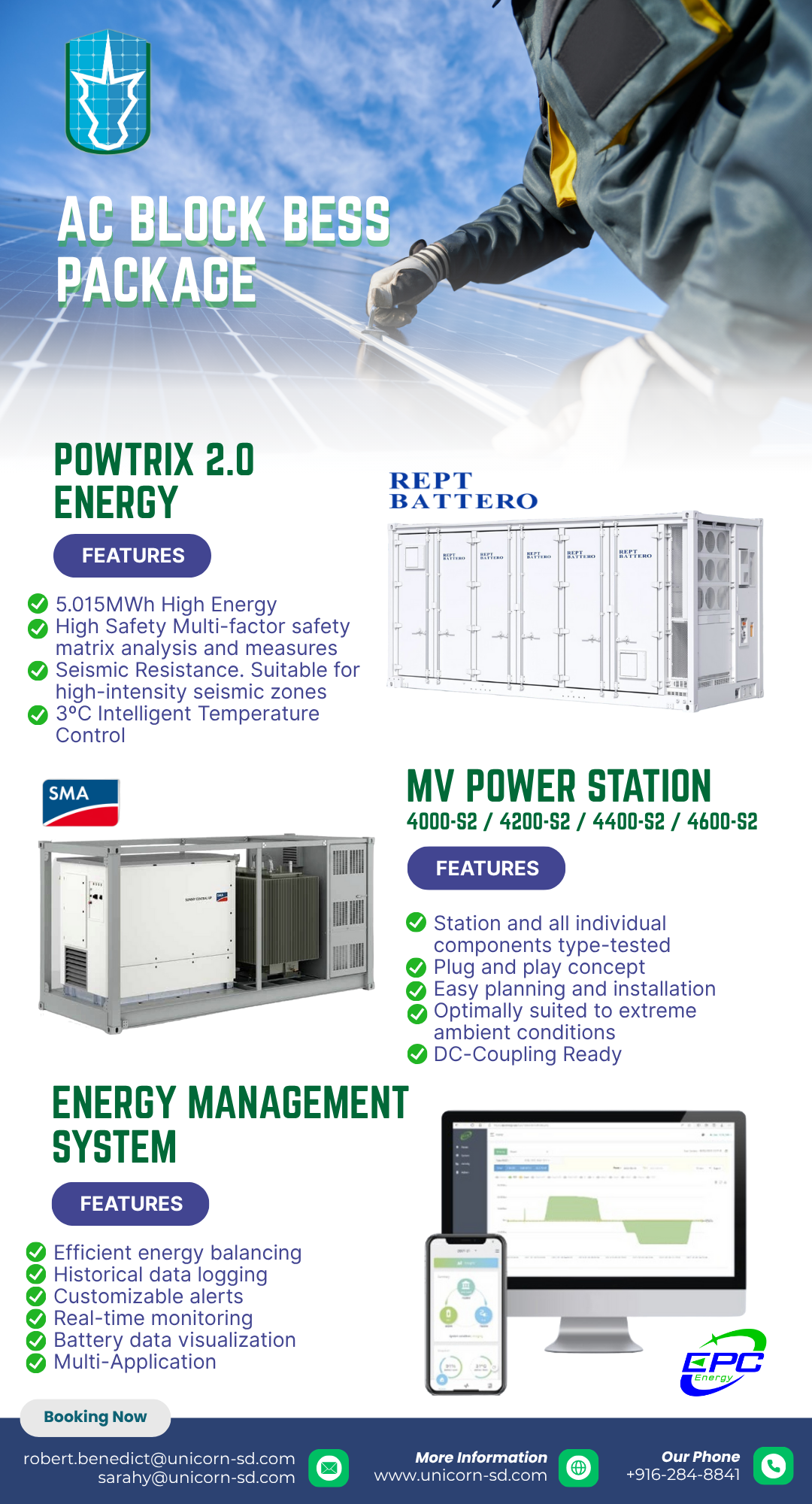
Along with the modules, please work with one of the Unicorn Solar team members to purchase your inverters, batteries, racking, transformers, DC combiners, EV chargers,
and turbines.
.…by Robert Benedict
Unicorn Solar is watching, studying, and working with companies innovating within the solar and decarbonization space. Please reach out to us, and we can work together to build a more efficient energy world.
You can read more information in our LinkedIn here: Unicorn Solar
If you have any questions or would like to work with a team of professionals who can help you achieve your success, please don't hesitate to contact Robert, Karlita, Jayde, or Elizabeth for more information. Also, if you have supply-related questions, please contact Sarahy. For BESS, inverter, and transformer questions, please reach out to George, Sebastian or Anthony.
|