Issue #5 | November 2022

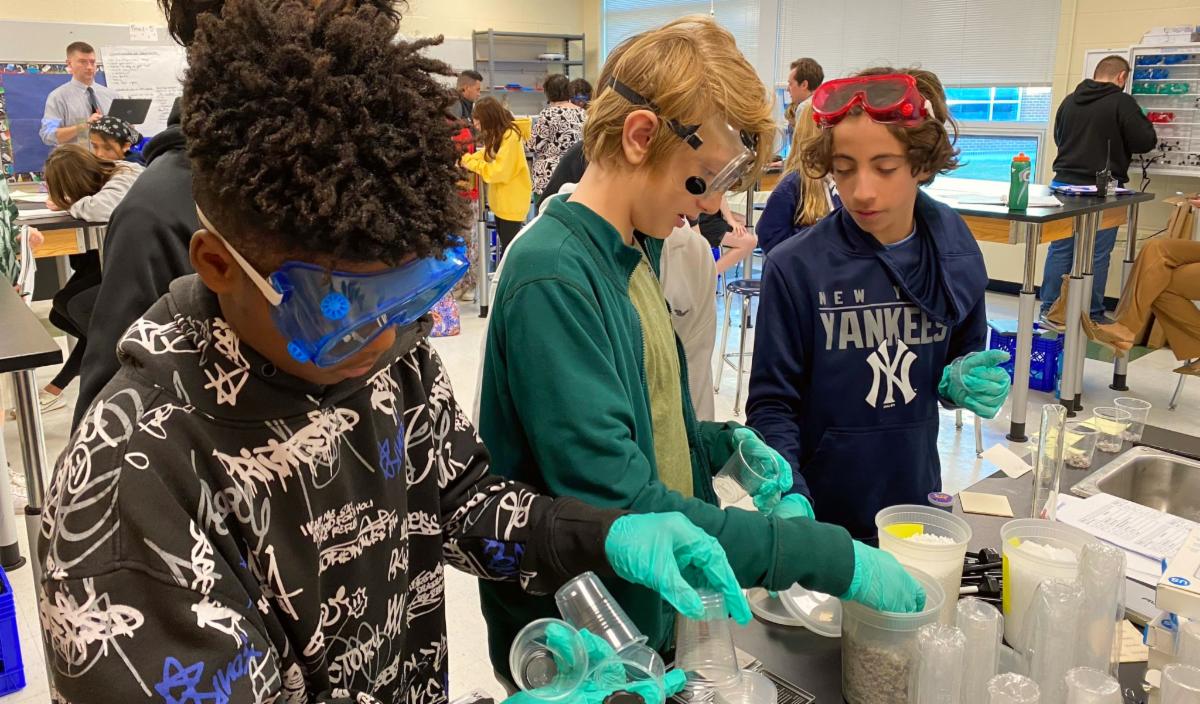
[Image Credit: OpenSciEd students testing which salt will warm up the most for their heat pack designs. Photo by @MrsEtense on Twitter]

Happy November!


With just a few weeks left before the holiday season is upon is, it’s a great time to take stock of all of the great progress teachers and students have been making this school year with OpenSciEd.


Seeing the excitement of teachers and students as they delve into units that explore phenomena through inquiry that puts students in the drivers seat of their learning journey is reason to celebrate!


In a recent article by The 74, school leaders in Washington expressed enthusiasm as they announced that they are one of ten states that will be piloting OpenSciEd. The excitement is real and contagious as the OpenSciEd movement grows and revolutionizes learning across the country.


Successfully implementing OpenSciEd might feel magical, but there are a lot of strategic moving parts that go into giving students the best learning outcomes with this innovative curriculum. The key to successful implementation of OpenSciEd a great pilot program.


This month in our most recent blog post, we explore piloting OpenSciEd. What are the elements of a great pilot program? What should school leaders do and what should they avoid when piloting OpenSciEd? We cover this and more in the post.


If you have questions about how to pilot OpenSciEd, let us know and we’ll be happy to answer your questions.


Enjoy this month’s newsletter issue!  🙌


The Activate Learning Team

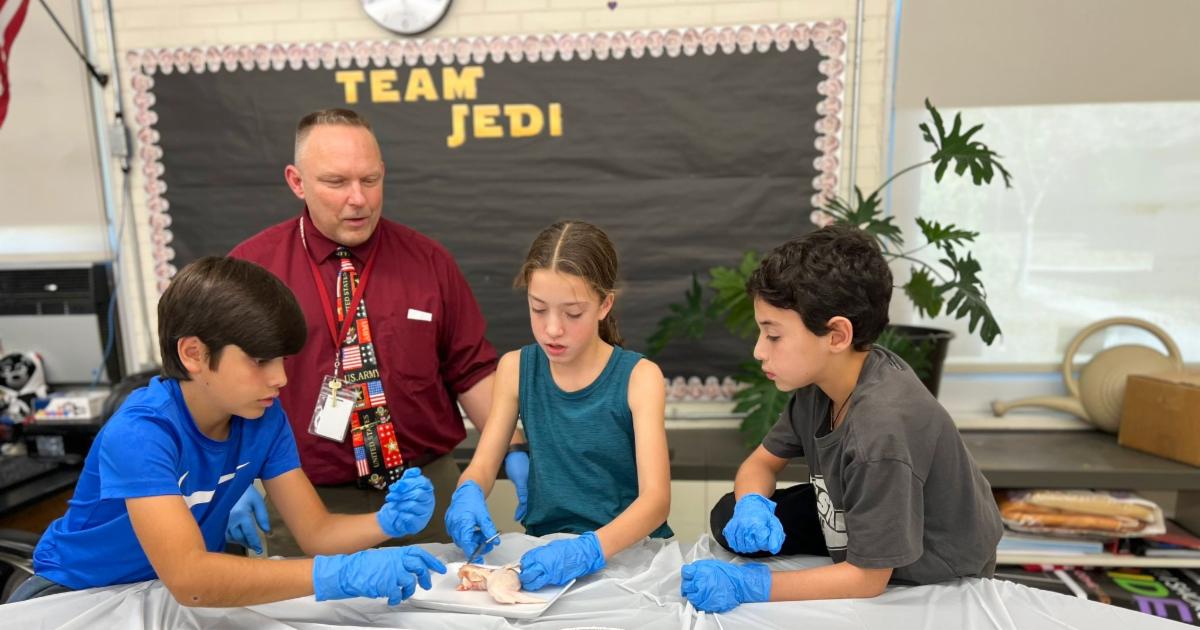
[Image Credit: OpenSciEd students dissecting a chicken wing to make sense of what bones, skin and muscles do for the human body. Photo by @Alma_APrice on Twitter]

The Road to OpenSciEd Successful Implementation Starts with a Great Pilot

Before implementing OpenSciEd, schools should first lay a solid foundation for implementation with a rigorous pilot program. A pilot program allows districts to “test drive” a curriculum by implementing all or parts of a curriculum in real-time, with real students, for a limited time, to learn whether or not the curriculum will meet predefined goals. During a pilot program, educators use simulations to measure how effectively their students learn using the curriculum in their classrooms.


In our latest blog post we explore the building blocks of a great pilot program.


READ MORE

Culturally Responsive Science Curriculum: a Key to Unlocking Student Potential 

Culturally responsive curriculum allows students to connect the material to their own lives and experiences which, in turn, facilitates deeper learning. When students see themselves, their culture, and their community represented in the curriculum, they are more likely to be engaged and motivated to learn.

Culturally responsive curriculum (like OpenSciEd) closes the achievement gap, boosts the confidence of students, and empowers them to solve real-world problems in their local communities.


In this post, we explore how teachers can incorporate culturally responsive science curriculum in their classrooms.


READ MORE

OpenSciEd Student-Facing Science Video Library

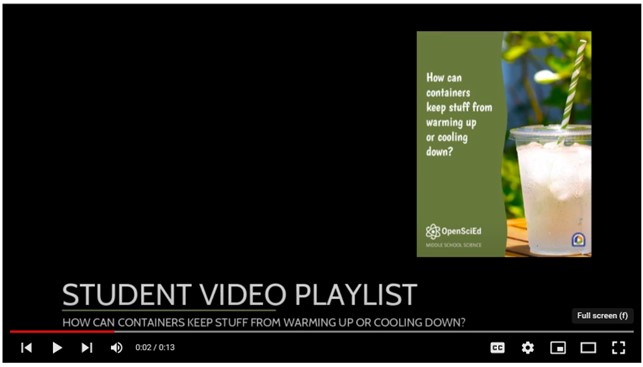
Using various mediums to engage students during class is important for their retention and development. OpenSciEd incorporates multiple mediums for maximum engagement including a Science Lesson Video Library with student video playlists for each Unit.


All of the videos associated with the OpenSciEd units are on their YouTube Channel and on their website. They even have alternative links for classrooms that are not able to stream YouTube videos. The student-facing videos are meant to be shown to students as part of the unit they’re learning. The teacher preparation videos guide teachers on the setup of laboratory investigations and other features of the instructional materials.


VIEW VIDEO LIBRARY

Research and Resources

  • Clemson researcher examines school science leaders’ effect on teacher retention nationwide. A Clemson researcher will use a nearly $1 million award from the National Science Foundation to better understand the relationship between the professional development of science leaders in school districts and those districts’ retention of science teachers. [read more]


  • Using Culturally Responsive Project-Based Learning to Teach Core Skills. One school used a PBL unit that combined science, math, and cooking dumplings to explore the many cultures that make up their community. [read more]


  • ALL RISE Helps Middle School Students Overcome Language Obstacles in Science Class. University of Houston program aims to clear more paths to STEM careers by broadening global awareness in Classrooms. A new UH program called ALL RISE invites experienced middle school science teachers to explore instructional theories and methods that honor and integrate the backgrounds and languages of everyone in the classroom, particularly emergent bilingual students. [read more]


  • Task Annotation Project for Science Takeaways. Are phenomena a “nice-to-have" engagement hook, or a “must have” feature of three-dimensional science assessments? [read more]


  • All Standards, All Students: Making the Next Generation Science Standards Accessible to All Students. This chapter, accompanied by seven case studies of diverse student groups, addresses what classroom teachers can do to ensure that the NGSS are accessible to all students; hence the title: “All Standards, All Students.” [read more]

Mark Your Calendars: November Science Holidays

Here’s a fun way to engage students in science learning – celebrating science holidays!


Here’s a roundup of science holidays for November that students will love observing (even though they won’t get the day off from school for these holidays). Create fun, quick learning experiences using science holidays like contests, creating mini-podcast or interviews about the holiday topic and asking them to find and explain phenomena associated with the science holiday.


If you do any fun activities with students in observance of any of these science holidays, post it on Twitter and tag us @ActivateScience.


  • Nov. 10: World Science Day for Peace and Development
  • Nov. 15: America Recycles Day
  • Nov. 23: Fibonacci Day
  • Nov. 25: Thanksgiving Day (it’s not a science holiday but there’s science cooking in kitchens across America on this day!)
  • Nov. 25: Black Hole Friday

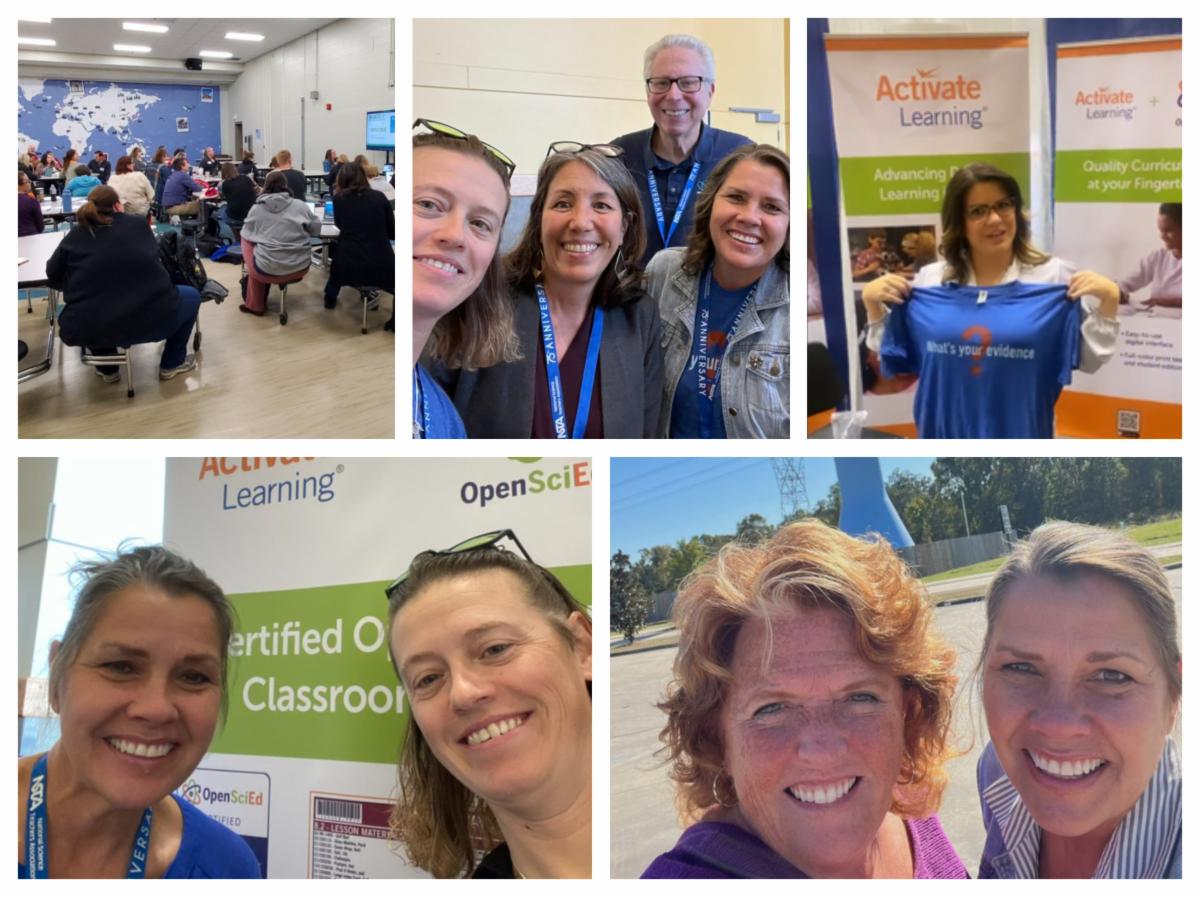
Our Professional Learning Team is On The Road

The Fall conference season is back in full swing and our professional learning team has been making their way to cities across the country to connect with science teachers everywhere!


You can probably tell from the photos above, but they’re having a fantastic time doing professional learning workshops and hearing from teachers how they (and their students) are doing this first, full semester back in school. If you see them do stop them and say hello – they’d love to learn about your rock star students and answer any questions you have.


Take a look at our calendar to see which conferences we’ll be attending in the coming weeks. Join our free professional learning workshops, stop by our booth for demos, and get some awesome free swag! 😎


VIEW SCHEDULE

At Activate Learning, we believe there is a better way to engage students in STEM. Our K-12, interactive curriculum engages students with authentic learning and phenomena that are relevant and meaningful. We inspire teachers with research-based curricula that support three-dimensional learning and prepare students for the careers of tomorrow.


To learn more about how we can help bring transformational learning to your classroom, submit your info below and one of our curriculum specialists will contact you.


GET PRODUCT INFO